
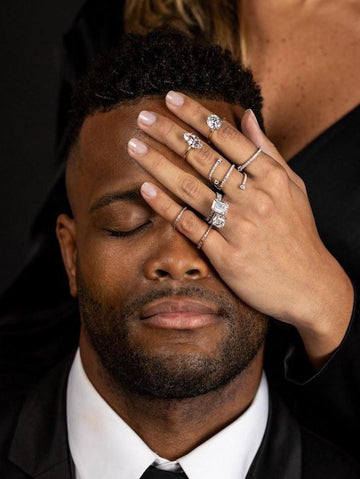

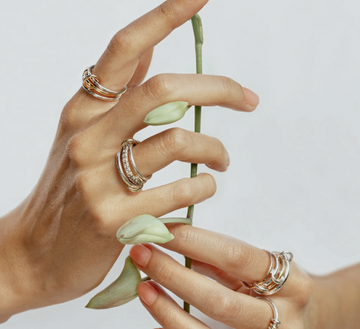


If you are considering an upgrade engagement ring before and after, start with the ring you own and the result you want to see. A professional jeweler can help you decide whether that result calls for a new center stone, a different setting, a more comfortable profile, or a complete redesign.
Explore engagement ring designs for your upgrade
Kravit Jewelers explains an engagement ring upgrade as a change to the center stone, setting, metal, profile, or mounting while preserving the details that matter most. The visible result may be greater presence, improved proportion, better comfort, or a refreshed design for a meaningful stone. The right choice depends on the ring's condition, your style, how you wear it, and what you want to keep.
For couples in Oceanside and across Long Island, the most successful result is not necessarily the largest possible center stone. It is a ring that looks intentional from every angle and still feels connected to its history. This guide explains what can change, how the process works, and how to assess the finished piece.
What Does an Upgrade Engagement Ring Before and After Transformation Look Like?
Kravit Jewelers views an upgrade engagement ring before and after transformation as a change in proportion, function, and personal expression, not just size. The difference may appear in the center stone, surrounding setting, side profile, metal, finish, or several details working together.
Before: a meaningful ring with new needs
The original ring may carry years of memories while no longer matching your daily life. The band may feel too narrow beside your wedding band. The setting may sit higher than you prefer, catch on clothing, or make the center stone feel separate from the rest of the design. Prongs, solder points, or other components may also show wear that deserves attention.
Sometimes the center diamond is still exactly right, but the mounting feels dated or impractical. In other cases, the diamond's shape, scale, or cut character no longer delivers the look you want. A jeweler should inspect the stone and mounting before you assume that a larger stone can fit the existing head.
After: a more considered relationship between the parts
The finished ring might have a new center stone, a halo, side stones, a lower profile, a different metal, or a new finish. A halo can expand the outline around a smaller center stone. Pave accents can add light along the shoulders. A bezel can create a sleek frame around the stone's edge, while prongs can preserve a more open appearance.
Metal also changes the ring's character. Yellow gold creates a warmer color story. Platinum or another white metal can create a brighter frame. The best choice considers your existing jewelry, preferred look, daily wear, and the structural needs of the design. An upgraded ring should feel balanced from the top, side, and underside, not only in a reveal photograph.
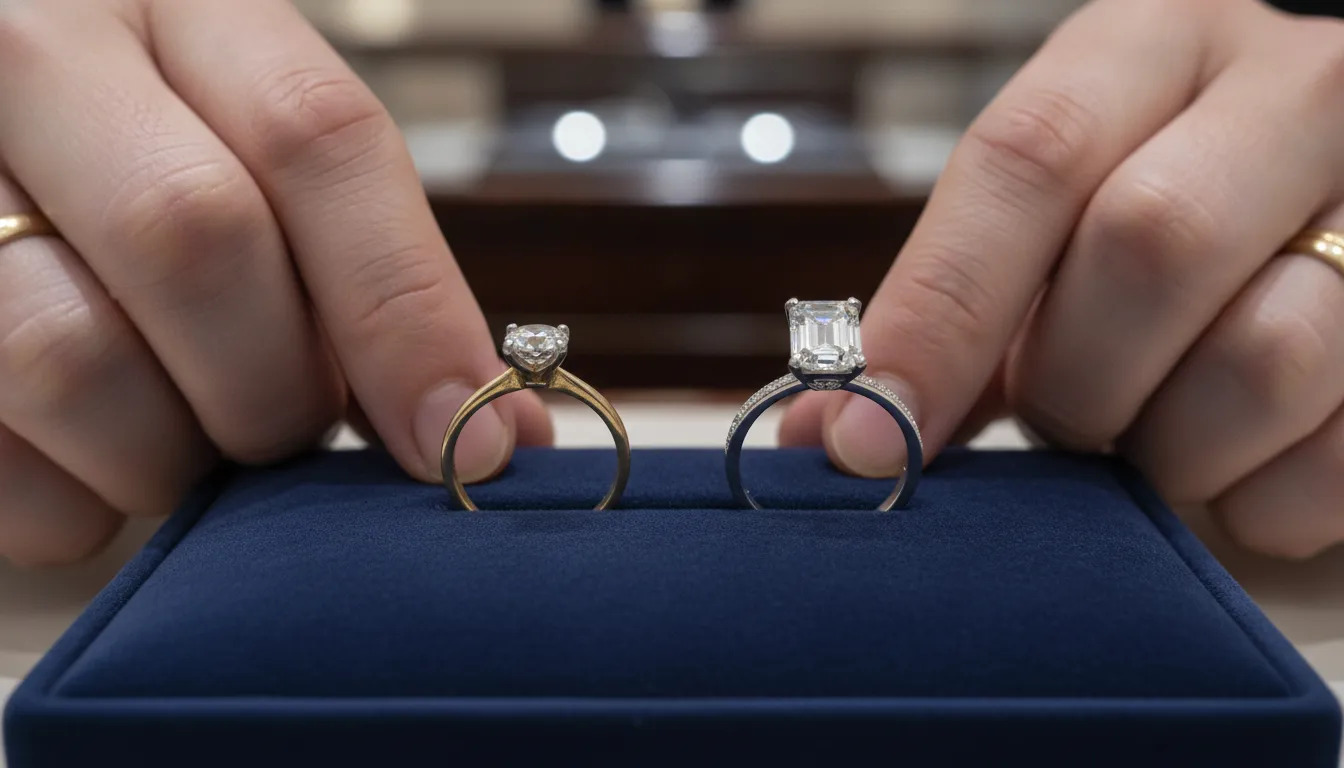
Visual impact is only one part of the result. Comfort, security, wedding-band fit, and maintenance matter just as much. Seeing the ring as a complete piece helps you choose an upgrade that remains satisfying after the first impression fades.
Which Parts of an Engagement Ring Can You Upgrade?
You can upgrade one component, several components, or nearly the entire ring while keeping the details that matter most. Considering each part separately makes it easier to identify the smallest improvement that will create the result you want.
Center stone
Replacing the center diamond creates the most immediately visible change. You might prefer a larger outline, a different shape, or a stone selected for a different balance of cut, color, clarity, and carat weight. A round brilliant can feel classic. An oval, cushion, emerald, pear, or radiant shape changes the ring's outline and visual rhythm.
Carat weight alone does not determine appearance. Shape, proportions, cut quality, and the surrounding mounting all influence how a stone looks on the hand. If the original diamond has deep sentimental value, keeping it and changing the setting may create a more meaningful transformation than replacing it.
Setting and accent stones
A setting determines how the center stone is framed and supported. A solitaire can become a halo, a three-stone design, or a ring with pave shoulders. Accent stones can add sparkle, color, or a more distinctive outline without replacing the original center.
Details such as decorative prongs, engraving, milgrain, or carefully chosen side stones can make a familiar ring feel personal again. Each addition should support the design rather than compete with the center stone. The scale of the accents also needs to work with the band and the way the ring will be worn.
Band width, metal, and finish
A change in band width can alter the apparent scale of the center stone and the visual weight of the ring. A wider band may feel grounded and substantial. A slimmer band may create a lighter look, but it still needs to provide appropriate support for the intended design.
Changing metal or finish can refresh the ring without changing its basic architecture. A jeweler can discuss how the proposed metal coordinates with your wedding band and how the finish will look alongside retained components. Re-polishing may be appropriate in some cases, but worn areas should be assessed before cosmetic work begins.
Sentimental components
An upgrade does not require every original detail to disappear. You may keep the center stone, preserve an engraving, reuse suitable metal, or retain the original setting as a keepsake. Existing materials should be examined first because their condition and construction determine whether they can be safely incorporated into a new design.
Review engagement ring setting styles to identify the profile and visual language you prefer. You can also compare engagement ring designs before discussing how that direction could work with the ring you already own.
How Do You Choose the Right New Ring Profile and Setting?
Kravit Jewelers recommends balancing the look you want with comfort, security, maintenance, and the way the ring must sit beside your wedding band. Ring profile describes the height and shape of the design from the side. It can change both the appearance and the everyday experience of the finished piece.
| Design choice | What changes in the before-and-after view | Questions to consider |
|---|---|---|
| Higher profile | Creates lift and may emphasize the center stone from the side. | Do you like the height, and will it work with your wedding band? |
| Lower profile | Creates a closer-to-the-finger look and may reduce snagging. | Does it leave room for the stone and the band you plan to wear? |
| Prong setting | Leaves more of the center stone visible for an open look. | Are the prongs appropriate for the stone and your daily wear? |
| Halo or side stones | Adds surrounding presence and more design detail. | Do you want a stronger outline, added sparkle, or color? |
| Bezel setting | Creates a sleek outline around the stone's edge. | Does the streamlined profile suit your style and activities? |
| Platinum or yellow gold | Changes the frame, color story, and character of the ring. | How should the metal coordinate with your other jewelry? |
A lower profile is not automatically better, and a higher profile is not automatically impractical. The correct choice depends on the center stone, your hand, your preferred appearance, and the way the ring meets the wedding band. Evaluate a setting with the actual stone's dimensions in mind rather than selecting from a photograph alone.
If you are comparing stones, Kravit's diamond cut education guide can help you organize your preferences. You can also browse custom engagement ring design ideas before a design conversation.
Discuss a custom engagement ring upgrade with Kravit Jewelers
What Happens During the Engagement Ring Upgrade Process?
An engagement ring upgrade at Kravit Jewelers moves from assessment to design decisions, craftsmanship, inspection, and documentation. The exact scope and timing depend on whether you are changing one component, modifying an existing mounting, or creating a new piece.
- Begin with a consultation. Bring the ring and, if relevant, your wedding band. Explain what you love, what no longer works, and what you hope the finished ring will look and feel like.
- Clean and inspect the piece. A jeweler should examine the stone, prongs, head, shank, solder points, and other structural components before recommending a path forward.
- Confirm feasibility. A new stone, lower profile, different shape, or new accent layout may require more than a simple setting change. The mounting must safely support the finished design.
- Review the design direction. A custom jewelry design conversation can help you compare proportions and refine details before fabrication. The available design process, materials, and approval steps should be confirmed for the specific project.
- Define the scope. Confirm whether the work includes new stones and metal, de-setting, modifying the mounting, resetting retained stones, polishing, re-pronging, or engraving. Project details and pricing should be discussed for the specific ring.
- Complete the bench work. Stones are removed and handled carefully. The new or modified mounting is prepared, and the components are assembled and finished.
- Review the completed ring. Inspect the top view, side profile, underside, stone alignment, finish, and fit beside the wedding band. Ask for care guidance that matches the new design.
- Update documentation. A completed upgrade may justify a new appraisal that reflects the current materials and finished design for insurance records.
Ask how the ring will be documented, protected, and stored while it is in the jeweler's care. Timelines vary with design complexity, approvals, materials, and bench work. A project-specific estimate is more useful than a fixed promise made before the ring is assessed.
Should You Reset, Replace, or Redesign Your Engagement Ring?
Reset when the original center stone still expresses your story, replace when the stone is the main limitation, and redesign when the entire architecture needs a new direction. This framework helps you compare choices without assuming that a dramatic change is always best.
Reset when the stone and story still feel right
Resetting can be a strong choice when you love the original center stone but want a different profile, metal, or surrounding design. The stone becomes a bridge between the ring's history and its next chapter. A new mounting can make it feel more contemporary, more prominent, or better suited to your wedding band.
Replace when the center stone needs to change
Replacing the center stone may make sense when you want a different shape, visual scale, or cut character. Compare the proposed stone in the intended setting or a close representation of it. Two stones with the same carat weight can look different because of shape and proportions.
Redesign when the ring needs a new language
A redesign allows the mounting to be built around your current style and the materials that can be retained. It can incorporate an engraving, a suitable stone from another piece, or a new profile designed around how you wear jewelry today.
Before deciding, separate your goals from outside pressure. A refined profile, improved wedding-band fit, fresh finish, or carefully chosen accent layout can create a powerful before-and-after result without making the ring look unrecognizable.
For more context, explore Kravit's wedding band collection and read the diamond cut guide before choosing a center stone.
What Should You Check After an Engagement Ring Upgrade?
The final review should confirm that the upgraded ring is attractive, comfortable, secure, and properly documented. Look at the ring from multiple angles, not only from the top.
- Security: Ask about the condition of the prongs, bezel, head, and shank. Confirm how worn components were addressed.
- Profile: Try the ring beside your wedding band. Check whether the height feels comfortable during ordinary movement.
- Finish: Look for an even polish, clean transitions, and a consistent surface across retained and new components.
- Wearability: Notice whether the ring catches on clothing, rotates excessively, or feels uncomfortable during use.
- Documentation: Ask whether a new appraisal is appropriate. Keep photographs, receipts, and reports with your jewelry records.
Follow the jeweler's guidance for cleaning, inspections, and everyday wear. Regular professional checks can be especially helpful when a design includes multiple small stones or delicate details. A good upgrade should continue to look considered after the reveal and remain practical in the life you actually lead.
How Can Kravit Jewelers Help You Compare an Upgrade Engagement Ring Before and After?
Kravit Jewelers can help you compare the original ring with a proposed result by discussing what should stay, what can change, and how the finished design should function. Bring the ring, your wedding band if relevant, and a clear description of your priorities. A design conversation can then focus on proportion, setting, materials, comfort, and the level of transformation you want.
Consultation details and pricing vary with the ring, materials, and scope of work. Treat the before-and-after image as a design goal, not a promise that every existing component can be reused. A professional assessment is the right next step when safety, fit, and sentimental value all matter.
Plan your engagement ring upgrade with Kravit Jewelers
Frequently Asked Questions About Engagement Ring Upgrades
Is it worth upgrading my engagement ring?
It can be worthwhile when the ring no longer fits your style, comfort, stone goals, or daily wear. The upgrade may be a new setting, finish, profile, center stone, or complete redesign. The best choice balances sentimental value, structural condition, wearability, and the result you want.
Can I use the same diamond for a new engagement ring setting?
Often, yes, if a jeweler confirms that the diamond and its condition suit the proposed head and mounting. You can explore a different profile, metal, halo, or accent layout while keeping the stone that carries your history. The diamond should be professionally inspected, handled, and reset.
How much does it cost to upgrade an engagement ring setting?
The cost varies with the setting, metal, stones, design complexity, and labor involved in removing and resetting original components. A custom project may also include design development and visualization. Because every ring is different, Kravit Jewelers can discuss the scope for the specific piece rather than applying a generic range.
How long does an engagement ring upgrade take?
The timeline depends on whether you are choosing an available setting, modifying a mounting, or creating a custom design. Stone selection, design approvals, materials, bench work, polishing, and final inspection can all affect the schedule. Request an estimate after the ring and project scope have been reviewed.
Does upgrading my ring change its appraisal value?
An upgrade changes the jewelry piece, so a new professional appraisal may be appropriate after the work is complete. Updated documentation can reflect the current stone, metal, setting, and finished design for insurance records. Ask what documentation suits your situation.


