



Women's Gold Band Engagement Rings: Sleek Single-Band Styles
Start with women's gold band engagement rings, not the trend. A gold engagement ring can feel timeless, modern, or distinctly personal depending on its color, karat, profile, and relationship to the wedding band that may follow. Looking at the complete bridal combination early helps you choose a ring that suits both your style and your everyday routine.
Explore Kravit Jewelers' engagement ring collection.
Women's gold band engagement rings offer a refined alternative to traditional stone-forward designs, with options ranging from warm yellow gold to contemporary white or romantic rose gold. Compare karat purity, durability, silhouette, and wedding-band fit before deciding, especially if you plan to wear the ring every day.
For Long Island couples, an in-person conversation can make those distinctions easier to see and feel. The right choice begins with understanding how each gold color and karat changes the character and practical performance of the ring.
How should you compare women's gold band engagement rings by color and karat?
Gold color sets the mood of an engagement ring, while karat helps determine its composition and day-to-day feel. Compare both with the wearer's style, lifestyle, and center stone before choosing a ring that feels intentional.
How do yellow, white, and rose gold differ?
Yellow gold is the classic choice, with a warm presence that can make a diamond or colored gemstone feel especially inviting. Its golden tone often complements warm undertones in the skin, although personal preference matters more than a color rule. White gold has a brighter, cooler appearance that is visually similar to platinum. It can create crisp contrast around a white diamond and coordinate naturally with other white-metal jewelry.
Rose gold gets its distinctive blush tone from a higher proportion of copper in the alloy. That warm, romantic color can soften the look of a brilliant center stone and create an appealing contrast with cooler skin undertones. It also offers a modern alternative for someone who wants a gold ring with a less traditional appearance. The finish matters, too: a high polish reflects more light, while a satin or brushed surface creates a quieter, more tactile look. In each case, view the metal beside the actual center stone, since color, cut, and setting can change the overall impression.
What does 14K or 18K mean?
Karat measures the purity of gold used in jewelry. 14K gold contains 58.3% gold, while 18K gold contains 75%; the remaining portion consists of alloy metals that influence strength and color. Because 18K contains more pure gold, it generally presents a richer yellow color and may feel softer than 14K. Gold is naturally soft, so alloying helps create a ring suited to regular wear.
For an active lifestyle, 14K is often considered a practical balance between purity and resistance to everyday wear. Someone drawn to a deeper gold tone and a higher gold content may prefer 18K, provided the ring's construction and care routine suit how it will be worn. Ask to compare both karats in the same design and finish rather than judging them from a photograph. White gold may also have a rhodium plating that enhances its whiteness and can require professional re-plating over time.
Takeaway: Choose gold color for the way it complements the wearer's style and center stone. Then choose 14K or 18K based on the desired balance of durability, purity, and richness of color.
What single-band silhouettes work best for Women's gold band engagement rings?
A single-band engagement ring keeps the relationship between the band and center stone in clear focus. The silhouette affects how the ring sits, how much attention the diamond receives, and how naturally the design transitions into everyday wear. Kravit Jewelers' engagement ring collections include traditional solitaires and modern contoured styles for a personal choice.
Solitaire and low-profile silhouettes
A classic solitaire is one of the most versatile choices. Its uninterrupted band directs the eye toward the center stone and leaves room for the diamond's shape, setting, and proportions to define the ring. This restrained approach works especially well for someone who prefers a refined, minimalist look. Minimalist gold engagement rings are valued for their understated, modern character, and a plain band can make the finished design feel quietly distinctive.
A low-profile silhouette brings the center stone closer to the finger. That can create a sleek appearance and reduce the feeling of height during daily activities. It is worth checking how the setting is constructed, however. The band, shoulders, and center setting should work together so the stone is visually supported without making the ring feel heavy or unbalanced.
Plain, sculpted, and contoured bands
A plain gold band offers a clean foundation and keeps the focus on the center stone. Its simplicity also makes small design decisions more visible, including the band's width, edge shape, polish, and connection to the shoulders. A sculpted band introduces gentle shaping, such as tapered shoulders or a softly rounded profile, to give the ring more presence while preserving a single-band appearance.
A contoured silhouette curves around the center setting. This shape can be selected for its own profile, but it is particularly useful when the engagement ring is intended to sit alongside a wedding band later. When paired with a solitaire, a contoured band can frame the center diamond and emphasize it without competing with the engagement ring's focal point. The exact curve should be evaluated with the center setting, since a contour that suits one ring may not sit naturally with another.
Subtle diamond accents
Small diamonds along the shoulders or upper band add light without changing the ring into a highly ornate design. They can create a gradual visual transition from the center stone into the band, especially when the accent stones are proportionate to the main diamond. The goal is balance: enough detail to catch the light, but not so much that the band overwhelms the center.
Takeaway: The best single-band silhouette is the one that supports the center stone's proportions, matches the wearer's preferred level of simplicity, and leaves enough room for comfortable future pairing.
When comparing women's gold band engagement rings, view the ring from the side as well as from above. A hands-on fitting in Oceanside can reveal whether the profile feels secure, balanced, and natural on the finger.
How durable are gold bands for everyday wear?
Gold bands can suit everyday wear when the design matches the wearer's routine. Desk work and planned ring removal create different needs from hands-on work, gardening, lifting, or travel. Repeated contact with hard surfaces can create scratches, soften edges, or put pressure on a setting.
Takeaway: A gold band can suit daily wear when its karat, alloy, profile, and setting are matched to the wearer's lifestyle.
How does karat affect everyday durability?
Gold is naturally soft, so pure or very high-karat gold is more susceptible to scratching and bending. Mixing gold with other metals creates an alloy that changes both its color and its strength. The Federal Trade Commission's jewelry guidance explains that 24K gold is soft and that alloying can increase hardness and durability. For that reason, 14K gold is often considered a useful balance for an engagement ring worn during active daily life. It contains 58.3% gold, while 18K contains 75% gold and offers a richer color, though it may be somewhat softer.
That does not make 18K an unsuitable choice. The warmer color and higher gold content may be central to the look you want, particularly for a refined, traditional design. The decision should account for your habits, the ring's construction, and how the band will be cared for over time rather than relying on karat alone.
What ring details matter beyond the metal?
A substantial profile can provide more resilience than an especially thin band, while a low-profile design may reduce the chance of catching on clothing or equipment. If the ring includes a diamond or other gemstone, examine the prongs and surrounding setting carefully. Secure prongs, a well-supported center stone, and an appropriate band thickness all contribute to how confidently the ring handles normal wear. A jeweler can also assess whether the ring's shape will sit comfortably beside a wedding band without creating unnecessary friction.
Active work deserves particular attention. Remove the ring for strenuous tasks, heavy lifting, contact sports, or situations where it may be exposed to chemicals or sharp equipment. Even a well-made ring is not immune to damage. Regular professional cleaning can help reveal worn prongs or other maintenance needs before they become more serious, and gentle at-home cleaning may be appropriate for simpler designs.
At Kravit Jewelers in Oceanside, a personal consultation can connect your preferred gold color and silhouette with the realities of your routine. That hands-on guidance is especially valuable when comparing a delicate minimalist band with a more substantial profile. It is also useful when choosing between 14K and 18K for a ring intended to remain part of everyday life.
How do you pair an engagement ring with a wedding band?
Begin with the engagement ring's profile, then choose a wedding band that either follows its shape or creates a deliberate contrast. The goal is not always a perfectly matched set. It is a comfortable, balanced combination that feels cohesive from every angle. A jeweler can assess the ring's height, setting, stone proportions, and metal color before recommending a band.
| Approach | How it works | Best suited to |
|---|---|---|
| Flush-fit | The band sits neatly beside the engagement ring without a visible gap. | A higher setting or a ring designed to accommodate a fitted partner. |
| Contoured | The band curves around the engagement ring's setting for a tailored profile. | A prominent center stone or a lower-profile ring that needs extra clearance. |
| Straight | A classic line creates a clean look, even when a small gap remains. | Simple solitaires, stackable combinations, and a relaxed modern style. |
| Mixed-metal | Different gold colors add contrast while repeating a detail such as diamonds or width. | Wearers who want a personal, layered look rather than a matched set. |
A flush-fit band offers the most streamlined appearance, but it depends on the engagement ring's setting. If the center stone or prongs extend low toward the finger, a straight band may press against them or leave an unwanted gap. In that case, a contoured band can create a closer fit while protecting the setting from unnecessary contact. Kravit Jewelers' gold diamond wedding bands illustrate how a curved silhouette can complement an engagement ring.
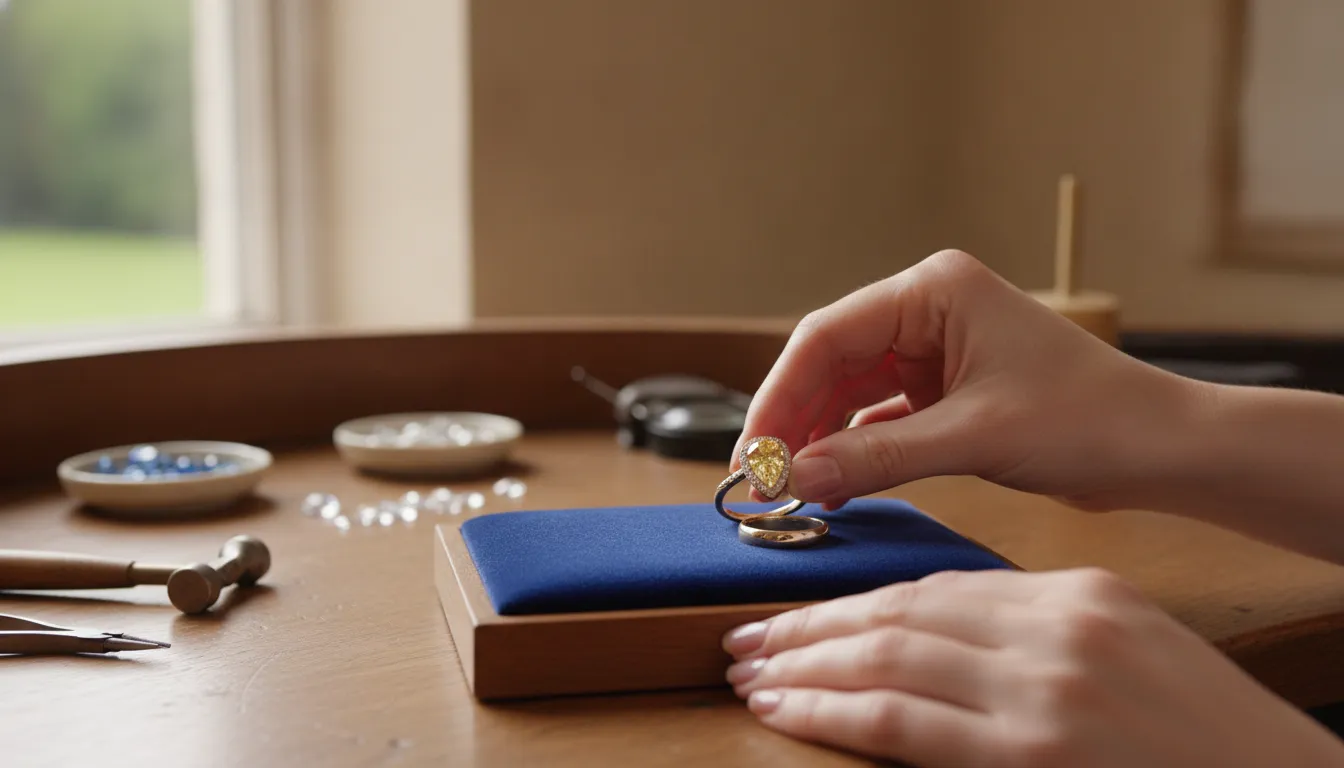
Explore women's wedding bands for a considered bridal pairing.
Metal color is another important decision. Using the same color for both rings produces a seamless effect, while combining yellow, white, or rose gold can make the pairing feel intentionally contemporary. For example, a white gold wedding band can echo a white-metal setting, while a yellow gold engagement ring may pair naturally with a gold eternity band for warmth and continuity. Consider repeating one visual element, such as diamond coverage, a polished finish, or a similar band width, so the contrast still feels connected.
When comparing engagement rings and bands, bring the actual ring to a showroom whenever possible. Trying the pieces together reveals details that measurements alone may miss, including finger comfort, edge alignment, and how the stones look from the side. If no ready-made band gives the right fit, custom ring design can help create a pairing tailored to the original setting and your style.
When should you consider a custom gold engagement ring?
Consider custom design when the ring you imagine depends on details that are difficult to find together in a ready-made setting. A custom process can be especially valuable when you want a particular proportion or an unusual band profile. It also helps when the ring should be designed around how the engagement ring and wedding band will sit together.
When fit and proportion matter most
A custom ring gives you more control over the relationship between the center stone, shoulders, band width, and finger shape. You can refine the height of the setting and the profile of the shank. You can also refine the way the ring balances visually on the hand. This is useful if you prefer a refined low profile or need room for a future wedding band. It can also help if you want a sculpted contour that feels intentional rather than adapted after the fact.
It also helps when comfort is a priority. A jeweler can discuss the ring's proportions, edge shape, and how it should fit during daily wear. If you already have a wedding band in mind, bring its measurements or inspiration to the consultation. Designing both pieces as a coordinated pair can help create a flush fit or a complementary silhouette.
When personal details should become part of the design
Custom design makes sense when the ring should carry meaning beyond its materials. Engraving can mark a date, initials, or a private sentiment, while hand-selected textures can add subtle character to an otherwise clean gold band. You can also choose the gold color that best suits your style, whether that is classic yellow gold, bright white gold, or warm rose gold. The goal is not decoration for its own sake. Each detail should support the way you want the ring to look and feel years from now.
Kravit Jewelers offers custom engagement ring design through a CAD/CAM process, allowing the design to be tailored to your vision. Its engagement ring settings are available in 18K gold or platinum, and the team can explain how those options relate to the desired appearance and construction. In Oceanside, a consultation provides the opportunity to compare proportions, discuss the wedding-band plan, and make informed decisions without guessing from a screen.
Explore custom ring design or learn more about custom jewelry design before your appointment.
Takeaway: A custom gold engagement ring is worth considering when fit, proportion, personalization, or wedding-band compatibility matters as much as the center stone.
How should you care for a gold engagement ring?
A thoughtful care routine helps preserve the finish and gives you a chance to notice changes in the setting. Gold is resistant to corrosion and tarnishing, but the ring can still collect oils, dust, and residue. Care should reflect the design, finish, and stones involved.
- Remove it for demanding tasks. Take the ring off before heavy lifting, contact sports, gardening, cleaning with chemicals, or work around sharp equipment. Place it in a secure, lined dish rather than loose in a pocket or beside a sink.
- Clean simple designs gently. For a straightforward gold band, use mild soap and lukewarm water, then rinse carefully and pat dry with a soft, lint-free cloth. Avoid abrasive powders, stiff brushes, and household chemicals that can dull the finish or affect other materials.
- Inspect the setting. Look for a loose stone, bent prong, catching edge, or change in the band profile. If you notice a concern, stop wearing the ring during strenuous activity and ask a professional to assess it.
- Schedule professional attention when needed. Intricate settings, diamond accents, white gold finishes, and heavily worn rings benefit from a jeweler's inspection and cleaning recommendation. Kravit Jewelers provides lifetime cleaning services for purchases, allowing owners to discuss maintenance as the ring becomes part of everyday life.
Takeaway: Gentle home care, sensible removal during risky activities, and professional inspection help keep a gold engagement ring looking considered and wearable over time.
View engagement rings before choosing your gold band.
Frequently Asked Questions
Which gold color is best for an engagement ring?
There is no single best color. Yellow gold offers a classic, warm appearance, white gold creates a bright look similar to platinum, and rose gold brings a soft, romantic tone. Consider the wearer's existing jewelry, preferred style, and whether the wedding band should match or intentionally contrast.
What does karat mean in a gold engagement ring?
Karat measures gold purity. 14K gold contains 58.3% gold, while 18K gold contains 75% gold; the remaining alloy metals influence strength and color. The right choice depends on the desired richness of color and the way the ring will be worn.
Are gold band engagement rings durable enough for everyday wear?
Yes, gold bands can be well suited to daily wear when the karat and design fit the wearer's lifestyle. Alloyed gold, such as 14K, is generally harder than high-karat gold. Remove the ring for strenuous activities and have the setting checked if it includes a center stone.
How can I pair an engagement ring with a wedding band?
Start with the engagement ring's shape and profile. A flush-fit band sits neatly beside a higher setting, while a contoured band follows the curve of the engagement ring. A straight band can create a clean, simple look, and matching metal colors usually produce the most seamless pairing.
How should I clean a gold engagement ring at home?
For a simple design, gently wash the ring with mild soap and lukewarm water, then pat it dry with a soft, lint-free cloth. Avoid harsh chemicals and abrasive materials. Intricate settings and white gold are better assessed by a professional, especially when the ring needs detailed cleaning or finish maintenance.
Ready to explore women's gold band engagement rings?
The right gold color, karat, and silhouette should feel personal and work naturally with the wedding band you envision. Explore Kravit Jewelers' engagement ring collection to compare styles and consider which details suit your vision. Then contact the team to begin a thoughtful conversation about your next step in Oceanside, with guidance focused on the ring and pairing choices you have been considering.


