


When you are researching how to sell gold jewelry for cash, the most useful first step is not guessing at a number online. It is understanding what you have, choosing an evaluation process you can follow, and knowing which questions to ask before you decide. Kravit's gold selling guidance is the local next step when you want that evaluation. A local, in-person conversation gives you the opportunity to see how the jewelry is assessed and request a clear quote without rushing into a decision.
Call (516) 766-3855 to request a local gold evaluation
What should you decide before selling gold jewelry?
Start by separating three different decisions that are often blended together: which pieces you are willing to discuss, what you want to learn about them, and whether you are ready to accept a cash offer. You can request an evaluation without committing to sell. Keeping those decisions separate makes the conversation more useful, especially when a piece has sentimental history or when you are still comparing options.
Make a short list of your goals. You may want to turn unwanted jewelry into cash or understand the materials in an inherited collection. You may also want to compare a local evaluation with an online option, or learn whether a group of pieces is worth bringing in. Your goal determines what to ask. Someone ready to sell may focus on the quote and next steps. Someone sorting an estate may first need help understanding what each piece is.
It is also wise to identify pieces that are not for sale. Keep heirlooms, gifts, and items with personal meaning separate from jewelry you are prepared to discuss. If several family members have an interest in the collection, clarify who can make a decision before arranging a visit. A clear boundary helps prevent an evaluation from becoming an unexpected family decision.
If you are in Long Island, Kravit's gold selling guidance can help you understand the local evaluation path before you bring in a piece.
How can you protect sentimental and financial decisions?
Gold jewelry can carry a financial question and an emotional one at the same time. A ring may have metal value, design details, stones, and a family story. Those parts do not always lead to the same decision. Before you visit, write down whether you want a cash quote, an explanation of the materials, guidance about an inherited piece, or all three.
If more than one person has a claim to an estate, pause before presenting the collection as ready for sale. Gather the relevant family information and decide who can speak for the group. Keep notes about which pieces belong to whom, particularly when several similar chains or earrings are together. A simple record can protect against confusion later.
Set a decision boundary before the appointment. For example, you might decide that you will listen to the evaluation and take the jewelry home before making a final choice. You might also decide which pieces are never to be sold. A pre-set boundary makes it easier to evaluate the information calmly rather than deciding under pressure.
Finally, avoid comparing a cash quote with an unrelated number. A replacement appraisal, insurance value, auction estimate, retail price, and buying quote can serve different purposes. Ask the evaluator to identify the type of figure being discussed. Understanding that distinction is more useful than trying to force every number into a single ranking.
How can you prepare gold jewelry for a cash evaluation?
Preparation should create an accurate record, not change the jewelry. Keep pieces in their current condition instead of polishing, repairing, removing stones, or altering a chain before it is evaluated. Cleaning may make jewelry look different from the way you received it, and an alteration can make it harder to discuss the original construction. If a piece needs attention, note that fact rather than trying to improve it first.
- Sort the pieces. Group rings, chains, bracelets, earrings, pendants, and broken or incomplete items so you can keep track of what is being reviewed.
- Record visible details. Note any markings you can read, such as a karat stamp, and describe stones, clasps, missing parts, or unusual construction. Treat a mark as a useful observation, not a final conclusion.
- Photograph the collection. Take clear photographs of each piece and its distinguishing features for your own records. Keep the images with a simple list of what you plan to bring.
- Gather paperwork. Bring receipts, prior appraisals, repair records, boxes, or provenance documents when you have them. These documents can add context, but they do not guarantee a particular cash quote.
- Separate questions from assumptions. Write down what you want explained, including how the buyer identifies materials, which parts of a piece are considered, and what happens if you decline an offer.
Do not include a piece simply because it is in the same jewelry box. A mixed group can contain items you want to sell, items you want to keep, and items you want assessed for another reason. Mark the groups clearly and tell the evaluator which pieces are in each group.
Before traveling, contact the business to ask whether the jewelry you have is within its current evaluation scope and whether an appointment or identification is required. Policies can change, and a brief conversation can prevent an unnecessary trip. Kravit Jewelers serves Long Island from Oceanside and asks sellers to confirm details about a specific item before visiting when they are unsure.
How do you sell gold jewelry for cash with a local evaluation?
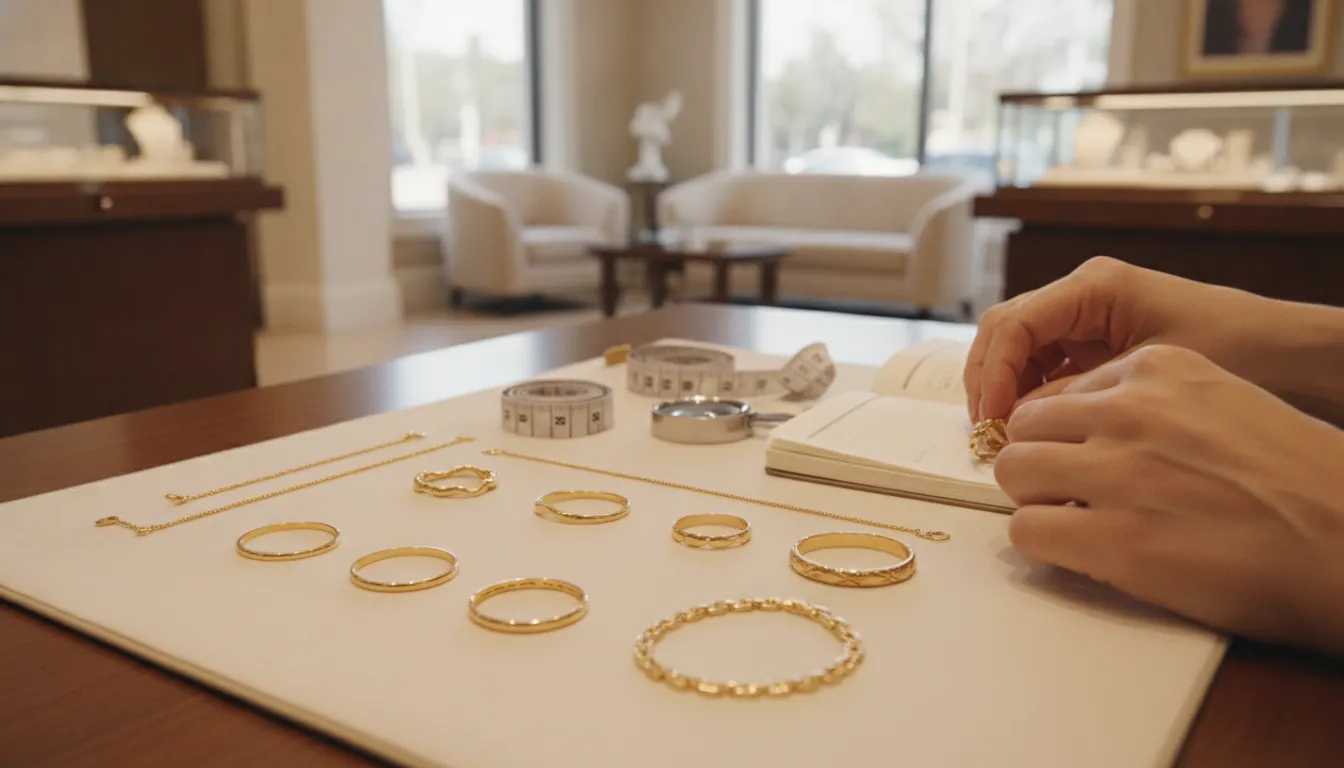
A local evaluation lets you discuss the piece while it is in front of you. The evaluator may review visible markings, material, gold-bearing components, construction, condition, stones, and other details that affect how the item is understood. The exact process varies by piece and by buyer, so ask the evaluator to explain what has been established and what remains uncertain.
A karat mark can be a useful starting point, but it does not answer every question. Two pieces with the same total weight may contain different proportions of gold, and the total weight of a finished item may include stones, settings, clasps, or other materials. Avoid treating a household scale, a stamp, or a search result as a finished quote.
The value of a finished jewelry item is also not automatically the same as its original retail price. Retail pricing can reflect design, craftsmanship, branding, labor, and the selling environment. A cash-buying conversation may use a different basis. Ask what kind of figure you are being shown and which factors led to it.
For additional context, the AARP guide to selling gold and silver explains why purity marks and buyer terms deserve careful attention. It is general consumer information, not an appraisal of your jewelry or a prediction of a local quote.
Which questions should you ask before accepting an offer?
You do not need to know every technical term before you visit. The right questions help you understand the quote and compare it fairly with another option if you choose to do so. Ask for an explanation in plain language, and take notes if you are reviewing several pieces.
| Question to ask | What it helps clarify |
|---|---|
| What details were considered for this piece? | Whether the discussion includes purity, weight, construction, condition, stones, and other visible factors. |
| Is the weight total item weight or gold-bearing weight? | Whether the number includes components that are not gold. |
| How was the karat or material information assessed? | Whether a stamp is being treated as a clue or as one part of a broader evaluation. |
| Is this figure a buying quote, appraisal, or another type of estimate? | What the number is intended to represent and how it should be compared. |
| What happens if I decide not to sell today? | Whether you can take the jewelry home and whether any conditions or fees apply. |
| What should I bring or confirm before a future visit? | Whether documentation, identification, an appointment, or scope confirmation is needed. |
Listen for an explanation that matches the actual piece rather than a generic promise. A trustworthy conversation should make clear what was reviewed, what the evaluator could not determine, and what your choices are. If you do not understand a term or calculation, ask for it to be restated. You should not have to accept a quote simply because the process feels unfamiliar.
How should you compare cash offers from different buyers?
Comparing only the largest advertised number can be misleading. First confirm that the figures refer to the same pieces and the same type of transaction. Then compare the evaluation basis, any conditions, the timing and method of payment, and what happens if you decline. A local visit may also let you keep possession of your jewelry until you are ready to discuss it in person, while a mail-in option introduces shipping, packaging, insurance, and return-policy questions.
Create a simple comparison note with one line per piece or group. Record the buyer, date, description, stated karat or material information, quoted amount, terms, and questions that remain unanswered. Do not combine a quote for one group with a quote for another. This record can help you make a calm decision and avoid relying on memory.
If you are considering a mail-in service, read its complete terms before sending valuable jewelry. Confirm who is responsible during transit, how insurance works, how the evaluation is communicated, how long payment takes, and how an item is returned if you decline. Taking photographs and keeping shipment records is sensible, but documentation does not remove every transit risk.
If you prefer a local conversation, you can review Kravit's guide to the factors behind a gold estimate before your visit. It covers market references, karat, gold-bearing weight, and construction without promising a specific amount for an individual piece.
Read Kravit's gold selling guidance before requesting a quote
What should Long Island sellers confirm before visiting Kravit Jewelers?
Kravit Jewelers is a family-owned jeweler in Oceanside that has served local families since 1927. Its gold-buying information describes careful, in-person evaluations and explains that an evaluation does not obligate you to sell. The page also notes that the team can evaluate gold, silver, platinum, fine and estate jewelry, diamonds and other precious gemstones, luxury watches, gold flatware, sterling silver, and broken, outdated, or unworn jewelry. Confirm that your specific item is within the current buying scope before you visit.
Bring the jewelry you want to discuss and any documentation you have. Keep sentimental items clearly separated from pieces you are ready to sell. You can ask how the piece was assessed, what factors influenced the quote, and what options are available after the evaluation. If you decide to take the jewelry home, the evaluation can still have helped you understand what you own and what questions to consider next.
For directions, scheduling, or questions about a specific item, use Kravit's contact page or call before making the trip. Do not assume that a general description of gold means every item, coin, bar, or mixed-material object is accepted. Scope should be confirmed directly with the store.
Request a clear cash quote through Kravit's gold-buying page
Frequently asked questions about selling gold jewelry for cash
Should I clean gold jewelry before selling it?
No. Keep the jewelry in its current condition and avoid polishing, repairing, or altering it before an evaluation. Gather the pieces, record visible details, and ask the buyer how condition and construction are considered.
Does a karat stamp tell me exactly how much cash I will receive?
No. A stamp can be a useful clue about purity, but it does not establish the gold-bearing weight, the construction of a finished piece, the buyer's evaluation basis, or the final quote. Ask how the mark was interpreted and what other factors were reviewed.
Can I request an evaluation without deciding to sell?
Yes. An evaluation and a sale are separate decisions. Ask the buyer whether you can take the jewelry home if you decline and whether any conditions apply. Kravit's gold-buying page states that an evaluation does not obligate you to sell.
What should I bring to a local gold evaluation?
Bring the jewelry you want to discuss, any receipts or prior appraisals, boxes or provenance documents you have, and your questions. Keep a personal inventory and photographs for your own records, and confirm in advance whether the business needs identification or an appointment.
How do I start selling gold jewelry for cash in Oceanside?
Begin by separating the pieces you are willing to discuss, confirming that the item is within the buyer's current scope, and requesting an in-person evaluation. For a local next step, contact Kravit Jewelers through its gold-buying page or call (516) 766-3855 to ask about the process and request a quote.


