


Birthstone meaning can add a personal layer to a piece of jewelry, especially when the stone marks a birthday, family milestone, or shared memory. Rather than treating a traditional association as a promise about a person's character or future, use it as a starting point for a gift that reflects what the stone means to its wearer.
What does birthstone meaning represent?
Birthstones are gemstones traditionally associated with calendar months. People may choose them because of a birthday, a family connection, a color they love, or a symbolic quality they want to celebrate. These associations are cultural traditions, not guarantees of luck, health, or personality.
That distinction can make the symbolism more useful. Instead of asking whether a stone will bring a specific outcome, ask what it helps you remember: a loved one, a new beginning, a family bond, or an important achievement. The answer can guide a gift without making claims the stone cannot support.
Which stone is associated with each month?
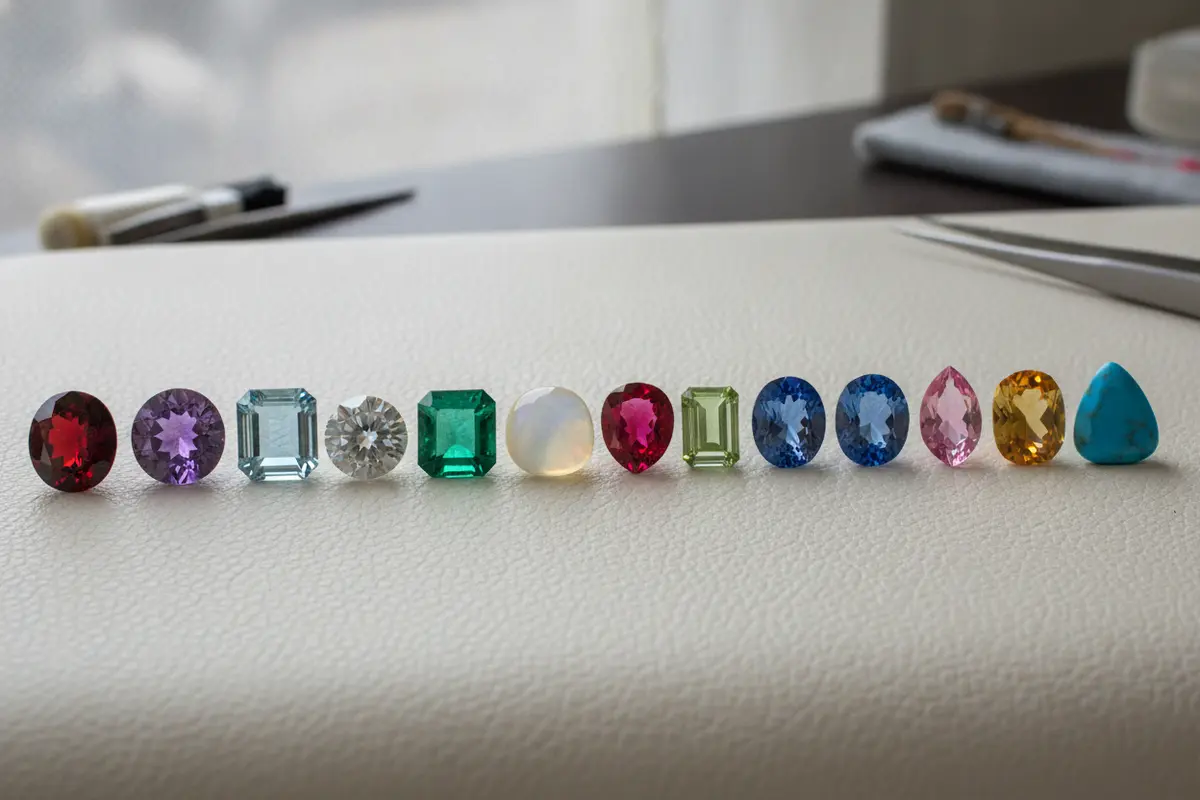
Birthstone charts sometimes show more than one traditional or modern option for a month. The table below gives a familiar set of associations and commonly linked themes; meanings vary among traditions and sources.
| Month | Common birthstone | Traditional association often linked with it |
|---|---|---|
| January | Garnet | Protection and friendship |
| February | Amethyst | Calm and clarity |
| March | Aquamarine | Serenity and courage |
| April | Diamond | Strength and enduring love |
| May | Emerald | Renewal and hope |
| June | Pearl | Wisdom and sincerity |
| July | Ruby | Passion and vitality |
| August | Peridot | Growth and good fortune |
| September | Sapphire | Wisdom and loyalty |
| October | Opal | Creativity and imagination |
| November | Topaz | Warmth and abundance |
| December | Turquoise | Protection and good fortune |
These are symbolic associations, not a grading system for gemstones or a fixed rule for choosing jewelry. For an overview of modern and traditional options, consult the International Gem Society's birthstone chart. Some charts list alternative stones, and families may follow customs passed down through generations. If the recipient has a preferred version of their month's stone, that personal preference should guide the choice.
How can you choose a birthstone gift with meaning?
Start with the recipient, not the calendar. A birth-month stone can make a gift feel personal, but it is only one route. Someone may value a child's birth month, a partner's favorite color, or a stone that recalls a place or occasion more than their own birthstone.
- For a birthday: Choose the recipient's birthstone if they enjoy the tradition, or select a color they wear often.
- For a parent or grandparent: Consider representing children or grandchildren with one stone for each person.
- For a milestone: Link a gemstone to the month of an anniversary, graduation, or another meaningful date.
- For a couple: Use two stones to acknowledge each person's birth month or a shared story.
Think about how the recipient dresses and wears jewelry. Do they prefer a subtle accent, a vivid center stone, or a piece that can be layered? A thoughtful choice should suit their taste as well as its symbolism. Browse fine jewelry options such as the Lucy collection or fine rings for examples of different forms and styles.
What are meaningful ways to personalize a birthstone piece?
Personalization can be quiet and understated. A single stone may stand for one person; a small grouping can represent a family. The design can also incorporate an engraving or a detail that connects the piece to a particular memory. The goal is to make the symbolism legible to the wearer without making the jewelry feel crowded.
Represent a family or important circle
Choose a stone for each person you want to honor. Before deciding on a layout, consider how many stones will fit comfortably and whether you prefer a cluster, a line, or one focal stone with smaller accents. Multiple birth months can produce a range of colors, so a jeweler can help consider how the combination will look together. You might arrange stones chronologically, group them by color, or give one person a larger central stone and let the remaining accents sit beside it. The design can communicate relationships without requiring every stone to be identical in size.
For a family gift, make a short list of whose birthdays or milestones you want to include before settling on the number of stones. This avoids a design that grows crowded as names and dates are added. If several people share a month, you can decide whether one stone represents them together or whether the design should distinguish each person another way. A simple sketch or written list can help explain the idea during a consultation.
Use a birthstone as a private detail
A gemstone does not have to be prominent to matter. It can sit inside a band or appear as a small accent on a pendant or ring. This approach works well when the recipient prefers simple designs or when the meaning is intended mainly for the wearer. A hidden detail can also make a piece suitable for everyday styling while preserving a connection to a person or event.
Think about whether the recipient would enjoy explaining the symbolism or keeping it personal. A visible center stone invites conversation; a small accent may be meaningful without defining the entire look. Placement affects how often the detail is seen and how the piece feels on the hand or neckline, so the intended level of visibility is useful to mention before design decisions are made.
Pair a stone with an inscription
A date, initials, or short phrase can clarify why a stone was chosen. Keep any inscription concise and check that the piece has enough room for it. A design consultation can help balance the stone, setting, and engraving so that the detail is practical as well as personal. You could use a date, a pair of initials, or a brief phrase known to the recipient; a longer message may be better kept on a separate note that accompanies the gift.
For examples of personal motifs, explore a symbolic jewelry design or a heart bracelet as a starting point for discussing the kind of detail that feels right.
How do you make the symbolism feel personal, not generic?
Connect the stone to a real story. A note included with the gift can explain why you chose it: perhaps the color reminds you of a garden you visited together, or the month marks a turning point in your relationship. A specific memory is often more meaningful than repeating a broad symbolic label.
You can also let the recipient choose among a few thoughtful options. If you are unsure of their style, a conversation about preferred metal color, jewelry type, and how often they wear jewelry can guide the design. For an understated look, a small stone in a familiar silhouette may feel more wearable than an elaborate statement piece. When a surprise matters, discreetly notice which pieces they reach for most often: delicate or bold, warm or cool metal, smooth or detailed surfaces. These clues help you make the gift personal without assuming that everyone born in a particular month likes the same color or style.
Another way to avoid a generic result is to write down the meaning in your own words before choosing the form. “This reminds me of the month we met” gives you a more specific direction than “this stone means loyalty.” The stone, setting, and presentation can then support the story rather than carry the entire message. If the association is shared by a family, ask which details matter most and which can remain out of the design.
For a gift, include a short card that explains the connection. The recipient does not have to know a birthstone chart or agree with a traditional meaning to appreciate your thought. The story is yours to share, and the tradition is a prompt rather than a rule.
Plan a custom design consultation
What should you discuss before requesting custom design?
Bring the meaning and the practical preferences to the same conversation. Kravit Jewelers is a family-owned jeweler serving Long Island from Oceanside since 1927, with custom jewelry design among its services. A consultation can help turn an idea into questions about scale, setting, and how the piece will be worn.
- Who or what should the piece represent?
- Which stone or colors matter, and are you open to alternatives?
- What type of jewelry does the recipient wear most?
- Should the design be subtle, visible, or suitable for layering?
- Would an engraving or another personal detail add meaning?
It can also help to bring a reference image, a family list, or the note you plan to include with the gift. A reference is a way to show mood, proportion, or an arrangement you like; it does not need to be a finished design. Be clear about what must remain in the piece, such as one particular stone, and what can change, such as its placement or scale.
Consider how the piece will be used. A design intended for regular wear raises different questions about setting height, comfort, and how it may sit alongside other jewelry than a piece reserved for special occasions. These are practical discussion points, not reasons to sacrifice meaning. The person creating the design can help explore how the idea and intended use work together.
Details and design possibilities vary from one project to another, so discuss the concept before settling on specifics. You can also compare the idea with existing choices such as gemstone jewelry styles or browse gold jewelry designs to identify details you like.
How can you make a thoughtful final choice?
Let symbolism guide the conversation, then choose a piece that fits the recipient's style and the story you want to honor. A birthstone can mark a month, but its meaning becomes personal through the people, memories, and intentions attached to it. Whether you choose a ready-to-wear design or explore custom work, a clear reason for the choice makes the gift more memorable.
How can you develop a design idea before a consultation?
Begin with a few decisions that are easy to explain: whose story the stone represents, what role the piece will play, and how noticeable the symbolism should be. These choices help prevent a design from accumulating details simply because each one sounds meaningful in isolation. If the piece represents several relatives, for example, decide whether every person must be represented equally or whether the central relationship should stand out.
Next, separate fixed preferences from flexible ones. The birth month or a particular color may be essential, while the exact stone shape or setting style could remain open. That distinction is useful when the preferred stone is unavailable in a desired size or does not suit the intended design. It gives the jeweler room to discuss alternatives without losing the idea behind the gift.
Think about how the piece will be received and worn. A pendant may suit someone who rarely wears rings; a small accent may fit a person who prefers understated jewelry. Consider whether it should coordinate with pieces already in their collection, whether it is meant for frequent wear, and whether the symbolic detail should be visible at a glance. These practical questions help connect the story to a form the recipient will enjoy using.
What can make a birthstone gift feel considered?
The presentation can reinforce the meaning without adding more decoration to the jewelry itself. A handwritten note can name the memory, relationship, or turning point that led you to the stone. Keep the explanation specific and warm; you do not need to present a traditional meaning as fact or expect the recipient to share every association. A simple sentence about why you thought of them is enough to make the symbolism clear.
If you are choosing for someone else, consider whether a surprise or a shared decision will make the gift more comfortable. A surprise works best when you already understand the recipient's preferred jewelry type, color, and level of detail. If those preferences are uncertain, you can share the idea and invite them to help shape the final piece. The personal meaning remains intact even when the wearer has a say in the design.
Also decide what information should accompany the piece. A birthstone chart can explain the month association, while a personal card explains why that particular stone matters to you. These are different purposes: one describes a tradition, and the other tells your story. Keeping them distinct makes the gift both clear and sincere.
What questions help narrow the design?
A short list of questions can turn a broad wish into a practical conversation. Start with the recipient's habits: which jewelry do they wear most, and do they prefer pieces that sit close to the body or make a visible statement? Then consider the role of the stone. Should it be the focal point, one of several accents, or a private detail that the wearer knows is there?
- Is the birthstone itself essential, or is the color and meaning more important?
- Should the design represent one person, several people, or a particular date?
- Would a single stone communicate the idea more clearly than a cluster?
- Does the recipient favor a particular metal tone or jewelry silhouette?
- Would an inscription help tell the story, or would a note be enough?
Write down the answers and note any uncertainties. This makes it easier to compare different ideas without losing sight of the reason for the gift. If more than one person is involved in choosing, the list can help everyone agree on the essentials before discussing appearance.
How can you keep tradition in perspective?
Birthstone traditions can be a useful source of inspiration, but they do not have to define the recipient. Charts differ, families bring their own customs, and personal taste may matter more than a month-based association. It is perfectly reasonable to choose a different stone, use a favorite color, or create a design around a date that has special meaning.
That flexibility also makes the symbolism more inclusive. Someone may identify more strongly with a family member's birth month, a season, or an important shared event than with their own calendar stone. The intention behind the choice is what makes it personal. A thoughtful gift does not need a universal meaning to feel significant to the person who receives it.
When you use birthstone meaning as a prompt rather than a rule, you can create a piece with a clear story and room for individual style. Start with the person, choose the symbolism that feels true to your relationship, and let the design support that meaning.


