




Choosing women's gold jewelry is easier when you begin with how a piece will fit into everyday life. Karat, color, silhouette, and scale all affect its appearance and feel, while good care helps preserve its finish. Whether you are choosing a personal staple or a meaningful gift, a few clear comparisons can help you narrow the options with confidence.
What does gold karat tell you about a piece?
Karat describes the proportion of pure gold in an alloy. Pure gold is 24 karat. Jewelry gold is commonly blended with other metals to create a material suited to a particular design and use. The karat number is therefore one useful point of comparison, but it does not tell you everything about a piece’s appearance, construction, or suitability.
For example, 14-karat gold contains a smaller proportion of pure gold than 18-karat gold. The other metals in an alloy affect its color and physical properties. A higher karat may appeal to someone who prefers a richer gold composition, while a lower karat may be considered for a piece intended for frequent wear. The specific design and how you plan to wear it matter as much as the number.
When comparing items, look for the karat mark and ask the jeweler to explain what it means for that particular piece. Also ask whether the item is solid gold, gold-filled, or plated. Those descriptions are not interchangeable. A clear explanation helps you understand what you are purchasing and what care it may need.
How do gold colors differ?
Yellow, white, and rose gold offer different looks. Yellow gold has a warm, classic appearance. White gold has a lighter silvery tone, while rose gold brings a soft pink warmth. The precise appearance can vary with alloy composition and finish, so viewing a piece in person can be helpful.
Think about the other jewelry you wear most often, but do not treat matching metals as a strict rule. A single color can create a coordinated look; mixing colors can feel intentional when the shapes, scale, or finish connect the pieces. If you are selecting a gift, notice whether the recipient usually chooses warm or cool tones, and whether their favorite items are delicate or more substantial.
Skin undertones can be one consideration, but comfort and personal preference matter more. Try a piece beside your usual jewelry and with clothing you often wear. The right color is the one you enjoy reaching for.
Which silhouettes make useful wardrobe staples?
Start with the role you want a piece to play. A simple chain or small hoop may be easy to wear across settings. A pendant, sculptural earring, or textured bracelet can add a more noticeable point of interest. For rings, consider whether you want a narrow band that sits comfortably beside other pieces or a bolder design worn on its own.
- Necklaces: A fine chain can work alone or support a small pendant. A more substantial chain can be a focal point without extra layers.
- Earrings: Studs and smaller hoops can suit a restrained look, while larger hoops or drops bring more movement and presence.
- Bracelets: A slim chain or bangle can be worn alone or paired with other pieces. Check how it moves on the wrist and whether the closure feels secure.
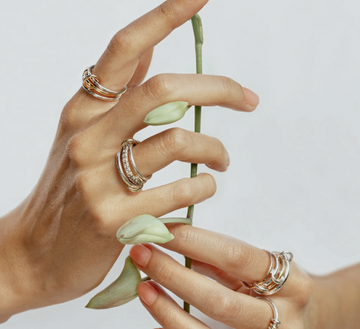
- Rings: A simple band can be an everyday choice; a wider or more detailed design may call for more attention to fit and comfort.
Proportion is personal. If you have a petite frame or prefer subtle accessories, a smaller scale may feel natural. If you enjoy statement jewelry, a larger silhouette can still feel balanced when the rest of the look is simple. A selection of chain styles can help you compare necklace proportions, while browsing bracelet designs can clarify which shapes appeal to you.
How can you layer gold jewelry without making it feel crowded?
Layering works best when each piece has room to be seen. Begin with one item you want to highlight, then add a second piece that differs in length, scale, or texture. Two necklaces with clearly separated lengths are less likely to tangle visually than pieces that sit at exactly the same point.
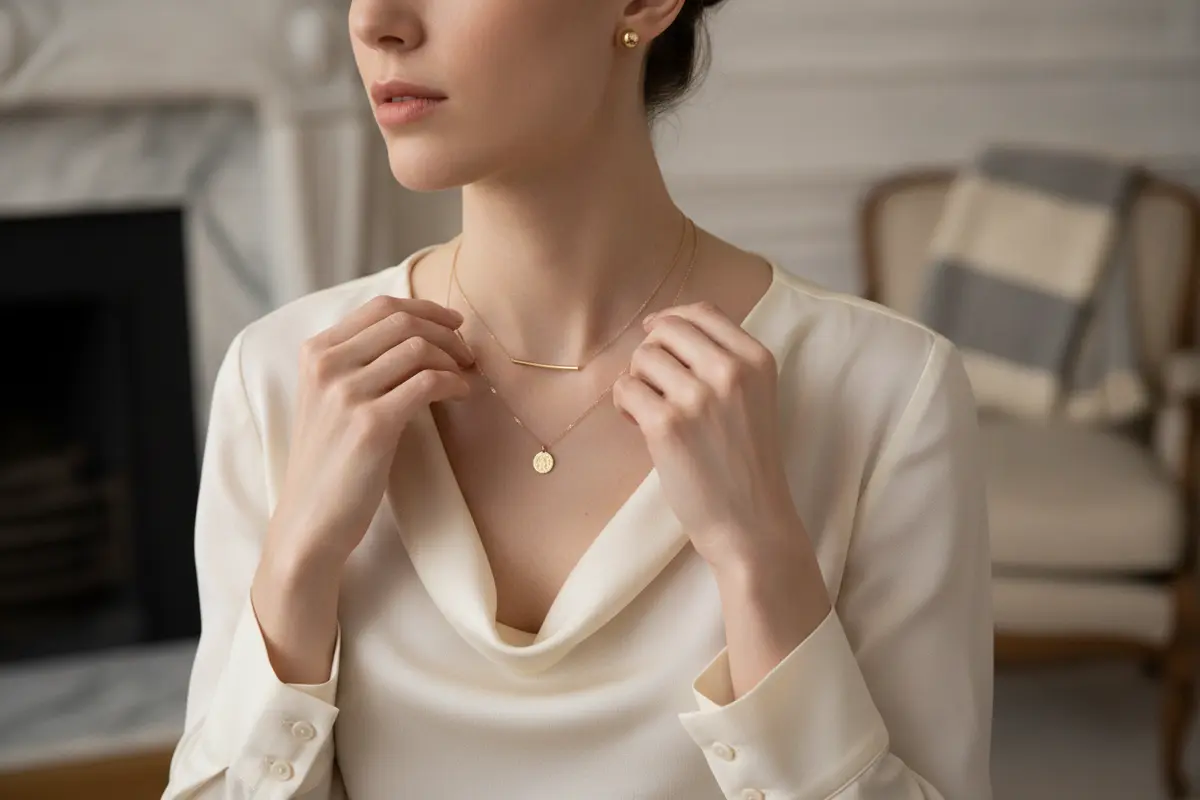
For bracelets, mix a fine chain with a more structured bangle, or keep several pieces similar in scale for a quieter effect. For earrings and necklaces, consider visual balance: if one is especially bold, a simpler companion can make the overall look feel considered. You do not need to wear a set for the pieces to work together.
Comfort is part of the styling decision. Check whether chains catch on clothing, whether stacked bracelets make noise or restrict movement, and whether a ring feels comfortable when your hands are active. A layered look should suit the day, not just a photograph.
What should you compare before choosing a gold piece?
Use a practical comparison rather than relying on appearance alone. These questions can help you evaluate pieces with different roles and construction.
| What to compare | What to look for | Question to ask |
|---|---|---|
| Karat and material | Clear description of the gold content and whether the piece is solid, filled, or plated | What does this marking mean for this item? |
| Silhouette and scale | How the piece looks against your usual clothing and jewelry | Can I see it worn or compare it beside another size? |
| Construction | Closures, links, settings, and edges that feel appropriate to the design | How should I check the clasp or other moving parts? |
| Fit and comfort | Length, wrist movement, ring fit, or earring weight | Can I try it on and assess how it feels? |
| Care | Any material-specific cleaning or storage guidance | What care does this piece need over time? |
Ask to see the piece in good light and from more than one angle. For earrings, consider weight as well as shape. For a bracelet, check the clasp and how it sits when your wrist moves. For a necklace, consider the length with the necklines you wear. A helpful in-store conversation can also explain which details are specific to a given design rather than general rules.
How can you choose a meaningful gold jewelry gift?
A thoughtful gift reflects the recipient’s actual habits. Notice whether they wear jewelry daily or save it for special occasions, whether they favor yellow, white, or rose gold, and whether they choose minimal or expressive designs. If you can, take note of the length of a necklace they wear often or the general size of their preferred hoops.
When those preferences are uncertain, choose a direction rather than guessing at an exact style. A classic chain, understated earrings, or a simple gold band may be easier to incorporate than a highly distinctive piece, but the recipient’s taste should guide the decision. Ask about exchange or sizing policies before purchase if those details matter; terms vary by retailer and item.
For a milestone, personalization can make the gesture feel specific. Consider a piece connected to a shared memory, a favorite shape, or a meaningful date. The sentiment need not be engraved to feel personal. A familiar silhouette selected with care can be just as thoughtful.
If you are comparing rings, explore fine ring styles and pay particular attention to fit and how the design works alongside jewelry the recipient already wears. For a custom direction, Kravit’s custom jewelry page is a starting point for discussing a personal design.
How should you care for gold jewelry over time?
Care depends on the piece’s materials and construction, so follow the guidance provided for the specific item. As a general habit, put jewelry on after applying lotions, fragrance, or hair products, and remove it before activities that could expose it to impact, snagging, or harsh substances. Avoid assuming every stone, finish, or gold alloy responds to the same cleaning method.
- Store pieces separately in a clean, dry place to limit tangling and surface contact.
- Fasten necklaces and bracelets before storing them so chains are less likely to knot.
- Use a soft cloth for gentle wiping, unless the jeweler has advised a different method for that piece.
- Ask before using cleaning solutions, ultrasonic equipment, or abrasive materials, especially on pieces with gemstones or delicate settings.
- Have clasps and settings checked if you notice looseness, damage, or a change in how a piece sits.
Keeping jewelry away from hard contact can reduce avoidable wear. Remove rings before tasks that could catch or strike them, and avoid wearing delicate chains when they may snag. If you travel with jewelry, use a separate soft pouch or compartment for each piece rather than placing chains and earrings together loose in a bag. This simple step helps limit tangles and scratches. At home, avoid leaving jewelry on a bathroom counter where it may be exposed to moisture or knocked into a sink. If a piece becomes caught or a clasp feels unreliable, set it aside until it can be checked instead of continuing to wear it.
Care needs can differ between solid gold, plated jewelry, and pieces set with gemstones or other materials. A cleaning method that seems harmless for one design may be unsuitable for another. Keep any care instructions that came with the piece, and ask the jeweler before using a dip, polishing cloth, or machine cleaner if you are unsure. Regular gentle handling and prompt attention to a loose setting or worn clasp can help you notice a concern before wearing the piece again. If a piece needs attention, seek advice from a qualified jeweler rather than trying an unfamiliar repair at home. For help discussing a piece or its care, you can contact Kravit Jewelers.
It can also be sensible to pay attention to product safety notices. The U.S. Consumer Product Safety Commission reported a recall of certain 14-karat gold jewelry due to high levels of cadmium. This concerns specific recalled items, not gold jewelry as a whole; check the notice if you own a product matching its description.
What should you ask when shopping in person?
A visit gives you a chance to see color, scale, and finish directly and ask questions that product photographs cannot answer. Bring a short list of priorities: intended use, preferred color, approximate silhouette, and any care concerns. If you are shopping for someone else, a photo of jewelry they wear can help communicate their taste.
Useful questions include: What is the karat and material description? How should I care for this design? Is the length or fit adjustable? What should I check on the clasp or setting? If I am choosing a gift, what options are available if fit or style needs to be reconsidered? Answers can vary by piece, so ask about the specific item rather than relying on assumptions.
At a local fine jeweler, you can compare pieces in person and talk through how they might work with your wardrobe or existing collection. Kravit Jewelers is a family-owned jewelry store in Oceanside, serving Long Island since 1927. A personal conversation can make the selection process more straightforward, whether you are exploring a simple staple, a gift, or a custom idea.
Arrange a visit to discuss your options
How can you make a confident choice?
Choose women's gold jewelry by bringing together the factors that matter to you: karat and material, color, silhouette, comfort, and care. Compare the piece with your real routines and favorite styles, not only with a trend or a photograph. When questions remain, an in-person conversation can help you understand the details and select a piece you will be glad to wear or give.
Take a moment to imagine the piece in the situations where you expect to wear it. Consider its scale with work clothes, whether it fits into a travel pouch without tangling, or whether the clasp can be handled easily before leaving home. For a gift, compare the recipient’s established preferences with the piece’s practical details, then ask about fit or care before deciding. This extra pause can turn an attractive choice into one that feels natural to wear.
With a clear sense of material, proportion, and use, you can build a collection gradually rather than trying to solve every styling question at once. Choose the piece that feels comfortable, suits the way you dress, and can be cared for with habits you are willing to keep. That is a grounded way to select women's gold jewelry for yourself or someone you love.


