


Schedule time to compare an engagement ring in person before the proposal. A rose gold engagement ring in box creates a warm first impression, but the most important view comes when the ring is on the hand. Color, proportion, setting height, and the way the design fits a partner's style all deserve attention before the moment arrives.
Explore engagement rings for your proposal
A rose gold engagement ring in box looks distinctive because its warm blush tone contrasts with the box lining and frames the center stone. On the hand, the same ring feels more dimensional as its proportion, polish, and setting interact with movement and personal style. Rose gold gets its color from gold alloyed with copper.
The box and the hand tell two parts of the same story. The box isolates the ring for a focused reveal. The hand shows how it will live alongside a person's skin tone, wardrobe, daily habits, and future wedding band. Use both perspectives to choose a ring that feels beautiful on proposal day and natural afterward.
Why does a rose gold engagement ring in box make a memorable first impression?
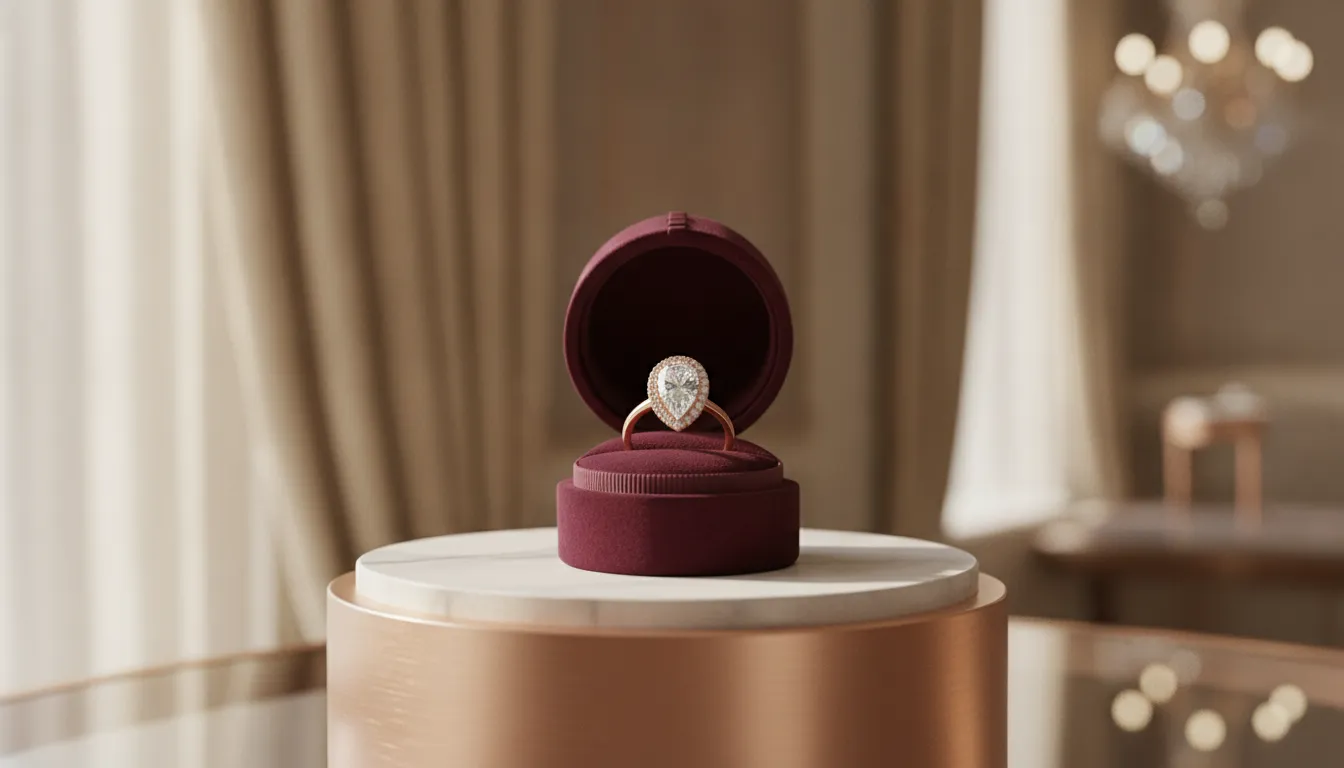
A rose gold engagement ring in box makes a memorable first impression because the box creates a quiet stage for the metal, center stone, and setting. The rosy alloy stands out against a neutral or dark lining. Soft light can reveal polished edges without overwhelming the details. That focused view gives the recipient time to notice the ring as a complete design.
How do contrast and light shape the reveal?
Contrast affects what the eye notices first. A deep velvet lining can make the rose tone appear luminous, while ivory or taupe creates a gentler, more understated effect. Neither is universally better. Choose a lining that supports the ring's color and gives the center stone a clear outline. Busy decoration can compete with the details you want the recipient to see.
Light matters just as much. Diffuse daylight can show the difference between the metal's warmth and the stone's brilliance. Warm indoor light can make the presentation intimate. Harsh overhead light may create reflections that obscure the setting. Before the proposal, open the box in the intended location and check the view from the recipient's normal height.
What changes when the ring moves from the box to the hand?
In the box, the ring's outline and color lead the experience. On the hand, proportion becomes equally important. Band width, setting height, finger length, and neighboring jewelry can change the way the design reads. A ring that looks substantial in a close-up may feel delicate at conversational distance. A slender band may become more noticeable when it catches light in motion.
That difference is why the reveal and the long-term wearing experience belong in the same decision. Look at the ring from above, from the side, and at a natural distance. Consider whether the profile will feel comfortable beside a wedding band. The strongest proposal presentation introduces a design that already feels connected to the recipient's life.
What should you know about rose gold before choosing a ring?
Rose gold is gold alloyed with copper and, depending on the recipe, other metals. It is not a surface color applied over a different metal. The alloy blend creates the warm pink or rosy tone, while the karat mark indicates the proportion of pure gold. Compare the color, karat, craftsmanship, and setting together rather than treating the metal shade as the only decision.
How does copper create rose gold's color?
GIA explains that adding copper to gold creates rose gold. Jewelry makers can use different alloy proportions, so one rose gold ring may look softly blush while another appears deeper and more copper-toned. If the exact shade matters, view the ring in person beside the intended gemstone and any jewelry the recipient already wears.
The Federal Trade Commission explains that pure gold is soft and is commonly mixed with other metals for jewelry use. Rose gold's color is therefore part of the alloy's construction, not a temporary coating. That distinction is useful when comparing solid gold options with plated fashion jewelry. Ask to see the karat mark and maker's mark, and use a qualified jeweler for questions about a specific piece.
What do 14K and 18K rose gold mean?
Gold purity is measured in 24 parts. Eighteen-karat gold contains 18 parts pure gold and 6 parts alloy, which is 75 percent gold. Fourteen-karat gold contains 14 parts pure gold and 10 parts alloy, or approximately 58.3 percent gold. Both can be made in a rose-gold alloy. The karat describes gold content, while the alloy recipe influences the final color and physical characteristics.
Higher-karat gold contains more pure gold. Fourteen-karat gold contains a larger share of alloy metals. The right choice depends on the wearer's preferences, the ring's design, and the guidance of a trusted jeweler. Neither karat mark alone describes the quality of the setting or the exact shade. For additional background, review GIA's explanation of rose gold and the FTC guide to gold jewelry markings.
How does a rose gold engagement ring in box look on the hand?
Short answer: A rose gold engagement ring can look richer and more dimensional on the hand than it does in its box. The box shows the ring's color and silhouette in isolation. The hand reveals its scale, warmth, movement, and relationship to the wearer's personal style.
Why does the hand change the first impression?
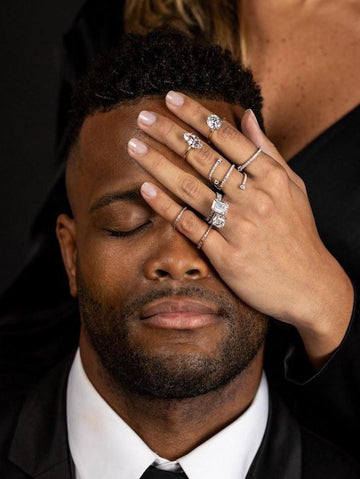
In a box, the eye naturally focuses on the center stone, rose-toned metal, and outline. On the hand, proportion leads the experience. A slender band can make a prominent center stone feel airy and refined. A wider band can give the same stone a bolder, more grounded presence. Neither balance is automatically right. The recipient's hand, existing jewelry, and preferred visual character should guide the choice.
Finger length and width also affect the result. A long, narrow finger may carry a more detailed setting with ease. A petite hand may look especially balanced with a cleaner profile. Trying on rings remains the most reliable way to judge proportion. Photographs and display boxes can suggest a direction, but they cannot show how a design feels during ordinary movement.
Rose gold's warm tone can echo warm undertones, contrast with cool undertones, or complement mixed-metal jewelry. Skin tone can be a styling prompt, not a restriction. The wearer's clothing, heirloom pieces, and daily preferences may be more useful clues. The goal is to choose a ring that feels personal rather than to follow a rigid color rule.
How can you compare the ring from every angle?
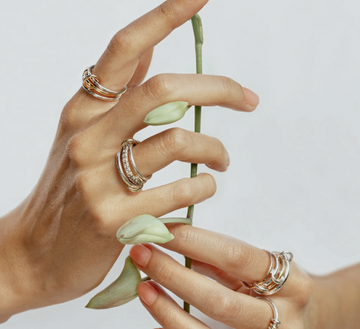
View the ring from above to assess the center stone and halo or side-stone layout. Turn the hand to inspect the setting height and the way the band meets the finger. Then step back and see whether the design still feels balanced at a conversational distance. Move the hand gently so the polished surfaces can catch light naturally.
Consider the future pairing as well. A wedding band may sit flush, curve around the engagement ring, or create a deliberate contrast. Browse wedding bands for proportion ideas, and use the recipient's existing jewelry as a guide. For a bolder direction, explore black and rose gold engagement rings to see how contrast changes the character of a design. You can also compare the wider engagement ring collection for additional metal and setting combinations.
Which center stone and setting suit rose gold best?
Round, oval, and cushion center stones all pair naturally with rose gold because their silhouettes complement the metal's softness. A solitaire keeps the design clean. A halo adds a more framed presence. A three-stone ring gives the composition symbolic depth. An emerald cut offers a refined geometric contrast. Select the center stone and setting as a coordinated composition rather than choosing them separately.
| Choice | In the box | On the hand |
|---|---|---|
| Round solitaire | A timeless center stone with room for subtle band details. | Bright, classic, and refined against warm metal. |
| Oval halo | An elongated stone surrounded by a frame of smaller stones. | Graceful, prominent, and visually elongated across the finger. |
| Cushion halo | A softly squared shape with rounded corners and a diamond border. | Romantic, distinctive, and harmonious with rose gold. |
| Three-stone round | A center stone supported by two complementary side stones. | Meaningful and substantial from every angle. |
| Emerald solitaire | A step-cut stone emphasizing clarity and clean geometry. | Understated, architectural, and striking in a blush-toned setting. |
Why does rose gold flatter round, oval, and cushion diamonds?
Round diamonds are adaptable. Their symmetrical outline lets rose gold act as a subtle frame instead of competing with the center stone. Oval diamonds create a longer visual line and bring a graceful curve to the design. Cushion diamonds provide a softer, more distinctive outline that can reinforce a vintage-inspired or romantic feeling.
A halo can add sparkle around the center and create a more framed appearance. A solitaire leaves more space around the stone and lets the metal play a quieter role. Examine the band width, prong style, side-stone scale, and setting height together. For more guidance, read how to choose the perfect diamond cut before comparing settings.
When is a three-stone or emerald setting the right choice?
A three-stone design suits someone who wants the ring to carry meaning as well as beauty. Round side stones create continuity, while contrasting shapes can draw attention to the center. An emerald cut suits a wearer who prefers polished simplicity and broad flashes of light. Its corners and open facets make protective setting details especially important to discuss.
Try the ring beside a potential wedding band. The final impression depends on how the pieces sit together, not only on the engagement ring viewed alone.
Explore rose gold engagement rings at Kravit Jewelers
How can you choose size and details discreetly?
Choose discreetly by gathering clues about the recipient's current jewelry, hand shape, and routine. The objective is not to guess perfectly. It is to give a jeweler useful direction without revealing the proposal. Style observations can be as valuable as a borrowed ring.
- Observe existing jewelry. Note whether the recipient wears yellow gold, white metal, mixed metals, delicate lines, or substantial designs.
- Borrow a ring carefully. If possible, use a ring worn on the intended finger. A ring from another finger can suggest proportion, but it is not a precise size reference.
- Study the profile. A low profile can feel streamlined, while a higher profile creates more visual presence. Ask how the setting may work with the recipient's daily routine.
- Consider comfort. Band width, finger shape, neighboring rings, and sensitivity to pressure all influence the final fit.
- Plan for stacking. Leave room for an engagement ring and wedding band to sit naturally together. A jeweler can help compare shapes without compromising the surprise.
Do not stretch or bend a borrowed ring. You can trace its inside edge, photograph it beside a ruler, or bring it to a jeweler in a small pouch. A discreet estimate is only a starting point. Temperature, time of day, band width, and the ring's profile can all affect fit, so final sizing should receive professional attention.
Lifestyle clues can guide design choices. Someone who works with their hands may prefer a smooth profile and fewer exposed details. Someone drawn to vintage jewelry may enjoy graceful shoulders or subtle texture. For a more individual direction, explore custom jewelry design. A design conversation can translate those observations into a ring concept grounded in comfort and wearability.
How should you present the ring during the proposal?
Present the ring calmly, with the box secure, the rose gold setting visible, and a few sincere words ready. The goal is not a staged performance. It is a comfortable moment in which the ring and your feelings can be seen clearly.
What should you check about the ring box?
Open and close the box several times before the proposal. The ring should sit firmly in its slot without rocking, sliding, or catching on the lining. Check the hinge, clasp, and interior for loose threads that could touch the setting. Keep the box clean and dry, and store it where keys and other hard objects cannot press against it.
How can light and positioning show the rose gold ring?
Choose steady, flattering light. Gentle daylight can show the metal's color and the stone's details without harsh glare. Warm indoor light can create intimacy. Avoid placing the open box beneath a strong overhead bulb or in shifting direct sunlight. Keep the box level and open it toward the recipient. A brief pause lets them take in the ring before the conversation continues.
How do you handle the ring safely and speak sincerely?
Handle the ring by its band rather than touching the center stone or polished surfaces. Keep the box closed until the reveal. Outdoors, protect it from rain, wind, sand, and loose ground. Your words do not need to be elaborate. Share a memory, a quality you admire, or a hope you have for the future. A simple explanation of why you chose rose gold can make the presentation feel personal.
Kravit Jewelers offers engagement rings, custom design guidance, and fine jewelry expertise for shoppers seeking a considered proposal piece. When you are ready to compare designs, use the ring's proportions, the recipient's style, and the proposal setting as your guide.
Find an engagement ring for your proposal
Frequently Asked Questions
What does a rose gold engagement ring look like in a box?
A rose gold engagement ring in box has a warm blush glow that stands out against a dark or neutral lining. The box makes the band, center stone, and setting easy to view together. Open it under soft light to see the alloy's color without reflections hiding the design.
Why is rose gold popular for engagement rings?
Rose gold is popular because its pinkish tone feels romantic, distinctive, and versatile. It can soften a classic design or add warmth to a modern one. The color comes from gold alloyed with copper, so it is part of the metal's composition rather than a temporary surface effect.
Does rose gold engagement jewelry require special care?
Rose gold benefits from thoughtful care like other gold jewelry. Wipe it with a soft, lint-free cloth after wear, and use a cleaning method suitable for the gemstones and setting. Remove the ring before household cleaning, swimming, or activities involving chemicals or impact. Store it separately, and arrange professional attention when the ring needs inspection.
How should I present a rose gold engagement ring?
Keep the presentation personal and uncluttered. Choose a secure box, check that the ring is clean, and open it where the recipient can see the metal's warm color. A quiet moment often matters more than elaborate staging. Pair the ring with sincere words that reflect your shared story.
Is rose gold better than yellow or white gold?
No gold color is universally better. Rose gold offers a warm, romantic contrast. Yellow gold has a classic golden appearance. White gold provides a brighter, neutral look. Compare each metal beside the center stone and consider existing jewelry, lifestyle, and the recipient's preferences before choosing.
Schedule time to compare an engagement ring in person before the proposal. A rose gold engagement ring in box creates a warm first impression, but the most important view comes when the ring is on the hand. Color, proportion, setting height, and the way the design fits a partner's style all deserve attention before the moment arrives.
Explore engagement rings for your proposal
A rose gold engagement ring in box looks distinctive because its warm blush tone contrasts with the box lining and frames the center stone. On the hand, the same ring feels more dimensional as its proportion, polish, and setting interact with movement and personal style. Rose gold gets its color from gold alloyed with copper.
The box and the hand tell two parts of the same story. The box isolates the ring for a focused reveal. The hand shows how it will live alongside a person's skin tone, wardrobe, daily habits, and future wedding band. Use both perspectives to choose a ring that feels beautiful on proposal day and natural afterward.
Why does a rose gold engagement ring in box make a memorable first impression?
A rose gold engagement ring in box makes a memorable first impression because the box creates a quiet stage for the metal, center stone, and setting. The rosy alloy stands out against a neutral or dark lining. Soft light can reveal polished edges without overwhelming the details. That focused view gives the recipient time to notice the ring as a complete design.
How do contrast and light shape the reveal?
Contrast affects what the eye notices first. A deep velvet lining can make the rose tone appear luminous, while ivory or taupe creates a gentler, more understated effect. Neither is universally better. Choose a lining that supports the ring's color and gives the center stone a clear outline. Busy decoration can compete with the details you want the recipient to see.
Light matters just as much. Diffuse daylight can show the difference between the metal's warmth and the stone's brilliance. Warm indoor light can make the presentation intimate. Harsh overhead light may create reflections that obscure the setting. Before the proposal, open the box in the intended location and check the view from the recipient's normal height.
What changes when the ring moves from the box to the hand?
In the box, the ring's outline and color lead the experience. On the hand, proportion becomes equally important. Band width, setting height, finger length, and neighboring jewelry can change the way the design reads. A ring that looks substantial in a close-up may feel delicate at conversational distance. A slender band may become more noticeable when it catches light in motion.
That difference is why the reveal and the long-term wearing experience belong in the same decision. Look at the ring from above, from the side, and at a natural distance. Consider whether the profile will feel comfortable beside a wedding band. The strongest proposal presentation introduces a design that already feels connected to the recipient's life.
What should you know about rose gold before choosing a ring?
Rose gold is gold alloyed with copper and, depending on the recipe, other metals. It is not a surface color applied over a different metal. The alloy blend creates the warm pink or rosy tone, while the karat mark indicates the proportion of pure gold. Compare the color, karat, craftsmanship, and setting together rather than treating the metal shade as the only decision.
How does copper create rose gold's color?
GIA explains that adding copper to gold creates rose gold. Jewelry makers can use different alloy proportions, so one rose gold ring may look softly blush while another appears deeper and more copper-toned. If the exact shade matters, view the ring in person beside the intended gemstone and any jewelry the recipient already wears.
The Federal Trade Commission explains that pure gold is soft and is commonly mixed with other metals for jewelry use. Rose gold's color is therefore part of the alloy's construction, not a temporary coating. That distinction is useful when comparing solid gold options with plated fashion jewelry. Ask to see the karat mark and maker's mark, and use a qualified jeweler for questions about a specific piece.
What do 14K and 18K rose gold mean?
Gold purity is measured in 24 parts. Eighteen-karat gold contains 18 parts pure gold and 6 parts alloy, which is 75 percent gold. Fourteen-karat gold contains 14 parts pure gold and 10 parts alloy, or approximately 58.3 percent gold. Both can be made in a rose-gold alloy. The karat describes gold content, while the alloy recipe influences the final color and physical characteristics.
Higher-karat gold contains more pure gold. Fourteen-karat gold contains a larger share of alloy metals. The right choice depends on the wearer's preferences, the ring's design, and the guidance of a trusted jeweler. Neither karat mark alone describes the quality of the setting or the exact shade. For additional background, review GIA's explanation of rose gold and the FTC guide to gold jewelry markings.
How does a rose gold engagement ring in box look on the hand?
Short answer: A rose gold engagement ring can look richer and more dimensional on the hand than it does in its box. The box shows the ring's color and silhouette in isolation. The hand reveals its scale, warmth, movement, and relationship to the wearer's personal style.
Why does the hand change the first impression?
In a box, the eye naturally focuses on the center stone, rose-toned metal, and outline. On the hand, proportion leads the experience. A slender band can make a prominent center stone feel airy and refined. A wider band can give the same stone a bolder, more grounded presence. Neither balance is automatically right. The recipient's hand, existing jewelry, and preferred visual character should guide the choice.
Finger length and width also affect the result. A long, narrow finger may carry a more detailed setting with ease. A petite hand may look especially balanced with a cleaner profile. Trying on rings remains the most reliable way to judge proportion. Photographs and display boxes can suggest a direction, but they cannot show how a design feels during ordinary movement.
Rose gold's warm tone can echo warm undertones, contrast with cool undertones, or complement mixed-metal jewelry. Skin tone can be a styling prompt, not a restriction. The wearer's clothing, heirloom pieces, and daily preferences may be more useful clues. The goal is to choose a ring that feels personal rather than to follow a rigid color rule.
How can you compare the ring from every angle?
View the ring from above to assess the center stone and halo or side-stone layout. Turn the hand to inspect the setting height and the way the band meets the finger. Then step back and see whether the design still feels balanced at a conversational distance. Move the hand gently so the polished surfaces can catch light naturally.
Consider the future pairing as well. A wedding band may sit flush, curve around the engagement ring, or create a deliberate contrast. Browse wedding bands for proportion ideas, and use the recipient's existing jewelry as a guide. For a bolder direction, explore black and rose gold engagement rings to see how contrast changes the character of a design. You can also compare the wider engagement ring collection for additional metal and setting combinations.
Which center stone and setting suit rose gold best?
Round, oval, and cushion center stones all pair naturally with rose gold because their silhouettes complement the metal's softness. A solitaire keeps the design clean. A halo adds a more framed presence. A three-stone ring gives the composition symbolic depth. An emerald cut offers a refined geometric contrast. Select the center stone and setting as a coordinated composition rather than choosing them separately.
| Choice | In the box | On the hand |
|---|---|---|
| Round solitaire | A timeless center stone with room for subtle band details. | Bright, classic, and refined against warm metal. |
| Oval halo | An elongated stone surrounded by a frame of smaller stones. | Graceful, prominent, and visually elongated across the finger. |
| Cushion halo | A softly squared shape with rounded corners and a diamond border. | Romantic, distinctive, and harmonious with rose gold. |
| Three-stone round | A center stone supported by two complementary side stones. | Meaningful and substantial from every angle. |
| Emerald solitaire | A step-cut stone emphasizing clarity and clean geometry. | Understated, architectural, and striking in a blush-toned setting. |
Why does rose gold flatter round, oval, and cushion diamonds?
Round diamonds are adaptable. Their symmetrical outline lets rose gold act as a subtle frame instead of competing with the center stone. Oval diamonds create a longer visual line and bring a graceful curve to the design. Cushion diamonds provide a softer, more distinctive outline that can reinforce a vintage-inspired or romantic feeling.
A halo can add sparkle around the center and create a more framed appearance. A solitaire leaves more space around the stone and lets the metal play a quieter role. Examine the band width, prong style, side-stone scale, and setting height together. For more guidance, read how to choose the perfect diamond cut before comparing settings.
When is a three-stone or emerald setting the right choice?
A three-stone design suits someone who wants the ring to carry meaning as well as beauty. Round side stones create continuity, while contrasting shapes can draw attention to the center. An emerald cut suits a wearer who prefers polished simplicity and broad flashes of light. Its corners and open facets make protective setting details especially important to discuss.
Try the ring beside a potential wedding band. The final impression depends on how the pieces sit together, not only on the engagement ring viewed alone.
Explore rose gold engagement rings at Kravit Jewelers
How can you choose size and details discreetly?
Choose discreetly by gathering clues about the recipient's current jewelry, hand shape, and routine. The objective is not to guess perfectly. It is to give a jeweler useful direction without revealing the proposal. Style observations can be as valuable as a borrowed ring.
- Observe existing jewelry. Note whether the recipient wears yellow gold, white metal, mixed metals, delicate lines, or substantial designs.
- Borrow a ring carefully. If possible, use a ring worn on the intended finger. A ring from another finger can suggest proportion, but it is not a precise size reference.
- Study the profile. A low profile can feel streamlined, while a higher profile creates more visual presence. Ask how the setting may work with the recipient's daily routine.
- Consider comfort. Band width, finger shape, neighboring rings, and sensitivity to pressure all influence the final fit.
- Plan for stacking. Leave room for an engagement ring and wedding band to sit naturally together. A jeweler can help compare shapes without compromising the surprise.
Do not stretch or bend a borrowed ring. You can trace its inside edge, photograph it beside a ruler, or bring it to a jeweler in a small pouch. A discreet estimate is only a starting point. Temperature, time of day, band width, and the ring's profile can all affect fit, so final sizing should receive professional attention.
Lifestyle clues can guide design choices. Someone who works with their hands may prefer a smooth profile and fewer exposed details. Someone drawn to vintage jewelry may enjoy graceful shoulders or subtle texture. For a more individual direction, explore custom jewelry design. A design conversation can translate those observations into a ring concept grounded in comfort and wearability.
How should you present the ring during the proposal?
Present the ring calmly, with the box secure, the rose gold setting visible, and a few sincere words ready. The goal is not a staged performance. It is a comfortable moment in which the ring and your feelings can be seen clearly.
What should you check about the ring box?
Open and close the box several times before the proposal. The ring should sit firmly in its slot without rocking, sliding, or catching on the lining. Check the hinge, clasp, and interior for loose threads that could touch the setting. Keep the box clean and dry, and store it where keys and other hard objects cannot press against it.
How can light and positioning show the rose gold ring?
Choose steady, flattering light. Gentle daylight can show the metal's color and the stone's details without harsh glare. Warm indoor light can create intimacy. Avoid placing the open box beneath a strong overhead bulb or in shifting direct sunlight. Keep the box level and open it toward the recipient. A brief pause lets them take in the ring before the conversation continues.
How do you handle the ring safely and speak sincerely?
Handle the ring by its band rather than touching the center stone or polished surfaces. Keep the box closed until the reveal. Outdoors, protect it from rain, wind, sand, and loose ground. Your words do not need to be elaborate. Share a memory, a quality you admire, or a hope you have for the future. A simple explanation of why you chose rose gold can make the presentation feel personal.
Kravit Jewelers offers engagement rings, custom design guidance, and fine jewelry expertise for shoppers seeking a considered proposal piece. When you are ready to compare designs, use the ring's proportions, the recipient's style, and the proposal setting as your guide.
Find an engagement ring for your proposal
Frequently Asked Questions
What does a rose gold engagement ring look like in a box?
A rose gold engagement ring in box has a warm blush glow that stands out against a dark or neutral lining. The box makes the band, center stone, and setting easy to view together. Open it under soft light to see the alloy's color without reflections hiding the design.
Why is rose gold popular for engagement rings?
Rose gold is popular because its pinkish tone feels romantic, distinctive, and versatile. It can soften a classic design or add warmth to a modern one. The color comes from gold alloyed with copper, so it is part of the metal's composition rather than a temporary surface effect.
Does rose gold engagement jewelry require special care?
Rose gold benefits from thoughtful care like other gold jewelry. Wipe it with a soft, lint-free cloth after wear, and use a cleaning method suitable for the gemstones and setting. Remove the ring before household cleaning, swimming, or activities involving chemicals or impact. Store it separately, and arrange professional attention when the ring needs inspection.
How should I present a rose gold engagement ring?
Keep the presentation personal and uncluttered. Choose a secure box, check that the ring is clean, and open it where the recipient can see the metal's warm color. A quiet moment often matters more than elaborate staging. Pair the ring with sincere words that reflect your shared story.
Is rose gold better than yellow or white gold?
No gold color is universally better. Rose gold offers a warm, romantic contrast. Yellow gold has a classic golden appearance. White gold provides a brighter, neutral look. Compare each metal beside the center stone and consider existing jewelry, lifestyle, and the recipient's preferences before choosing.


