



What to do with old wedding rings depends on the ring's condition, materials, sentimental meaning, and your goals. You can sell the gold, repair or reset the stones, redesign the piece, store it safely, or pass it down. A local jeweler can help you compare material value, practical wearability, and personal meaning before you choose.
Explore custom jewelry design for your old wedding ring
Start by deciding what you want the ring to become. You may want to preserve its story, reuse its materials, make it wearable again, or let it go. If you are unsure, a professional evaluation can help you compare your options before any permanent work begins.
For broader guidance on choosing a lasting band, see Kravit Jewelers' wedding rings guide. The article can help you compare how a future design should fit your lifestyle and preferences.
How Can You Decide What to Do With Old Wedding Rings?
In brief: Decide whether your first priority is cash, wearability, design, preservation, or family history. Selling may suit someone who wants to convert the materials into funds. Repairing or resetting may preserve the original piece. Redesigning can give meaningful stones or metal a new role, while careful storage keeps your choices open.
There is no universal answer for an old wedding ring. Before making a permanent change, consider the ring's condition, the stones and metal it contains, and how you feel when you see it. A ring can have more than one kind of value, and those values may point toward different choices.
- Sell it if you want to convert the piece into funds. A professional evaluation can distinguish the value of its metal, stones, workmanship, and condition. Sentimental value is meaningful, but it is not always reflected in a cash offer.
- Redesign it if the materials still matter but the original form does not. A jeweler may be able to reset stones into a necklace, bracelet, pair of earrings, or another ring. Existing metal may also be considered for reuse, depending on its purity, alloy, condition, and quantity.
- Reset or repair it if the ring has good structural potential. A worn setting, loose stone, damaged shank, or uncomfortable fit does not always mean the piece should be discarded.
- Wear it differently if you want a simple change. Some people move a sentimental ring to another finger, wear it as a right-hand ring, or combine it with other jewelry.
- Store it if you are not ready to decide. Keep the ring in a secure, dry jewelry box or individual pouch. Record any known history, inscriptions, appraisal documents, or family details.
- Pass it down if its history matters more than immediate use. An heirloom can be given to a family member as-is, or accompanied by a written account of who wore it and why it matters.
If you are unsure, begin with an in-person assessment rather than dismantling or aggressively cleaning the ring at home. Kravit Jewelers can discuss selling, repair, restoration, appraisal, storage, and custom design options based on the piece in front of you. That preserves your choices while you decide which outcome feels appropriate.
What to Do With Old Wedding Rings If You Want to Sell?
In brief: Kravit Jewelers can help you compare selling an old wedding ring with preserving or redesigning it. Selling may be appropriate when you no longer want to wear or preserve the ring and prefer to turn its materials into funds. Before accepting an offer, have the ring examined and ask what the evaluation includes. Gold purity, weight, stones, condition, craftsmanship, and current market conditions can all affect the discussion.
Deciding what to do with old wedding rings often begins with an honest distinction between what the ring means to you and what it contains. A wedding ring may carry personal history that cannot be measured in dollars. If the memories are difficult, or if the ring has remained unworn for years, selling may provide a practical way to give the piece a new purpose. If you still value the story but not the style, redesigning or preserving it may be a better fit.
Look for a karat mark inside the band, such as 10K, 14K, or 18K. The mark indicates the gold's purity. It is useful information, but it does not determine the full value on its own. Weight, condition, gemstones, craftsmanship, and current market conditions may also affect an evaluation. A karat mark is not the same as an appraisal, and a cash offer is not the same as insurance or replacement value.
Ask the jeweler to explain which type of evaluation you are receiving. Metal value, gemstone value, replacement value, and a purchase offer serve different purposes. A clear conversation helps you compare options without treating one figure as a guarantee of another. Details vary by ring, so Kravit Jewelers frames gold buying and other valuation conversations around the specific piece and current market conditions.
A local jeweler can also inspect whether the ring has design or gemstone potential beyond its material value. At Kravit Jewelers in Oceanside, gold buying, appraisal guidance, repair, and custom design are part of a full-service jewelry practice. The result of an evaluation may be a sale, but it may also show that the stones or setting deserve another life.
If selling feels right, bring any original documentation, gemstone reports, insurance records, or family history you have. Ask how the metal and stones will be assessed, what the process involves, and which decisions require your approval. There is no need to rush a sentimental decision or rely on an online estimate that cannot examine the piece firsthand.
Learn about gold buying at Kravit Jewelers
Can You Reset or Repair an Old Wedding Ring?
In brief: Kravit Jewelers can assess whether resetting or repairing will preserve the parts of an old wedding ring that matter most while making the piece safer or more wearable. A jeweler should inspect the stones, prongs, shank, and setting before recommending work. The design, amount of wear, stone condition, and desired fit determine what is practical.
Resetting can preserve the most recognizable and emotionally important part of a ring while giving it a more current silhouette. A center diamond might become the focal point of a pendant, while several smaller stones could be arranged in earrings or a new ring. The jeweler should check each stone for chips, wear, and secure edges before planning the setting.
Repair or restoration may be the simplest answer when you still appreciate the original design. Common concerns include loose stones, worn prongs, a thin or misshapen band, broken shoulders, damaged settings, and a fit that no longer feels comfortable. A repair assessment can identify whether the ring is a candidate for resizing, refinishing, setting work, or a more substantial restoration.
Do not try to tighten a loose stone, reshape the band, or clean a damaged ring with household products. Place it in a small, secure box or soft pouch and limit handling until it has been examined. This is especially important when a prong catches on fabric or a stone visibly moves.
Resetting and repairing do not have to erase the ring's original character. You might keep a distinctive engraving, preserve a center stone, retain a meaningful design detail, or change only the setting. A consultation makes it easier to decide which elements should remain visible and which can be updated for present-day wear.
Before approving work, ask how the jeweler will document the ring's condition, which materials are intended for reuse, and what the recommended work is designed to accomplish. A thoughtful plan protects both the ring and your expectations. Kravit's jewelry repair services can be part of that evaluation for Long Island clients. You can also compare the store's ring design tools when you are ready to explore a new direction.
How Can You Redesign Old Wedding Rings Into Something New?
In brief: Kravit Jewelers can explore whether an old wedding ring can become a pendant, bracelet, pair of earrings, or a new ring. The first step is an inspection and design consultation, not an automatic decision to melt everything down. A jeweler can identify which stones, metal, engravings, or other details may be suitable for reuse and where new materials may be needed.
Redesigning makes sense when the original form no longer fits your style, but the materials or story still matter. The new piece can honor the past without reproducing the old ring exactly. You might keep one center stone as a focal point, divide several smaller stones among multiple pieces. Or use a discreet detail of the original band as part of the design.
| Option | What changes | Best suited for |
|---|---|---|
| Reset the stones | Existing diamonds or gemstones move into a new setting. | Preserving meaningful stones while changing the style. |
| Resize or restore | The original ring is adjusted, repaired, or refinished. | A ring with sentimental value and a wearable structure. |
| Use components in a new piece | Selected stones or details become part of earrings, a pendant, bracelet, or another ring. | A completely different form with a personal connection. |
| Incorporate existing metal | Usable metal may contribute to a new design after evaluation. | Someone who values the original material as well as its history. |
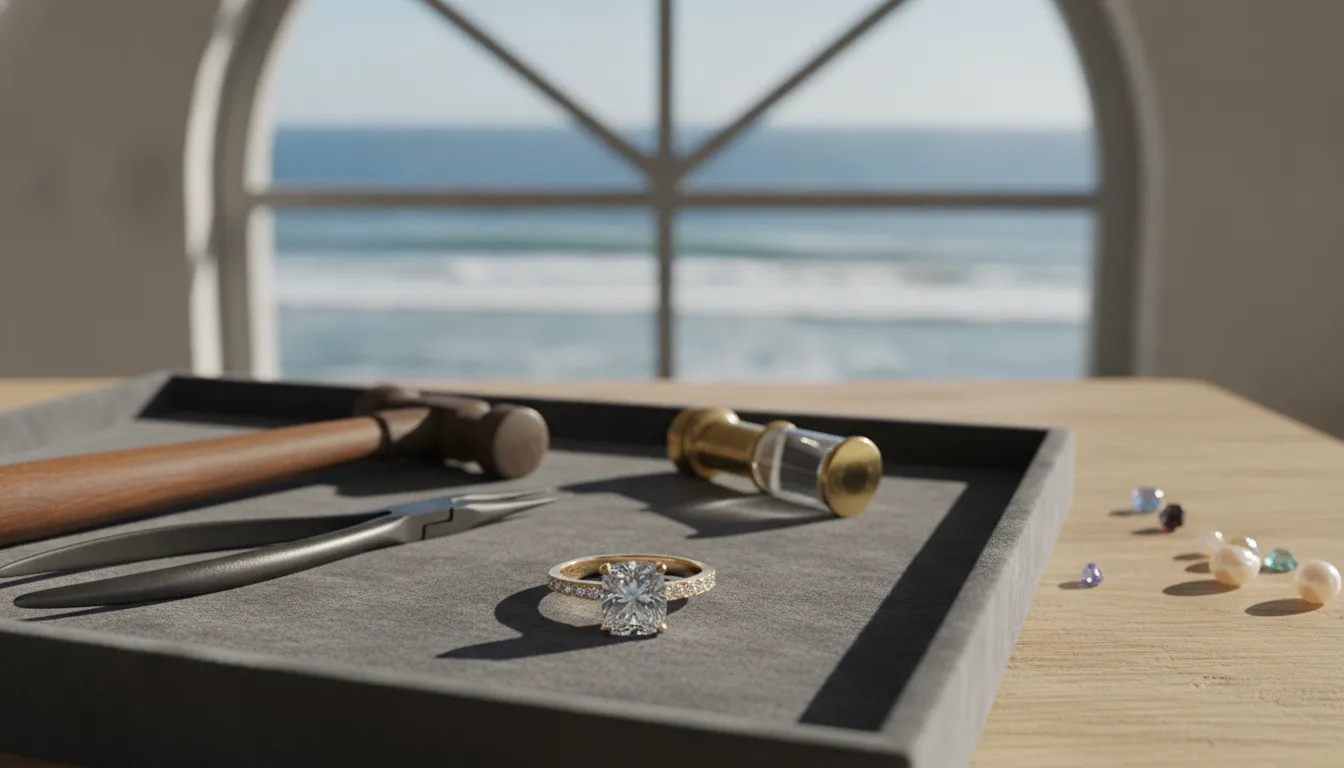
Existing metal should be treated as a consultation-based consideration rather than an automatic promise. Its karat, alloy, condition, previous repairs, and amount available can affect whether it can be incorporated directly. In some projects, new metal may be recommended to provide the strength, color, or volume the design requires.
Kravit's in-house custom design team can use CAD/CAM technology to develop a personalized concept around the elements worth keeping. Reviewing a concept before fabrication can help you consider proportions, stone placement, profile, scale, and wearability. It also creates an opportunity to clarify which materials are intended for reuse.
For additional inspiration, explore these ring redesign ideas and consider which details feel essential to the story. A design professional can then help translate that preference into a realistic plan.
See Kravit's custom jewelry design options
What Should You Preserve When an Old Wedding Ring Has Sentimental Value?
In brief: Kravit Jewelers can help you preserve the details that carry the most meaning. Whether that is a center stone, engraving, distinctive setting, original metal, or the story of who wore the ring. You do not have to preserve every component in its original form. A careful evaluation can help you decide what should remain unchanged, what can be adapted, and what should be documented.
Sentimental value can live in different parts of a ring. For one person, it may be the stone. For another, it may be an inscription, a family connection, or the fact that the ring was worn during a meaningful chapter. Naming the important element first makes a redesign or preservation decision more personal and less driven by trends.
Photograph the ring from several angles before any repair, resetting, or redesign. Record inscriptions, hallmarks, known dates, and the names of people connected to it. If you have receipts, appraisals, laboratory reports, or repair records, keep copies with the family history. Documentation will not replace the ring, but it can help preserve context for the next owner.
When discussing a redesign, ask whether a meaningful detail can remain visible or be incorporated discreetly. A jeweler may be able to preserve a stone, engraving, or portion of the original design, but the answer depends on the ring's condition and the intended use. Do not assume that every part can be reused without inspection.
If the ring has emotional weight, give yourself permission to pause. Store it safely while you consider the decision. You can also ask for a consultation that focuses on possibilities rather than immediate fabrication or sale. A thoughtful process makes room for the history of the piece and the life you want it to have next.
What Are the Safest Ways to Store or Pass Down an Old Wedding Ring?
In brief: Kravit Jewelers recommends storing an old wedding ring in a clean, lined jewelry box or individual soft pouch. Keep it away from household chemicals, excessive heat, and other pieces that may scratch or catch its setting. If you plan to pass it down, preserve its history in writing and document its condition before transferring ownership.
You do not have to decide a ring's permanent future while emotions are still changing. Storing it carefully for a period of time is a considered choice, not an unfinished one. If you eventually want to redesign or sell it, careful storage helps preserve the options available to you.
Keep the ring in a dry, stable environment. Avoid placing it loose in a drawer with other pieces, where prongs can catch on fabric and gemstones can scratch. Do not leave a delicate ring in a bathroom, near a window with prolonged direct sunlight, or beside cleaning products. If a stone is loose or the band is damaged, limit handling until a jeweler can examine it.
Preserve the ring's history alongside the ring itself. Write down who wore it, when it was acquired if known, where it came from, and any family stories connected to it. Add photographs and copies of appraisals, receipts, or repair records. A short note in your own words can be just as valuable as formal documentation because it gives future family members the meaning behind the piece.
If you hope to pass the ring to a child, grandchild, or another relative, discuss the intention rather than assuming the recipient will understand it. Some families preserve a ring exactly as it is. Others choose a future reset, resizing, or restoration so the piece can be worn safely. The choice should respect both the ring's condition and the recipient's connection to it.
Consider a professional appraisal before transferring ownership, insuring the ring, or making a substantial repair. An appraisal can document condition and characteristics, but sentimental value may not be reflected in a market figure. A consultation gives your family time to compare preservation, repair, and redesign without committing to a particular outcome.
What Should You Do Before Bringing an Old Wedding Ring to a Jeweler?
In brief: Kravit Jewelers recommends preparing the ring's history, documenting its visible condition, protecting loose stones, and identifying your preferred outcome before evaluation. You do not need to choose between selling, repairing, or redesigning in advance. Preparation simply makes the conversation more focused and helps preserve information that may otherwise be forgotten.
- Gather the ring's history. Write down what you know about when and where it was purchased, who wore it, and whether it has been resized, repaired, or altered. Look for receipts, prior appraisals, insurance records, certificates, or family notes.
- Inspect and photograph the ring. In good light, take photos of the top, underside, hallmark, and any engraving. Note loose stones, bent prongs, worn areas, cracks, missing accents, or discoloration. Photos cannot determine value, but they can document condition before handling.
- Decide what you hope to accomplish. Consider whether you want to wear the ring again, restore its appearance, reset its stones. Create a different piece, preserve it as an heirloom, or learn about selling options. You do not need a final design before your visit.
- Protect loose stones and fragile details. If a stone moves, a prong catches on fabric, or the band is visibly damaged, place the ring in a secure jewelry box or soft pouch. Avoid wearing it, bending the setting, or placing it in household cleaners.
- Ask how the evaluation works. Confirm whether an appraisal, repair assessment, gold evaluation, or design consultation is appropriate. Ask about handling, recommended work, material reuse, and which steps require your approval.
In short: Bring the ring's history, document its condition, secure any loose stones, and arrive with an intended outcome in mind. The right evaluation can separate sentimental value, material value, and the practical considerations of making the piece wearable or meaningful again.
Discuss gold buying and old wedding ring options with Kravit
Frequently Asked Questions
What can I do with my old wedding rings?
You can sell the ring, restore it, resize it for another finger, redesign it into a new piece, reset its stones, or preserve it as an heirloom. The best choice depends on the ring's condition, materials, sentimental importance, and how you want to use it now.
How can I repurpose an old wedding ring into new jewelry?
A jeweler may be able to reset its stones into a necklace, bracelet, or earrings, or incorporate some metal into a new design. A custom consultation helps determine which parts can be safely reused. It can also show how the finished piece may reflect your current style.
Should I sell or redesign an old wedding ring?
Sell it if you no longer want the piece and prefer to release its materials. Redesign it if the stones or sentimental history still matter to you. Before deciding, ask for a professional evaluation so you understand the ring's condition, materials, and available options.
Can I resize an old wedding ring to wear on another finger?
Often, yes. Resizing may make it suitable as a right-hand ring or for another finger, although the design, stone settings, metal, and amount of adjustment affect what is practical. Have it inspected before wearing it regularly, especially if it has worn prongs or a thin band.
Should I save my old wedding ring as a family heirloom?
If you are not ready to sell or change it, safe storage is a reasonable choice. Keep the ring in a protective container and record its history, materials, and condition. That documentation can help preserve its meaning when you eventually pass it to a family member.
Ready to Choose a New Purpose for Your Old Wedding Ring?
Whether you are considering a thoughtful redesign, a careful repair, or a conversation about selling, Kravit Jewelers can help you weigh the ring's condition, materials, and personal meaning. The Oceanside showroom offers approachable guidance for Long Island families making a clear, respectful decision about a piece with history.


