



A watch complication is any function on a watch beyond simply telling the hours, minutes, and seconds. The term may sound technical, but the idea is straightforward: a calendar, stopwatch, second time zone, or moon-phase display adds information or utility to the dial. If you are asking what is a watch complication, the best answer is that it is an added function, and the right one depends on how you expect to wear the watch.
What makes a watch function a complication?
In traditional watchmaking, the basic time display is the starting point. Any additional indication or mechanism is commonly called a complication. Some are designed to make everyday timekeeping more useful. Others add a specialized display or a demanding mechanical feature that appeals to collectors.
A complication does not automatically mean a watch is better or more accurate. It means the watch does more than display basic time. A simple date window and a highly complex calendar are both complications, but they differ greatly in purpose, construction, and ease of use.
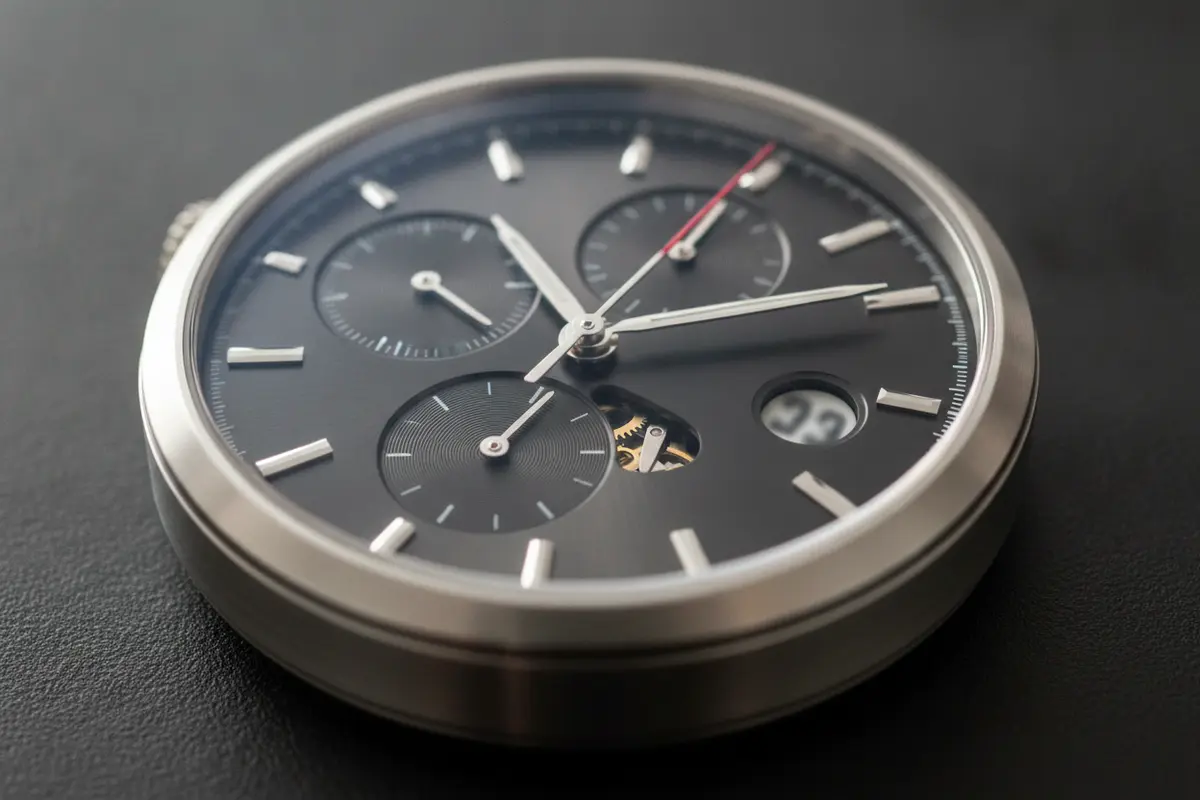
The word can also refer to the function itself, not just the visible dial element. A chronograph, for example, has a timing function controlled by pushers. Its subdials show elapsed time, while the primary hands continue to show the current time.
It helps to separate three ideas when looking at a watch: the function, the display, and the mechanism behind it. The function is what information or action the watch provides. The display is how that information appears on the dial. The mechanism is how the movement produces it. Two watches may offer a similar function but present it differently, so a familiar label alone cannot tell you whether a particular dial will suit you.
Which watch complications are most useful day to day?
The most useful function is the one you will actually use. Before comparing watches, think about routines: Do you travel across time zones? Do you need to time an activity? Do you prefer a quick date reference? Your answers can narrow the field more effectively than choosing a watch by the number of features.
| Complication | What it indicates | Best question to ask |
|---|---|---|
| Date display | The day of the month | Is it easy to read and set? |
| Chronograph | Elapsed time, usually started and stopped with pushers | Will I use the timing function often? |
| GMT or second time zone | Time in another zone | Can I distinguish the second time from local time at a glance? |
| Moon phase | The moon's current phase as represented on the dial | Do I value the display aesthetically or practically? |
| Annual or perpetual calendar | Calendar information with varying levels of automatic adjustment | What corrections and setting steps does the specific model require? |
Use this comparison as a starting point, not a ranking. A useful selection exercise is to name one situation in which you would use each feature. If you cannot think of a real situation for a display, it may be an aesthetic choice rather than a practical requirement—and that is still a valid preference. The important thing is to know which reason is guiding your decision.
How does a date complication work?
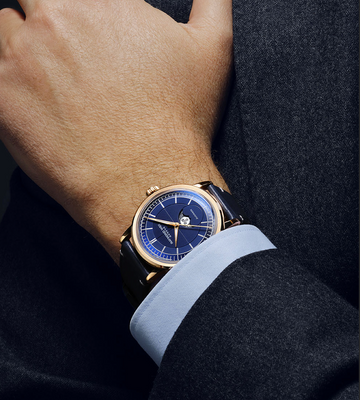
A date complication displays the calendar date, often through a small aperture or a pointer around the dial. On many watches, the date changes through the movement at a set time. The exact setting procedure varies by watch, so the owner's instructions matter, especially when adjusting the calendar.
Some date displays require correction at the end of shorter months. More advanced calendar mechanisms can account for additional calendar patterns, but their operation differs by model. Do not assume that every calendar watch adjusts itself in the same way. Ask how to set the particular watch and whether there are times when changing the date should be avoided.
Legibility is worth considering. A date window can be useful, but its location, size, contrast, and magnification affect how quickly it can be read. If you rely on the calendar, try reading it from your normal viewing distance before deciding. Look at the date alongside the hour markers and hands: a window that is technically present may still feel inconvenient if it blends into the dial or sits in a spot you rarely notice.
Also consider how the calendar fits your habits. If you wear one watch most days, a quick date reference may be useful. If you rotate among several watches, you may need to reset the date more often after a watch has stopped. That small ownership detail can matter as much as the visual design, particularly if you prefer a watch that is ready to wear without extra adjustments.
What does a chronograph do?
A chronograph is a stopwatch function built into a watch. Pushers typically start, stop, and reset elapsed-time measurement, while separate hands or subdials record the result. It can help time a cooking interval, a walk, or another activity without replacing the ordinary time display.
Chronographs vary in layout. Some have a central seconds hand for timing and smaller counters for longer intervals. Others present the counters differently. When comparing them, check which pusher controls each action, how the counters are read, and whether the dial remains clear to you. A busy dial may look appealing yet be less convenient if quick reading is your priority.
For a buyer, operation matters as much as appearance. Ask for a demonstration and try the start, stop, and reset sequence. Confirm the watch's instructions for use rather than assuming every chronograph works identically.
Think through the kind of interval you would time. A short task may be easy to track with a central seconds hand, while longer periods require reading a counter as well. If you intend to use the function regularly, test the controls with the watch on your wrist and see whether you can operate them comfortably. Notice whether the pushers are easy to identify and whether the elapsed-time indication is distinct from the hands that show the current time.
A chronograph can also add visual complexity whether or not you use the stopwatch. If you like the appearance, consider whether the subdials make the primary time harder to read. The right choice balances the function you want with the clarity and feel of the whole watch.
How can a second time zone help a traveler?
A GMT or other second-time-zone complication can display a second local time alongside the time where you are. It may be useful for frequent travel or for staying in touch with family, colleagues, or clients in another region. Designs differ: some use an additional hand and a 24-hour scale, while others use a separate display.
Before choosing one, consider whether you want to read a second time at a glance or adjust the local time while traveling. Look at the dial and identify which hand or indicator corresponds to each time. A clear display can make the function more practical than one with extra markings that are difficult to distinguish.
Try a simple reading exercise: identify the local time, then find the second-zone time without moving the watch or pausing to decode the dial. If the display uses a 24-hour scale, ask how to interpret it and how the additional hand relates to the ordinary hour hand. The method of setting the second zone can vary, so check the instructions for the exact model.
Travel habits can help decide whether the feature is worthwhile. A frequent traveler may want to keep home time visible while changing the local time. Someone who rarely travels but regularly coordinates with people in another region may still appreciate a fixed second-time reference. In either case, compare the reading process rather than choosing based on the GMT label alone.
What does a moon-phase display show?
A moon-phase display represents the phase of the moon through a small aperture or rotating disc. It is a traditional complication that can add visual character and a connection to the lunar cycle. For many owners, its appeal is as much about design and watchmaking as it is about daily utility.
Ask how the display is adjusted and what the maker's instructions say about keeping it aligned. Compare the detail and legibility in person: a moon-phase indication may be subtle, prominent, or integrated into a broader calendar display.
Because this display is often chosen for its visual character, judge it in context with the rest of the dial. Notice its size, contrast, and placement. Does it draw the eye away from the time, or does it feel balanced? Consider whether you enjoy having a detail that invites a closer look even if it is not information you need every day. The distinction between functional necessity and personal enjoyment is useful throughout a watch decision.
How do calendar complications differ?
Calendar complications range from a simple date to more elaborate indications of the day, month, or calendar cycle. A complete calendar may show several pieces of information but still require correction at certain points in the year. An annual calendar is designed to account for months of different lengths, while a perpetual calendar is built to handle a longer calendar cycle with fewer manual corrections under its intended operating conditions.
These names describe different capabilities, not a promise that a watch never needs attention or adjustment. The exact behavior and setting process depend on the model. Review the manufacturer's documentation and ask a knowledgeable professional to explain the watch's specific calendar before purchase.
When comparing calendar watches, count the information you will actually read. A day and date may be enough for one person; another may value a month indication or a more elaborate display. More information can be helpful, but it can also add steps when setting the watch and more visual elements to interpret. Ask what the watch does after it stops, what the correct setting sequence is, and whether the instructions include cautions for calendar adjustment.
How should you compare watches with complications?
A practical comparison starts with use, then moves to fit and ownership. A complication is most satisfying when it is readable, understandable, and suited to your routine.
- Name the task. Decide what information you want the watch to provide, such as the date, elapsed time, or another time zone.
- Check legibility. Read the display in the lighting and at the distance where you expect to use it.
- Try the controls. If the watch has pushers or multiple setting functions, ask for a demonstration.
- Understand the calendar. Ask how often it may need correction and where to find the model-specific instructions.
- Consider the whole dial. Additional indicators can add visual interest, but make sure the primary time display remains easy for you to read.
- Ask about care. Confirm the manufacturer's guidance for operation and maintenance for the specific watch rather than relying on general assumptions.
Look at more than the complication label when comparing a few examples. The timepieces collection offers a starting point for seeing different watch styles. Product pages such as this timepiece example and another watch design can help you think about dial layout and overall presentation; always check the specific model's current details rather than inferring functions from appearance.
One way to make an in-person comparison more useful is to write down the two or three functions you care about before you arrive. For each watch, note whether the display is immediately clear, whether the controls feel comfortable, and whether the setting process seems manageable. This keeps the discussion grounded in your own preferences instead of the number of features or the complexity of the movement.
What should you ask before choosing a complication?
Turn general interest into a short list of practical questions. Ask what each hand, subdial, or window displays, how to operate the controls, and how to set the function. If the watch includes a calendar, ask what corrections may be needed and where to find the manufacturer's instructions. For a second-time-zone display, ask which indicator corresponds to home time and which to local time.
It also helps to discuss your normal use. A buyer who travels often may value a clear second time display, while someone who wants a simple daily reference may prefer a date window. A collector may enjoy a more elaborate mechanism even if it is not essential for everyday routines. These are different priorities, not a single scale of better or worse.
When you handle a watch, take a moment to read it as you would during an ordinary day. Check the primary hands first, then locate the added function. Try the crown or pushers only as the seller or manufacturer recommends. A brief demonstration can reveal whether the dial feels intuitive or demands more attention than you want to give it.
For an in-person comparison, bring your questions and take time to handle the watches. Kravit Jewelers is a family-owned jeweler in Oceanside serving Long Island, and its showroom offers a setting to discuss timepiece features with a sales professional. Browse the timepieces collection or consider an example like this pre-owned timepiece listing to see how a calendar can appear in a watch design.
For background on how watch functions are presented in an accessible educational setting, consult the Khan Academy explanation of mathematical functions. That lesson is about mathematics rather than watchmaking, so it does not define horological complications; rely on the manufacturer's watch documentation for operating guidance.
Before settling on a particular model, make sure you understand both what it indicates and how you will interact with it. Ask for the manufacturer's manual or a demonstration where appropriate. A clear explanation of the controls and corrections can prevent small surprises after the watch becomes part of your regular routine.
Frequently asked questions about watch complications
Is a complication the same as a decorative dial detail?
Not necessarily. A complication is a function beyond basic time display, such as a date or stopwatch. Decorative elements may add visual detail without performing an additional timekeeping or calendar function.
Does a watch with more complications keep better time?
No. The number of functions does not by itself determine timekeeping accuracy. Accuracy depends on the specific movement and its condition, among other factors. Compare a watch's functions separately from its performance specifications.
Is a chronograph difficult to use?
Many chronographs have straightforward start, stop, and reset controls, but layouts and operating instructions vary. Ask to see the controls demonstrated and review the instructions for the specific model.
Which complication should a first-time buyer choose?
Start with the information you expect to use. A date display may be convenient for everyday wear, while a chronograph or second time zone can suit a particular routine. Try the display in person and choose the function you find clear and useful.
What should you remember before choosing?
A watch complication adds a function beyond basic time display, but usefulness is personal. Learn what each indicator does, test its readability, and ask how to operate it. A thoughtful comparison helps you choose a timepiece whose features fit your habits and taste.


