



If you are wondering how much does a custom engagement ring cost, the most useful answer is that the final amount depends on the choices made for that particular ring. The center stone, precious metal, setting, level of detail, and design revisions all affect the total. A consultation can turn a broad budget into a thoughtful set of options without relying on a one-size-fits-all estimate.
What determines the cost of a custom engagement ring?
A custom ring is not simply a standard ring with a different look. Its cost comes from the materials selected and the work required to bring the design together. The most important choices are usually the center stone, the metal, the setting, and the amount of individual detail.
Think of the budget as a group of decisions rather than one fixed number. For example, a design with a modest center stone and a simple setting can have a very different cost from a ring with a larger or more elaborate stone, intricate metalwork, and accent stones. The goal is to decide which features matter most to you, then shape the rest of the design around them.
How does the center stone affect the budget?
The center stone is often one of the largest variables. For a diamond, price can differ substantially based on the combination of carat weight, cut, color, and clarity. Two stones with the same carat weight may not look alike or have the same value. A change in one characteristic may make room in the budget for another priority.
Start by describing the look you want rather than locking into a single specification. Do you want a stone that appears larger face-up, a particular shape, or a certain balance of brightness and color? Comparing options in person can make trade-offs easier to understand. The Gemological Institute of America explains the factors behind engagement ring costs and why preferences and choices affect what a buyer spends: GIA's overview of engagement ring cost.
A colored gemstone, a diamond with a different shape, or a center stone with a distinct appearance will lead to a different set of design considerations. Discuss the qualities you value, the budget you want to stay within, and any details you are flexible about. Avoid assuming that one grade or size is required for a beautiful result.
Which metal and setting choices change the total?
The ring's precious metal contributes to the materials cost, while the setting affects both the look and the work involved. A simple solitaire has a different construction from a halo, a multi-stone design, or a ring with detailed shoulders. Prongs, bezels, side stones, engraving, and shaped bands each add design decisions that may affect the finished piece.
Use these comparisons as a starting point for discussing priorities, not as a quote:
| Choice | What it changes | Budget question to ask |
|---|---|---|
| Center stone | Stone type, size, shape, and quality characteristics | Which visible qualities matter most to me? |
| Metal | Material selection and the appearance of the ring | Which metal suits my preferred look and daily wear? |
| Setting | How the center stone is held and how the ring is styled | Would I prefer a clean, simple design or added detail? |
| Accent stones and details | Additional materials and setting work | Which details are essential, and which are optional? |
| Design changes | Time and work needed to refine the concept | How will revisions be reviewed before the design is finalized? |
How does design complexity influence custom ring cost?
Complexity is about more than how ornate a ring looks. A design may involve carefully shaped metal, multiple stones, unusual proportions, or details that need to work together while remaining comfortable to wear. More elements can mean more decisions and more intricate work than a straightforward silhouette.
Bring reference images if you have them, but explain what you like in each one. Perhaps one image has the right profile, while another has a setting detail you prefer. This helps distinguish the essential features from inspiration that can be adapted. A custom design does not need to reproduce every reference exactly.
How do revisions and design choices fit into the process?
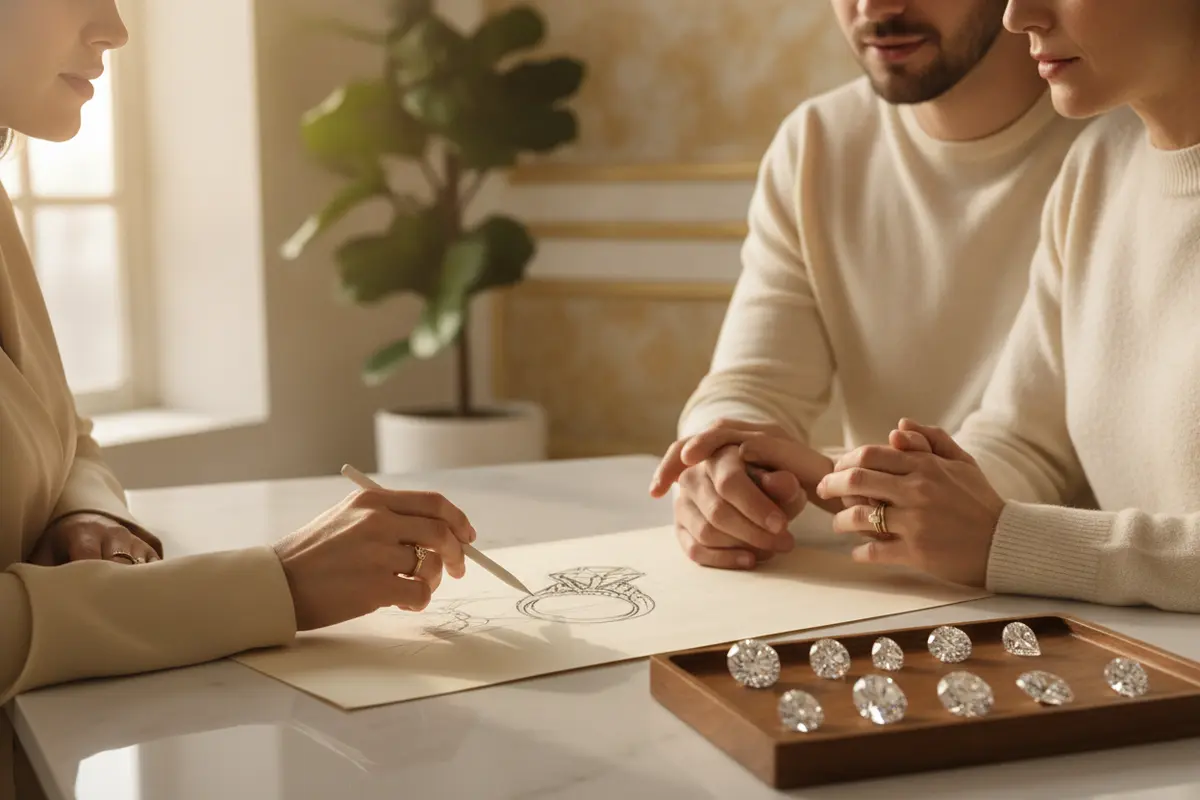
Every custom project has its own scope, so ask how the design process works before making assumptions about timing, included revisions, or final cost. Clarify when material and stone choices are confirmed, how proposed changes are reviewed, and when you will approve the design. These questions help you understand what decisions remain open and which ones may affect the quote.
Keep a short list of non-negotiables and flexible details. For example, your priority may be a particular center-stone shape, while the band profile or accent stones can remain open. Having that distinction makes it easier to explore alternatives if a preferred combination does not fit the budget.
How can you set a budget before a design appointment?
Choose a comfortable spending range before looking at detailed options. This gives the jeweler useful context while leaving room to discuss what the design can achieve. You do not need to decide every specification in advance. In fact, flexibility on one or two features can help preserve the overall look you want.
- Set a maximum. Decide what total feels responsible for you, rather than relying on a general spending rule.
- Rank priorities. List the two or three characteristics that matter most, such as stone shape, metal color, or a particular setting detail.
- Identify flexible choices. Consider where an alternative might work, such as changing accent stones or simplifying the band.
- Ask what the estimate includes. Confirm which materials and design work are reflected, and whether changes could alter the amount.
- Review the whole design. Consider appearance, comfort, and how the ring will be worn—not just one specification.
For inspiration, browse fine ring styles and wedding bands to note shapes and details that appeal to you. Examples can help you explain your taste, but a finished custom design will depend on the choices made for your own ring.
What should you ask during a custom engagement-ring consultation?
A productive consultation should leave you with a clearer understanding of your options and the decisions that shape the cost. Consider asking:
- Which parts of my design idea are likely to have the greatest effect on the total?
- Can I compare a few center-stone options within my budget?
- What alternatives could preserve the look while simplifying the design?
- How are design revisions handled, and when is the design considered approved?
- What materials and work are included in the proposed amount?
- What information should I bring before the next step?
For a locally guided conversation, Kravit Jewelers has served Long Island from Oceanside since 1927 as a three-generation family-owned jeweler. Its fine jewelry selection can also offer examples of different ring styles to discuss.
Browse wedding bands and ring styles
How can you compare design directions without losing sight of budget?
When an idea has several possible interpretations, compare a small number of complete directions rather than evaluating each detail in isolation. One version might prioritize a distinctive center stone and keep the band understated. Another might use a simpler center stone and devote more attention to side stones or a shaped band. Looking at whole concepts helps you judge how the elements work together and what matters most to you.
Ask for the options to be explained in comparable terms. If the center stone changes between versions, note its shape, approximate dimensions, and the qualities being compared. If the setting changes, identify whether the difference is in the number of stones, the amount of metalwork, or the profile. That way, you are not comparing a detailed design with a simple one while overlooking the underlying differences.
It can help to make a short decision sheet after the discussion. Record the concept name or sketch reference, the features you want to preserve, the parts you would change, and the questions still open. If you revisit the options later, these notes reduce the risk of confusing one version with another. Keep the proposed amount associated with the exact design it describes, rather than treating it as a general price for any custom ring.
What practical details should the design account for?
Appearance is only one part of a ring that will be worn regularly. Think through how the ring should feel on the hand, what kinds of activities the wearer does, and whether the profile should sit close to other jewelry. A taller setting may create a different look and feel from a lower profile. A band with elaborate details may have different comfort considerations from a smooth, simple band. These are useful design questions to raise, not reasons to assume one construction is right for everyone.
Consider how the engagement ring may sit beside a wedding band. If you expect to wear both together, mention that early and look at the relationship between their shapes. A straight band, a contoured band, and a band with a gap can create distinct pairings. You can browse wedding band designs for visual references, then discuss whether the pairing should be close, matched, or intentionally contrasting.
Daily wear also makes maintenance and future care worth discussing. Ask how the proposed design may affect routine inspection or cleaning and whether any details need particular attention. The answers can help you weigh a delicate decorative element against a simpler alternative. Do not assume that every setting or stone arrangement has identical care needs; ask about the actual design under consideration.
How should you prepare for the consultation?
A little preparation can make the appointment more focused without requiring you to arrive with a finished design. Bring inspiration images, but annotate what each image communicates to you: the stone shape, the band width, a side view, or the overall mood. Images are starting points, not specifications. Naming the feature you like helps the jeweler suggest an interpretation that fits your preferences.
- Choose a working budget range. Be clear about a comfortable ceiling and whether it includes every part of the ring purchase.
- Write down priorities. Separate must-haves from features you would enjoy but could change.
- Collect useful references. Include different angles when possible, and note the detail you want to discuss in each image.
- Think about wear. Consider comfort, the wearer's routine, and whether the ring should pair with another band.
- Bring questions. Ask about the steps from concept to approval, what each estimate covers, and how revisions are considered.
If the ring is a surprise, consider how to gather preferences discreetly. A trusted friend or family member may know the wearer's style, or you might notice the jewelry they already choose. Pay attention to whether they favor clean lines, colored stones, warm or cool metal tones, and understated or more detailed designs. Treat these clues as helpful context, not a substitute for professional guidance about construction and fit.
What belongs in a custom ring estimate?
An estimate is most useful when it identifies the design and choices it applies to. Ask whether it reflects the selected center stone, metal, setting, accent stones, and agreed design details. Confirm how long the estimate is valid, whether any selection remains provisional, and what happens if a material or design element changes. These questions are especially helpful when you are comparing alternatives or deciding whether to adjust one feature.
Use a simple comparison record so you can review options later:
| Record for each option | What to note | Why it helps |
|---|---|---|
| Center stone | Type, shape, and qualities being compared | Keeps stone differences visible when weighing choices |
| Metal and setting | Material, profile, and construction details | Clarifies how the ring will look and sit on the hand |
| Design features | Accent stones, engraving, and other requested details | Separates essential details from optional additions |
| Estimate scope | Included selections and any unresolved choices | Shows what the proposed amount actually describes |
| Open questions | Revision process, timing, and care considerations | Gives you a clear list to resolve before approval |
Keep the written notes with the corresponding sketch or design version. If you request a change, ask whether that change affects the estimate and whether you will review the updated version before approval. A clear record of what was discussed helps both sides stay focused on the same design rather than an earlier concept.
How can you make a confident choice?
The cost of a custom engagement ring reflects the combination of stone, materials, design detail, and the work needed to create the piece. Set a comfortable budget, be clear about what matters most, and ask how each choice affects the proposed design. An in-person consultation can help you compare possibilities and make decisions at a pace that feels right.
To make the next discussion productive, bring a few reference images, a comfortable budget range, and a short list of priorities. You can then compare complete design directions, clarify what each estimate covers, and decide which details deserve the most attention. The right starting point is not a universal price rule but a clear conversation about the ring you want.


