
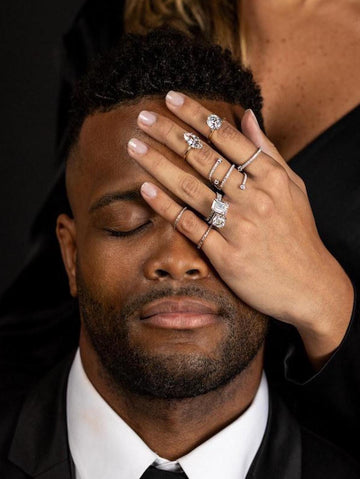



When comparing HPHT vs CVD diamonds, you are comparing two methods used to grow diamonds in a laboratory. Both create diamond material, but the growth conditions differ. The method alone does not determine which stone is right for you; compare each diamond, its documentation, and your preferences.
Explore a diamond jewelry example
What is the difference between HPHT and CVD diamonds?
HPHT means high pressure, high temperature. A carbon source crystallizes around a diamond seed under intense pressure and heat. CVD means chemical vapor deposition. Carbon-containing gas is used in a controlled chamber, where carbon deposits onto a seed in layers. These are different growth processes, not a simple ranking of quality.
That distinction is useful, but it does not tell you how a finished diamond will look or how it will suit a particular piece of jewelry. The growth method is one piece of information about a stone’s origin. Cut, proportions, color, clarity, shape, and setting all affect the finished appearance. Two diamonds made using the same process can still differ from one another.
A useful way to frame the question is to separate origin, measurable characteristics, and personal preference. Origin tells you how the diamond material was grown. A grading or identification document may describe specific characteristics, depending on its scope. Your preference comes from seeing the individual stone and deciding whether its appearance and design fit what you want. Keeping those questions separate prevents the method label from doing too much work in your decision.
How does HPHT diamond growth work?
In HPHT growth, a seed crystal and carbon source are placed in a press. High pressure and temperature help carbon crystallize around the seed. The resulting crystal can be cut and polished for jewelry. Growth conditions can influence internal features, but shoppers should not treat these details as a visual identification test. Appropriate instruments and expertise are needed to assess a stone.
The phrase “high pressure, high temperature” describes the environment used during growth. It is not a grade for the finished diamond, and it does not guarantee a particular color, clarity, or level of brilliance. When reviewing a candidate, separate the manufacturing description from the quality information shown on its grading or identification documents.
For a practical comparison, note the stated method in one column of your notes, then record the stone’s actual characteristics separately. For example, if one listing names HPHT but gives little detail about the stone, the method does not fill in missing information about shape, dimensions, or appearance. Ask for the details that let you assess the specific diamond rather than treating the process label as a substitute.
How does CVD diamond growth work?
CVD growth begins with a thin diamond seed in a chamber. Carbon-rich gas is introduced, and energy breaks gas molecules apart. Carbon atoms deposit onto the seed over time, building diamond material in layers. Depending on the individual stone, further processing may follow growth.
Growth patterns can leave clues specialists examine. The Gemological Institute of America reports that CVD synthetic diamonds tend to display banded strain patterns, which can help scientists distinguish them from HPHT synthetic diamonds. This is a technical observation, not a promise that every stone shows an obvious pattern. Read GIA’s overview of HPHT and CVD growth processes.
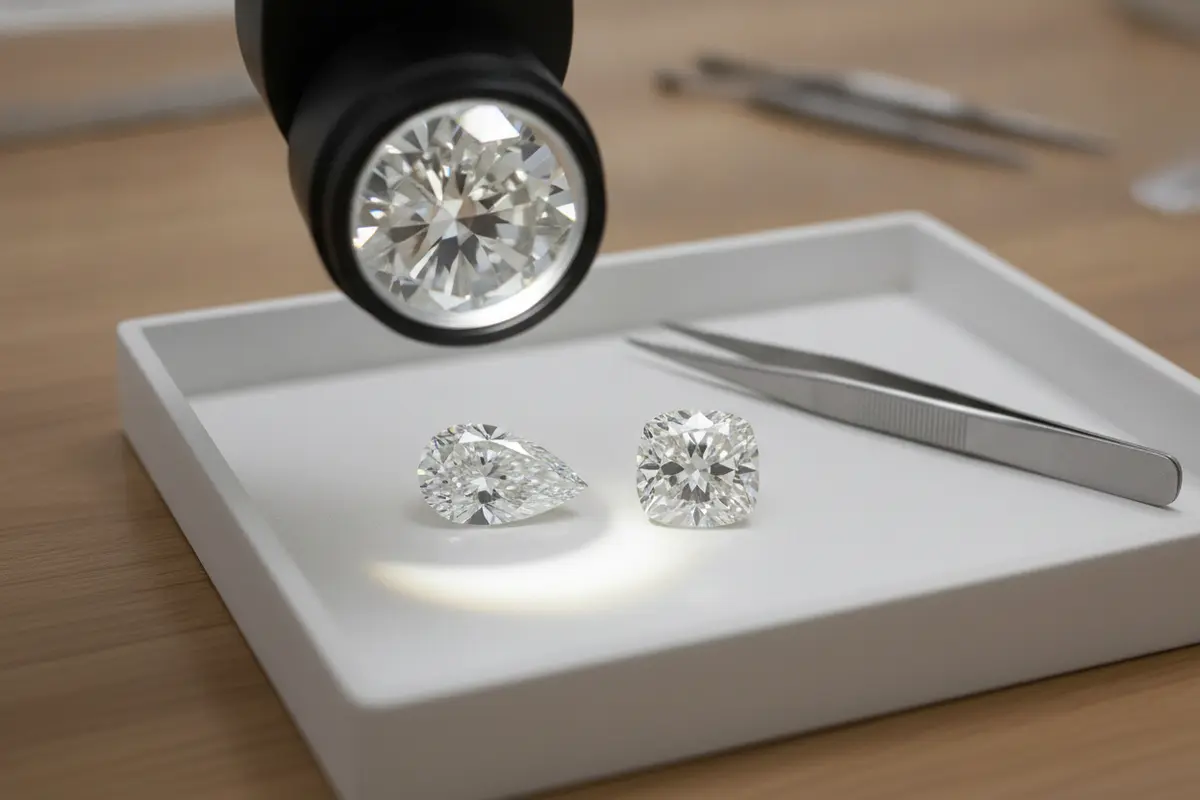
Can you tell HPHT and CVD diamonds apart by looking?
Usually, a shopper should not expect to identify the growth method with the unaided eye. Both methods can produce diamonds used in jewelry, and cutting and polishing affect appearance. Internal features may be detectable with specialized instruments, but they require expertise to interpret. Review stone-specific documentation and ask whether it refers to the exact diamond you are considering.
Lighting, viewing angle, mounting, and surrounding metal can also influence what you notice. A loose stone viewed under inspection lighting may appear different from the same stone set in a ring or earrings and seen in everyday conditions. This is one reason to avoid drawing conclusions from a quick glance or a single photograph.
If a listing identifies a growth method, treat that statement as information to verify rather than something you must independently diagnose. Ask what documentation accompanies the stone and whether its identifying details match the item being discussed. A professional can explain which observations are relevant and what the available report does or does not establish.
When viewing in person, take a moment to look at the stone from more than one angle. Notice whether the outline looks balanced to you, whether the face-up appearance meets your expectations, and whether any visible characteristic draws your attention. Then ask whether the lighting or setting is affecting the view. You are not trying to perform a laboratory examination; you are building a clear impression of the finished diamond and identifying questions for a knowledgeable professional.
Which factors should you compare beyond the growth method?
Use the growth method as one detail in a broader comparison. Consider the cut, color, clarity, carat weight, shape, and setting. Ask how inclusions or color characteristics affect appearance. Check that grading or identification information corresponds to the specific stone, and ask what the document verifies. Think about how the diamond will be mounted and worn. Two stones grown by the same method can differ in these qualities, and those distinctions may matter more to your choice than the process label.
It helps to compare stones with a clear priority list. You might care most about a shape that suits a particular design, a certain face-up size, or a particular balance of color and clarity. Write down your priorities before viewing options. Then compare the stones against the same criteria instead of changing your standard each time a new feature catches your attention.
Cut and shape
Shape refers to the outline of the diamond, such as round or oval. Cut relates to the proportions and finish that influence how a diamond handles light. These terms are not interchangeable. If sparkle and visual balance matter to you, compare the actual stones and ask how their proportions contribute to what you see. A growth method by itself cannot answer that question.
Color and clarity
Color and clarity are separate characteristics. Color describes the degree of color apparent under grading conditions, while clarity concerns internal or surface characteristics. The presence of a characteristic does not automatically tell you whether it will be noticeable in normal wear. Ask to view the diamond and have the relevant details explained in context rather than relying on a number without seeing the stone.
Carat weight and dimensions
Carat weight is a measure of weight, not a direct measurement of face-up size. A diamond’s shape and proportions affect how large it appears from above. If you are comparing two options, look at the listed dimensions alongside carat weight and view the stones from a similar angle. The setting can also influence the overall impression once the diamond is mounted.
Setting and intended use
A stone chosen for earrings may have different practical considerations from one selected for a ring. Think about the design, how often the jewelry will be worn, and the look you want from the finished piece. The setting frames the diamond and affects its presentation, so consider the complete jewelry piece rather than judging the loose stone in isolation. You can view a diamond jewelry example while considering how a mounted stone is presented.
Try to compare like with like when possible. Two loose stones in the same shape make it easier to focus on their individual appearance. If your real decision is between finished pieces, compare the complete designs instead, including how prominent the stones look and how the settings frame them. A written list of questions can help you avoid switching between comparisons that answer different things.
What are the practical differences between HPHT and CVD?
This table summarizes broad process distinctions. It is not a quality scorecard; individual stones vary, and their documentation should be assessed separately.
| Comparison point | HPHT | CVD |
|---|---|---|
| Full name | High pressure, high temperature | Chemical vapor deposition |
| Growth approach | Carbon crystallizes around a seed under pressure and heat | Carbon deposits onto a seed from gas in a chamber |
| Possible clue | Specialists assess internal characteristics | GIA notes banded strain patterns tend to occur |
| Buyer’s next step | Compare the individual stone, documentation, setting, and your preferences rather than choosing by method alone. | |
The table describes process-level differences, not a prediction of price, beauty, durability, or suitability. A general explanation of how a stone was grown cannot replace the details for a particular diamond. If a description gives the method but does not make clear what documentation is available, ask for clarification before making a comparison.
Use the comparison as a prompt for questions, not as a scorecard. If the method is important to you, confirm that the description identifies the specific stone and ask what supports that identification. If appearance is your main concern, spend more time comparing the stones under similar conditions. If the finished jewelry matters most, consider the mounting and design alongside the diamond. Different shoppers may reasonably prioritize these considerations differently.
How should you review a diamond’s documentation?
Start by checking that the report or identification document is tied to the specific stone being offered. Look for identifying information and ask the seller to show how it corresponds to the diamond. Confirm the document’s stated scope: some documents describe grading characteristics, while other records may focus on identity or origin. Do not assume every document answers every question.
Read the document alongside the product description. If wording differs, ask which details are current and how the discrepancy will be resolved. You can also ask whether the stone has undergone any post-growth treatment and where that information is disclosed. The goal is not to interpret technical language alone, but to understand what is being represented and what the supporting material verifies.
Keep the information with your purchase records. If you later need to identify or discuss the diamond, having the stone’s paperwork and item details together can make the conversation clearer. For a mounted piece, ask what documentation applies to the center diamond and what describes the finished jewelry as a whole.
A simple review routine can make this less daunting. First, match identifying details on the document to the item under discussion. Next, note the document’s stated purpose and the characteristics it actually lists. Then compare those details with the description and ask about any difference in wording. Finally, keep a copy with the purchase information. This routine does not require you to become an expert in gemological terminology; it helps you know what has been documented and what still needs clarification.
What questions should you ask before choosing?
A short conversation can clarify a product description. Ask whether the diamond is identified as HPHT-grown or CVD-grown and what documentation supports that. Does the report identify the exact stone? What are its cut, color, clarity, carat weight, and shape? Has it undergone post-growth treatment, and where is that disclosed? Can you compare it with another stone in a similar shape or size? How will the setting affect its look and wear?
Bring your priorities into the discussion. If shape, appearance, or setting matters most, say so early. That helps focus a comparison without assuming one method automatically meets your needs. You can also browse fine jewelry selections and note the details you want to discuss.
Consider writing down the answers as you go. A compact note might include the method stated, document available, shape and dimensions, features you notice in person, and any follow-up question. This is especially useful if you view several stones on different days. It lets you revisit your actual impressions instead of relying on memory or on whichever detail sounded most technical.
How can you compare two stones fairly?
A fair comparison uses consistent conditions and the same questions for each diamond. If possible, view both stones under similar lighting and from similar angles. Compare their documentation, dimensions, and stated characteristics side by side. If one option is mounted and another is loose, remember that the setting changes how you perceive the finished piece. Ask to see the relevant details in a way that makes the comparison meaningful.
Make a short checklist before you begin. Include the shape you prefer, the approximate size range you want to consider, the appearance qualities that matter to you, and any design or wear considerations. Then note what you learned about each stone. This avoids relying on memory, especially when two diamonds have similar descriptions or when you are considering more than one setting.
Try not to let a single label settle the decision. If one diamond is described as CVD and another as HPHT, that tells you their growth routes differ. It does not establish that one is automatically more attractive or better suited to your plans. Your decision can account for both the documented origin and the visible qualities you value.
For example, suppose you like the outline of one stone but prefer the face-up appearance of another. Record those as separate observations. Then ask whether a different setting or another stone in your preferred shape might address the tradeoff. This keeps the conversation practical. Rather than asking which growth method wins in general, you are asking which individual option best matches the priorities you have identified.
What should you consider when choosing jewelry with a lab-grown diamond?
Start with the piece you want to wear or give. A diamond selected for earrings, a pendant, or a ring is part of a larger design. Think about proportions, metal color, setting style, and how the piece fits the recipient’s preferences. An appealing loose stone may not be the best match for every design, so discuss the whole piece before settling on a direction.
For a gift, consider what you already know about the recipient’s style. Do they favor understated designs or a more prominent look? Do they wear similar jewelry often? If you are unsure, focus on the design preferences you can verify rather than guessing at a technical feature that may not be visible in everyday wear. A conversation in person can help you look at options side by side.
When comparing earrings, for example, consider how the pair will sit and how the stones look together. For a ring, the center stone, setting, and band form a single design. In either case, ask how the stones are matched and what information is provided for each. You may also explore fine jewelry selections in another collection to clarify what shapes and styles catch your eye.
Think through the practical context before settling on a design. Will the piece be worn often or reserved for special occasions? Do you want the diamond to be the focal point, or should it sit quietly within a broader design? These questions can help guide the balance of stone size, setting, and overall proportions. They also give a jeweler a clearer picture of what you hope the finished piece will feel like.
How can you make a confident choice?
Start with the individual diamond, not a generalized claim about its production method. Compare documented characteristics, appearance, and setting, then ask a jeweler to explain details you are unsure about. HPHT and CVD describe different growth processes, but neither label replaces a careful review of the finished stone.
A local consultation can help you talk through a diamond’s details and how it suits your preferences. Kravit Jewelers has served the Long Island community from Oceanside since 1927, with a high-touch, in-store approach to fine jewelry. With clear questions and stone-specific information, you can compare the methods without letting the method name make the decision for you.
Explore a diamond jewelry example
Take the time to review the actual stone and its supporting information, and choose the option that best fits the design and qualities you value.


