




If you are asking how to restring pearls, start by checking the thread, knots, and way the strand hangs. A strand that feels loose, shows gaps, or has a weakened-looking thread may need attention before it is worn again. Restringing replaces the cord that holds the pearls together; it is different from cleaning or repairing the pearls themselves.
Call to ask about having your pearl strand assessed
What signs suggest a pearl strand needs restringing?
Look closely at the strand in good light, and handle it gently. You do not need to pull the thread or stretch the necklace to inspect it. Pay attention to changes in how it sits and to any visible wear near the pearls or clasp.
- Visible gaps between pearls: If the pearls no longer sit close together, the thread may have stretched or the knots may have loosened.
- Thread that looks frayed or discolored: Fuzziness, thinning, darkened areas, or a rough appearance can be signs that the cord has experienced wear.
- Knots that have loosened: On a knotted strand, the knots should separate the pearls consistently. Loose or uneven knots can change the way the necklace drapes.
- A strand that hangs differently: A section that looks slack, twists more than usual, or no longer falls evenly deserves a closer look.
- A clasp or end area that feels unstable: The connections at either end carry stress when the necklace is fastened and removed. Check for movement or visible wear without tugging.
- A recent snag or pull: If the strand caught on clothing or was pulled, set it aside and have it examined, even if the thread does not appear broken.
One sign alone does not tell you exactly what work is needed. The strand may need restringing, a clasp adjustment, or another kind of attention. If you are unsure, avoid wearing it until someone qualified has looked at it.
Why does pearl restringing matter?
Restringing gives a strand a fresh cord and restores the way its pearls are held together. With knots between individual pearls, the knots help keep the pearls from rubbing directly against one another. They can also limit how many pearls would come loose if the strand breaks, although no thread or knotting method makes a necklace break-proof.
A strand can look beautiful while its thread is becoming worn. The cord is partly hidden, and wear can be more noticeable around the clasp or in places that bend often. That is why checking the construction matters as much as judging the necklace by appearance alone.
Restringing is not a substitute for examining each pearl. If a pearl is cracked, chipped, or has a damaged drill hole, that issue needs separate assessment. Similarly, changing a clasp or shortening a necklace involves decisions beyond replacing its thread. Ask what condition the pearls and findings are in before approving work.
How does professional pearl restringing work?
The exact approach depends on the strand's construction, the pearls, and the desired length. A jeweler or experienced restringing professional can examine those details and explain the options before starting. A typical process may include these steps:
- Examine the strand. The professional looks at the cord, knots, clasp, end components, and pearls. They may ask whether the strand has been snagged, altered, or stored for a long time.
- Discuss the result you want. Confirm whether you want to keep the current length and clasp, or whether you are considering a change. Ask about any findings that may need attention and whether that is included in the proposed work.
- Document the arrangement. If the pearls vary in size, shape, or color, their sequence matters to the necklace's appearance. A careful process preserves the order or confirms any planned adjustment with you.
- Remove the old thread and inspect the pearls. As the strand is taken apart, the pearls and their holes can be checked for damage or residue. Any concern should be discussed rather than assumed to be part of routine restringing.
- Choose suitable cord and knotting. The material and technique should suit the pearls and strand. Ask what will be used and whether the strand will be knotted between pearls.
- Reassemble and finish the ends. The pearls are returned to the intended order, threaded, and secured at the clasp. The finished necklace should lie naturally and fasten securely.
- Review the finished work. Before leaving, look over the strand and clasp together. Ask how to care for it and when it would be sensible to have it checked again.
A professional should be able to describe the proposed work in plain language. If you have a particular preference—such as preserving the original length, keeping the existing clasp, or retaining a specific pearl order—mention it before work begins.
What choices should you make before restringing?
Think about how you use the necklace before discussing the work. Do you usually wear it at the same length, or would you like it to sit differently? Does the current clasp feel easy to fasten? Are there particular pearls whose position or spacing you want to preserve? Sharing those preferences early helps the professional explain what is possible and identify any trade-offs.
Length is not just a measurement. A strand that is shortened may have extra pearls left over, while a longer strand may require more material or a different design decision. Ask what will happen to any pearls that are removed, and confirm whether you will receive them back. If the necklace has an alternating pattern or a deliberate progression in pearl size, ask how the arrangement will be recorded before the strand is taken apart.
The clasp deserves its own conversation. A new thread cannot correct a clasp that does not close properly, and a clasp change may affect the appearance, weight, or ease of fastening. If you want to retain an older clasp for sentimental or design reasons, say so. The professional can assess whether it is suitable to reuse, but do not assume that it can be safely attached without inspection.
Also clarify the approval process. Ask whether the initial assessment is separate from the restringing work, what the estimate includes, and whether you will be contacted if the professional finds a damaged pearl or other issue. Agree on the plan before work begins, especially if preserving the original look matters more to you than changing the length or clasp.
There is no single visual checklist that can confirm the condition of every strand. Materials, construction, how often the necklace is worn, and its previous care all affect what a professional may recommend. An assessment can help distinguish ordinary wear from a problem that needs a different repair, without requiring you to commit to changes you did not request.
Should you restring pearls yourself?
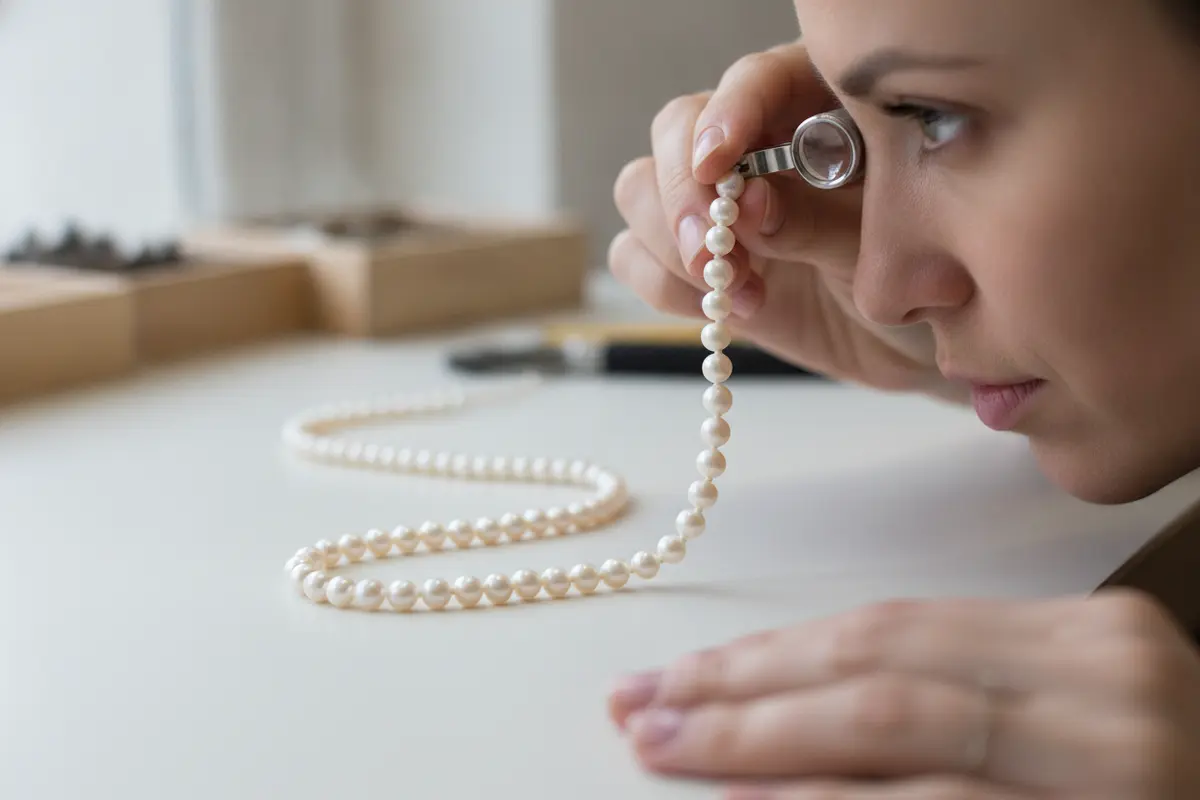
Doing it yourself may seem straightforward: remove the pearls, thread them again, and tie the ends. But small details affect the finished strand. The pearls need to stay in their intended order, the knots need to be even, and the finished length must work with the clasp. A knot that is too loose can leave gaps; one that is too tight may keep the strand from hanging naturally.
There is also a risk of losing or damaging pearls while taking apart a necklace. Drill holes and pearl surfaces should be handled carefully, and a clasp or end component may require a different repair from the thread. If the necklace is valuable to you, has an unusual design, or has already shown signs of wear, a professional assessment is a prudent first step.
If you are experienced with jewelry work and choose to restring a simple strand, use a clean, uncluttered work surface and keep the pearls organized. Do not pull on an old thread to test it, and stop if a pearl has a damaged hole or the clasp connection is unclear. When in doubt, leave the strand intact for an assessment instead of experimenting on it.
How can you compare restringing options?
Before approving work, ask what is included. The table below gives you a practical checklist for comparing an assessment, a basic restring, and a restring that includes additional changes. These are categories to discuss, not a quote or promise about a particular service.
| Option to discuss | What it may address | Questions to ask |
|---|---|---|
| Assessment first | Condition of thread, knots, pearls, clasp, and end components | What signs of wear do you see? Can the strand be worn safely as it is? |
| Restringing with existing design retained | Replacing the cord while keeping the current pearl sequence, length, and clasp where suitable | Will the pearls stay in their original order? Is the current clasp in good condition? |
| Restringing with a length or clasp change | Thread replacement plus a requested adjustment or finding change | How will the change affect the appearance and drape? Which parts are included? |
| Further repair or pearl review | A concern such as a damaged pearl, hole, or clasp connection | Does this require separate work or approval? Will you contact me before proceeding? |
Ask for the expected timing and cost before authorizing the work; both can depend on what the strand needs. If you are comparing jewelers, compare the scope of work as well as the quoted amount. A low figure is not a useful comparison if one estimate excludes a clasp or another repair you need.
For general background on gems and jewelry, you can explore the Gemological Institute of America (GIA) educational resources. For a specific strand, an in-person examination is more useful than trying to diagnose the thread from a photograph.
How should you care for pearls between restringing visits?
Gentle handling can help reduce avoidable strain, but it cannot make thread last indefinitely. A few habits help protect a strand:
- Put pearls on after getting ready. Make them one of the last pieces you put on, so they have less contact with cosmetics, fragrance, hair products, and other substances.
- Take them off with care. Undo the clasp rather than pulling the necklace over your head or stretching the strand.
- Wipe them gently after wear. Use a soft, clean cloth. Do not soak the strand or apply household cleaners unless a professional has confirmed that a particular method is suitable for its materials.
- Store them separately. Keep the necklace away from sharp jewelry edges that could scratch the pearls or catch the thread. Laying it flat can help prevent tangling and repeated bending.
- Check the clasp and thread visually. Look for new gaps, loose knots, fraying, or a change in the way the strand hangs. Do not tug on the necklace to test its strength.
- Keep a note of changes. If the necklace has been shortened, repaired, or snagged, tell the professional during the next assessment.
Use extra care with older or inherited pieces, especially when you do not know their repair history. Do not assume that a strand is ready to wear just because the pearls look clean. If the thread or clasp raises concern, set it aside until it has been checked.
There is no need to rely on a fixed calendar interval as the only reason to inspect a strand. A necklace worn often may experience different stress from one worn only for special occasions, and previous repairs or storage conditions may matter too. Use visible changes and the piece's history as reasons to ask for an assessment. If you are unsure how long it has been since the last restringing, mention that; the professional can evaluate the current condition instead of guessing based on age alone.
After any work, follow the care guidance you receive for that specific necklace. Keep the strand away from children or pets when it is not being worn, and avoid leaving it where it can be pulled, snagged, or crushed. If you notice a new gap, a loose clasp, or thread that catches on fabric, stop wearing it and have the change reviewed. These simple checks are not a substitute for a professional inspection, but they can help you notice a change before the necklace is worn again.
What should you ask before arranging pearl restringing?
A few direct questions can make the process clearer and help you decide whether the proposed work matches your priorities:
- Can you show me what is worn or damaged?
- Will you preserve the current pearl order and necklace length?
- Will you use knots between the pearls, and what cord is appropriate for this strand?
- Is the clasp secure, or should it be assessed separately?
- Will you contact me before doing work beyond the agreed scope?
- What is the expected cost and timing, and what could change that estimate?
- How should I handle and store the necklace after the work?
If you are also considering other necklace styles, browse the chain collection or designer gold jewelry for a sense of how different necklaces might fit your collection. You can also explore fine jewelry under $1,000 and fine jewelry under $2,000 if you are considering another piece. Product availability and details can change, so check the individual listing.
Speak with Kravit Jewelers about your pearl strand
What should you remember before wearing a pearl strand?
Look for gaps, loose knots, frayed thread, changes in drape, and movement near the clasp. If anything looks worn or the strand has been pulled, set it aside and ask for an assessment rather than testing its strength yourself. Confirm the proposed work, cost, and timing before authorizing it, and handle the necklace gently between inspections.


