


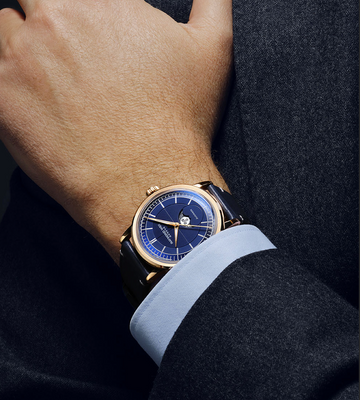



Hold a mechanical watch to your ear and you’ll hear it: a steady, quiet tick that no battery can fake. A mechanical watch keeps time with a wound spring and a set of precisely engineered moving parts, releasing stored energy in tiny, controlled steps to move the hands. No battery, no circuit board, just craftsmanship you can actually hear. Once you understand how that works, choosing between a manual-wind and an automatic watch (and deciding whether either fits your life) gets a lot easier.
Explore timepieces and plan a personal consultation
How does a mechanical watch keep time?
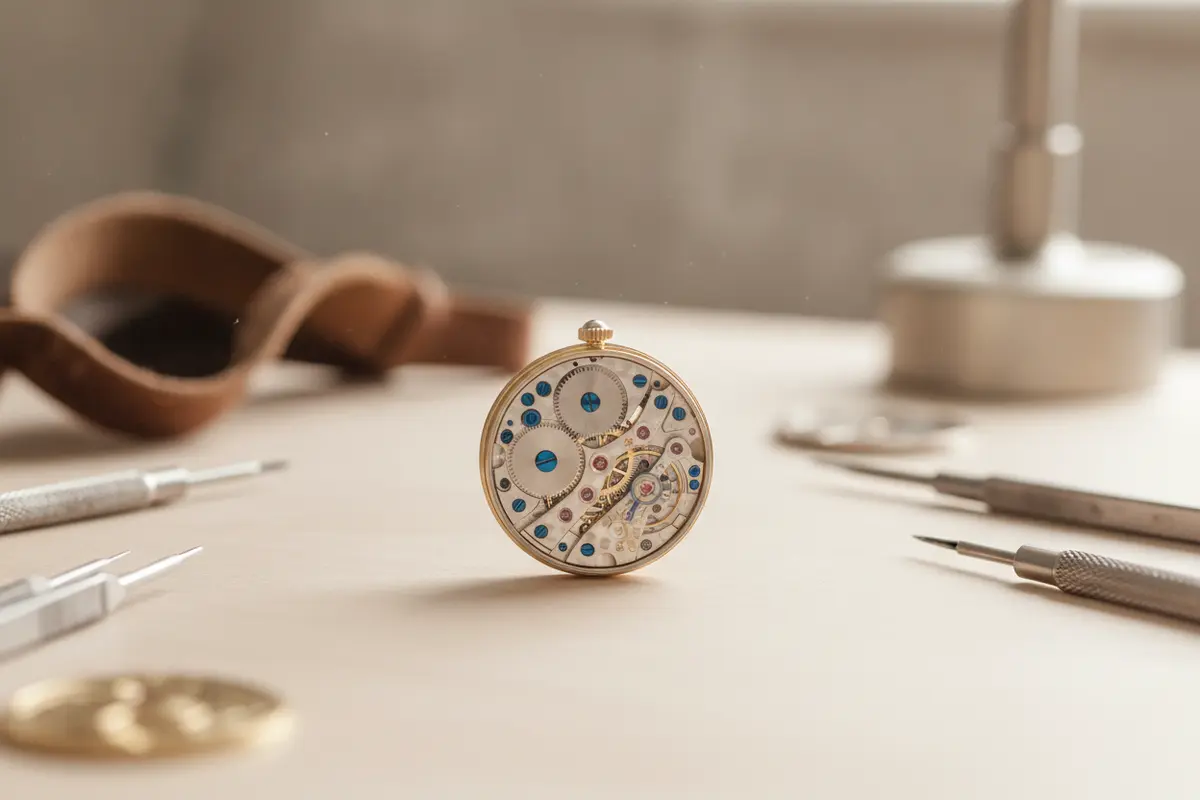
A mechanical watch stores energy in a tightly wound mainspring. As the spring gradually unwinds, it transfers energy through a series of gears. The escapement meters that energy into regular impulses, and the balance wheel swings back and forth at a steady rate. Together, these parts regulate the motion that ultimately moves the seconds, minutes, and hours hands.
Think of the mainspring as the source of power and the gear train as its delivery system. The escapement and balance wheel act as the timekeeping regulator. A mechanical movement is not simply a miniature motor spinning continuously. It is a coordinated system that releases energy in measured beats. The watch’s design, adjustment, condition, and wearing or winding routine all affect how consistently it keeps time.
Mechanical watches can display more than the time. Depending on the design, additional mechanisms may show the date, a second time zone, or a chronograph function. Those features add components and complexity, but the basic energy path remains similar: a wound spring powers a regulated movement.
To picture the sequence, imagine winding the watch and then watching the seconds hand advance. The crown turns a winding mechanism, which tightens the mainspring. When released, that stored energy passes through the gear train. The escapement interrupts the flow in a controlled rhythm, while the balance wheel and hairspring regulate that rhythm. The hands display the result of many small, coordinated movements rather than one continuous electrical signal.
The seconds hand’s motion can look different from one mechanical design to another. It may appear to move in small steps or as a smoother series of increments. That appearance reflects how the movement is constructed; it is not by itself a reliable way to judge the watch’s condition or overall timekeeping. For a particular model, its specifications and assessment matter more than a quick visual impression.
What are the main parts inside a mechanical movement?
The names of the parts can sound technical, but each has a practical role. The mainspring stores energy. The barrel contains it and releases it as the spring unwinds. Gears pass the motion onward and set the relative speed of the hands. The escapement controls the release, while the balance wheel oscillates to regulate the pace. The dial and hands show the result.
- Mainspring: Stores energy when wound.
- Gear train: Carries energy through the movement and drives the hands.
- Escapement: Releases energy in measured increments instead of letting the spring unwind all at once.
- Balance wheel and hairspring: Oscillate together to regulate the timing of those increments.
- Winding system: Winds the mainspring by hand or, in an automatic movement, through the motion of a rotor.
These parts work together inside the watch case. Their small scale and close coordination are part of the appeal for many owners. They also explain why a mechanical movement should be treated as a precision instrument, even when the watch has a sturdy exterior.
When comparing watches, a visible display is only one part of the experience. A clear dial may make the time easier to read, while an additional function may add useful information but also require extra controls. Ask which features are operated through the crown and which use pushers, then have someone demonstrate them. That simple check helps translate the movement’s complexity into practical questions about everyday use.
How is a manual-wind watch different from an automatic one?
Both types use a mainspring and mechanical timekeeping system. The difference is how the mainspring receives energy. With a manual-wind watch, the wearer turns the crown to wind the spring. With an automatic watch, movement of the wearer’s wrist turns a rotor, which winds the spring through the winding mechanism. Many automatic watches can also be wound by turning the crown, though the right procedure depends on the individual watch.
| Movement type | How it is powered | Everyday consideration |
|---|---|---|
| Manual-wind mechanical | The crown winds the mainspring. | Requires a regular winding habit; the watch stops when its stored power runs down. |
| Automatic mechanical | Wrist motion turns a rotor that winds the mainspring. | Regular wear can keep it wound, but it may stop after being set aside long enough. |
| Quartz | A battery supplies energy to an electronic timekeeping system. | Does not need daily winding; battery service is needed as applicable. |
The comparison is about routine, not a universal ranking. A manual watch can suit someone who enjoys winding and setting a timepiece. An automatic may fit a wearer who uses a watch regularly and prefers wrist motion to contribute to winding. A quartz watch may be a practical choice for someone who wants a different kind of ownership routine. Compare the particular watch, its features, and the manufacturer’s guidance rather than assuming every movement behaves identically.
A useful way to choose is to map each movement to a real week. If you expect to wear the same watch most days, an automatic’s rotor may keep adding energy as your wrist moves. If you alternate among several timepieces, plan for the possibility that an automatic will stop while it is set aside. A manual-wind watch asks for a deliberate winding routine instead. Consider whether that daily interaction sounds satisfying or like one more task to remember.
When trying one on, notice more than the label. Check whether the crown is comfortable to reach and turn, whether the case sits well on your wrist, and whether the dial is legible in the conditions where you expect to use it. If you travel, rotate watches, or rely on a calendar display, ask how those habits affect winding and resetting. A short demonstration can reveal whether the watch’s routine feels intuitive before you commit to it.
What does a power reserve mean in daily use?
A power reserve is the amount of time a fully wound watch is designed to run before its stored energy is depleted. It is not a measure of accuracy or quality by itself. A watch left unworn may stop once its reserve runs out. The owner then needs to wind or set it again, following the instructions for that model.
Consider your habits before choosing. If you rotate among several watches, an automatic may stop while it is resting. That is a normal consequence of the energy source, not necessarily a fault. A manual-wind watch also needs winding, even if worn every day. Ask how the specific model is wound, how to set its time and calendar, and whether any precautions apply when operating the crown.
For a useful side-by-side look at what is currently presented in the store, start with the timepiece collection. A product page can show the details of an individual watch, but always confirm current information with the store before making a decision.
What should you consider before choosing a mechanical watch?
First, decide whether you like the interaction that comes with a mechanical movement. Winding a watch, setting it after it has stopped, and noticing its mechanical character can be part of the enjoyment. If you would rather put on a watch and give little thought to winding, another movement type may better match your routine.
Next, consider how and when you plan to wear it. A watch worn often may be a natural candidate for an automatic movement, while a watch saved for occasional events may need resetting before each use. Think about case size, legibility, bracelet or strap preference, and any additional display you will genuinely use. Useful functions matter more than a long feature list if you want the watch to feel comfortable day after day.
Finally, consider the service and care expectations for the specific timepiece. Mechanical movements contain many moving parts and may require professional attention over time. The recommended interval and service scope vary by watch and maker, so do not rely on a one-size-fits-all schedule. Ask what the manufacturer recommends and where the watch can be assessed by an appropriate professional.
What is the day-to-day experience of wearing one?
A mechanical watch has a rhythm that differs from a battery-powered watch. You may wind it at the start of the day, set it after a period without wearing it, or let an automatic movement gather energy as you go about your routine. Some owners enjoy these small steps because they make the watch feel like an object to interact with, not just a display. Others prefer a watch that asks for less attention. Neither preference is better; the right choice depends on what you want from the experience.
Mechanical timekeeping also has practical limits worth understanding. A watch may gain or lose time, and its performance can be influenced by its design, condition, how it is worn, and other factors. Do not expect every mechanical watch to behave exactly alike or to match every quartz watch’s timekeeping characteristics. Ask about the specifications of the model you are considering, and try it on if possible. Comfort, readability, and ease of use matter as much as the movement type.
If you are comparing a watch with additional functions, take time to operate them with guidance. A calendar display, second time zone, or chronograph may make a watch more useful to you, but extra features can add steps to setting and daily use. Consider which ones you will actually use and which controls you can operate comfortably. A simple watch chosen with care can be a better fit than a more complicated one that feels difficult to manage.
Compare timepieces for your everyday routine
How should you care for a mechanical watch?
Follow the instructions provided for the exact watch. In general, handle the crown gently and do not force it if it resists. If the watch has a screw-down crown, learn how its maker says to open and secure it. Avoid operating the crown or pushers in circumstances the manufacturer warns against. Water resistance is not a permanent guarantee and can be affected by age, wear, or prior service, so check the watch’s stated rating and have concerns assessed rather than testing it yourself.
Keep the watch away from strong impacts and extreme conditions beyond its stated use. Magnetic fields can affect some mechanical movements, so consult the watch’s own guidance if you suspect exposure or notice a change in timekeeping. Store a watch safely when it is off the wrist, and use a soft, clean cloth for routine exterior care if suitable for its materials. Do not open the case or attempt internal adjustments at home.
When a watch has stopped, take a moment to identify the circumstances before doing anything. Was it unworn for a while, exposed to an impact, or in contact with a strong magnetic source? Note any visible moisture or damage and whether the crown feels normal. These observations can help a professional understand the issue. Do not force the crown, repeatedly shake the watch, or try to remove the case back; those actions can create additional risk without identifying the cause.
Setting the watch carefully is part of routine care too. Read the maker’s directions for setting the time and calendar, especially if the watch has additional displays or a specific operating sequence. If the instructions are unclear, ask for a demonstration rather than experimenting with the controls. After setting, confirm that the crown is returned to its proper position as directed. A careful, model-specific routine is more useful than applying generic advice to every watch.
If a watch stops, runs differently than expected, or shows physical damage, note what happened and seek a professional assessment. A stopped watch is not automatically evidence of a serious problem; it may simply need winding or setting. On the other hand, persistent changes, moisture beneath the crystal, or a crown that will not operate normally deserve attention. Avoid shaking or forcing a watch in an attempt to restart it.
What questions can help when comparing watches?
A focused conversation can clarify whether a mechanical movement fits your expectations. Ask how the watch is wound, how long it is designed to run when fully wound, and what steps are needed after it has stopped. Confirm how to set the time and any calendar features. If the watch has additional complications, ask for a demonstration so you can see how they work before choosing.
It is also reasonable to ask about the maker’s care recommendations, the watch’s stated water resistance, and how to arrange an assessment if service is needed. These questions keep the discussion specific to the model rather than relying on broad assumptions about all mechanical watches. For a pre-owned option, ask what documentation and condition information are available for that individual piece. You can also review Kravit’s pre-owned timepiece page as one route for exploring that category.
To compare actual models, look at their dimensions, movement type, functions, and wearing feel together. A product listing such as this individual timepiece example can help make a comparison more concrete; it does not replace confirming the specific watch’s details and current status with the store. Another place to browse is the Isabelle fine jewelry and timepieces page.
Before a visit or inquiry, it can help to make a short comparison note: how often you will wear the watch, whether you want a manual or automatic winding routine, which functions you need, and what questions remain about care. Bring those points into the conversation and compare one model at a time. That keeps the decision grounded in actual use rather than letting technical terminology or a long specification list dominate.
Where can you learn more about watchmaking?
Mechanical watches belong to the wider history of horology, the study and practice of timekeeping. The National Association of Watch and Clock Collectors is a horological organization with educational resources and a community for people interested in watches and clocks. Explore the National Association of Watch and Clock Collectors for broader watchmaking and collecting context. For decisions about a specific watch, however, the model’s own documentation and an informed in-person conversation are more directly useful.
Browse timepieces and arrange a consultation
Frequently asked questions about mechanical watches
Does a mechanical watch need a battery?
No. A mechanical movement runs on energy stored in its mainspring. A manual-wind watch receives that energy when its crown is turned, while an automatic movement uses a rotor that responds to wrist motion.
Why did my automatic watch stop when I was not wearing it?
An automatic watch can stop after it has been left unworn long enough for its stored energy to run down. Follow the specific watch’s winding and setting instructions before wearing it again. If it does not restart or behave as expected, ask a professional to assess it.
Is an automatic watch the same as a mechanical watch?
An automatic watch is a kind of mechanical watch. It uses a mainspring and mechanical regulating parts, but a rotor winds the spring through wrist motion. Manual-wind watches are also mechanical, but the wearer winds them at the crown.
Are mechanical watches always more accurate than quartz watches?
No single movement type should be assumed to be the most suitable for every wearer. Mechanical and quartz watches use different timekeeping systems, and actual performance depends on the particular watch and its condition. Compare the maker’s specifications and choose the routine and characteristics that fit you.
A mechanical watch combines stored spring energy with a carefully regulated movement, and its winding routine is part of the ownership experience. Compare the specific watch, ask practical questions, and choose the movement that feels right for how you plan to wear it.


