




If you are asking what do gold buyers do with the gold after a purchase, the honest answer is that the next step depends on the item and the buyer’s business. Some pieces may be considered for their appeal as finished jewelry; others may be handled for their material or through a separate business process. No single route applies to every piece, and a customer should not assume a particular destination.
Contact Kravit Jewelers to discuss a consultation
What does a buyer learn during an evaluation?
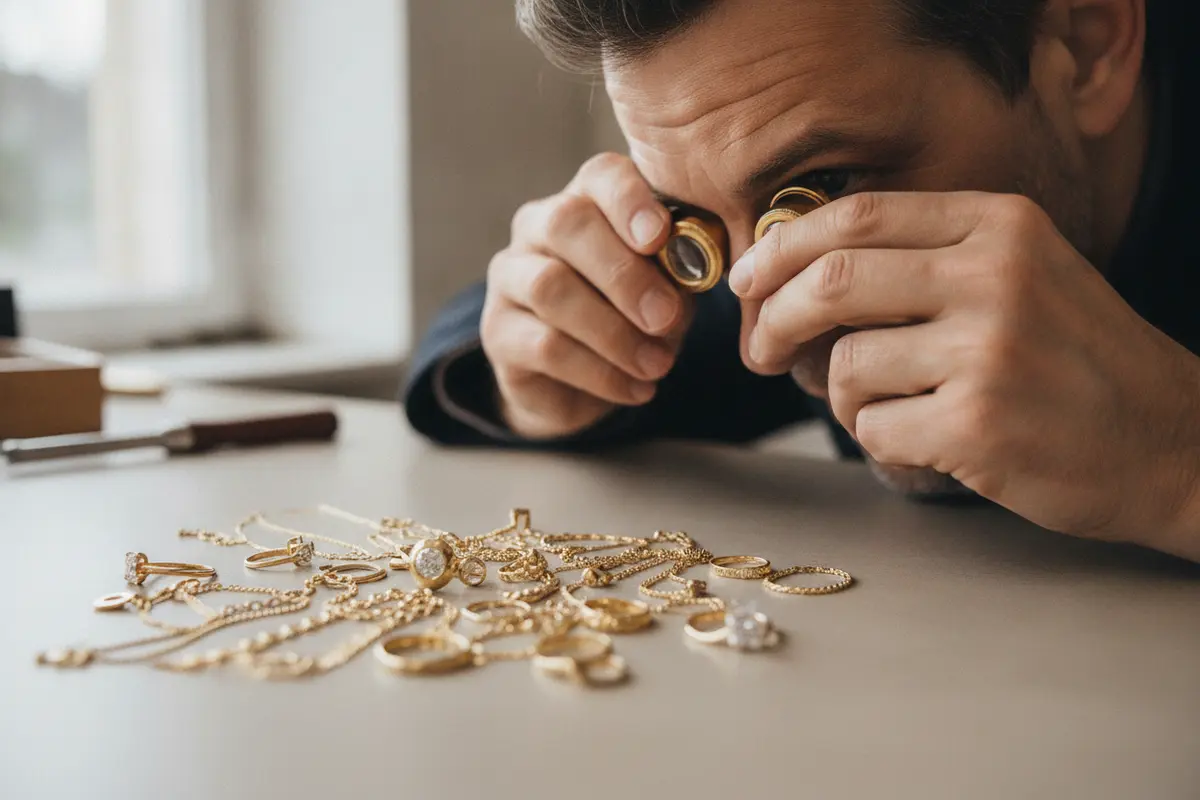
Before deciding what to do with gold, a buyer needs to understand what has been brought in. An evaluation may involve looking at markings, construction, condition, and weight. It may also mean distinguishing gold from other materials and identifying components that are not gold. The precise steps vary with the item and the business’s process.
Weight is one detail, not the entire story. A chain may have a clasp made from another material; a ring may include stones or non-gold components; earrings may be incomplete. A finished piece can have design or reuse value separate from its material. Ask what factors the buyer considers instead of assuming weight alone explains an offer.
A career overview from the American College of Business and Science Professionals describes gold buyers assessing items and making cash or trade-in offers. This is broad background, not a description of every jeweler’s policies or of a specific transaction. Each business can use its own procedures.
What possible paths can purchased gold take?
There are several broad possibilities after a purchase, but they are possibilities rather than promises. A wearable, complete piece might be considered for a future customer if it suits the buyer’s business. Another item may be treated chiefly as material. A business may use its own process or work with another party for later handling. Whether any path applies depends on the object and operating arrangements.
Imagine a customer brings in an intact gold bracelet and a single damaged earring. The bracelet’s condition and design might make it worth discussing as a finished piece, while the earring may be assessed differently. Two items brought in together need not share the same outcome. This example does not predict what a particular buyer will do.
| Possible pathway | What it may mean | Useful question |
|---|---|---|
| Finished jewelry | An intact piece may suit another customer. | Is the offer for the piece, its material, or both? |
| Material handling | The item may be considered chiefly for metal content. | How are stones and non-gold parts treated? |
| Further handling | Internal procedures or another party may be involved. | What is known, and what remains uncertain? |
| No sale | The customer may decline the offer. | Can I take time to decide? |
Why can buyers handle similar pieces differently?
Gold buyers do not all have the same customer base, inventory needs, expertise, or arrangements for handling material. One business might see a use for a wearable piece, while another may focus on its material. A difference in approach does not establish which offer is right; understand its basis and compare it with your priorities.
Completeness and condition can affect the discussion. A matching pair or secure piece is not identical to a broken chain or single earring. These details do not guarantee a particular valuation or outcome; they help make the conversation specific. Mention repairs or missing parts rather than concealing them.
Customer goals differ, too. Someone parting with an unused item may value clear terms, while someone with family jewelry may want time to weigh emotional importance against practical reasons for selling. A consultation is a chance to gather information, not an obligation to decide.
How can you ask what may happen to your item?
Ask direct questions, while recognizing that a buyer may not know or disclose every later operational step. Ask whether the item is being considered as finished jewelry, primarily for its material, or another way. If the answer is uncertain, ask what can be confirmed now and what may only be determined after a purchase.
- Which pieces are included in the offer?
- How did you identify and weigh each item?
- How are stones, clasps, solder, and other parts treated?
- Is this based on the finished piece, material, or both?
- What payment or trade-in terms apply?
- Is there an obligation to proceed?
- What can you explain about later handling?
These questions separate what is known from what is only possible. A buyer may explain an assessment and terms, but may not guarantee a later destination. If you need certainty about a downstream step, ask before agreeing and decide whether available information is enough.
If you are preparing to discuss 14K pieces, read what to expect when selling 14K gold jewelry. For a separate example of finished gold jewelry, browse the designer gold jewelry collection.
What should you bring to a local consultation?
Bring items you want assessed and information you have, such as purchase details or prior documentation. Paperwork may explain an item’s history but does not guarantee an offer. Separate pieces you are ready to discuss from those you are not considering selling. This helps confirm what is part of the conversation.
There is usually no need to polish or alter an item. Avoid home cleaning that could damage a setting or loosen a stone. If it is fragile, tangled, or has a loose part, mention that and ask how it should be handled. Confirm the store evaluates that type of item before making a special trip.
Kravit Jewelers is a family-owned jeweler in Oceanside that has served Long Island since 1927, and gold buying is among the store’s services. An in-person conversation lets you ask about your items and the offer. Do not infer the store’s practices from general descriptions; ask directly about evaluation and terms.
For broad background, see the gold buyer career overview. It describes assessment and offers generally, not what happens to a particular item after a sale.
How can you compare an offer without rushing?
Make sure each offer covers the same items. Ask for a breakdown to see whether a figure applies to one item or a group. Ask what was assessed, what terms include, and whether payment or trade-in changes the arrangement. Keep notes if you speak with multiple buyers.
Write down each piece, its condition, and relevant details. Then record what each buyer says about the offer’s basis and terms. Do not treat a possible downstream route as a guaranteed result. Compare confirmed information, not hoped-for outcomes.
Consider your priorities before accepting: clarity about included items, time to decide, uncomplicated terms, or information about later handling. If one is essential, ask explicitly. If the answer does not address your concern, it is reasonable to wait or seek clarification.
Keep written terms or transaction records, and check that listed items match what you handed over. If you decline, collect your pieces and confirm that all are returned before leaving. These steps reduce confusion when several items are discussed.
How can you organize several pieces before an evaluation?
Set items aside separately. Do not pull at a tangled chain. Put loose earrings, detached clasps, and small parts in a secure pouch, and note which part belongs to which piece. Make an inventory in plain language: “yellow-gold ring with blue stone” or “single hoop, clasp missing.” You need not identify the metal or estimate value. The list helps track what you brought and what you intend to discuss.
At the appointment, confirm which pieces the buyer will evaluate. If items are grouped, ask whether the offer applies to the group or separately. For an item with a stone or unusual construction, ask whether the assessment considers the whole piece or a component. When you leave, use the list to check returned pieces if you decline.
Preparation also helps when the item has history. Note a prior repair, a missing mate, or an inherited box of mixed jewelry. You need not make assumptions about what each object is worth. Simply explain what you know and allow the buyer to clarify what can be assessed. If a piece is especially delicate, point that out before handling begins.
What is the difference between an assessment and a later destination?
An assessment concerns the item in front of the buyer and the terms of a possible transaction. A later destination concerns what a business may decide or arrange after acquiring it. A buyer may explain the first while having limited information about every later step. Keep the questions separate so a general explanation does not sound like a promise.
If a customer hears that a piece is considered for its metal content, that describes the discussion but does not establish exactly how material will be handled, by whom, or when. Likewise, hearing that an intact piece could suit another customer does not mean it will be offered for sale. Ask what is known now and what is only possible.
If an outcome matters to you, say so before accepting. Ask whether a specific commitment can be made and documented. If there is no clear answer, decide whether you are comfortable proceeding without it. Recognizing a limit is better than filling it with an assumption.
How can you compare offers on a like-for-like basis?
Confirm that each discussion covers the same pieces. A figure for a bracelet alone cannot be compared directly with a combined figure for a bracelet, ring, and earrings. Ask how stones or other components were considered and whether an offer is for payment, trade-in, or another arrangement.
| What to compare | What to record | Why it helps |
|---|---|---|
| Items | Names and count | Confirms offers cover the same group. |
| Basis | Finished piece, material, or both | Clarifies what the explanation covers. |
| Terms | Payment or trade-in conditions | Distinguishes unlike arrangements. |
| Unknowns | Unanswered handling questions | Separates possibility from certainty. |
One conversation might discuss a chain as jewelry while another focuses on its material. Ask what each offer includes before comparing. This record is not a formula for choosing a buyer; it makes clear what each person has actually said. If an answer is unclear, ask for plain-language clarification.
For example, a customer with a ring, chain, and one earring can list them separately and note whether each offer covers all three. The customer can then compare terms without assuming that different approaches promise different later outcomes. If needed, take time to review notes after leaving rather than deciding while trying to remember several explanations.
What should you do before handing over an item?
Pause to review the terms, item list, and any record provided. Check that the number and descriptions match what you brought. Ask whether accepting completes the transaction and whether any conditions apply. Read available written information before agreeing rather than relying on memory.
If you decline, confirm every item and loose component is returned. Use your inventory before leaving. If you accept, keep transaction documentation and ensure it identifies the items covered as clearly as possible. These steps help both sides maintain a shared understanding.
For directions and store information, visit Kravit Jewelers’ contact page. Use it to confirm practical details and ask whether the store can evaluate your type of item.
Contact the store to ask about a gold-buying consultation
Frequently asked questions
Do gold buyers always melt purchased jewelry?
No. The next step depends on the piece and the business’s process. Some items may be considered as finished jewelry, while others may be handled differently. Do not assume a specific outcome unless the buyer confirms what they can.
Can a buyer sell every piece purchased?
No. Condition, design, completeness, demand, and business practices can affect whether a piece is suitable as finished jewelry. A buyer may instead consider some pieces primarily for their material.
Does an evaluation mean I have to sell?
An evaluation is an opportunity to understand the assessment and any offer. Ask whether there is an obligation before proceeding, and take time to decide whether the terms meet your needs.
Should I ask what happens to my specific item?
Yes. Ask what the buyer can share about its process and what is known at the time of the offer. The buyer may explain the transaction without guaranteeing every later step.
Understanding what is assessed, what is offered, and what remains uncertain can make a gold-buying conversation easier to navigate. A thoughtful decision starts with clear terms and questions that address your priorities.


