



If you are wondering how to open a tennis bracelet clasp, place the bracelet on a soft, stable surface. Release the safety latch first, then operate the clasp's release without pulling on the links or stones. Most clasps open with gentle, controlled pressure. If the release does not move, stop rather than forcing it.
Ask Kravit Jewelers about a careful jewelry assessment
A tennis bracelet can look simple, but its closure often combines several small parts. A box clasp may have a tongue that fits into a receiver, plus a figure-eight safety or another secondary latch. Other bracelets use a fold-over, lobster, or double-locking design. Knowing which part releases first helps protect the metal, stones, and your fingers.
How do you open a tennis bracelet clasp safely?
Use this sequence whenever you are unsure how the closure works. Work slowly and keep the bracelet supported from underneath. The goal is to release the clasp, not to bend the bracelet until it separates.
- Choose a safe work area. Use a clean table away from a sink, drain, hard floor, or edge. A folded microfiber cloth or soft towel can keep the bracelet from sliding and cushion it if you lose your grip.
- Support the bracelet. Hold the clasp body or rest it on the cloth. Do not lift the bracelet by one end, and do not use the diamond links as a handle.
- Find the secondary safety. Look for a small hinged latch, figure-eight tab, safety chain, or fold-over arm near the main clasp. Release that piece first by lifting or pressing its designed release point. Never twist it sideways.
- Locate the main release. On a box clasp, look for a small lip, groove, or side release on the clasp body. On a fold-over design, lift the hinged cover. On a lobster-style closure, press the small spring lever.
- Release the clasp with your thumb. Keep the other hand on the clasp body and use light, direct pressure. If the mechanism does not move after a gentle attempt, reposition your fingers and look again rather than increasing force.
- Separate the two sides in a straight line. Once the tongue or hook is released, pull the clasp halves apart along their natural direction. Do not twist the bracelet or pull on the nearest stone setting.
- Set the bracelet down before putting it on. Place the open bracelet on the cloth while you position your wrist. This reduces the chance of dropping it while trying to fasten it with one hand.
The short answer to how to open a tennis bracelet clasp is gentle release followed by straight separation. If you need a tool, feel resistance, hear a sharp click that seems unusual, or see a bent part, stop and have the clasp assessed by a professional.
What should you check before opening the clasp?
Before touching the release, inspect the closure in good light. Look for the main clasp body, the tongue or hook that enters it, and any safety feature attached to the side. A little preparation makes the opening motion easier to understand and helps you avoid pressing a decorative part.
Check whether the bracelet is under tension. If it is wrapped tightly around your wrist, hold the bracelet close to the clasp and relax your wrist before releasing anything. A clasp can feel stuck when the links are pulling in opposite directions. Do not yank the two ends apart to relieve that tension.
Also check for visible damage. A loose diamond, lifted prong, gap in a link, bent safety arm, or clasp that sits crooked is a reason to pause. Opening a compromised closure may make the problem worse. Photographing the clasp before handling it can also help you remember how the safety piece sits when it is correctly closed.
Which tennis bracelet clasp type do you have?
There is no single clasp used on every tennis bracelet. The table below is a quick guide, but the release should always be confirmed by looking at the actual mechanism in front of you.
| Clasp type | What to look for | Safe opening motion |
|---|---|---|
| Box clasp. | A flat receiver with a tongue that slides inside, often paired with a safety latch. | Release the safety, press or lift the designed release point, and pull the tongue straight out. |
| Fold-over clasp. | A hinged cover that folds over the main closure. | Lift the cover from its small edge or release tab, without prying against the bracelet links. |
| Lobster clasp. | A spring-loaded lever on one side and a ring on the other. | Press the lever, then guide the ring out of the opening. |
| Double-locking clasp. | A main closure combined with a hinged safety arm or secondary latch. | Open the secondary arm first, then release the main clasp in its natural direction. |
| Magnetic or specialty closure. | Two matching sections that meet without a visible tongue. | Follow the maker's intended separation direction and avoid sliding the sections across the stones. |
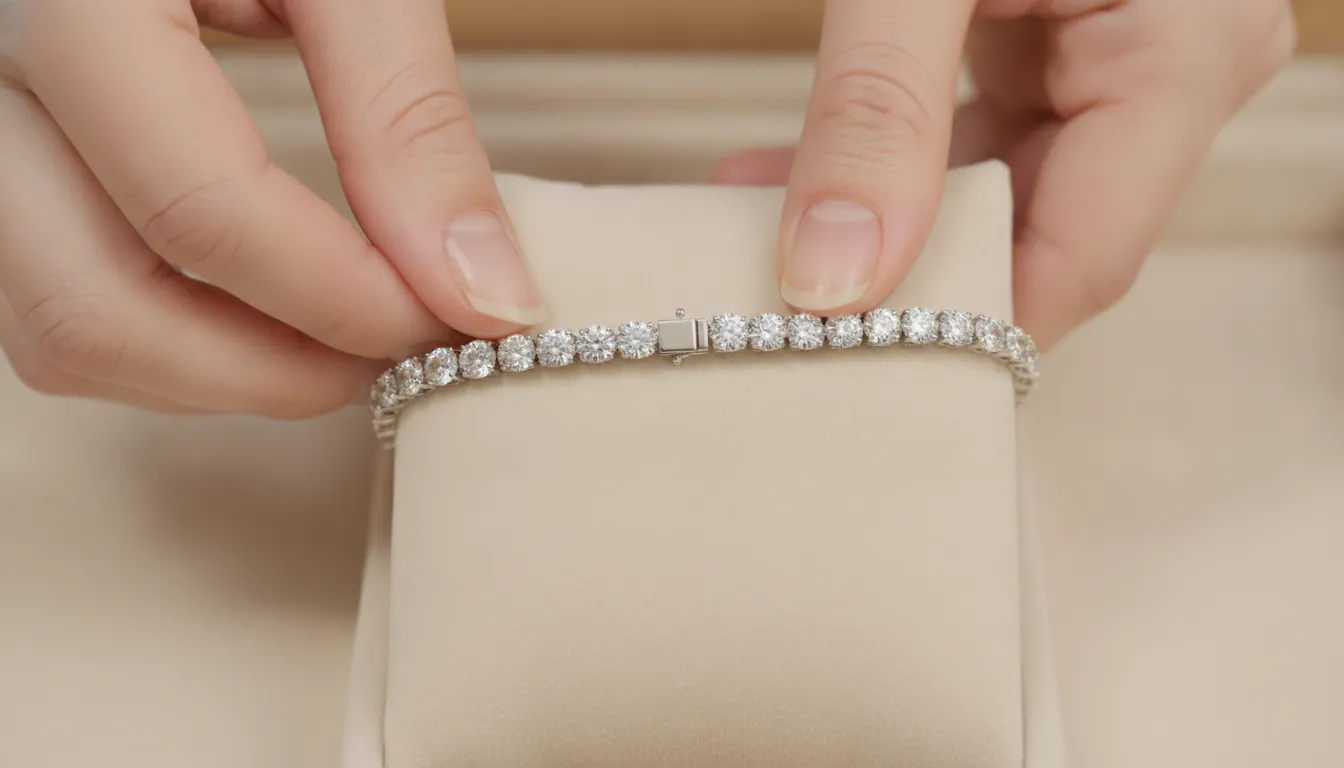
Many diamond tennis bracelets use a box clasp with a safety feature because the bracelet needs a secure connection while it is worn. That does not mean the closure should be difficult to open. A properly functioning clasp should respond to its release point with controlled pressure.
How do you release the safety latch?
The safety is the small backup closure that helps keep the main clasp from opening accidentally. It may look like a thin hinged arm, a figure-eight tab, or a short safety chain. It is usually located beside or over the main clasp, not inside the section where the bracelet's tongue enters.
Hold the clasp body in one hand and use the fingernail of the other hand to lift the safety's edge if it has a clear lift point. If it has a small hinged tab, move it in the direction of the hinge. If it has two sides, release one side at a time without bending the tab away from the bracelet.
Do not insert a knife, pin, tweezers, or other sharp object under a safety latch. Those tools can scratch the metal, slip into a gap, or catch a prong. A fingernail is enough for a normally functioning safety. If it is too tight to move with gentle pressure, the safest choice is an assessment rather than a stronger tool.
Once the safety is open, keep it out of the way while you release the main clasp. Do not assume the safety is open just because the arm has lifted slightly. Confirm that it has cleared the edge of the clasp before separating the bracelet ends.
Explore Kravit's bracelet collection
What mistakes can damage a tennis bracelet clasp?
The most common mistake is treating the bracelet like a chain and pulling both ends until the closure gives way. That force travels through the links and can stress the settings near the clasp. It can also bend the tongue so that it no longer sits securely when the bracelet is closed.
- Do not pry against a diamond or gemstone. A stone is not a release button, and a sharp edge can damage a prong or scratch the setting.
- Do not twist the clasp sideways. The tongue, hook, and receiver are designed to separate in a specific direction.
- Do not use household tools. Knives, pliers, screwdrivers, and pins can scratch the finish or apply more force than the small mechanism can handle.
- Do not open it over a hard or wet surface. A dropped bracelet can be difficult to find and a wet drain creates an avoidable risk.
- Do not keep trying after repeated resistance. A stuck clasp can indicate dirt, deformation, a misaligned tongue, or a worn spring.
- Do not wear the bracelet again without checking the closure. If the clasp opened unexpectedly or feels loose, it needs attention before the next wear.
These precautions matter even when the bracelet appears sturdy. Fine jewelry is made from durable materials, but small moving parts and stone settings still require controlled handling.
What should you do if the clasp will not open?
First, stop pulling. Place the bracelet on a soft cloth and examine the clasp from several angles. Make sure a safety arm is not still engaged, and check whether the tongue is aligned with the receiver. A small change in angle may reveal the release point, but do not force the bracelet into a new position.
If the clasp remains stuck, loose, crooked, or visibly damaged, bring it to a jeweler for an assessment. A professional can inspect the clasp, nearby links, and stone settings without turning a minor adjustment into a larger repair. The same advice applies if the clasp opens but no longer clicks securely closed.
Kravit Jewelers' jewelry repair service describes an initial consultation, detailed assessment, and expert recommendations for jewelry that needs attention. That makes a professional evaluation the right next step when a tennis bracelet closure does not behave normally. Contact the store before visiting if you want to confirm the best way to bring in the piece.
How can you close and test the clasp afterward?
After opening a tennis bracelet, close it on a soft surface before putting it back on. Insert the tongue or hook fully into the receiver until the main clasp engages. Then close the safety arm or latch. Use light pressure only. If the parts do not line up, open the closure and try again rather than forcing the safety shut.
Perform a gentle check by holding the bracelet over the cloth and applying a small amount of opposing pressure to the clasp body. You are checking that the closure stays engaged, not testing it to failure. The safety should sit flat, and the clasp should not rock from side to side.
Never rely on a vague click alone. Look at the closure. Confirm that the tongue is fully seated, the safety is closed, and there is no visible gap. If you see a gap, feel looseness, or hear rattling near the clasp, set the bracelet aside until a jeweler checks it.
How should you care for a tennis bracelet clasp?
Keep the clasp clean and dry according to the care guidance for the bracelet's metal and stones. After wearing it, wipe away skin oils with a soft jewelry cloth. Store the bracelet flat or in a separate soft compartment so the clasp does not catch on other pieces. For broader bracelet selection and care ideas, see Kravit's guide to choosing the perfect bracelet. Avoid tossing it into a jewelry box where links and safety arms can tangle.
Before important occasions, inspect the clasp and safety at home. Look for a bent edge, a gap, a loose hinge, or a safety arm that no longer lies flat. If you wear the bracelet often, make this part of your normal jewelry check rather than waiting until the closure fails.
When traveling, keep the bracelet in a padded case. Do not leave it loose in a toiletry bag or packed against hard objects. GIA's tennis bracelet buying guide notes that secure clasps and safety latches support safer everyday wear. A little protection helps preserve the clasp alignment and reduces unnecessary stress on the links.
Get expert guidance for a tennis bracelet clasp that needs attention
Frequently asked questions
Why is my tennis bracelet clasp so hard to open?
A clasp may feel difficult because the safety is still engaged, the tongue is under tension, or the release point is small and recessed. It may also need professional attention if the mechanism is bent, dirty, worn, or misaligned. Use only gentle pressure. If it still will not release, stop and ask a jeweler to assess it.
Can I use tweezers or pliers to open a tennis bracelet?
It is better not to use household tools. Tweezers and pliers can scratch the metal, slip into a stone setting, or bend the clasp. A normally functioning closure should open with the intended release point and your fingers. If it does not, a professional assessment is safer than extra leverage.
What is the safest way to open a box clasp?
Support the clasp body, release the secondary safety first, and then operate the small release or lip on the box clasp. Once the tongue is free, pull the two sides straight apart. Avoid pulling the bracelet links or prying against the stones.
Should I wear a tennis bracelet if the safety latch is loose?
No. A loose safety can reduce the protection provided by the closure. Set the bracelet aside and have the clasp and nearby links inspected before wearing it again. A jeweler can explain whether the piece needs an adjustment, repair, or a more detailed evaluation.
How do I know when to ask a jeweler for help?
Ask for help when the clasp will not release with gentle pressure, the safety is bent, the bracelet has opened unexpectedly, a stone or prong looks loose, or the clasp does not close securely. It is safer to pause early than to turn a stuck closure into a damaged one.


