



What is a bangle bracelet? It is a rigid bracelet, usually made as a solid circle or curved band, that slips over the hand or opens at the wrist. Unlike a flexible chain bracelet, a bangle keeps its shape while you wear it. That simple distinction creates many choices in fit, opening style, metal, width, texture, and how the piece works with the rest of your jewelry.
The best bangle is not simply the prettiest one in a display case. It should feel secure without squeezing, move comfortably without sliding excessively, and suit the way you plan to wear it. This guide explains the essential differences so you can compare styles with confidence, then visit a trusted Oceanside jeweler when you want help checking the fit in person.
What is a bangle bracelet, exactly?
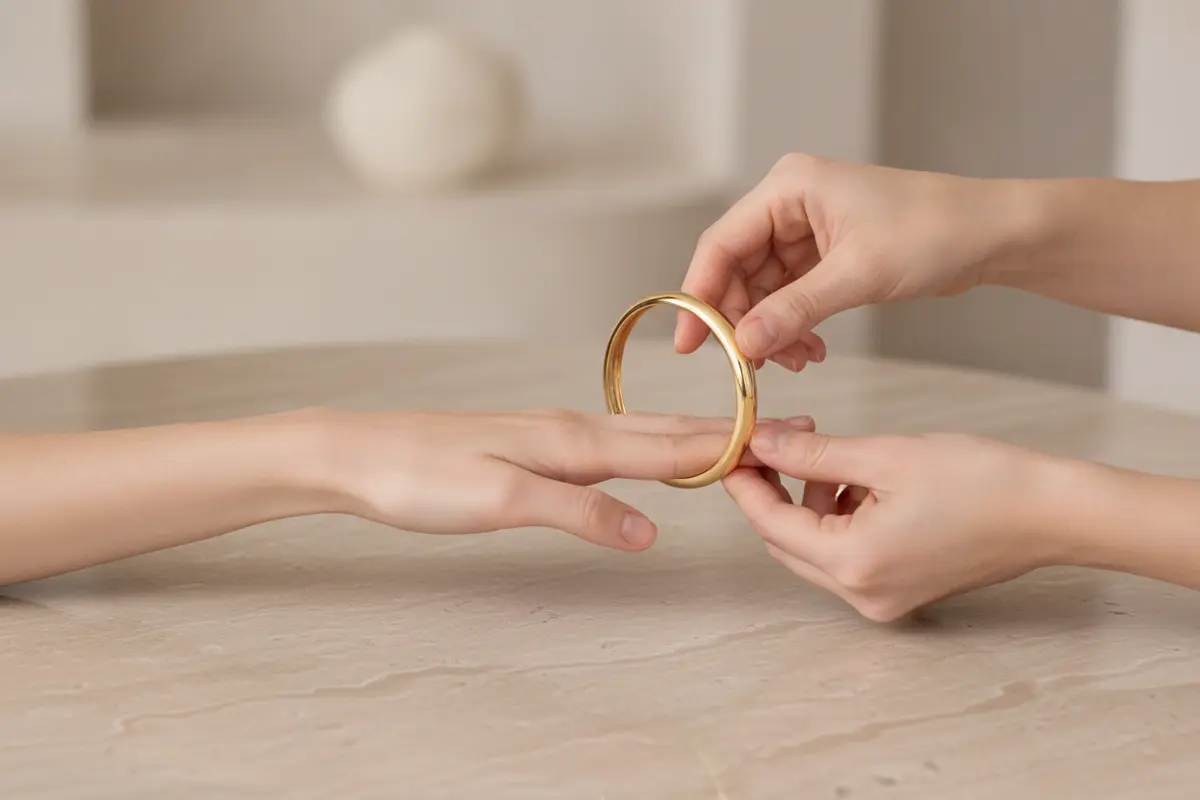
A bangle bracelet is a structured bracelet with little or no flexibility. Traditional closed bangles form a continuous loop. You put one on by guiding it over the fingers and widest part of the hand, then allowing it to rest around the wrist. Other bangles have a hinge, clasp, or opening that lets you place the bracelet directly around the wrist.
Because a bangle has a defined shape, its proportions matter. A slim bangle can look delicate when worn alone or layered with other pieces. A wider cuff can serve as a strong focal point. Details such as a polished surface, carved texture, diamonds, or a contrasting finish can change the character of the same basic form.
Historical examples show that the bangle shape can be made from many materials and adapted into rounded, engraved, and other forms. The Gemological Institute of America’s research on jadeite manufacturing is one example of how bangle styles can develop from an initial form into different finished designs. For today’s shopper, the important question is how the structure and opening affect comfort and wear.
How is a closed bangle different from an open bangle?
The opening style is the first practical difference to understand.
| Style | How it goes on | Fit considerations | Best for |
|---|---|---|---|
| Closed bangle | Slides over the hand | Must pass over the widest part of the hand; should not be so loose that it falls off | A classic, continuous look and easy stacking |
| Open bangle or cuff | Wraps around the wrist through an opening | Opening and curve should sit comfortably without pinching | Shoppers who prefer direct wrist placement or a sculptural design |
| Hinged or clasped bangle | Opens at a hinge or closure | Closure should feel secure and be manageable for the wearer | A structured look with easier on-and-off wear |
A closed bangle creates a clean uninterrupted circle. It can make a pleasing sound as it moves against other bangles, and several narrow pieces can be combined for a layered look. Its main sizing challenge is the hand: the bracelet must pass over the knuckles and thumb area before it reaches the wrist.
An open bangle or cuff avoids that hand-over-bracelet step. It may have a small opening or a larger gap, depending on the design. The opening should be intentional rather than forced wider each time you put it on. Repeated bending can affect the shape or finish of a fine piece.
A hinged bangle offers another approach. It preserves the firm outline of a bangle while making wrist placement more direct. When comparing one, operate the closure gently and check that it closes fully. A jeweler can show you the correct way to put on and remove a structured bracelet without stressing its moving parts.
How should a bangle bracelet fit?
A well-fitting bangle should have enough room to move slightly as your wrist moves, but not so much room that it repeatedly slides over the hand. The ideal amount depends on your design, wrist, hand shape, and personal preference. Some people enjoy a relaxed, audible movement. Others prefer a closer fit with less motion.
For a closed bangle, measure the part that must pass through the opening: usually the widest part of your hand when the fingers and thumb are brought together. Measuring only the wrist can result in a bracelet that fits the wrist but cannot pass over the hand. Compare that measurement with the inside diameter or circumference supplied for the bangle.
For an open or hinged design, wrist measurement becomes more useful. Wrap a flexible measuring tape around the wrist where the bracelet will sit, or use a strip of paper and measure it afterward. Keep the tape comfortably close to the skin rather than pulling it tight. Add room according to how much movement you like and the thickness of the bracelet.
- Too tight: the bangle presses into the wrist, catches when your hand moves, or leaves a persistent indentation.
- Too loose: it rotates constantly, catches on nearby objects, or can move toward the hand and risk slipping off.
- Comfortable: it moves naturally, does not pinch, and stays in the area where you want to wear it.
Width changes the way a bangle feels. A wide design can feel more substantial even when its measurement is correct, while a very slim bangle may need a more careful check because it can move more freely. If you are between sizes, bring the shoes or clothing you expect to wear with the piece and try the bracelet while standing and moving normally.
Which materials and finishes work well for bangles?
Gold, silver, platinum, and other jewelry materials can all be used for structured bracelets. The right choice depends on your preferred color, weight, finish, budget, and care routine. Yellow gold has a warm presence, while white metals create a cooler look. Mixed-metal designs can connect a bangle to jewelry you already own.
Finish also changes the experience. High polish reflects light and gives a smooth, formal appearance. Brushed or textured surfaces can create more visual interest and may make small marks less noticeable. A gemstone-set bangle adds sparkle, while a plain metal bangle can be easier to combine with watches, chains, or other bracelets.
Do not judge a material only by a product photograph. Hold the piece when possible. Notice its weight, the smoothness of its edges, the shape of its opening, and whether the interior feels comfortable. A local appointment also gives you an opportunity to compare a few widths and finishes side by side.
How can you style a bangle bracelet?
A bangle can be worn alone, paired with similar pieces, or used as a structured accent beside flexible bracelets. Start with the proportion you want. One narrow bangle can add a quiet detail. A wider design can anchor an outfit. Several coordinated pieces can create movement, but they should still leave enough room for each piece to move without constant friction.
Should you wear one bangle or stack several?
One bangle is often the simplest choice for a polished look. It lets the outline, finish, or stone detail speak clearly. If you stack, vary one element at a time: combine similar metals with different widths, or keep the widths similar while changing texture. Too many competing shapes can make the wrist feel crowded.
Think about sound and movement as well as appearance. Bangles may touch one another during normal activity. If that motion is part of the appeal, choose durable, compatible pieces and accept that contact can create wear over time. If you want a quieter stack, leave more space between structured pieces or pair one bangle with a softer, flexible bracelet.
Can a bangle be worn with a watch?
Yes, but placement and material matter. You can wear a bangle on the opposite wrist for a balanced look, or place it beside a watch if the shapes sit comfortably together. Avoid forcing a wide bangle into a crowded space. Check that the edges do not rub against the watch case, crystal, or strap during normal movement.
For a coordinated wardrobe, you might connect the metal color of your bangle to a necklace from a fine chain collection or echo a gemstone color found in another piece. Styling does not require an exact match. Repeating one visual detail is often enough to make different pieces feel intentional.
What should you check before buying a bangle?
Use the following checklist before choosing a piece:
- Confirm the opening: Decide whether you want a closed circle, an open cuff, or a hinged design.
- Measure correctly: Measure the hand for a closed bangle and the wrist for a direct-placement style.
- Inspect the edges: Run a finger carefully along the interior and exterior to identify sharp or uncomfortable areas.
- Test the movement: Raise and lower your hand. The bracelet should move in a way you find comfortable without threatening to slip off.
- Consider your routine: Think about work, travel, exercise, layering, and how often you want to remove the piece.
- Ask about care: Learn which activities, chemicals, and storage conditions may affect the material or any gemstones.
When a piece is a meaningful purchase, a consultation can be more useful than relying on a size chart alone. A jeweler can compare proportions, help you assess the opening, and discuss whether the bracelet works with your existing collection. Kravit Jewelers is a family-owned jeweler in Oceanside, NY, serving Long Island with a high-touch, in-store approach and fine jewelry services.
How should you care for a bangle bracelet?
Store a bangle separately or with enough space that it does not scrape against harder jewelry. A lined jewelry box or soft pouch can help reduce contact with other pieces. Fasten or close hinged designs before storing them, and avoid forcing an open cuff beyond its intended shape.
Remove jewelry when an activity could expose it to impact, snagging, harsh chemicals, or excessive moisture. Be especially mindful of gemstone-set designs and delicate finishes. For routine cleaning, follow the care guidance appropriate to the material and stones. If the piece is bent, the closure feels loose, or a stone appears damaged, stop wearing it and arrange a professional assessment rather than trying to reshape it yourself.
Regular professional attention can help you identify wear before it becomes a larger problem. Bring the bangle to a qualified jeweler when you are unsure about fit, closure security, or the safest cleaning method.
Where can you compare bangle bracelet styles in person?
Online photographs are useful for narrowing your preferences, but an in-person visit reveals details that a screen cannot: the actual weight, the way a bangle moves, the feel of its edges, and how its proportions look on your wrist. At Kravit Jewelers, you can explore fine jewelry in a local showroom and discuss your goals with a sales professional.
You may also compare a bangle with other bracelet silhouettes, including diamond styles and mixed-metal designs. If your purchase is a gift, bring any information you have about the recipient’s wrist size and usual jewelry preferences. If the fit is uncertain, choose a style that allows a jeweler to assess sizing before you make a final decision.
Compare bangle and fine bracelet styles
Frequently asked questions about bangle bracelets
What is the difference between a bangle and a bracelet?
A bangle is a type of bracelet with a firm, structured shape. The broader word bracelet includes flexible chains, leather designs, cuffs, and other wrist-worn jewelry. In everyday conversation, people may use the terms broadly, but structure is the clearest practical distinction.
Should a bangle bracelet be loose or tight?
It should be comfortable and secure rather than tight. A small amount of movement is normal, but the bangle should not pinch or slide so far that it can fall over the hand. The preferred fit depends on the opening style and how much movement you enjoy.
How do you size a closed bangle?
Measure the widest part of your hand with the fingers and thumb brought together, then compare that measurement with the bangle’s interior dimensions. Measuring only the wrist is not enough because a closed bangle must pass over the hand.
Can you wear a bangle every day?
Many bangles can be part of an everyday jewelry wardrobe, but daily wear should match the design and your routine. Remove the piece for activities that could cause impact, snagging, or chemical exposure, and inspect it periodically for changes in fit or closure.
What should you do if a bangle does not fit?
Do not force a closed bangle over the hand or repeatedly bend an open one. Set it aside and ask a jeweler to assess the measurements, design, and possible options. A professional can help you choose a better size or a style with an opening that suits your needs.
A bangle bracelet is a structured piece defined by its shape, opening, and fit. Once you know how those details affect comfort, you can choose a design that feels natural on your wrist and complements your personal jewelry style.


