




Online gold buyers have made selling jewelry easier than ever, but convenience is only part of the equation. What really determines your outcome is how your pieces are tested, how they’re protected in transit, how quickly you’re paid, and how much leverage you have if you don’t like the offer. Selling locally changes most of those answers, starting with the fact that you’re in the room.
Contact Kravit Jewelers about a gold consultation
What should you compare before selling gold jewelry?
Online and local selling both require you to share the jewelry with a buyer for evaluation. The difference is where the evaluation happens, how the jewelry gets there, how clearly the process is explained, and how you receive payment. Before choosing, review the full process rather than focusing only on advertised convenience or a preliminary estimate.
| Factor | Online buyer | Local in-person option |
|---|---|---|
| Convenience | May let you begin from home and use a mail-in process. | Requires planning a visit and bringing the pieces in person. |
| Shipping | Understand packaging, insurance, tracking, and responsibility during transit. | You keep the jewelry with you until you present it for evaluation. |
| Evaluation | Usually occurs after receipt; ask how the result is explained. | You can ask questions directly while discussing the pieces. |
| Payment | Timing and method depend on the buyer's process and your acceptance. | Ask about payment methods and timing before agreeing. |
| Declining | Check return terms, fees, and steps for getting pieces back. | Ask whether conditions or costs apply if you do not proceed. |
Why do people choose to sell unwanted gold jewelry online?
A mail-in service can appeal if you have a busy schedule, live far from a buyer, or prefer to start from home. Some services provide instructions and a shipping package, while others require you to arrange packing and shipment. Read the terms before sending anything. A convenient first step does not tell you what the final evaluation will be or how an offer will be calculated.
Online services differ. Verify the buyer's identity and contact information, read the complete selling and return policy, and understand how the package is protected in transit. Save copies of forms and take clear photographs of each piece before packing it. Keep tracking details and communications until the transaction is complete.
What shipping risks should you review?
Shipping makes a physical handoff part of the transaction. Before mailing valuable jewelry, find out who provides the shipping label, whether insurance applies to the full value you are sending, what exclusions or limits apply, and who is responsible if a package is delayed, lost, or damaged. Do not assume a prepaid label or tracking number guarantees coverage for every loss.
Follow the buyer's packaging requirements exactly and retain proof of shipment. Avoid putting identifying details about the contents on the outside of the package. If instructions leave questions about coverage or custody unanswered, ask for clarification before sending the jewelry. Written terms should explain what happens if items received do not match the shipment record.
How can you document a mail-in shipment?
Make a simple inventory before packing. Note each item's general description, visible marks, and any distinguishing features, such as a bent clasp or missing earring mate. Photograph the pieces individually in good light, then photograph the packed contents before sealing the parcel if the buyer's instructions permit it. Keep copies of the shipping label, tracking receipt, and any form listing the contents.
Use the buyer's stated packing method rather than improvising. If the process calls for a particular container or declared-value procedure, follow it and retain the confirmation. Avoid sending extra pieces that are not listed in your records. These steps do not eliminate transit risk, but they give you a clearer record if questions arise about what was sent or received.
How can you assess transparency in an evaluation?
Gold jewelry can vary by karat, weight, construction, and condition. A stamped mark can be a useful clue, but it does not replace an evaluation of the piece. AARP notes that gold jewelry may carry purity marks such as 10K, 14K, 18K, 417, 585, or 750. The mark can help you identify what to ask about; it does not establish a particular offer. Read AARP's guide to selling gold and silver for further context.
Ask what factors the buyer considers and whether the assessment is explained item by item. If several pieces are evaluated, ask whether the discussion can distinguish them rather than giving only a single unexplained total. You may also want to know whether stones, clasps, or other materials affect the evaluation, and how the buyer handles jewelry that is not being purchased. Do not assume that a sentimental, designer, or handcrafted piece will be valued in the same way by every buyer.
When looking at an estimate, distinguish a preliminary figure from a final offer. Ask what could change after physical inspection, whether the offer is binding for a stated period, and how you can decline. A clear explanation lets you make a decision without relying on a number presented without context.
What questions make an offer easier to understand?
Try asking the buyer to explain the evaluation in plain terms: Which pieces were assessed separately? What information about metal purity and weight was used? Were stones or non-gold components included, excluded, or treated differently? Are there fees or deductions? These questions are not a demand for a particular result. They help you understand what the stated amount represents.
If the buyer cannot explain a number clearly, ask for a written breakdown or a description of the evaluation method before deciding. If the pieces have different characteristics, a grouped total may be hard to compare with another offer. A consistent inventory and item-by-item notes help you compare like with like, while recognizing that buyers may use different processes and may reach different conclusions.
What should you ask about payment?
Payment expectations should be clear before you ship or hand over jewelry. Ask which payment methods are available, when payment is issued, whether payment depends on a confirmation step, and whether any fees are deducted. For a mail-in process, confirm what happens if you do not accept the final offer and how long return shipping may take.
Never rely on an informal promise that differs from written terms. Keep the buyer's policy, offer details, receipts, and correspondence. If something is unclear, pause and request a direct answer before agreeing to a sale. A careful buyer should be able to describe the next steps in plain language.
How should you compare payment terms?
Look at the sequence, not just the method. When is the evaluation completed? How will you be notified? How much time do you have to accept or decline? At what point is payment sent, and what confirmation will you receive? If payment is by check or electronic transfer, ask what the buyer's stated timing means in practice and whether a processing period applies.
Also compare what happens if there is a mismatch between the initial description and the buyer's findings. The written policy should state whether a revised offer is presented, how you respond, and how the items are returned if you decline. A buyer who makes each step understandable gives you a better basis for choosing than a headline promise that leaves the details unstated.
How can you compare two offers fairly?
Comparing offers is useful only when you know what each number covers. One buyer might discuss the whole group at once, while another may describe each piece separately. Before treating one figure as better, ask whether both evaluations include the same items and whether either amount depends on a condition, fee, or deadline. A difference in presentation does not by itself explain a difference in value.
For example, imagine you are considering a chain, two rings, and a single earring. Write all four entries on one inventory, noting any visible marks and condition issues. When you speak with each buyer, confirm that all four were reviewed, ask whether any item was excluded, and record the terms alongside the quoted amount. If one buyer gives a group total, ask whether they can clarify how the pieces were considered. This simple side-by-side record helps prevent an omitted item or return cost from being mistaken for a stronger offer.
Keep the comparison focused on decision factors you can verify: how the review is explained, how long the offer remains open, what deductions may apply, when you must respond, and how declined pieces are returned. Do not feel pressured to choose immediately if the terms are unclear. Request the terms in writing, then take time to read them and ask follow-up questions. You can compare process and communication as well as the stated amount without assuming that every buyer uses the same method.
What practical details can affect convenience?
Convenience is personal, so think through the full sequence rather than the first step. A mail-in option may save a trip, but it also asks you to organize an inventory, package the pieces, track a shipment, wait for receipt and review, and decide how to respond to an offer. Consider whether you are comfortable with those tasks and with having your jewelry away from you during the process.
A local visit takes travel and scheduling, but it lets you bring questions and records with you and hear an explanation in person. If you are bringing several pieces, place them in a secure container and keep a written list separate from the jewelry. Call or write ahead to confirm the store can discuss the kinds of items you have and whether an appointment is appropriate. If you have an important time constraint, ask about expected next steps before making the trip; do not assume that a consultation means an immediate decision or payment.
Consider your comfort with communication, too. Online transactions may rely on email, a portal, or written instructions. In-person discussions provide a chance to ask follow-up questions in real time, though you should still keep notes and obtain any important terms in writing. Neither channel removes the need to understand the buyer's process. The right choice is the one whose handoff, communication, and decision timeline you can manage with confidence.
How does a local in-person consultation differ?
With a local consultation, you bring the jewelry to the store and can ask questions as it is reviewed. You can describe any history you know, point out pieces or marks you want considered, and ask what the evaluation means. You also avoid mailing the items before the initial conversation. An in-person meeting does not guarantee a purchase or a particular offer, but it gives you the chance to understand the process before deciding.
Kravit Jewelers is a family-owned jeweler in Oceanside, serving Long Island since 1927. If you are nearby, you can ask about an in-store discussion of unwanted gold jewelry. Contact the store first to confirm what types of items it can consider and whether you should schedule a visit. That is especially sensible if you have unusual pieces or questions about what to bring.
You can also explore Kravit's designer gold jewelry and gold and silver chains to see how finished jewelry styles differ from items you may be considering selling.
How should you prepare before selling?
A little preparation can make a conversation more useful, whether it takes place online or at a local store.
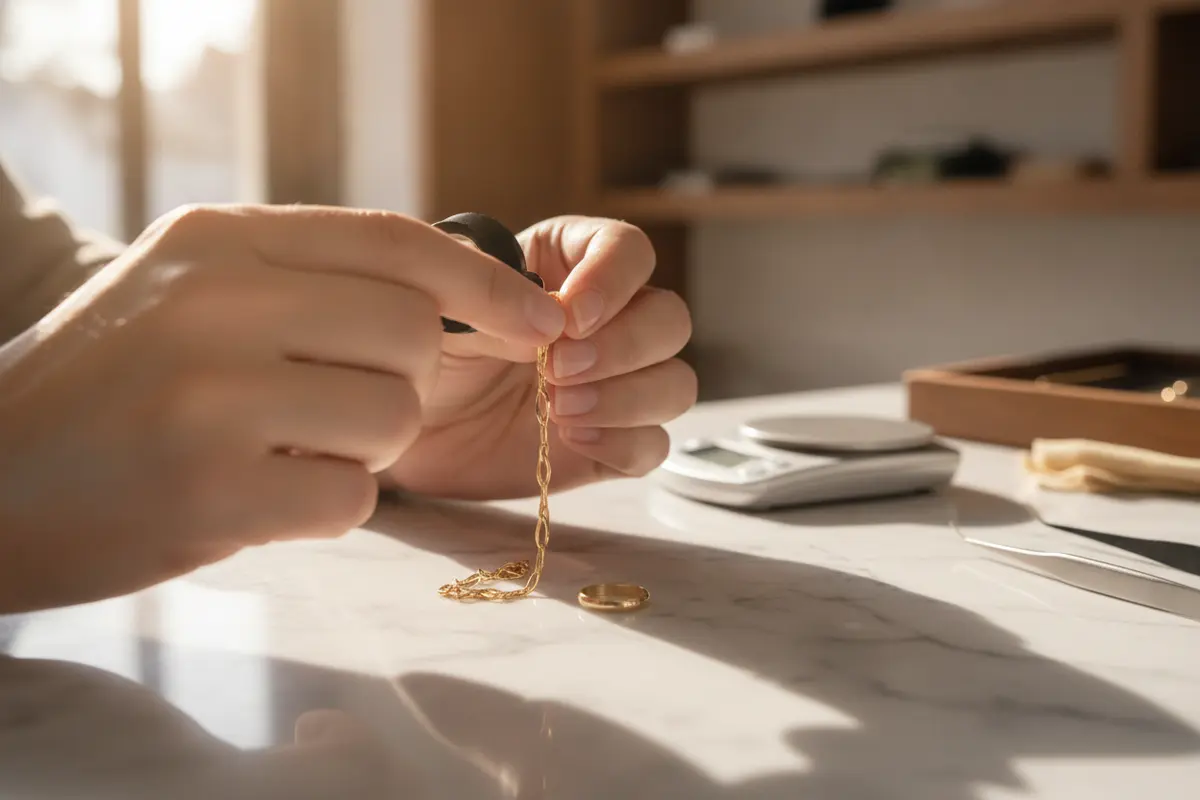
- Gather the pieces. Keep items together and separate anything you are not ready to sell. Do not clean or alter jewelry just to influence an evaluation.
- Note what you know. Record known karat marks, approximate age, and whether you have receipts or documentation. Do not treat a stamp as a guaranteed assessment.
- Photograph the items. Take clear pictures from several angles and include close views of marks or damage. Keep the photos for your records.
- Write down questions. Ask how the buyer evaluates the pieces, what payment terms apply, and what happens if you decline.
- Compare the complete process. Consider shipping, insurance, return arrangements, communication, and payment timing—not only the first estimate.
How can you keep your decision deliberate?
Separate the decision into stages. First decide which pieces you are willing to sell. Next, gather information and ask for an explanation of the assessment. Then review the written terms and decide whether the offer and process suit you. You do not need to decide on every item at once; ask whether the buyer can discuss individual pieces and whether you can choose what to include in a transaction.
This approach is useful when a group includes jewelry with different histories or conditions. For example, you might have a broken chain, a pair of earrings with one missing mate, and a ring with a clear purity mark. Record each item separately, ask how each is treated, and compare the explanations. Do not treat the example as a prediction of value: the actual evaluation depends on the individual pieces and the buyer's process.
For a local conversation, the Kravit Jewelers contact page is a practical starting point. You can also review the store's fine jewelry selection for context about its range; this does not establish that a specific item will be purchased.
Ask about an in-person gold consultation
Frequently asked questions
Can I get a final offer before sending gold jewelry?
An online buyer may provide an initial estimate, but a final offer can depend on physical inspection. Ask what information the estimate uses and what could change it before you ship anything.
Should I clean my gold jewelry before an evaluation?
There is no need to alter a piece to prepare it. Keep it as it is, and share any details you know about its history or condition.
What if I do not accept an online buyer's offer?
Check the return policy before sending the jewelry. Confirm whether return shipping has a cost, how the items are insured, and how long the return process may take.
Does an in-person consultation mean the store will buy my jewelry?
No. A consultation is an opportunity to discuss the pieces and understand the evaluation. Whether a buyer makes an offer, and what that offer is, depends on the individual items and the buyer's review.
Which option is right for you?
An online process may suit someone who values starting from home and is comfortable reviewing shipping and return terms. A local visit may suit someone who prefers direct questions and a face-to-face explanation before making a decision. In either case, understand the evaluation, payment, and decline process in advance. Take time to compare the complete terms, and choose the path that lets you make an informed decision about your jewelry.


