



If you are searching for where to sell gold jewelry near me, begin with a buyer who will explain how an evaluation works and give you room to decide. For Long Island residents, an in-person conversation can help clarify what affects an offer before you part with a piece. Kravit Jewelers is a family-owned jeweler in Oceanside that has served the community since 1927. Contact the store first to confirm whether your particular jewelry is within its current evaluation scope and what to expect on a visit.
Call to ask about an in-store jewelry evaluation
What should you look for in a local gold buyer?
A useful first conversation is clear, specific, and free of pressure. Ask the buyer what types of jewelry they currently review, how they conduct an evaluation, and whether there is any fee. Also ask whether you can take the pieces home if you decide not to accept an offer. These terms can differ from one business to another, so do not rely on assumptions or on another buyer’s policy.
It helps if the person evaluating the item can explain what they have and have not determined. For example, a visible stamp may be a useful starting point, but it does not by itself establish every detail about a piece. Ask what other factors are considered, whether any additional inspection may be needed, and how the buyer arrives at a proposed amount. A good explanation should make the process easier to understand, not leave you guessing.
Think about convenience as well as the number offered. A nearby showroom lets you bring your items, ask questions face to face, and hear an explanation while the jewelry is in front of you. A remote estimate may be convenient, but the final assessment can depend on an in-person review. Kravit Jewelers serves Long Island from Oceanside; call ahead to verify the details of a visit rather than assuming every item is accepted.
How can you prepare before bringing jewelry in?
You do not need to polish or alter jewelry before asking for an evaluation. In fact, cleaning or changing a piece may make it harder to understand its original condition or construction. Gather the items as they are, and set aside anything you are not prepared to consider selling. Preparation is mainly about keeping items organized and knowing what questions you want answered.
- Sort by type. Group chains, rings, earrings, bracelets, and broken or incomplete pieces separately. This makes it easier to keep track of what the buyer reviewed.
- Note visible details. Write down any markings you can see, such as a karat stamp, and whether a piece has stones or attached components. Treat these as observations to discuss, not as a conclusion about value.
- Gather existing records. If you already have receipts, prior appraisals, or other paperwork, bring them along. They may give context, but do not assume a receipt or appraisal guarantees a specific offer.
- Make a simple inventory. Take photos for your own records and list each piece. You can note which items are sentimental or not for sale, so there is no confusion during the conversation.
- Ask about requirements. Confirm whether identification or an appointment is needed before you travel. Requirements may vary, and a quick call can prevent an avoidable second trip.
Keep sentimental heirlooms separate from pieces you are ready to sell. If a relative’s jewelry has a history you want to preserve, write down what you know before the visit. You can ask for an evaluation without deciding to sell. Separating the questions—“What is this?” and “Am I ready to part with it?”—helps you avoid treating an estimate as a decision deadline.
If you are considering a chain, you may want to review the range of styles shown in the store’s gold and silver chain collection as a reference for jewelry forms, not as a guide to an offer on a pre-owned piece. For example, a delicate chain, a substantial link chain, and a chain with a pendant are different objects to describe clearly when you call. The item’s current condition and construction still need to be considered in person.
What happens during an in-person evaluation?
The evaluator may look at visible markings, construction, condition, and the materials that make up the item. The exact process varies, so ask what can be established during the appointment and whether anything would require further examination. If a piece includes gemstones, a clasp, or non-gold components, ask how those parts are considered. Do not assume that every feature contributes to an offer in the same way.
An item’s original retail price is not automatically the same as a buyer’s offer. Retail pricing may reflect design, workmanship, brand, overhead, and the setting in which the item was sold. An offer from a buyer may be based on different factors, including the material and the buyer’s intended next step for the piece. This is why an explanation of the evaluation matters more than trying to calculate an amount from the original receipt alone.
Ask whether the buyer can describe the assessment for each item separately. If you brought a mixed group, a single total may make it difficult to see which pieces contributed to the offer. A written or clearly stated item-by-item explanation, when available, helps you compare later and correct any misunderstanding about which pieces were included.
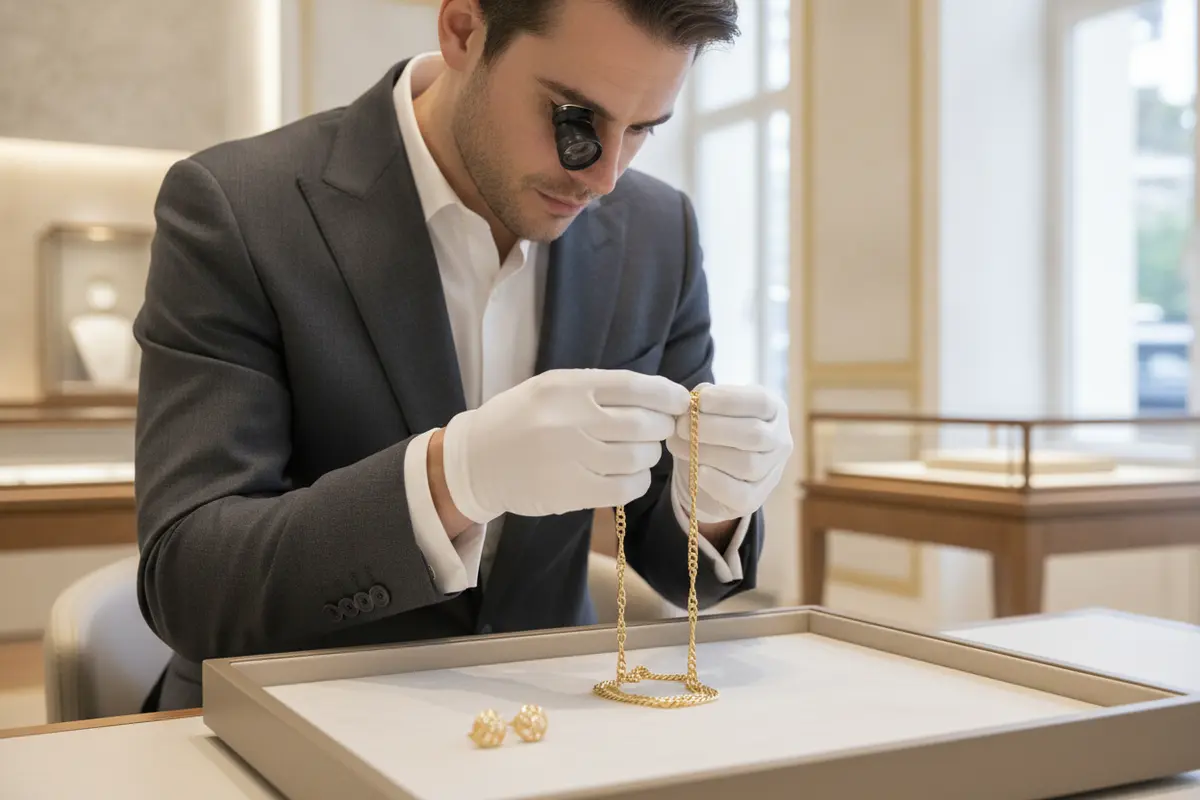
You can ask the evaluator to pause while you consider what you have heard. An evaluation is a conversation; it does not obligate you to sell. If a detail is unclear, ask for it to be restated in everyday terms. For instance, ask whether the offer applies to the complete piece or only to a portion, and whether any deduction, fee, or condition affects the amount. Never agree to a transaction until you understand its terms.
How do you compare local offers fairly?
If you want a second opinion, take the same pieces to more than one qualified local buyer. AARP’s guidance on selling gold and silver recommends visiting at least three local buyers, ideally on the same day, to compare quotes. You may not need to make every visit, but the principle is useful: keep the items and questions consistent so the answers are comparable.
Before you start, make a short comparison sheet. Record the date, the pieces reviewed, the quoted amount, and any stated conditions. Note whether the buyer evaluated items separately or together, whether the quote is subject to another review, and how long it remains available if a time limit is stated. Do not compare a quote for one chain with a total that includes several rings and earrings.
| What to compare | Question to ask | How to record the answer |
|---|---|---|
| Items included | Did you review each item, or only the group total? | List every piece included in the quote. |
| Evaluation basis | Which features or examination informed the assessment? | Note markings, condition, materials, and any limits explained. |
| Amount and terms | Is this the proposed amount, and are there fees or conditions? | Write down the full amount and all qualifications. |
| Timing | Does the quote have an expiration or require a further review? | Record the date and any stated deadline. |
| Your options | Can I take the items home and decide later? | Confirm whether you keep possession while considering. |
Imagine that one buyer gives a total for a small group, while another gives separate assessments for each piece. The totals may look easy to compare, but first check that both buyers included the same items and used the same assumptions. If one buyer left out a stone-set ring or treated two broken earrings as a pair, ask for clarification before drawing a conclusion. A careful comparison can reveal that the apparent difference came from the items or terms, not from an apples-to-apples evaluation.
Also compare the experience, not just the top-line amount. Did the buyer answer questions directly? Were the items kept identifiable during the conversation? Could you leave with the jewelry if you chose not to proceed? A process that is easy to understand gives you better grounds for a considered choice. If something feels unclear, take your notes and seek another opinion instead of making a rushed decision.
It can also help to distinguish a piece’s form from its material. A chain, bracelet, or ring may contain different components, so describe what you can see and let the buyer explain what the evaluation establishes. For a retail example of one type of gold jewelry, see this yellow gold chain anklet. It is not a comparable sale or an estimate for your item; it simply shows why a clear description of style and construction can make your first call more productive.
When you compare answers, write down what each buyer says they can establish at that visit and what remains uncertain. If one answer depends on additional inspection, include that qualification in your notes instead of comparing it as though it were a final offer. The more clearly you separate an initial estimate from a confirmed offer, the easier it is to decide what follow-up is worthwhile. For another design example, this yellow gold ring with ruby and diamond accents shows why describing stones and settings can help you explain what you are bringing in. It is a retail listing, not a comparable valuation for pre-owned jewelry.
Call Kravit to confirm whether your pieces are in scope
What details can change how an offer is explained?
Jewelry is often more complex than a single stamp or a simple description such as “gold ring.” Pieces may combine different materials, include stones, or have repairs and wear that are not obvious in a photograph. If you know that a clasp was replaced or a ring was resized, mention it as background. You are not expected to diagnose the item yourself; sharing what you know helps the evaluator understand its history and explain what remains uncertain.
Condition is worth discussing, but avoid making repairs or removing parts simply to prepare for a sale. A broken clasp, a missing earring mate, or a chain that has separated can all be described as they are. Ask whether the condition affects the evaluation and how. If the buyer cannot determine something during the first look, find out what further examination would involve before agreeing to any next step.
Design and sentimental meaning can matter to you even when an offer is being discussed on a different basis. If a piece was handmade, inherited, or bought for a milestone, explain that context, then ask whether it changes how the buyer approaches the evaluation. Do not assume that a personal story, brand name, or original price will be reflected in the same way by every buyer. The useful question is what the specific buyer is considering and why.
For a familiar example of how different gold designs are presented at retail, the store’s designer gold jewelry collection includes a range of styles. That collection is not a valuation tool, and a new retail item is not a direct comparison for used jewelry. It simply illustrates why describing the form and design of your own piece can make an initial conversation more precise.
How should you decide whether to accept an offer?
Before the appointment, separate your practical goal from the price you hope to receive. You may be clearing out pieces you no longer wear, deciding what to do with inherited jewelry, or simply learning what a buyer would consider. Each goal may lead to a different decision. If the purpose is only to understand the piece, say so when you begin and ask whether the buyer can provide an assessment without requiring a sale.
When an offer is presented, pause to check three things: which exact items it covers, whether the amount is final or conditional, and whether you have time to consider it. If you brought six pieces but only four were assessed, do not treat the total as an offer for the full group. If a buyer says that a detail needs further review, note that qualification and ask what will happen next. These small checks prevent a misunderstanding from becoming the basis of your decision.
It may help to compare the offer with your notes from other evaluations, then ask any remaining questions before agreeing. You do not have to disclose another buyer’s quote to request clarification. You can simply ask what is included and whether any fees or additional conditions apply. If the explanation still feels incomplete, take the jewelry home and consider whether another opinion would help. A deliberate choice is more useful than a quick answer you later regret.
How can you plan a visit without feeling rushed?
Choose a time when you can focus on the conversation rather than fitting it between several errands. If there are many pieces, let the store know when you call. You can ask whether an appointment is recommended, whether the team can review the quantity you have, and how much time to allow. These are practical planning questions, not assumptions about what the store will accept.
Bring your inventory and keep each item in a separate small pouch or compartment if you already have one. Avoid placing loose jewelry together where pieces could tangle or small parts could become difficult to identify. Keep your notes and documents separate from the jewelry. When you arrive, compare your list with the items you hand over and ask how the buyer will keep track of multiple pieces during the discussion.
If the store cannot review a particular item or needs more information, ask what the next step is and whether you should take the piece with you. Coin acceptance and gold-bar acceptance have not been confirmed for Kravit, so do not assume those items can be evaluated or purchased. Call first and describe exactly what you have. This article is focused on jewelry; a quick scope check is especially important when the item is not a wearable jewelry piece.
It may help to decide in advance what you need to know before considering an offer. For example, you might want an explanation of how the offer was reached, time to compare another quote, or confirmation that you can leave with the jewelry. These are reasonable points to clarify. You do not have to decide on the spot simply because you made the trip.
What should you confirm before visiting Kravit Jewelers?
Before traveling to Oceanside, contact the store and describe the jewelry you want reviewed. Mention the type of piece, any visible metal markings, whether stones are present, and whether the item is broken or incomplete. Ask whether it is within the store’s current gold-buying scope, whether an appointment is recommended, and what you should bring. The store can confirm the latest details directly.
Kravit Jewelers is a family-owned jeweler serving the Oceanside community since 1927. A local visit lets you ask questions in person, but the specific items accepted and the terms of an evaluation must be confirmed with the store. You can also browse a current example of a gold chain, such as this gold bead chain, to see how a jewelry item may be described online. A listed retail piece is not a basis for estimating what a buyer may offer for a different item.
Speak with Kravit before making the trip
Frequently asked questions
Should I clean gold jewelry before an evaluation?
No special cleaning is needed. Avoid polishing, altering, or removing parts just to prepare. Bring the piece in its current condition and ask how condition factors into the assessment.
Does a karat stamp determine what my jewelry is worth?
A stamp can be a clue about metal content, but it is not a complete evaluation. A buyer may consider the full construction, condition, stones, and other features. Ask how the stamp was verified and what else informed the assessment.
Can I get several opinions before deciding?
Yes. You can ask more than one local buyer to review the same pieces. Keep a record of what each person examined, the explanation provided, and any fees or conditions so you can compare like with like.
Does Kravit Jewelers evaluate gold coins or bars?
Acceptance of specific coins or gold bars has not been confirmed. Contact Kravit before visiting and describe exactly what you have so the store can confirm whether it can help.
What if I decide not to sell after an evaluation?
Ask the buyer beforehand whether you can take the items home and whether any terms apply if you decline. An evaluation conversation is not automatically a commitment to sell, but you should understand the buyer’s process before handing over your jewelry.
What is a sensible next step?
Choose a local buyer who explains the evaluation clearly, compare offers only when the same pieces and terms are being considered, and give yourself time to decide. If you are in the Oceanside area, contact Kravit Jewelers first to confirm whether your jewelry is suitable for an evaluation and what to expect when you visit.


