



Schedule time to understand your ring before you decide where to sell it. People searching for trusted gold buyers for engagement rings are often protecting more than metal weight. A diamond, colored gemstone, setting, craftsmanship, documented history, or personal meaning may deserve careful attention.
Explore a private conversation about selling an engagement ring
Answer: Trusted gold buyers for engagement rings explain what they are evaluating. They examine gemstones and settings carefully, protect your privacy, and separate confirmed details from assumptions. They should give you a clear, item-specific discussion without pressuring you to accept an offer.
For owners in Oceanside and across Long Island, a private conversation with a credentialed jewelry professional can make the process more comfortable. Start by asking about the buyer's expertise and documentation standards. Ask how the ring itself will be examined. Compare those standards before handing over a sentimental or potentially valuable piece.
What Makes Trusted Gold Buyers for Engagement Rings Different?
Takeaway: A careful buyer looks beyond melt value, explains the evaluation, and gives you room to decide without pressure.
An engagement ring may contain value in its metal, but that is only one part of the story. The diamond or colored gemstone, the quality of the setting, the ring's condition, its craftsmanship, and any documented history can all matter. A trustworthy evaluation identifies those elements instead of treating the piece as anonymous scrap.
Which credentials should you look for?
Ask who will examine the ring and what training they bring to the process. Gemological credentials do not guarantee a particular offer. They show that the person assessing the piece has relevant knowledge. At Kravit Jewelers, GIA Graduate Gemologists provide expertise in diamond grading and gemstone identification. That background supports a more informed discussion about what is present in the ring.
It is also reasonable to ask whether the buyer can explain the difference between metal content and the characteristics of the stone. A gold buyer who cannot discuss the diamond, gemstone, setting, or condition may be equipped for a melt-only transaction. That is not necessarily the right process for an engagement ring with details beyond its metal weight.
Why does local accountability matter?
A longstanding local business gives you a physical place to return to. Its reputation is connected to the community it serves. Kravit is family-owned and has served Long Island since 1927. It has operated at its current Oceanside location since 1976. That history is not a promise about the value of any individual ring. It is a useful signal of continuity and accountability when choosing whom to trust.
Privacy matters, too. Private consultation rooms and dedicated experts allow you to discuss the ring's history and your goals in a more comfortable setting. The right environment should feel discreet and professional, not rushed or performative.
What questions should a careful buyer answer?
Before moving forward, ask what the evaluation includes. Ask whether the stone will be examined separately from the setting. Ask how condition or missing documentation may affect the discussion. Request the reasoning behind the assessment in language you can understand. You should also be able to take time to consider your options. A no-pressure approach matters when an engagement ring carries emotional history or when you are not ready to decide during the first visit.
For Oceanside and Long Island clients, Kravit's gold-buying service provides a place to begin that conversation with item-specific attention, gemological expertise, and local accountability. The goal is clarity about the ring in front of you, not a rushed conclusion.
What Documentation Should You Bring When Selling an Engagement Ring?
Summary: Bring any available receipts, laboratory reports, appraisals, repair records, designer paperwork, and provenance. These documents can help establish an item's identity and history. Missing paperwork does not automatically disqualify a ring from consideration or guarantee a particular value.
Gather the ring's paperwork before an evaluation, but do not worry if the original folder is incomplete. Documentation gives a buyer useful context and may help distinguish the ring's materials, design, and history from assumptions based only on appearance. A careful review should still consider the piece itself, including its metal, gemstones, condition, craftsmanship, and any brand or designer details that can be verified.
Which receipts and purchase records are useful?
Original receipts can show when and where the ring was purchased, how it was described at the time, and whether the documentation identifies the metal, gemstones, designer, or model. Bring the full receipt if you have it, along with an original box, warranty card, or certificate that belongs with the ring. These items can support an informed conversation, although a receipt is not a guarantee of today's resale value. Retail purchase price and a current buyer's assessment are different measurements.
Should you bring a diamond or gemstone laboratory report?
Yes, bring any laboratory report or grading document issued for the center stone or other significant gemstones. A report may record characteristics such as the stone's identity and documented grading details. Keep the report with the matching ring whenever possible, since the evaluator may need to compare the document with the physical stone and setting. If the ring has replacement stones or has been altered, mention that history rather than assuming older paperwork describes its present condition exactly.
What do appraisals, repair records, and provenance add?
Prior appraisals can provide useful background, especially when they were prepared for a defined purpose such as insurance, an estate matter, a divorce settlement, tax documentation, or a pre-purchase decision. An appraisal is purpose-specific, so it should not be treated as an automatic purchase offer. If you need current documentation, a professional jewelry appraisal can help explain what an appraisal is designed to document.
Repair invoices and service records may reveal resizing, stone setting, tightening, replacement, restoration, or refinishing. That history helps an evaluator understand how the ring has been maintained and whether a visible difference reflects an intentional change. Designer paperwork, signed certificates, estate documents, family records, and other provenance can also add context when their connection to the ring is clear.
If documents are missing, be candid about what you know. A reputable evaluation should not depend on pressure or on a single piece of paper. Bring the ring, any supporting materials you can locate, and relevant ownership or alteration history. The goal is a transparent, item-specific assessment that separates documented facts from questions requiring closer examination.
How Should a Buyer Evaluate the Diamond and Setting?
Summary: A careful engagement ring evaluation separates the metal from the diamond or other gemstones, the setting, condition, craftsmanship, and design context. That broader review helps preserve distinctions that a melt-only assessment may overlook.
Gold weight matters, but it is only one part of an engagement ring. A trustworthy evaluation identifies the metal, its purity, hallmark, and overall condition. The buyer should then examine the center stone, side stones, setting, and workmanship separately. This approach matters when a ring has sentimental design details or gemstones that warrant attention beyond metal content.
What should be examined in the diamond or gemstone?
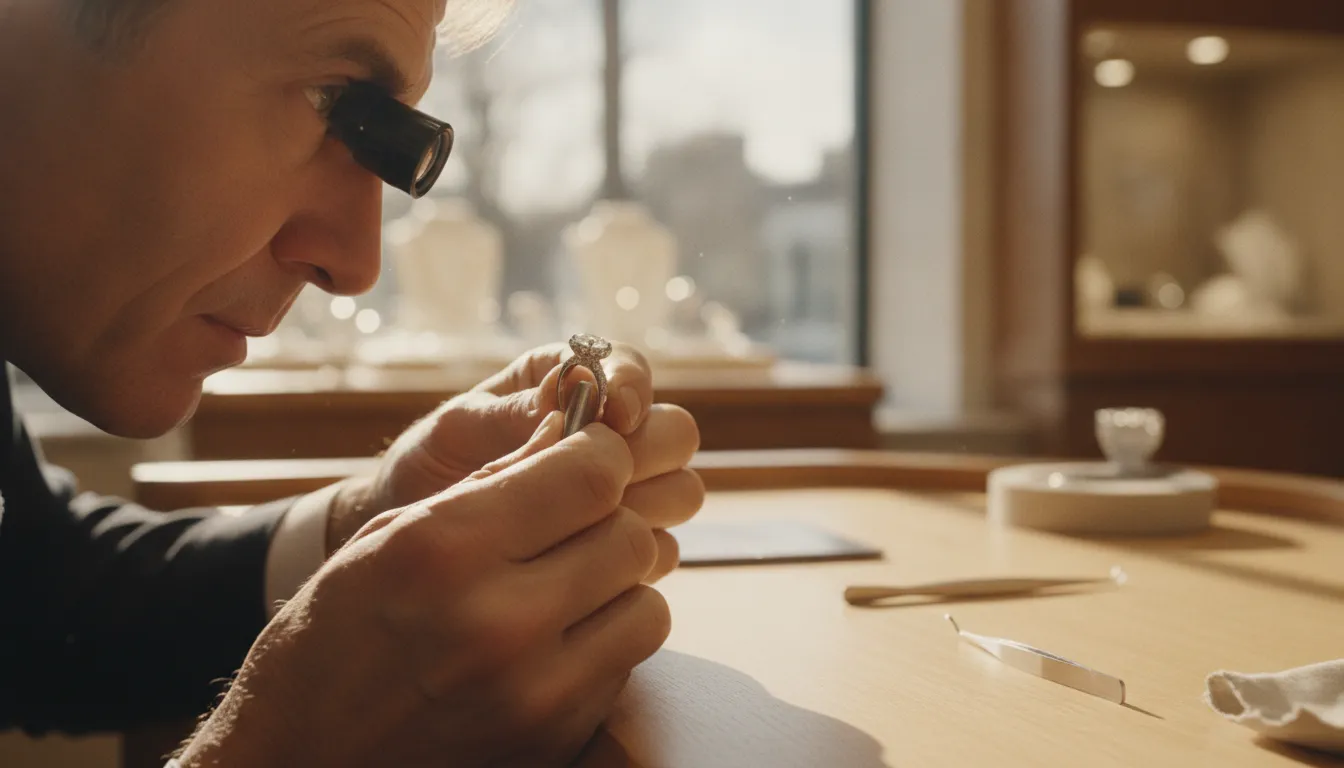
The diamond should be handled carefully. An evaluator may review its apparent quality, condition, and available grading documentation. If the ring contains colored gemstones, the evaluator may need to identify the stone and consider treatments, durability, wear, and how it is set. Those details can affect how the piece is understood. They do not automatically establish a purchase value. Missing paperwork does not make a ring worthless. It may mean that more examination is needed before a conclusion is reached.
Look for a process that distinguishes observation from assumption. An evaluator should be willing to explain what can be confirmed, what remains uncertain, and whether the stone requires additional testing or specialist review. Questions about the center stone, accent stones, treatment, and condition should receive clear answers rather than being folded into one unexplained number.
Why does the setting and condition matter?
The setting protects the stones and influences how the ring wears. Prongs should be checked for looseness or thinning, while the evaluator may also look for chips, abrasion, bent metal, worn channels, and signs of previous resizing or repair. The construction of the ring can reveal craftsmanship and help explain whether the piece is ready to wear, needs service, or should be considered primarily for its materials.
Professional stone handling is relevant even when the owner is considering selling. Kravit's documented capabilities include stone setting, tightening, diamond and gemstone replacement, ring services, restoration, and refinishing. Learn more about its jewelry repair expertise if the ring needs attention or if you want its condition explained before making a decision.
Finally, design, maker, and provenance may provide useful context when verified, but they should not be assumed to add value without support. Ask the evaluator to separate metal content, gemstone characteristics, condition, craftsmanship, and documented history in the explanation. That transparency gives you a more informed basis for deciding whether to sell the ring as-is, repair it, seek an appraisal, or explore another option.
How Can You Protect Privacy During a Ring Evaluation?
Summary: Protect your privacy by choosing an evaluation setting that allows a private conversation. Ask how your ring will be documented, request an explanation of each component, and take enough time to decide without pressure.
An engagement ring can carry financial value, personal history, or both. A careful evaluation should respect that context. Before handing over the piece, ask where the assessment will take place and whether you can discuss the ring in a private consultation area rather than in a crowded sales floor. You should feel comfortable asking questions about the process, the people handling the jewelry, and what information will be recorded.
What should a transparent evaluation include?
Start by asking how the ring will be examined and documented. A clear process may identify the metal, describe the center stone and any accent stones, and note visible condition issues. It should distinguish observations from conclusions about value. If the ring has a designer name, laboratory report, previous appraisal, repair history, or other supporting paperwork, ask how that information will be considered. Missing documents should lead to questions and further examination, not embarrassment or pressure.
Request an explanation of each important component in plain language. For example, you can ask how the metal content, gemstone characteristics, condition, craftsmanship, and design context affect the evaluation. If a component cannot be confirmed during the initial review, the evaluator should say so rather than present an assumption as a fact. This level of communication helps you understand what is known, what needs further inspection, and what an assessment does not establish.
How can you keep control of the decision?
Ask what happens after the evaluation and whether you can take time to consider your options. A no-pressure conversation gives you room to review the explanation, gather documents, compare your priorities, and decide what to do next. You should not feel obligated to accept an offer, authorize another service, or make an immediate decision simply because the ring has been examined. If the evaluator cannot explain the next step clearly, that is useful information when comparing local buyers.
Kravit Jewelers documents a private consultation and clear, no-pressure guidance as part of its customer experience. Its showroom is located at 3151 Long Beach Rd, Oceanside, NY 11572, where Long Island customers can discuss an engagement ring face to face. To learn more about the process, visit the page about selling an engagement ring. An initial conversation can help you understand the evaluation process before deciding how to proceed.
How Do You Compare Gold Buyers Before You Decide?
When you compare trusted gold buyers for engagement rings, look beyond the convenience of a nearby address or a quick verbal estimate. An engagement ring may represent substantial craftsmanship, gemstone value, personal history, or all three. A sound evaluation separates those considerations instead of treating the ring as anonymous scrap metal.
Use the checklist below before choosing where to bring your ring. You do not need to have every document or know every jewelry term in advance. The buyer's willingness to explain the process, examine the complete piece, and give you time to consider your options is itself useful information.
| Criterion | What to look for | Questions to ask |
|---|---|---|
| Credentials | Jewelry, gemological, or appraisal expertise that is clearly explained. | Who examines the ring, and what experience do they have with diamonds and colored gemstones? |
| Metal testing | A careful method for identifying metal type and purity, rather than an unexplained conclusion. | How will the metal be tested, and will the result be explained to me? |
| Gemstone review | Separate consideration of the center stone, accent stones, setting, condition, and design. | Are the gemstones being reviewed independently from the metal weight? |
| Documentation | A clear written record of what was examined and how the assessment was reached. | Will I receive an itemized explanation or written evaluation? |
| Privacy | A discreet setting where personal circumstances and jewelry details can be discussed comfortably. | Can the evaluation take place in a private consultation area? |
| Decision time | Room to review the information without pressure to accept an immediate outcome. | May I take time to consider my options before deciding what to do? |
Why does an itemized explanation matter?
An itemized explanation helps you understand which characteristics shaped the assessment. It can distinguish metal content from gemstone characteristics, condition, craftsmanship, and design context. That distinction is especially important when a ring includes a diamond or other gemstone that deserves individual attention. A missing receipt or laboratory report should not automatically end the conversation, but bringing available records can give the evaluator helpful context.
Also consider whether the business can address practical questions after the evaluation. A full-service jeweler may be able to discuss repair, restoration, appraisal, or other options if selling is not the right next step for your circumstances. Kravit Jewelers offers gold buying and appraisal services in its Oceanside showroom, with GIA Graduate Gemologists on staff and a documented emphasis on private, consultative service. The goal is a clear conversation about your particular ring, not a promise that every ring will be purchased or that a specific value will result.
Explore a private gold-selling discussion with Kravit Jewelers before you decide.
In short, the strongest gold buyer is not defined by a headline offer. Compare credentials, complete-ring examination, testing methods, documentation, privacy, and the freedom to make an informed decision. Those standards help you protect both the material and sentimental considerations attached to an engagement ring.
Frequently Asked Questions About Trusted Gold Buyers for Engagement Rings
Who is the most reputable gold buyer?
A reputable buyer is transparent about credentials, testing, documentation, gemstone handling, privacy, and how an item-specific assessment is reached. Look for a professional who examines the whole ring, explains what can be confirmed, answers questions in plain language, and gives you time to decide without pressure.
Where can I get the most money for an engagement ring?
No single buyer or method guarantees the highest outcome for every ring. The amount a buyer may discuss depends on the metal, gemstones, setting, condition, craftsmanship, documentation, and current market factors. Compare evaluation methods rather than choosing based only on a headline promise. A jeweler who can explain the ring's separate components may give you a more useful understanding of your options.
How can I sell my engagement ring for the most money?
Start by gathering receipts, laboratory reports, prior appraisals, repair records, designer paperwork, and any history you have. Then choose an evaluator who handles the stone carefully, examines the setting, explains the metal and gemstone findings, and provides a clear, item-specific discussion. You do not need to accept an offer simply because you requested an evaluation.
Where can I get the most money for a gold ring?
Gold value is influenced by purity, weight, and market conditions, but an engagement ring may also include a diamond, colored gemstone, designer details, and craftsmanship. Ask whether the buyer evaluates those features separately from the metal. The most responsible next step is a transparent review of the actual ring, not an assumption based on weight alone.
Ready to Discuss Your Engagement Ring?
If you are considering selling an engagement ring, begin with a conversation that respects both its materials and its history. Kravit Jewelers offers gold buying and appraisal expertise in a private, no-pressure setting in Oceanside, NY. An item-specific review can help you understand the ring's metal, diamond or gemstones, setting, condition, and available documentation before you decide what to do next.
Visit Kravit's gold-selling page to learn more about starting the conversation and preparing your piece for review.


