


A gold chain is more than a length of metal. Its karat mark, total weight, clasp, added components, and condition can all affect how a buyer evaluates it. A sentimental or distinctive design may also deserve consideration beyond scrap value.
Explore Kravit's gold-buying service
If you are wondering where to sell gold chains for cash, start with a reputable local jeweler that can inspect the chain in person. Explain its purity and weight, and discuss your options without promising a value before evaluation. In Oceanside and across Long Island, an in-person review can be especially helpful when a chain is broken, mixed with other metals, set with stones, or connected to a family history.
Before choosing a buyer, take a careful look at the chain itself. Knowing what to examine, and what information to bring, helps you ask better questions and make a considered decision about selling, repairing, redesigning, or keeping it.
What Should You Check on a Gold Chain Before Selling It?
A careful inspection helps you describe the chain accurately and ensures that important details are not overlooked during an in-person evaluation. Before deciding where to sell gold chains for cash, examine the piece in good light and note what you can confirm yourself. A karat stamp is useful evidence, but it is only one part of the review.
Start with the karat mark
Look closely near the clasp, end tab, or another discreet area for a karat mark such as 10K, 14K, 18K, or 24K. The karat system divides the metal into 24 parts. According to the U.S. Geological Survey, 24K represents pure gold, while 12K represents an alloy that is half gold and half other metal. The Federal Trade Commission also explains that the karat quality mark indicates how much pure gold a jewelry item contains.
A stamp should be treated as a starting point rather than an automatic guarantee. Note whether the mark is clear, worn, or difficult to locate. If there is no visible mark, do not assume the chain is worthless or that it is a particular karat. A professional can discuss how purity is identified and verified.
Inspect the chain body and hardware
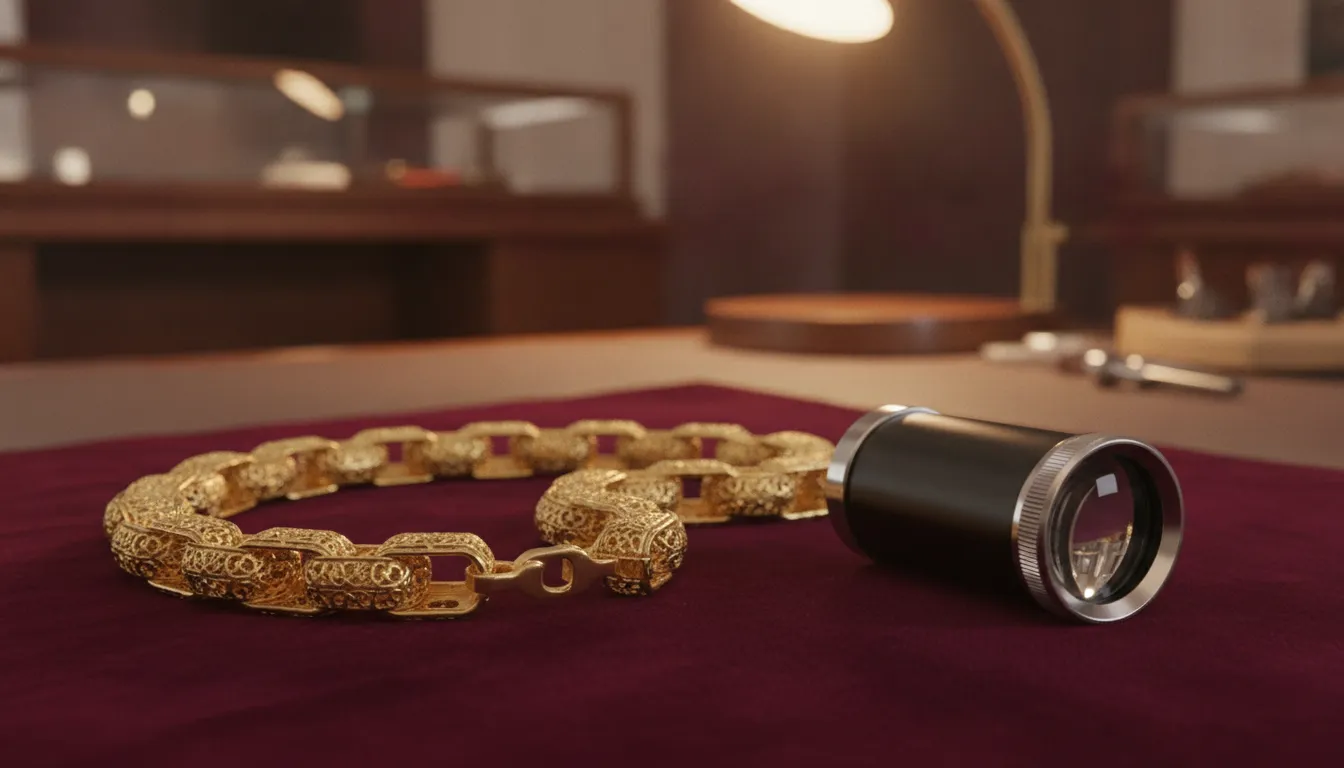
Consider the chain as several connected components. Look at the links for stretching, thinning, kinks, open seams, or areas where the metal has worn. Check the clasp, end rings, and jump rings, which are the small connecting rings attached to the chain. These parts may be made differently from the main chain, so ask how non-gold components will be accounted for during an evaluation. The FTC's jewelry guidance recommends looking for the karat quality mark and understanding what the mark represents.
Also record whether the chain includes stones, enamel, beads, plating, or other inserts. Do not remove anything before an evaluation. A design feature may affect how the piece is assessed, and removing components could damage the chain or erase useful context.
Note weight and condition without guessing value
Write down any weight shown on reliable paperwork, but do not use a household scale to create a definitive valuation. The relevant weight may need to distinguish the gold from clasps, stones, or inserts. Condition matters as well. A broken chain, missing clasp, repaired link, or heavily worn section should be disclosed honestly. Gather receipts, certificates, or prior documentation if available, especially for an inherited chain or one with gemstones. Paperwork can provide helpful history, but its absence does not prevent a professional assessment.
Where Can You Sell Gold Chains for Cash in Oceanside?
The right selling route depends on how much you value hands-on inspection, clear explanations, security, and convenience. A gold chain is not always a simple piece of scrap metal. Its karat mark, weight, clasp, stones, inserts, condition, and design can all affect how it should be assessed. An in-person buyer can examine those details directly, while an online estimate may depend on information and photographs supplied by the seller.
For Oceanside and nearby Long Island sellers, a local jeweler offers the opportunity to discuss the chain face to face and ask how purity, weight, and non-gold components are being considered. Kravit Jewelers has provided gold buying among its professional jewelry services since 1927. You can review Kravit's gold-buying service before deciding whether an in-person evaluation fits your needs.
| Selling route | Physical inspection | Transparency and security | Convenience |
|---|---|---|---|
| Local jeweler | Face-to-face review of karat marks, chain construction, weight, and condition. | Ask how the chain is tested, weighed, and separated from non-gold components. You can evaluate the setting and environment in person. | Convenient for Oceanside and surrounding communities, with no shipping required. |
| Online buyer | Usually begins with photographs or a description. The buyer inspects the item after it is shipped. | Review shipping instructions, documentation, and written policies carefully. The FTC recommends researching a seller rather than relying only on online or social media information. | Useful when shipping is preferable to visiting a showroom, but requires packaging and transit. |
| Pawn-style counter | Often allows an immediate visual review at the counter, but ask what testing and component accounting are included. | Request the terms in writing and make sure you understand whether the transaction is a sale, loan, or another arrangement. | May be accessible for a quick conversation, though policies and evaluation depth vary by business. |
| Private sale | You show the chain directly to prospective buyers, but independent verification may be limited. | Requires care with personal safety, payment, meeting location, and written records. There may be less professional accountability. | Can provide control over the listing and timing, but finding a serious buyer may take longer. |
Before choosing a buyer, ask what will happen during the evaluation and how the result will be documented. The FTC also advises checking a seller's policies in writing. If you prefer local guidance, a professional showroom in Oceanside lets you bring the chain, ask questions, and decide without basing the conversation on an unverified online estimate.
How Does an In-Person Chain Evaluation Work?
An in-person evaluation gives you a clearer understanding of what a gold chain is made of and which details may matter beyond its appearance. A knowledgeable buyer should examine the piece methodically, explain the findings in plain language, and give you room to decide what to do next.
How is purity identified?
The evaluation typically begins with the chain's karat mark or hallmark, if one is present. That mark indicates the proportion of pure gold in the alloy. A professional should also explain how purity is tested rather than treating a stamp as the only evidence. Ask whether the result applies to the chain body, the clasp, and any added sections. Clasps, jump rings, soldered repairs, and inserts may not have the same metal content as the main links.
Why do weight and components matter?
The chain is weighed as part of the review, then its construction is considered in context. A scale reading alone does not describe the entire piece. The evaluator should note whether the chain contains non-gold components, hollow or reinforced sections, attached stones, enamel, or other materials. Stones may be assessed separately when they are present, while settings and the way they are attached can affect what can reasonably be considered in the evaluation.
Condition is another practical consideration. A broken clasp, stretched links, severe wear, or prior repair may influence whether the chain is best sold, repaired, redesigned, or kept. A chain's style and craftsmanship can also matter, especially when the piece has a distinctive design or potential appeal beyond its metal content. GIA explains that a trained appraiser considers quality, market availability, desirability, and local demand when evaluating jewelry, not simply one isolated characteristic: GIA's jewelry-selling guidance.
Visit Kravit's gold-buying service for an in-person chain evaluation.
Why are online estimates limited?
An online calculator or estimate can be a useful starting point, but it cannot reliably account for an unseen clasp, uncertain purity, exact weight, condition, attached stones, or design context. Photos may not reveal hollow construction, repairs, or markings. GIA describes fair market value as an appraiser's opinion of what a willing buyer will pay a willing seller, and recommends considering the appraiser's education and experience. Those factors help explain why an in-person conversation is more informative than an anonymous estimate alone. Ask how purity was identified, how weight was measured, which components were included, and how the chain's condition and design were considered before you make a decision.
What Should You Bring to a Gold-Chain Evaluation?
A little preparation can make an in-person evaluation more useful, especially when a chain has a distinctive design, an unclear history, or more than one type of material. You do not need to become a jewelry expert before you visit. Bring the chain as it is, along with any information that helps explain what you own and what you hope to decide.
Bring the complete chain and its markings
Place the chain, clasp, and any attached pieces together in a small pouch or box. If you can locate a karat or maker marking, point it out, but do not assume that a stamp tells the entire story. A karat mark indicates the proportion of pure gold in the alloy. The U.S. Geological Survey explains that gold fineness is expressed in parts out of 24, while the Federal Trade Commission advises consumers to look for a karat quality mark when identifying gold jewelry. You can review the FTC's guidance on gold jewelry quality marks before your appointment.
Bring the clasp and jump rings rather than detaching them. Mention stones, beads, enamel, plated sections, or other inserts attached to the chain. These components may need to be considered separately from the chain body. Also point out visible wear, stretching, kinks, missing links, or a broken clasp. An incomplete or damaged chain is still worth discussing, but its condition and components may require a different evaluation conversation than an intact piece.
Gather paperwork if you have it
Receipts, prior appraisals, insurance records, designer information, and repair records can provide helpful history. They may be especially useful for an inherited chain or one with gemstones. Documentation is not a reason to postpone an evaluation if you cannot find it. GIA notes that an appraiser considers the jewelry itself and relevant market factors, and that professional judgment can help establish a clearer basis for discussion than an online estimate alone. Bring paperwork as supporting context, not as a substitute for examining the physical chain.
Share the story and your decision points
If the chain was inherited, unworn, gifted, or connected to a meaningful occasion, say so. Sentimental value may not be reflected in a material assessment, but it matters when deciding whether selling is right for you. Be clear about whether you are considering selling, repairing, redesigning, or simply learning more. Identification should be brought only if the buyer requests it, and you can ask in advance what information is needed.
If the chain is damaged or you are unsure about letting it go, ask about gold chain repair options before making a decision. A careful evaluation should help you understand your choices without assuming that every chain must be sold.
How Can Long Island Sellers Choose a Trustworthy Gold Buyer?
When deciding where to sell gold chains for cash, look beyond a prominent sign or a quick online estimate. A trustworthy buyer should make the evaluation understandable, give you time to consider your options, and handle your jewelry with care. These questions can help Long Island sellers compare a local jeweler with any other selling route.
- Can the buyer explain how the chain will be tested? Ask what will be examined, including the karat mark, chain body, clasp, jump rings, stones, and any other materials. The FTC recommends researching a seller and not relying solely on online or social media information. A clear explanation is more useful than an unexplained figure.
- Will the process distinguish each component? A chain may contain parts that differ from the main body of the piece. Ask whether the buyer will review the chain's weight, construction, and non-gold components separately. The goal is to understand what the evaluation considered, rather than receive a vague assessment based on appearance alone.
- Are the policies and documentation clear? Before agreeing to a transaction, ask what paperwork you will receive and whether the terms are available in writing. The FTC specifically recommends finding a store's refund and return policies in writing. If a buyer cannot explain its policies plainly, pause and seek clarification.
- How will the chain be handled during the evaluation? Choose a setting where you can see what is happening and where your jewelry is handled securely. You should be comfortable asking to see the chain again, confirming which pieces belong to you, and understanding when an evaluation ends and a transaction would begin.
- Does the conversation feel consultative rather than pressured? A professional should answer questions without rushing you into a decision. Ask what factors influenced the assessment, whether the chain might have value beyond its metal content, and whether keeping, repairing, redesigning, or selling it best fits your goals. You are entitled to consider the information before proceeding.
- Can you verify a local address and relevant expertise? Kravit Jewelers is a family-owned heritage jeweler serving Long Island since 1927. Its showroom is at 3151 Long Beach Road in Oceanside, and gold buying is among its professional jewelry services. Current documented hours are Tuesday through Friday, 10 a.m. to 6 p.m., and Saturday, 10 a.m. to 5 p.m. Verify details before visiting, and ask who will evaluate your chain and what experience they bring to the process. The FTC's jewelry guidance also recommends asking people you personally know for recommendations.
A careful buyer should welcome these questions. You can also review Kravit's gold-buying service to understand the local, consultation-based approach before bringing your chain to the Oceanside showroom.
Visit Kravit's gold-buying service for a clear, in-person evaluation.
Frequently Asked Questions
What is the best way to sell a gold chain?
Start with an in-person evaluation from a reputable jeweler who can examine the chain's karat marking, weight, clasp, stones, and other components. Ask how the piece is assessed and whether the process is explained clearly before deciding. A local evaluation also lets you consider whether selling, repairing, redesigning, or keeping the chain makes the most sense.
How much is my 14K gold chain worth?
There is no reliable value based on the 14K mark alone. The karat mark indicates the proportion of pure gold in the alloy, while the chain's weight, construction, condition, non-gold components, and current market factors also matter. The Federal Trade Commission explains how karat marks indicate gold content. A professional assessment is the appropriate way to discuss the specific piece.
Where can I sell my gold chain near Oceanside?
Oceanside and Long Island sellers can choose among a local jeweler, an online buyer, a pawn-style counter, or a private sale. Compare each option for transparency, security, inspection of the physical chain, and clearly documented policies. Kravit Jewelers provides gold-buying services in Oceanside with consultation-based guidance.
Should I remove stones or repair a broken chain before selling?
Do not alter the chain before it is evaluated. Stones, inserts, clasps, and repairs can affect how the piece is examined, and removing components may destroy useful context. Bring the chain as it is and ask whether repair, restoration, redesign, or sale best fits your goals. If sentimental value matters, mention that during the conversation.
What should I bring to a gold-chain evaluation?
Bring the chain, any matching pieces, receipts or prior appraisals if available, and information about its history. These materials can provide useful context, but you should confirm any buyer-specific requirements in advance. If the chain is inherited, mixed-metal, unworn, or broken, say so, since those details help frame the evaluation.
Ready to Explore Your Gold Chain Options?
If you are considering selling a gold chain in Oceanside, an in-person evaluation can help you understand what you have and choose your next step with greater confidence. Bring your questions and let the chain's details guide the conversation. To learn more about the process and arrange your visit, visit Kravit Jewelers' gold-buying service page.


