



Preparing for official Roberto Coin jewelry repair starts with knowing the piece, describing what has changed, and asking how it will be assessed. A thoughtful handoff helps a jeweler understand your priorities without assuming the cause of a problem or promising a particular result. If you are considering professional care in Long Island, write down what you have noticed and bring the jewelry as it is.
Call to discuss your jewelry care questions
What does “official” mean when you seek Roberto Coin jewelry repair?
The word “official” can refer to different things: a brand’s own service channel, a retailer’s relationship to a brand, or simply a customer’s wish to have a branded piece handled carefully. Do not assume that every jeweler offers brand-authorized repair, or that every repair request can be completed in the same way. Ask directly which service route is available for your particular item.
Kravit Jewelers is a family-owned jeweler in Oceanside serving Long Island since 1927. Its jewelry repair process supports consultation, assessment, recommendations, restoration, and final polishing. Those are useful starting points for a conversation, but the right next step depends on the jewelry and the condition observed. Contact the store to confirm whether it can assess your specific Roberto Coin piece and the work you have in mind.
Keep the distinction clear between an assessment and a repair commitment. An initial conversation can establish what you have noticed and what you hope to achieve. A hands-on review may be needed before anyone can recommend an approach. Scope, feasibility, price, and timing should be discussed for the individual piece rather than presumed in advance.
What should you do before bringing the piece in?
Begin by recording what prompted the visit. Note the first time you noticed a change, whether it happened suddenly or gradually, and whether it appears in one place or more than one. For example, “the clasp feels loose when I close it” gives a jeweler a clearer starting point than “it needs fixing.” Keep this description factual; you do not need to diagnose the cause.
- Write down the concern in plain language, such as a loose-looking setting, a clasp that will not stay shut, a missing component, a change in fit, or a surface mark.
- Describe when you first noticed it and whether the condition has changed since then.
- Say whether the item has been cleaned, adjusted, or worked on before, if you know.
- Note your main priority: preserving the current appearance, making the piece wearable again, or asking what options are available.
- If there are multiple concerns, list them separately so the assessment can address each one.
Do not try to test a questionable clasp, pull on a setting, or wear a piece that seems at risk of losing a stone or other component. Avoid home repair attempts and strong cleaning methods before an assessment. If the jewelry has loose parts, place them in a small, secure container and bring them along. Keep the container separate from other jewelry so nothing is lost in transit.
Which details and documents are useful to bring?
Bring the item itself and any information that may help identify it or explain its history. Useful material can include a receipt, product description, appraisal, prior service paperwork, or photographs that show the piece before the concern appeared. These materials are not a guarantee of a particular service route; they simply give the jeweler context to review.
If you have documentation, keep it together in a folder or on your phone. A receipt can help identify when and where a purchase was made. A previous service record may describe past work. An appraisal or product record may contain useful details about materials or design. If you do not have paperwork, still bring the piece and explain what you know. Do not delay asking a question just because a document is missing.
Take a few clear photographs before the visit if the condition is visible. Use good light and photograph the area from more than one angle. Include a wider view that shows where the detail sits on the whole piece, then a closer view. Photos can record what the jewelry looked like before it leaves your hands, but they cannot replace a physical assessment.
How can you describe the concern without guessing at its cause?
Describe what you see, hear, or feel, not what you think must have caused it. If a stone moves, say that it seems to move and point to the location. If a chain catches, describe when it catches and whether you can see a snag. If a surface looks different, explain where and when you noticed the change. This keeps the conversation focused on observable details.
Be cautious about claims you may have heard elsewhere, such as a specific metal being damaged or a particular part needing replacement. A symptom can have more than one explanation. Let the professional examine it before deciding what work is appropriate. You can ask the jeweler to explain the observation and recommendation in everyday language.
Prioritize the questions that matter most to you. You might ask whether the piece can be assessed in store, what the assessment can determine, whether a recommendation will be provided before work begins, and what choices you have if more than one approach is possible. If preserving a detail or finish is especially important, say so before discussing options.
What should you ask during a repair or restoration consultation?
A good consultation should leave you with a clear understanding of what is known, what still needs examination, and what decision comes next. These questions can help make the conversation specific:
- Can you assess this particular piece and the concern I described? Confirm that the item and requested work are within the service scope before leaving it for consideration.
- What did you observe during the assessment? Ask for a plain-language explanation of the condition, including any uncertainty that remains.
- What do you recommend, and why? Ask how the proposed work relates to your priority, whether that is wearability, appearance, or preserving the piece.
- Will you discuss the scope and cost with me before work begins? Ask what is included and whether further findings could change the recommendation or estimate.
- What is the expected timing for this specific request? Timing can depend on the item and the work, so seek an individual estimate rather than relying on a general promise.
- How should I care for the piece while I decide? Ask what to avoid until you have chosen a next step, especially if there is a loose or missing part.
Take notes or ask for the recommendation in writing if that would help you compare options later. Before authorizing work, make sure you understand the proposed scope, the amount you are being asked to approve, and how the store will contact you if the assessment changes what can be done. You should feel comfortable pausing to consider the information.
How do assessment, cleaning, repair, and restoration differ?
These words describe different kinds of requests, and they should not be treated as interchangeable. An assessment is a review of the piece and the concern. Cleaning focuses on removing appropriate surface soil, while repair addresses a specific condition that affects a component or its use. Restoration may involve a broader effort to improve or return an item’s appearance. Which option makes sense depends on the jewelry and the professional’s findings.
| Request | What to explain | What to clarify before proceeding |
|---|---|---|
| Assessment | The visible or functional concern, when it began, and any prior work you know about. | What can be determined at the initial review and whether more examination is needed. |
| Cleaning | Whether you want routine care or have noticed a specific change in appearance. | Which cleaning approach is appropriate for the materials and design, and what it does not address. |
| Repair | The affected area and how the issue changes the way you wear or handle the piece. | The proposed work, cost, timing, and any limits or risks identified for your item. |
| Restoration | The appearance or condition you hope to improve, with any details you want preserved. | What outcome is realistic, what work is included, and whether the recommendation needs your approval first. |
This comparison is a preparation aid, not a promise that a particular option is suitable for every piece. A jeweler needs to evaluate the jewelry before recommending work. If you are unsure whether your request is cleaning, repair, or restoration, describe the concern and let the professional help classify it.
Explore more jewelry guides as you prepare
How do you protect the piece and keep your expectations clear?
Before handing over the jewelry, review the condition with the person receiving it. Point out the concern and any delicate area you have noticed. Ask what information will be recorded and how the item will be identified while it is being assessed. You can also ask what you should do if you decide not to proceed after receiving a recommendation.
Do not leave unrelated jewelry or loose items in the same pouch. Keep any detached parts together and tell the jeweler exactly what they are. If the piece has sentimental importance or a special design detail, explain that context. It may shape the questions you ask, even when it does not change what is technically possible.
Set expectations around decisions rather than outcomes. Ask when you should expect an update, but treat any timing as specific to the request and subject to what the assessment reveals. Do not assume that a visible issue can be resolved by polishing or that restoration will make an older piece look exactly as it once did. Get the recommendation and limits explained before approving work.
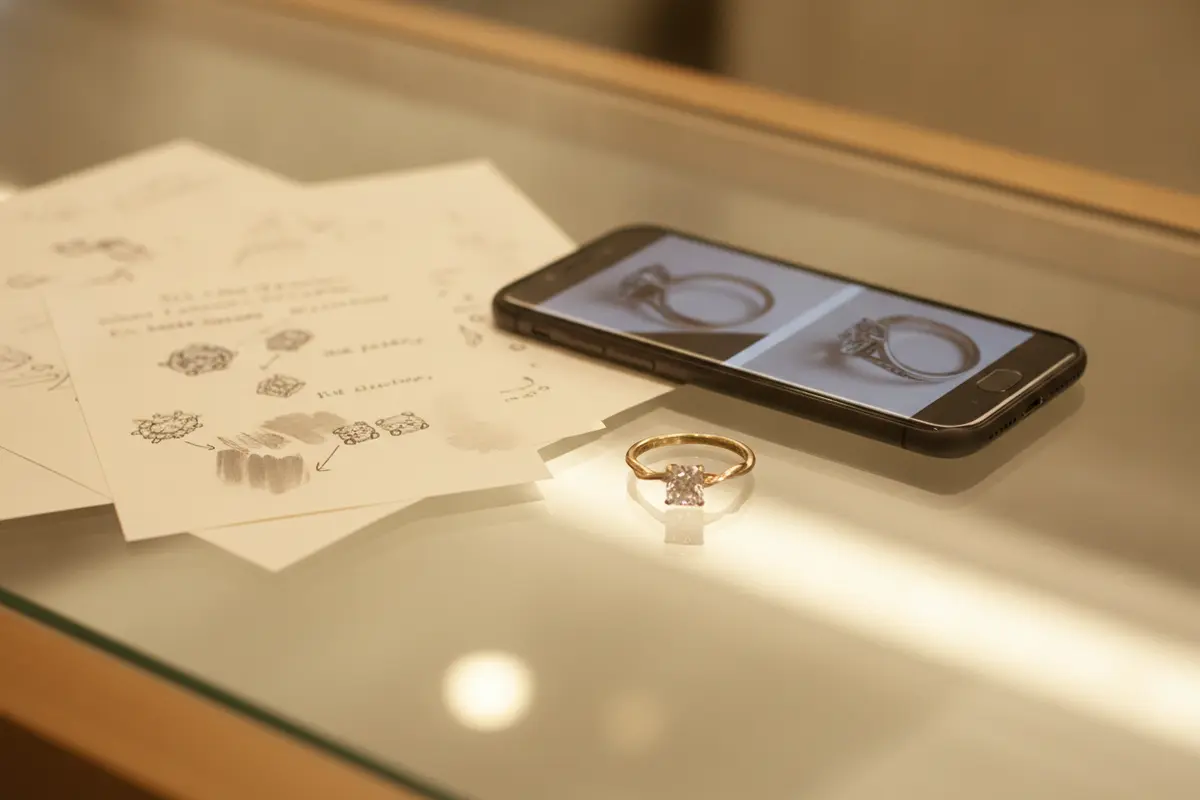
If the consultation suggests a design change rather than repair, you can discuss whether a different piece or a custom design conversation is appropriate. Kravit’s custom jewelry collection offers a useful place to explore personalization separately from a repair assessment; it should not be taken as a statement that a particular repair can be converted into a new design.
How can you make an in-person visit more useful?
Choose a convenient time to speak with the store and confirm that it can review the type of item and concern you have. Kravit Jewelers serves customers from its Oceanside showroom. Its visit information can help you plan the trip. Before you go, have your notes and any records ready, and keep the piece protected during travel.
If you are bringing several items, make a separate note for each one. A simple list might include the item description, the concern, the date you noticed it, and your question. That prevents one repair issue from being confused with another and helps you compare recommendations later. You can also prioritize which piece needs attention first.
For general consumer information about jewelry, Jewelers of America is a professional association and a starting point for its consumer resources. Use specific care guidance only when it applies to the materials and construction of your own piece; ask a jeweler when you are unsure.
Call Kravit Jewelers to ask about an assessment
Frequently asked questions
Can I request a repair for any Roberto Coin piece?
Do not assume that every piece or type of work can be accepted. Contact the jeweler with a description of the item and concern, then ask whether it can assess your specific request. The assessment and recommendation depend on the piece’s condition and the work needed.
Should I clean the jewelry before bringing it in?
Avoid aggressive cleaning or home repair attempts before an assessment, especially if something seems loose or damaged. Describe how the piece has been cared for and ask the jeweler whether cleaning is appropriate after examining it.
Will I know the cost and timing before work begins?
Ask for the proposed scope, price, and expected timing for your specific piece, and confirm how approval will be handled if the assessment changes the recommendation. Cost and timing should not be assumed before the item is evaluated.
What if I do not have a receipt or prior service record?
You can still contact a jeweler and explain what you know. Bring the piece and any photographs or other details you have. Missing paperwork does not replace the need for an assessment, but it need not prevent you from asking whether the item can be reviewed.
What is a sensible next step?
Write down the concern, gather any useful records, and ask whether the jeweler can assess your particular piece before you make plans around a repair. A clear conversation about findings, recommendations, cost, timing, and approval gives you a practical basis for deciding what to do next.


