



Vintage Roberto Coin bracelets can appeal for their distinctive design, goldwork, and sense of history. But a beautiful first impression is only one part of choosing well. If you are comparing vintage Roberto Coin bracelets, take time to examine the piece, consider how it will fit your wardrobe, and ask what is known about its background before deciding.
Explore personalized fine jewelry
What should you learn about a vintage bracelet first?
Begin by separating what you can observe from what needs verification. Shape, color, clasp, and visible wear can be examined directly. Exact age, original collection, prior ownership, and service history may not be apparent from appearance alone. A seller’s description is useful context, but it is not documentation by itself.
Write down your priorities before you shop. You may want a slim bracelet that layers easily, a sculptural piece to wear alone, or a design for both everyday outfits and special occasions. This short list helps you compare options against your own needs rather than focusing only on a maker’s name or a striking detail.
- Ask what is known about the model or collection and how that information was established.
- Check whether packaging, papers, a receipt, or service records are included. Their presence or absence does not, by itself, settle identity or condition.
- Clarify which statements are based on documentation, inspection, or information from a previous owner.
Which design details help you compare vintage pieces?
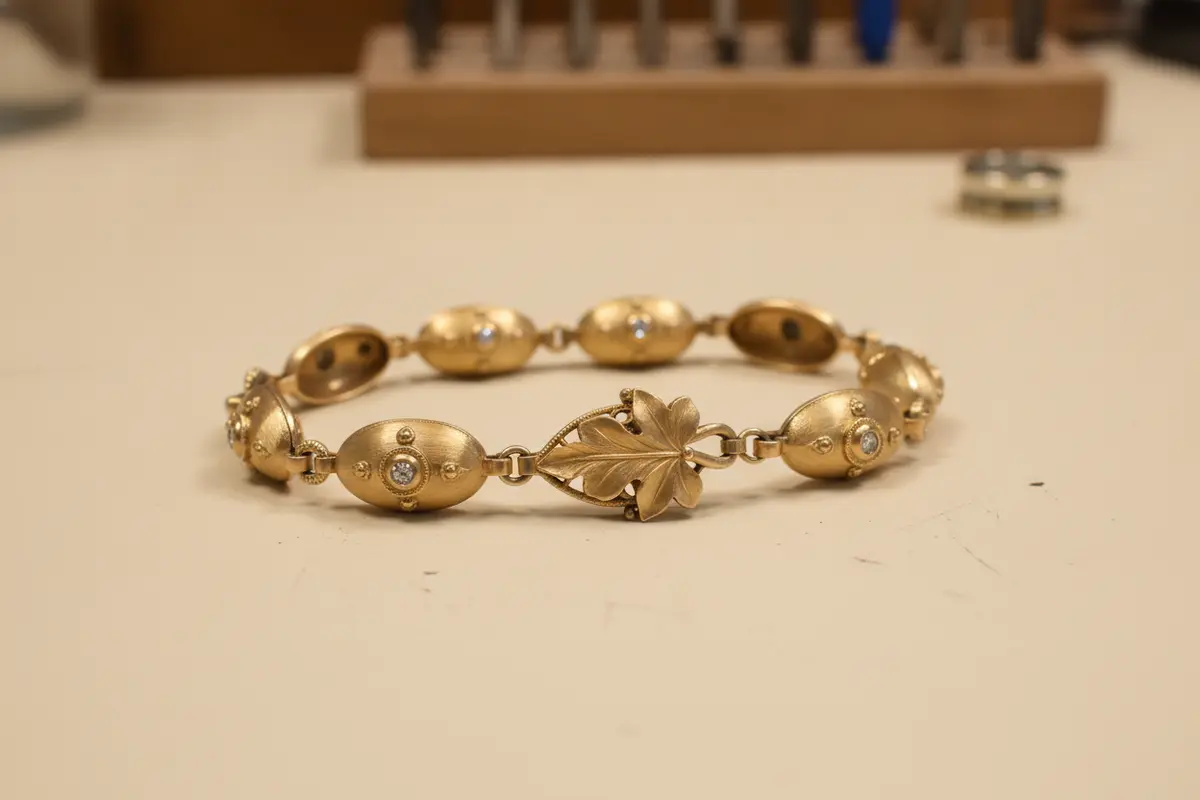
Look at the bracelet as a complete design. Notice its silhouette from above and from the side, the spacing and rhythm of its links, and the way decorative elements connect. Consider whether the visual weight feels balanced on your wrist. Small differences can affect the way a bracelet moves and how easily it works with other jewelry.
Think about finish and color alongside pieces you already own. If you usually wear yellow gold, another tone may add contrast or feel less versatile with your usual combinations. If you plan to layer, compare the bracelet with the watches and bangles you wear most. A piece that looks elegant alone may catch or crowd another bracelet when worn together.
Where decorative stones are present, examine their placement under good light. Look for visible chips, gaps, uneven alignment, or a setting that appears different from its neighbors. A visual check cannot confirm a stone’s identity or reveal every condition issue. Treat it as a starting point for questions, not a substitute for a closer assessment.
How can you assess condition without guessing?
Vintage pieces may show signs of use, and wear is not always a problem. The important question is whether the condition suits your expectations and intended use. Look closely at the clasp, hinges, connecting links, and areas that bear weight or rub against a surface. Check for movement where parts meet, sharp edges, dents, deep scratches, or repairs that differ from the surrounding finish.
If invited to handle the bracelet, open and close the clasp gently. It should operate consistently without forcing it. Do not tug on a link or repeatedly flex the piece to test it. If anything seems loose, stiff, or uncertain, pause and ask for an experienced in-person assessment before wearing it.
Surface shine can be misleading. A freshly polished piece may look bright, while fine details can be less crisp than on an untouched example. A soft patina can be part of a piece’s appearance, but it does not establish age or originality. Ask what work, if any, has been done and whether records support the answer.
What should you check about gold and markings?
Inspect any stamps or maker’s marks with good lighting and magnification if available. Record what you can actually see rather than filling in worn or unclear characters by assumption. Marks can provide clues, but a stamp alone does not establish the full history, composition, or authenticity of a vintage piece.
For general consumer guidance on jewelry descriptions and metal claims, consult the Federal Trade Commission’s Jewelry Guides: FTC guidance for jewelry sellers and buyers. The guides address how jewelry products should be described; they do not authenticate an individual bracelet. If metal content is central to your decision, ask what examination or documentation supports the specific description.
Compare color and finish across the bracelet, but do not infer metal content or a repair from color alone. Uneven tone can have several explanations. Ask how a seller reached a conclusion and what examination is available. Be cautious of confident claims that come without a clear explanation.
How should you compare fit, comfort, and closure?
A bracelet’s fit affects both comfort and security. If possible, try it on and notice how it rests when your arm is relaxed and when you move your wrist. Does it slide more than you prefer? Does the design rotate so its decorative side shifts? Is there room for natural movement without feeling at risk of slipping off?
Do not judge fit by a single measurement alone. Bracelet shape, link construction, and clasp design affect how a piece wears. If you cannot try it on, ask for measurements and how they were taken. Compare them with a bracelet you find comfortable, while remembering that two designs with the same stated length may sit differently.
Make the closure part of your inspection, not an afterthought. Look for a clasp that aligns properly, closes cleanly, and has no obvious damage. Ask whether a safety feature is present and how it should be used. If you are unsure whether the closure is secure, do not rely on it for regular wear until the concern has been addressed.
What is useful to compare before deciding?
A side-by-side checklist can distinguish a design you admire from a piece whose condition, fit, and available information also suit you. The table is not a grading scale. It keeps important questions visible while you compare options.
| What to compare | What to look at | Question to ask |
|---|---|---|
| Design | Shape, link pattern, finish, and decorative details | Does this match how I plan to wear it? |
| Condition | Clasp, joins, settings, visible wear, and repairs | What has been inspected or repaired? |
| Fit | Length, movement on the wrist, and comfort | Can I try it on or compare reliable measurements? |
| Identity and history | Visible marks and any supporting papers or records | Which details are documented, and which are seller-provided? |
| Price context | Asking price alongside condition, design, and included items | How was the price determined, and what is included? |
When comparing prices, make sure you are comparing like with like. Consider condition, design, supporting information, and whether included items matter to you. A lower asking price is not automatically better value if key details remain unclear, and a higher price does not prove superior condition or history. Factor unanswered questions into your decision.
How can an in-person conversation make the choice clearer?
Seeing a bracelet in person lets you examine proportions and movement in a way that photos may not show. Bring your questions and, if useful, a photo of jewelry you expect to wear with it. Ask to view the clasp and details under clear light, and request a chance to see how the bracelet sits on your wrist.
Kravit Jewelers is a family-owned fine jewelry store in Oceanside serving Long Island since 1927. Contact the store to discuss what you are looking for and confirm what information or assistance is available before making a visit. You can also browse the fine jewelry and gift collection or explore fine jewelry styles to clarify the design details you are drawn to.
Keep the comparison practical. Take notes about comfort, visual weight, condition, and the answers you receive. If shopping with someone else, agree on the points that matter most before looking at more pieces. Notes make it easier to revisit your options without relying only on memory or first impressions.
Plan a visit to the Oceanside showroom
For another perspective on styles and settings, browse Kravit’s fine jewelry guides.
What questions should you ask before choosing a vintage bracelet?
A useful conversation is specific and unhurried. You do not need technical terms to ask for a clear explanation. If an answer is uncertain, ask what can be verified and what remains unknown. Consider asking:
- What details support the bracelet’s stated maker, model, or collection?
- Are documents, original components, or service records available?
- What condition concerns should I know about, especially at the clasp and connecting points?
- Has the bracelet been repaired, polished, or otherwise altered, and is there documentation?
- Can I try it on and check how it moves and closes?
- What should I confirm about return or service terms before buying?
Do not feel pressured to resolve every question on the spot. A thoughtful choice can include taking time to compare notes, review documentation, or ask for clarification. If a detail is central to your decision and cannot be confirmed, decide whether you are comfortable proceeding with that uncertainty.
How can you prepare for a careful comparison?
Before visiting a jeweler or meeting a seller, gather the information you already have. Save the listing or description, note claims about the bracelet, and keep photos that show the clasp, marks, and overall shape. If images do not show these details, ask whether additional views are available. This makes it easier to compare what was described with what you can inspect in person.
Think about daily use as well as the occasion that first drew you to the piece. A bracelet intended for frequent wear may call for a different level of comfort and security from one you expect to wear selectively. Consider sleeves, other bracelets, and the activities you expect to do while wearing it. These practical details can help you decide whether a delicate profile or a more substantial design suits your routine.
Set a budget range before comparing options, but leave room to assess the whole picture. Asking price is only one part of the decision. Ask what is included, whether the description can be supported, and whether the seller can explain visible condition issues. If two pieces appeal to you, write down the facts and open questions for each instead of relying on a quick mental comparison.
- Keep a record of the description and any documentation you receive.
- Ask to see the reverse side, clasp, connecting points, and markings.
- Compare fit with a bracelet you know is comfortable, when possible.
- Pause if an important claim is unclear or you feel rushed.
It also helps to distinguish personal preference from a factual question. Whether a design feels elegant or suits your wardrobe is subjective. Whether a clasp works properly, a mark is legible, or a repair is documented calls for evidence or an informed assessment. Keeping those judgments separate lets you appreciate the design without overlooking practical details.
Frequently asked questions
Does a stamp prove that a vintage Roberto Coin bracelet is authentic?
A stamp can be one clue, but it should not be treated as proof on its own. Consider the mark alongside construction, condition, supporting documentation, and a qualified in-person review.
Should signs of wear rule out a vintage bracelet?
Not necessarily. Wear needs context. Look at whether the clasp, links, and settings appear secure, ask about repairs, and decide whether the visible condition meets your expectations for how you plan to wear the piece.
What if the bracelet does not fit quite right?
Confirm the measurements and try it on if possible. Ask whether an adjustment is appropriate for that construction before assuming it can be resized or altered. Discuss any proposed change with a qualified jeweler first.
Can I identify a vintage bracelet from a photograph?
Photos can help you compare visible design details, but may not show the clasp, markings, condition, or construction clearly. Use images to prepare questions, then seek a closer inspection before relying on conclusions about a specific piece.
Choose the details you care about most, then compare each bracelet against the same checklist: design, condition, fit, documentation, and unanswered questions. An informed decision balances a piece’s appeal with what you can verify and how comfortably it suits the way you want to wear it.


