




Mother of pearl jewelry has a soft, shifting glow that can feel distinctive without demanding attention. If you are choosing a piece for yourself or as a gift, look beyond its color: consider how the surface catches light, what it will be worn with, and how it should be cared for. These practical details can help you choose a piece that suits the wearer and the occasion.
What gives mother of pearl its distinctive appearance?
Mother of pearl, also called nacre, is the iridescent inner material found in the shells of certain mollusks. Its appearance can shift as the angle of light changes, showing subtle flashes rather than one flat, uniform color. The exact effect depends on the material and the way it is shaped and set, so two pieces need not look identical.
This layered visual quality makes mother of pearl appealing to people who want a natural-looking accent with a polished finish. It can read as luminous and delicate in a small pendant, or become a more noticeable focal point in a larger design. It is not a gemstone, and its look is different from the bright, sharply defined sparkle of faceted stones.
Materials research describes nacre as a composite of mineral crystals and organic substances, which helps explain why it has a layered structure rather than behaving like a solid crystal. See the University of Wisconsin–Madison overview of mother-of-pearl structure for further reading.
How can you judge the look of a piece before choosing it?
View the piece in more than one lighting condition if possible. Direct sunlight, warm indoor lighting, and softer daylight can make the same surface appear different. Move it gently rather than judging it from a single angle, and notice whether its luster feels even or whether particular areas catch light more strongly. Natural material can show variation, so the question is not whether every surface looks identical; it is whether the character of this particular piece appeals to you.
Also consider scale. A small inlay or pendant offers a restrained glimmer, while a broad surface or larger motif makes the changing color more prominent. If the jewelry will be worn near the face, compare it with the wearer’s usual clothing colors and accessories. A piece that looks beautiful alone may feel too dominant alongside patterned clothing or other statement jewelry.
Ask what the decorative material is and how it is set. A finished design may combine nacre with metal, stones, enamel, or other components. The care needs of the whole piece depend on those materials and its construction, not only on the visible surface. If any detail is unclear, ask the seller to explain it rather than inferring it from appearance.
How can you style and layer mother of pearl jewelry?
Start with the scale and tone of the piece. A small pendant can sit close to the collarbone and work as a quiet everyday accent. A larger pendant or pair of earrings can carry more of the look, especially with simple clothing and minimal additional accessories.
For layering, give each necklace room to be seen. Pair a mother-of-pearl pendant with a fine chain of a different length, then add another understated piece only if the pendants do not compete. Varying chain lengths can help reduce tangling and keep the focal piece visible. With earrings or a bracelet, choose one additional metal accent rather than repeating several strong motifs.
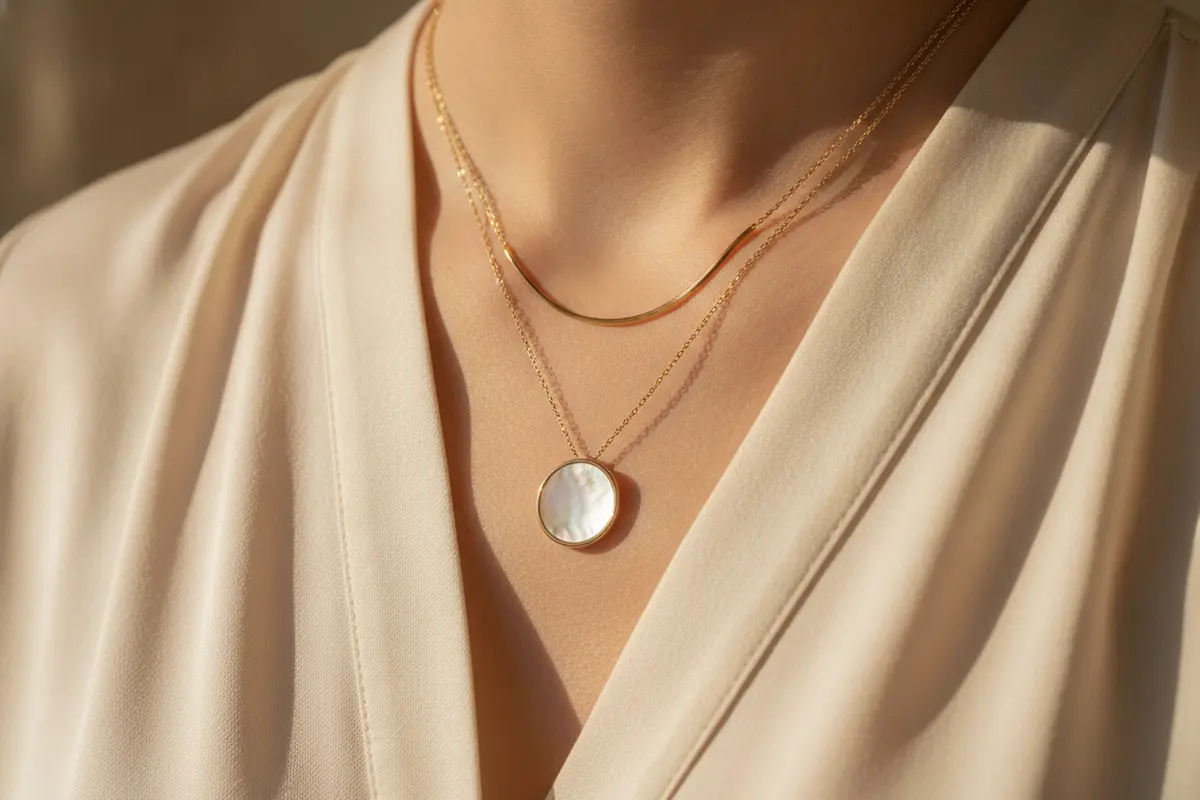
Mother of pearl pairs naturally with warm or cool metal tones, depending on the design. Try it beside gold for a warm contrast, or with silver-toned pieces for a cooler, quieter effect. A useful way to decide is to compare the piece against jewelry the wearer already owns. That gives a more practical sense of whether it will be worn often than choosing by trend alone.
For a coordinated look, consider a single mother-of-pearl piece alongside a clean band or chain. Browse fine jewelry styles, the Isabelle collection, or new arrivals for examples of different jewelry forms. These pages offer ideas for balancing a focal piece with other accessories; evaluate the materials and scale of any specific item on its own.
What should you consider if you have sensitive skin?
Skin sensitivity is often related to the metal or components that touch the skin rather than the decorative surface alone. Ask what metal is used in the setting, post, clasp, or chain, and whether any part of the piece contains an alloy that has caused a reaction for the wearer before. Do not assume a particular finish or color means a piece is suitable for every sensitive wearer.
If this is a gift and you do not know the recipient’s preferences, choose a style they can try on or exchange according to the seller’s stated policies. A jeweler can explain the materials in a specific piece, but cannot guarantee that an individual will have no reaction. For a known or significant allergy, follow the wearer’s medical advice and verify all materials before purchase.
How do you care for mother of pearl jewelry?
Because mother of pearl includes organic material, a gentle routine is a sensible approach. Avoid exposing it to household cleaners, perfumes, hairspray, and prolonged contact with cosmetics. Put the jewelry on after grooming, and remove it before swimming, exercising, or cleaning.
- Wipe the piece gently with a soft, dry cloth after wearing it.
- If it needs more cleaning, use a slightly damp soft cloth and mild water; avoid soaking it.
- Do not use ultrasonic cleaners, steam, abrasive brushes, or harsh chemicals on the nacre.
- Let the piece dry fully before storing it in a soft pouch or separate compartment.
- Keep it away from harder jewelry that could scratch or rub against the surface.
When a piece has an intricate setting, mixed materials, or visible damage, ask a jeweler how to clean it rather than experimenting. Care directions can differ across a finished piece because the setting, adhesive, or accompanying stones may have their own needs. If a surface looks dull or scratched, avoid polishing compounds and seek an in-person assessment.
How should you store it between wears?
Give mother of pearl its own soft pouch or a separate compartment in a lined jewelry box. This reduces contact with harder jewelry that could mark or rub the surface. Avoid leaving it loose in a drawer or allowing chains and clasps to press against the nacre. Before putting it away, make sure the piece is dry and free of residue from skin or cosmetics. If the jewelry includes a chain, fasten it before storage when practical; that can help keep it from tangling with other pieces.
What if a piece gets wet or exposed to fragrance?
Do not panic or scrub the surface. Remove the piece, blot it gently with a clean soft cloth, and let it air-dry away from direct heat. If a cleaner, perfume, or other product has contacted it, avoid adding another product to counteract it. Ask a jeweler for advice if you notice a change in luster, color, or setting, especially when the design combines several materials.
Which occasions make a thoughtful gift?
The gentle sheen of mother of pearl can suit occasions where a gift should feel personal but not overly formal. It may be considered for a birthday, anniversary, graduation, or a milestone that calls for a lasting keepsake. Its natural iridescence also makes it a fitting choice for someone who enjoys subtle color and texture more than bold sparkle.
Match the piece to the recipient’s habits. Someone who wears simple jewelry daily may prefer a small pendant or understated earrings. A person who enjoys expressive accessories might welcome a larger motif or a more noticeable design. Consider whether they wear necklaces, earrings, or bracelets most often, and whether their usual wardrobe leans warm, cool, or neutral.
For a gift, presentation is only part of the decision. Ask whether the piece is comfortable, easy to fasten, and appropriate for the recipient’s routine. A beautiful item that sits unworn because it is difficult to style or care for may not be the most thoughtful choice.
How can you compare options before choosing?
Use the table below as a simple shortlist. These are general styling considerations, not fixed rules; the best option depends on the actual piece and the wearer.
| Choice | Good fit when | What to check |
|---|---|---|
| Small pendant | You want a subtle, easy-to-layer focal point | Chain length, clasp, and how the pendant lies |
| Statement pendant | The wearer prefers one noticeable accent | Scale, weight, and whether it suits typical necklines |
| Earrings | The recipient wears earrings regularly | Post or fastening comfort and metal composition |
| Mixed-material design | You want texture alongside other stones or metals | Care guidance for every material in the piece |
Before deciding, look at the piece in more than one lighting condition if possible. Ask about the materials, cleaning recommendations, and any care limitations. If you are comparing two designs, consider which one works with jewelry already in the recipient’s collection, not just which one looks striking on its own. Check that closures are manageable and that the piece rests comfortably where it is meant to sit. These small practical checks can help distinguish a beautiful object from a piece the wearer will reach for regularly.
What questions should you ask when buying?
A short, specific conversation can clarify whether a design fits your priorities. Ask whether the visible material is mother of pearl or another shell material, how it is attached or set, and which parts of the piece need special care. If you are buying earrings, ask about the posts and backs; with a necklace, check the clasp and chain length. For mixed-material jewelry, request care guidance that addresses the complete piece rather than just the nacre.
If you are buying remotely or as a gift, review the seller’s written return or exchange terms before making the decision. Confirm which parts of the piece are included and whether the photos show the exact item or a representative design. Do not assume a policy or detail that is not stated. A little preparation can prevent disappointment and make it easier to choose a piece with confidence.
To see how different jewelry shapes and finishes work together, consider Kravit’s fine jewelry selection and additional jewelry styles. These links are starting points for browsing; verify the specific materials and details for any piece that interests you.
How can you make a practical shortlist?
Before you browse, write down the wearer’s usual jewelry habits. Note whether they reach for necklaces, earrings, or bracelets, whether they prefer light pieces or noticeable designs, and what metal tones they wear most. This turns a vague preference for “something luminous” into a useful set of filters. If the piece is for you, consider what you actually wear on an ordinary weekday, not only what looks appealing for a special event.
Next, sort your priorities into essential and optional details. Comfort, metal compatibility, manageable closures, and realistic care needs may be essential. Exact color flashes, a particular silhouette, or a match with a specific outfit may be preferences you can be flexible about. This distinction helps when two pieces differ: one may have a more striking surface, while another may fit the wearer’s routine better.
When comparing items online, check the description and images for the specific construction details available. Look for the dimensions, materials, fastening, and whether the pictured finish is representative of the item. If a detail is missing, ask before treating an assumption as fact. For natural-looking material, photographs can suggest the overall effect but may not reproduce every shift in luster under different lighting.
If shopping in person, test the practical details with care. See how a pendant hangs when the wearer moves, whether an earring feels balanced, or whether a clasp can be operated comfortably. Stand near a window or move to a different part of the showroom to view the sheen in changing light. Try the piece alongside a simple chain or familiar accessory if that helps judge layering. These checks are especially useful when choosing a gift for someone whose style you know but whose exact preferences you may not know.
How can you build a balanced layered look?
A successful layered combination has a clear focal point and enough visual space around it. Begin with the mother-of-pearl piece, then add one chain that differs in length or texture without matching its scale exactly. A fine plain chain can support a detailed pendant; a slightly bolder chain may work better with a tiny, simple charm. If the pieces sit at nearly the same point on the neckline, they may overlap or obscure one another, so adjust lengths until each element has room.
Consider the neckline and fabric as part of the composition. A pendant can disappear against a busy print or become caught in a high neckline. Against a smooth, solid-colored top, the changing surface may be easier to notice. For a lower neckline, check that the chain length leaves the pendant in a comfortable position rather than resting at an awkward edge. The right arrangement is not a fixed formula; it should feel secure and easy to wear.
Keep the rest of the look in proportion. If the pendant is the main feature, choose modest earrings or a simple ring rather than adding several competing focal pieces. If the mother-of-pearl detail is small, a second delicate accessory can make the outfit feel coordinated without turning it into a matching set. Try the full combination before an event and move naturally; pieces that tangle, flip, or snag may need to be adjusted or worn separately.
Metal mixing can be intentional. Gold and silver tones can sit together when their shapes and visual weight feel related, and the nacre can act as a soft bridge between them. If the wearer usually sticks to one tone, start there rather than forcing a new combination. The aim is to make the jewelry feel integrated with the person’s style, not to follow a rigid rule about matching every metal.
How can you adapt care to how often you wear it?
A piece worn occasionally may need little more than a gentle wipe and protected storage after each use. A piece worn more often is more likely to encounter lotion, perspiration, hair products, and accidental knocks, so make a quick check part of the routine. Look for residue around the setting, a loosened component, or a clasp that no longer closes as expected. Avoid trying to tighten or repair a delicate setting at home.
Before dressing, apply fragrance, hairspray, and cosmetics first, then give them time to settle before putting on jewelry. Remove the piece before workouts, household cleaning, swimming, or activities where it could be struck or exposed to chemicals. If you travel with it, use a separate pouch and avoid placing it loose beside other jewelry in a toiletry bag. A little separation reduces rubbing and makes it easier to find the piece safely.
After wearing, take a moment to check the surface under good light. If it looks unchanged, wipe it gently and store it dry. If you see a new mark, discoloration, or movement in the setting, stop wearing it until a jeweler can assess it. Do not try to restore shine with toothpaste, metal polish, baking soda, or a product intended for another gemstone; those approaches can be too abrasive or unsuitable for the materials in a finished design.
Keep any care guidance that comes with the jewelry, and ask for advice specific to its construction if the piece includes multiple materials. A chain, clasp, stone setting, and nacre may not all respond to the same cleaning method. When guidance is uncertain, the conservative choice is to avoid soaking and strong cleaners until a qualified professional can advise you.
What makes an in-person consultation useful?
Photographs can help you shortlist styles, but seeing a piece in person lets you assess scale and luster from several angles. You can compare its color shifts with your skin tone and clothing, check how it hangs or fastens, and ask questions about materials and care. Those details are difficult to settle from a single product image, particularly when the wearer has a specific preference or sensitivity.
Bring a small selection of pieces you already wear often, or note their metal tones and typical proportions. If you are shopping for a gift, a photo of the recipient’s usual style can help explain whether they prefer subtle or expressive accessories. You do not need to arrive with every decision made. A clear sense of daily habits, comfort needs, and the occasion is enough to make a focused conversation more useful.
Long Island shoppers can visit Kravit Jewelers in Oceanside to discuss fine jewelry choices and compare details in person. Ask about the particular piece you are considering, including its materials, care needs, and any terms that matter to your purchase. A consultation is a chance to evaluate fit and ask questions; the final choice should reflect the wearer’s preferences and the details confirmed for that item.
For examples of different forms and finishes, browse the new arrivals or the Isabelle collection, then note what shapes appeal to you before a visit.
Frequently Asked Questions
Is mother of pearl the same as a pearl?
No. Mother of pearl, or nacre, is the iridescent material that forms the inner lining of some shells. A pearl is a separate formation within a mollusk. They can share a related material, but they are not the same type of jewelry element.
Can mother of pearl jewelry be worn every day?
That depends on the design and the wearer’s routine. The surface can be vulnerable to scratching and harsh substances, so remove it for activities that risk impact, chemicals, or prolonged moisture and follow the jeweler’s care advice.
Can I clean mother of pearl with jewelry cleaner?
Do not assume a general jewelry cleaner is safe for nacre. Use a soft cloth and gentle methods, and check with a jeweler before applying a cleaner, especially when the piece includes multiple materials.
What should I ask before buying mother of pearl jewelry as a gift?
Ask about the materials touching the skin, care instructions, fastening comfort, and the seller’s exchange policy. Think about the recipient’s preferred jewelry type and whether the piece suits their everyday style.
Ready to explore a piece in person?
Seeing mother of pearl in person can help you judge its sheen, scale, and how it coordinates with other jewelry. Long Island shoppers can visit Kravit Jewelers in Oceanside for a conversation about materials, styling, and care before choosing a piece.
Take the wearer’s habits and preferences into account, and choose a design that feels natural to wear as well as beautiful to look at.

