


Birthstone jewelry can turn a beautiful piece into a gift with a personal connection. The best choice balances the recipient’s style, how often they will wear it, and the practical needs of the gemstone and setting. Whether you are marking a birthday, anniversary, or family milestone, a little planning can help you choose a lasting piece rather than a gift that feels generic.
Plan a personal jewelry consultation
How do you choose the right birthstone jewelry?
Begin with the person, not the calendar. A birthstone offers a useful starting point, but the design should still feel like something the recipient would reach for. Notice whether they prefer delicate or bold jewelry, warm or cool metal tones, and simple silhouettes or details that draw attention.
Think about the occasions and outfits the piece needs to suit. A small pendant or understated ring may work for frequent wear, while a more vivid gemstone or statement setting may be best for special occasions. If you are uncertain, choose a versatile shape and let the color provide the personal detail.
- Observe their habits: Do they wear necklaces, rings, earrings, or bracelets most often?
- Consider scale: Match the size and visual presence to pieces they already wear.
- Choose a meaningful connection: The stone could represent a birthday, a child, a partner, or another milestone.
- Keep comfort in view: For daily wear, avoid designs that catch on clothing or feel cumbersome.
Which gemstone should you select?
Birthstone charts commonly associate a gemstone with each month, but there can be more than one traditional or modern option. If the recipient’s birth month has a choice, consider which color and look they prefer. You can also choose a stone associated with a meaningful month rather than the recipient’s birth month, such as a child’s birth month or an anniversary.
Do not assume that every gemstone handles daily wear in the same way. Hardness is one factor in scratch resistance, but toughness, cleavage, treatments, setting design, and the wearer’s routine also matter. A stone worn during sports, hands-on work, or frequent chores may need more protection than one reserved for occasional use. Ask a jeweler about the specific gemstone and the care appropriate for it.
Color can vary from one stone to another. View the actual piece in person when possible, and look at it under ordinary lighting as well as store lighting. A photograph may not show the full character of a gemstone.
How do setting and durability affect everyday wear?
The setting protects the stone and shapes the jewelry’s look. A bezel surrounds the gemstone with a rim of metal, while prongs hold it at points around its edge and allow more of the stone to show. A lower-profile setting may be practical for someone who wears jewelry throughout a busy day. The right choice depends on the stone, design, and intended use.
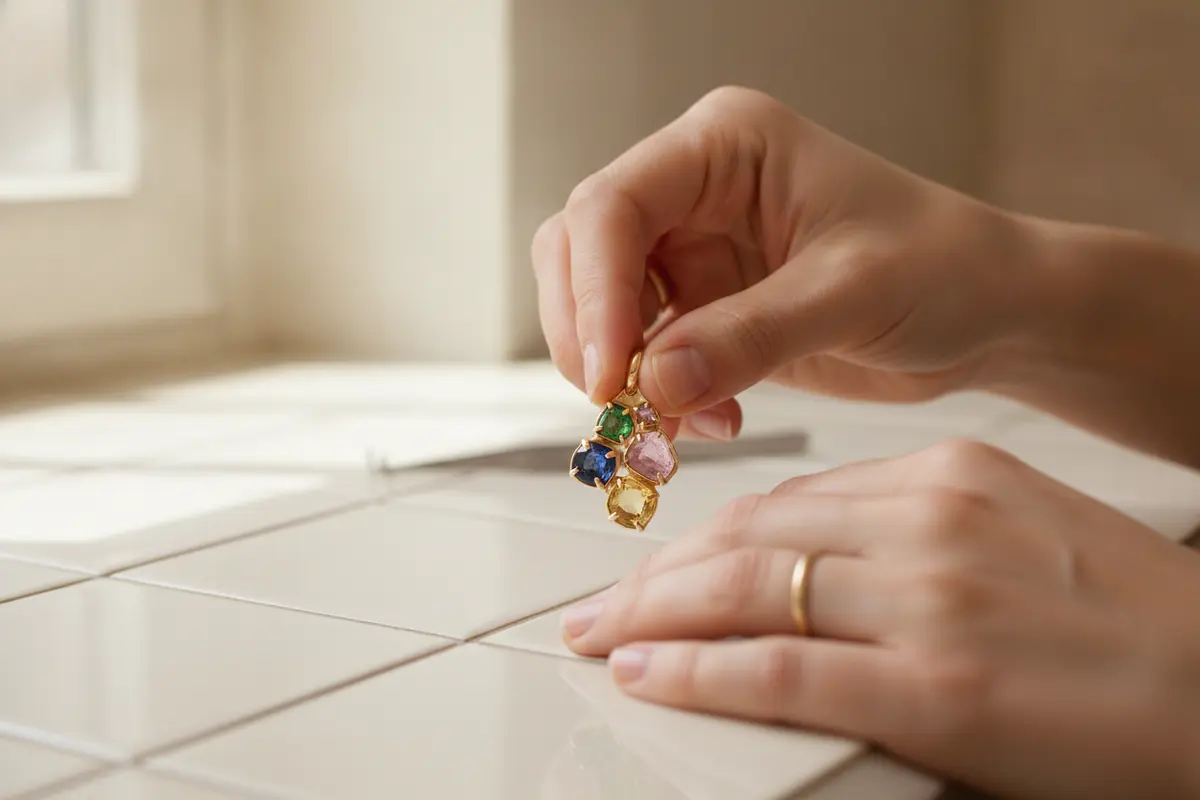
Before choosing, consider where the piece might snag or take a knock. Rings are exposed to more contact than pendants, and raised stones can catch on fabric. A pendant or earrings may suit someone who wants a colorful accent with less day-to-day contact. These are general considerations, not guarantees that any design is damage-proof.
| Jewelry choice | What to consider | Often suits |
|---|---|---|
| Ring | Hand use, setting height, comfort, and fit | Someone who wears rings regularly and can remove it for rough tasks |
| Pendant | Chain length, gemstone security, and how it layers | A recipient who prefers a personal accent close to the neckline |
| Earrings | Weight, closure, and sensitivity to dangling styles | Someone who wears earrings often and favors easy styling |
| Bracelet | Fit, movement, and chance of catching or impact | A recipient who enjoys wrist jewelry and can wear it comfortably |
Explore more gemstone jewelry guidance
Which metal works best with a birthstone?
Metal choice affects both appearance and wear. Yellow gold creates a warm contrast with many stones, while white metals offer a cooler, understated frame. Rose-toned gold brings a softer warmth. The best pairing is often the one that fits the recipient’s existing jewelry and personal preference.
Ask what metal the piece is made from and whether the recipient has known sensitivities. Also consider the finish and how the jewelry will be worn. A piece intended for frequent use may benefit from a simple design that is easy to coordinate with other jewelry. Browse fine jewelry styles to get a sense of the recipient’s preferred look, or compare a classic option such as this gold and gemstone-style jewelry silhouette. Product details vary, so confirm materials and specifications for the particular item you consider.
How can personalization make the gift more meaningful?
Personalization can be subtle. A gemstone chosen for a family member’s birth month, a meaningful color, or a design that suits a personal style can make a piece feel considered without adding unnecessary decoration. For a family gift, several stones may represent different people, but the layout should remain wearable and balanced.
Think carefully before adding engraving or combining multiple stones. Ask whether a change can be made to the specific piece, how it may affect the design, and whether personalization affects returns or future adjustments. Never assume a product can be altered; confirm the available options before purchase.
For an individual design concept, explore Kravit’s jewelry guides and discuss the idea with a jeweler. A consultation can help clarify the stone, metal, proportions, and intended use before decisions are finalized.
How should you match the piece to someone’s style?
When deciding between a familiar classic and a more distinctive design, consider the recipient’s routine. Someone who dresses simply may appreciate a small stone that adds color without changing the feel of an outfit. A person who enjoys layering may prefer a pendant that sits comfortably alongside their usual chains. For someone who wears bold accessories, a larger stone or sculptural setting could feel more at home, provided it suits their comfort and care needs.
Pay attention to practical details as well as appearance. Check whether earrings have a closure the recipient can manage easily. For a bracelet, think about whether it will slide, catch, or interfere with a watch. For a ring, comfort depends on fit and profile, and finger size can change over time. If you cannot check a size without spoiling a surprise, consider selecting a style for which sizing options and alteration terms can be confirmed in advance.
A multi-stone piece can tell a family story, but it is worth planning the composition carefully. One approach is to choose stones that represent several important people and arrange them in a restrained pattern. Another is to give a single gemstone linked to one meaningful date. Balance color, scale, and wearability; the design should feel like jewelry first and a personal reminder second.
Personalized gift guides often suggest birthstones as a way to represent loved ones, but the final choice should reflect the recipient’s taste rather than follow a formula. See this gift guide mention of birthstone jewelry and personalization for one example of that idea.
Use the jewelry they already wear as your guide. If their collection is mostly simple, a small stone in a clean setting may feel natural. If they often choose expressive pieces, a brighter color or more distinctive silhouette may be a better fit. Pay attention to chain lengths, earring shapes, ring profiles, and whether they mix metals.
When the gift is a surprise, a versatile design lowers the risk of choosing something that feels unlike them. A pendant or pair of modest earrings can be easier to style than a large statement ring. You might also choose a piece that coordinates with an existing favorite. Kravit’s delicate pendant style offers one example of a simple, everyday silhouette; confirm its current specifications before deciding whether it suits your gift.
How do you plan a multi-stone gift?
Representing several people in one piece takes more than collecting their birth months. Start by deciding whose stories the jewelry should carry. A parent might want a stone for each child; a couple might choose the two months connected to a shared milestone. Keeping the intention clear helps prevent the design from becoming crowded with details that do not matter equally to the wearer.
Next, think about how the stones will look together. Colors that are close in tone can create a quiet, coordinated effect, while contrasting colors make each stone more distinct. Neither approach is automatically better. Lay out the colors on paper or compare sample stones when possible, then consider whether the arrangement suits the recipient’s wardrobe and usual jewelry. If one shade dominates, a smaller accent stone or a different spacing may create a more balanced composition.
Scale is important. A row of several substantial stones can feel heavy or catch more easily than a compact arrangement. Smaller stones set close together may communicate the same family story in a more wearable format. Ask how stone size, setting height, and overall dimensions affect comfort, especially for a ring or bracelet that moves against surfaces throughout the day.
Consider whether each stone must be a traditional birthstone. A meaningful alternative could be a color the recipient loves, or a gem associated with a date important to the family. The point is to create a personal connection rather than satisfy a chart. If exact symbolism matters to the recipient, verify which stone tradition they prefer before choosing.
How can you select a gift when you are unsure of their preferences?
Start with observable clues rather than guesses. Notice the jewelry they wear repeatedly, not just pieces saved for formal events. Look at whether their necklaces are short or long, whether earrings are studs or drops, and whether rings are slim or prominent. Repeated choices reveal more about comfort and taste than a single outfit does.
If you are comfortable asking someone close to them, keep the question specific. Ask whether they wear rings, whether they prefer yellow or white metal, or whether they like colorful stones. A trusted friend may help you rule out an obvious mismatch without revealing the exact gift. Avoid treating another person’s taste as definitive; use their advice as a clue, then compare it with what you have observed.
When you cannot gather much information, favor flexibility. A pendant in a familiar metal may be easier to wear than a ring that needs a precise size. Stud earrings can be less visually assertive than long drops, though comfort and closure still matter. A simple design also gives the recipient more opportunities to pair it with pieces they already own.
Think about the gift’s timing. For a birthday, the birth month can supply a clear starting point. For a new baby or family milestone, a stone may stand for someone other than the wearer. For an anniversary, the date or shared memory may be more meaningful than either partner’s birth month. Choosing a piece around the story makes the gift feel deliberate without requiring elaborate customization.
If the recipient’s taste is highly particular, involve them in the decision. You could present the idea of a birthstone gift and let them choose the style, or offer a selection of shapes and metals. The surprise can be the occasion, the presentation, or the meaning you explain, rather than a design that may not suit their daily life.
What should you compare before choosing a piece?
It helps to compare options using the same questions rather than relying on a quick first impression. For each candidate, note the gemstone, metal, setting profile, jewelry type, and care instructions. Then ask whether it matches the recipient’s habits and whether the piece is intended for daily or occasional wear.
Use a short checklist when browsing:
- Confirm the stone: Identify the gemstone and ask whether any treatment information is available for the specific piece.
- Check the metal: Verify the material and finish rather than judging only by color in a photograph.
- Look at construction: Examine how the gemstone is held, whether the clasp or closure feels secure, and whether any edges might snag.
- Consider fit: Check the chain length, ring size, bracelet movement, or earring weight as relevant.
- Understand care: Ask which cleaning methods are appropriate and what activities should be avoided.
- Review purchase terms: Confirm sizing, personalization, return, and adjustment terms directly before ordering.
Comparing two pieces side by side can reveal trade-offs. One may have a brighter stone but a higher profile; another may sit closer to the body but have a more understated color. One may match the wearer’s usual metal, while another offers a contrast they would enjoy. There is no single feature that decides the better gift. The right choice is the one whose symbolism, look, and practical use fit together.
For a hands-on comparison, you can visit a local showroom and view the color, scale, and setting in person. Kravit Jewelers is a family-owned jeweler in Oceanside, serving Long Island since 1927. Seeing a piece under ordinary lighting can help you decide whether its color and proportions feel right, and a conversation can help clarify questions about the specific item.
A public gift guide also mentions birthstone rings as a way to represent children or grandchildren; use it as an example of a personal gift idea, not as technical advice about gemstone quality or care.
How should you care for birthstone jewelry?
Care depends on the specific gemstone, setting, and metal. Do not apply one cleaning method to every piece. Some stones may be sensitive to heat, chemicals, or sudden temperature changes, and certain treatments or settings may call for special handling. Follow care guidance for the exact jewelry rather than relying on a general recipe.
- Remove jewelry before strenuous activity, household cleaning, or applying lotions and sprays.
- Store pieces separately to reduce scratching and tangling.
- Use only a cleaning method confirmed as suitable for the stone and setting.
- Check periodically for a loose stone or damaged clasp, and stop wearing the piece if something seems insecure.
If a stone moves, a prong catches, or a clasp stops closing securely, avoid wearing the item until it can be assessed. Kravit’s jewelry repair page explains how to inquire about assessment and recommendations. Do not try to bend a setting back into place yourself.
What should you ask before buying a birthstone gift?
Make the final choice with the specific piece in mind. Ask what gemstone and metal it contains, whether any treatments are disclosed, how the stone is secured, and what care it requires. If you are considering a custom or personalized design, confirm what can be changed, the expected process, and any relevant purchase terms directly with the jeweler.
It can also help to ask whether the design is comfortable for the recipient’s typical routine. A thoughtful gift is not only symbolic; it should be wearable and suited to the person receiving it. For a hands-on comparison, visit a local showroom and view the color, scale, and setting in person.
How can you make the purchase feel considered?
Start by gathering clues discreetly. Notice the jewelry the recipient chooses for work, celebrations, and weekends. If they wear the same metal most days, matching it can make the new piece easier to combine. If their collection includes several metals, focus more on shape and scale than on strict matching. A trusted friend or family member may also know what colors and styles they enjoy.
Set a practical budget before comparing designs. Within that range, prioritize the features that matter most: a gemstone color they love, a durable setting appropriate for their routine, or a design that feels personal. Do not assume that a larger stone is automatically a better gift. Cut, color, proportions, and workmanship all affect how a piece looks, and a smaller stone in a well-chosen design can feel more meaningful than a larger one that does not suit the wearer.
Check product information and purchase terms before making a final decision. Confirm the metal, gemstone identity, dimensions, and whether the stone has any disclosed treatment. Ask about sizing or adjustment possibilities, care recommendations, and what happens if the gift does not fit the recipient’s style. These questions are especially useful for personalized pieces, where options may differ from standard items.
If you are unsure between two designs, compare them side by side. Consider which one can be worn with the recipient’s usual clothing and existing jewelry, and which feels comfortable for the occasion you are celebrating. In-store viewing can help you judge color and proportion more accurately than a screen. Give yourself time to ask questions rather than making a decision based only on a birthstone chart.
Before you settle on a piece, picture the recipient wearing it in a real week, not only in the moment they open the box. Would it work with their everyday clothes, commute, and usual activities? Does the design call for frequent adjustment or special care they may not want to manage? A useful gift respects both the symbolism and the recipient’s habits.
Presentation can also make the connection clear. Include a brief note explaining why you chose that stone: perhaps it represents a child, a shared date, or a color the recipient loves. The explanation need not be elaborate. A direct, personal message often makes the reason for the choice more memorable than a generic description of the month’s traditional stone.
For a family piece, decide whether the wearer wants the stones displayed prominently or kept discreet. A visible cluster can be a conversation piece, while a small accent may feel more private. Consider whether the recipient’s other jewelry is minimal or layered, and whether the new piece should stand alone or complement an existing favorite. Those details help translate an abstract idea into a design that feels like theirs.
Finally, keep a record of the item’s care instructions and purchase details. If the jewelry is a surprise, tuck the information away safely so the recipient can refer to it later. Knowing the gemstone and any care guidance is useful long after the occasion, particularly if the piece becomes part of a regular rotation.
Talk with Kravit about a personal jewelry consultation
Frequently Asked Questions
Can birthstone jewelry represent someone other than the wearer?
Yes. A birthstone can represent a child, partner, parent, or another person who matters to the recipient. Choosing a stone for its personal connection is more important than following a rule about who must wear it.
Is birthstone jewelry suitable for everyday wear?
It can be, depending on the gemstone, setting, and wearer’s routine. Ask about the specific stone’s care and choose a design that is comfortable and protected for its intended use.
Should I choose a ring, pendant, or earrings?
Start with the type of jewelry the recipient wears most. Consider hand activity and fit for rings, chain length for pendants, and weight and closure for earrings.
Can a birthstone piece be personalized?
Some designs may allow personalization, but options depend on the particular piece. Confirm customization possibilities and terms with the jeweler before ordering.
Ready to choose a personal gift?
Birthstone jewelry is most successful when the stone’s personal meaning meets the recipient’s real-life style and comfort. Take time to compare the gemstone, setting, metal, and care needs so the gift feels thoughtful now and remains enjoyable to wear.

