



Blue sapphire jewelry can feel both distinctive and enduring, but color is only one part of a thoughtful choice. The gemstone’s treatment, setting, intended wear, and care needs all affect which piece will suit you. Comparing these details in person can help you understand what you are considering before making a decision.
Arrange a jewelry consultation
What makes blue sapphire color distinctive?
Sapphires occur in a range of colors, but blue is the variety many people picture first. A sapphire’s appearance may shift from light to deep blue, and the way it looks can change under different lighting. When comparing pieces, look at the stone in more than one setting of light if possible. Ask to see how its face-up color reads from arm’s length as well as close up.
Color preference is personal. Some people favor a vivid, saturated blue; others prefer a lighter tone or a darker, more dramatic appearance. Consider whether the color works with the wearer’s wardrobe and other jewelry. If the piece is a gift, notice what colors and metals they wear most often. You can also think about whether the sapphire will be a quiet accent or the focal point of an outfit. A larger stone or a vivid color may attract attention, while a smaller stone can offer a subtler note of blue.
Clarity is another part of the visual impression. Natural gemstones can have internal characteristics. The Gemological Institute of America notes that blue sapphires typically have some inclusions, while very high clarity is rare. GIA’s sapphire quality factors offer additional context for evaluating this characteristic. The practical question is whether visible features distract from the beauty of the stone when viewed normally. Compare stones at a comfortable viewing distance, not only under magnification, and notice whether a feature is readily visible or disappears into the overall color.
Shape and cut also influence the impression. A round, oval, cushion, or other outline changes how the color is framed and how the piece feels stylistically. Rather than treating one outline as automatically better, compare the stone’s proportions, the way it sits in its setting, and whether the shape suits the wearer. For a gift, consider the shapes in their existing jewelry.
When comparing two stones, try to hold other factors steady. Look at similar sizes first, then compare the overall color impression and how evenly the color appears across the face. A stone viewed at an angle may look different from one viewed straight on, so turn the piece gently and observe whether the appearance still appeals to you. Avoid reducing the choice to a single label such as “dark” or “bright.” Describe what you actually see: whether the blue feels lively, muted, cool, or more dramatic, and whether the stone remains attractive in ordinary room light.
How should you compare sapphire treatments?
Some sapphires receive treatment to improve or alter their appearance. Treatment information matters because it helps you understand the stone and what care it may require. Ask the jeweler what is known about treatment, what documentation accompanies the piece, and whether any special care guidance applies. A clear answer should distinguish information that is documented from information that is not available.
Do not assume that every sapphire has had the same treatment or that treatment automatically makes a stone unsuitable. Instead, compare the specific stone and its disclosure. A clear conversation should cover what the jeweler can verify, what is stated in any available documentation, and what remains unknown. If details are not established, ask that the uncertainty be explained plainly rather than inferred. If two stones look appealing, treatment disclosure and care needs can be useful points of comparison alongside color and design.
For a significant purchase, keep the information provided with your records. If a piece is being considered for an insurance appraisal, ask what documentation is available and what appraisal process is appropriate. An appraisal is distinct from a guarantee of future resale value. Store paperwork in a safe place and make a note of which piece it describes, especially if you own several similar items.
A useful way to organize the conversation is to separate three kinds of information. First, note what you can observe directly, such as color and visible inclusions. Second, note what is documented about the stone, including treatment details if stated. Third, write down questions that remain unresolved. This prevents an attractive first impression from being mistaken for full knowledge of the gem. If documentation uses unfamiliar language, ask what the terms mean in practical terms, including whether they affect cleaning or repair decisions.
Is blue sapphire durable enough for regular wear?
Sapphire is a durable gemstone, making it a common choice for jewelry that may be worn often. Still, durable does not mean indestructible. A hard impact can damage a gemstone or its setting, and everyday wear can loosen prongs over time. The design and the way a person wears jewelry matter alongside the gem itself. Think about work, hobbies, and daily routines before selecting a piece for frequent use.
For a ring intended for frequent wear, consider how exposed the stone sits above the finger. A lower profile or a protective setting may reduce snagging and help shield the edges. For earrings and pendants, the stone generally faces less direct contact than it does in a ring, though clasps and posts still need care. A piece worn occasionally may allow more flexibility in design than one that stays on through busy days.
| Piece or setting | Useful consideration | Question to ask |
|---|---|---|
| Prong-set ring | Shows more of the stone, but prongs can catch or loosen | Can the prongs be checked during routine inspection? |
| Bezel-set ring | A rim surrounds the gem and gives a more enclosed profile | How does the bezel affect the visible face-up area? |
| Sapphire pendant | Less exposed to knocks than a ring during many activities | Does the chain and bail suit the pendant’s weight? |
| Sapphire earrings | Comfort and secure backs matter for regular wear | Are the closures appropriate for how often they will be worn? |
This comparison is a starting point, not a substitute for examining a particular piece. Construction, stone size, and how the jewelry fits can affect the practical choice. A jeweler can help you assess the profile and the condition of a setting. If you are already considering a ring style, you can also compare it with other fine ring designs to see which proportions feel comfortable.
Think about the situations in which the jewelry will be worn. Someone who works with their hands or plays sports may prefer to remove a ring during those activities, regardless of the gemstone’s durability. If jewelry is worn daily, notice whether the setting catches on pockets or knit fabrics and whether the band sits comfortably beside neighboring fingers. These small tests can reveal practical issues that are easy to overlook when attention is fixed on the stone.
Which setting works best for blue sapphire jewelry?
A setting should suit both the stone and its wearer. Prongs can leave much of the sapphire visible and allow light to enter from the sides. A bezel surrounds the stone with metal, giving a clean outline and added coverage around its perimeter. Halo settings place smaller stones around a center sapphire, changing the overall scale and visual character of the piece.
Metal color also affects the look. Yellow gold can create a warm contrast with blue. White metals can make the composition feel cooler and understated. The best choice depends on the sapphire’s particular tone, the wearer’s existing jewelry, and personal preference. Compare options side by side rather than relying on a description alone. Also consider whether the metal and setting details coordinate with pieces the wearer already reaches for.
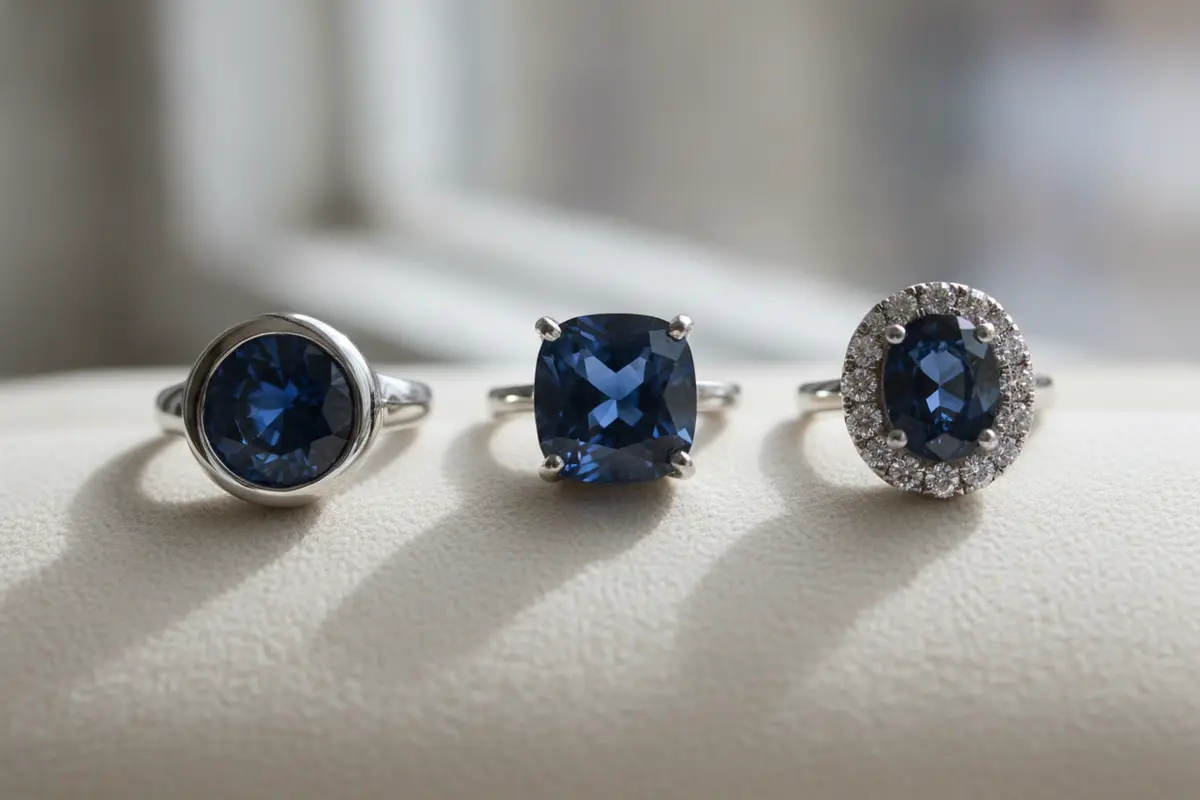
Think through practical details before choosing a design: Will a ring be worn with gloves or other rings? Does the person prefer delicate or substantial jewelry? Would a pendant or pair of earrings be easier to wear often? These questions can narrow the choice more effectively than focusing on style in isolation. For a coordinated look, a sapphire pendant could be compared with the wearer’s usual chain length and neckline; for example, view a blue sapphire and diamond halo pendant as one design reference, while earrings can be judged by weight and closure comfort.
Setting details influence maintenance as well. Open prongs can make the stone visually prominent, but they should be checked for security over time. A bezel has a different profile and may make the edge less exposed. No setting eliminates the need for thoughtful wear and periodic inspection. Ask what to watch for if the piece catches on clothing, feels different, or shows a change in how the stone sits.
For a custom direction, Kravit’s custom jewelry design page is a useful place to explore the design conversation. You can bring a reference image or describe the proportions, metal tone, and setting features you prefer, then ask which details are practical for the individual stone. Do not assume a pictured design can be reproduced exactly; use examples to communicate preferences.
A simple comparison can make a consultation more productive. Try on or view a lower-profile option and a more prominent one, then consider which feels balanced from both the front and side. If choosing a halo, look at whether the surrounding detail enhances the center stone or changes the visual scale more than you want. If choosing a bezel, consider the clean outline alongside how much of the sapphire’s edge is visible. These are not rules for selecting one setting over another; they are prompts for matching construction and appearance to the wearer’s habits.
For a gift, it can help to compare the new piece with jewelry the recipient already owns. A photograph can be a useful reference for metal color and scale, though it cannot substitute for seeing the sapphire itself. A design that complements familiar pieces may be easier to wear often, while a distinctive setting can make sense when the goal is a special-occasion statement.
What does a blue sapphire symbolize?
Blue sapphires have a long cultural history and are often associated with wisdom, loyalty, and devotion. The meanings attached to gemstones vary across cultures and eras, so symbolism is best treated as personal rather than as a fixed promise. The Gemological Institute of America describes historical sapphire lore, including associations with heavenly blessings in the Middle Ages, in its overview of sapphire history and lore.
That history can make a sapphire piece especially meaningful for an anniversary, milestone, or personal celebration. You might choose a design because the color recalls a place, an important memory, or a loved one’s favorite shade. A short note explaining the reason behind the choice can make the gift feel more personal without relying on a symbolic meaning that may not fit the recipient.
When choosing a gift, the story can guide the design without dictating it. A classic ring may mark a milestone, while a pendant or earrings may better fit someone who prefers jewelry that is easy to wear with different outfits. If you are uncertain, discreetly compare the recipient’s existing jewelry for scale, metal color, and shape. A meaningful choice is often one that reflects the person’s taste as much as the occasion.
How should you care for sapphire jewelry?
Care should reflect the setting and any treatment information provided for the individual stone. For routine cleaning, use a soft cloth and follow the jeweler’s advice. Avoid harsh chemicals and sudden temperature changes. Do not assume that every cleaning method or device is suitable for every piece, especially when the jewelry includes other gemstones or delicate construction. If you are unsure how to clean a piece, ask before using a household solution or device.
- Remove jewelry before strenuous activity, household work, or situations where it may be struck or caught.
- Store pieces separately so gems and metal do not rub against other jewelry.
- Check clasps and visible settings periodically, and stop wearing a piece if a stone feels loose.
- Bring concerns to a qualified jeweler rather than attempting to tighten or repair a setting at home.
For a ring worn often, periodic professional inspection can help identify a loose setting before a stone is lost. Ask what inspection involves and whether the piece’s construction calls for particular care. Keep any documentation and care instructions together so they are easy to consult later. When traveling, secure jewelry in a separate compartment rather than letting pieces move loose in a bag. After removing a ring, check that it is stored somewhere stable and easy to find.
Daily habits can make care easier. Put jewelry on after applying lotions or fragrance, and remove it before swimming or working with cleaning products. These practical precautions help limit avoidable contact with substances or situations that can affect jewelry. If a piece has multiple materials, follow the most cautious care guidance for the complete design rather than treating the sapphire alone as the only consideration.
Build a small routine around the jewelry you wear most. After taking off a ring or pendant, take a moment to look for a change in the setting, a loose clasp, or a new snagging point. This is not a substitute for professional inspection, but it may help you notice a change promptly. Store each item in a way that prevents it from knocking against harder jewelry, and avoid placing pieces together in a drawer where chains can tangle or stones can rub.
What should you ask before choosing a sapphire piece?
A focused consultation can help you compare the details that matter to you. Consider asking:
- What information is available about the sapphire’s origin or treatment?
- What visible inclusions or color features should I look at closely?
- How does this setting protect the stone, and what routine checks does it need?
- What care methods are appropriate for this specific piece?
- Can I compare the piece in different lighting and alongside alternative settings?
- What documentation is provided, and what does it describe?
The answers can help you compare pieces on a consistent basis. If you are choosing a gift, share the intended occasion, how often the recipient may wear it, and any known preferences about color or metal. That context helps keep the conversation centered on a piece that fits real life. You can make notes in the same order for each option: color impression, visible characteristics, treatment information, profile, comfort, and care. This keeps a comparison grounded in the details rather than a quick first impression.
If you are buying for yourself, be specific about how you plan to wear the piece. Mention whether it will be worn every day, kept for special occasions, or paired with other jewelry. For a ring, discuss fit and how the setting feels against neighboring fingers. For a pendant, consider chain length and whether the stone rests where you want it. These details are easier to assess in person than from a photograph.
You can also ask what information is confirmed and what is simply a design preference. There is no need to make a decision before you understand the answers. Take time to compare a few options and revisit your priorities if the pieces differ in several ways. A thoughtful purchase balances visual appeal with practical expectations.
Before you visit, make a short list of priorities rather than trying to decide every detail in advance. You might rank color first, then comfort, then setting profile, or put care requirements at the top if the piece will be worn often. Bring any relevant measurements or a photograph of jewelry you hope to coordinate with. During the comparison, record what you liked and what you would change about each option. This creates a useful point of reference if you want time to think before choosing.
Speak with Kravit Jewelers about a sapphire consultation
How can an in-person comparison help?
Photographs are useful for browsing, but they cannot fully convey how a sapphire looks in changing light or how a setting feels on the body. An in-person comparison lets you evaluate color, scale, profile, and comfort together. You can also ask about available documentation and care guidance before deciding. Bring a short list of questions and, if useful, a photo of jewelry the new piece may be worn with.
Kravit Jewelers is a family-owned luxury jeweler in Oceanside, serving Long Island since 1927. For a considered purchase, bring your questions and compare options at a pace that feels comfortable. The right blue sapphire jewelry is the piece whose appearance, construction, and care expectations make sense for the person who will wear it.


