


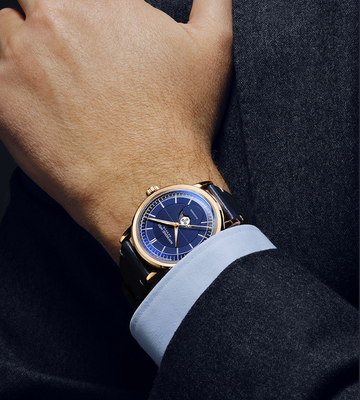



An automatic watch is more than a timepiece that runs without a battery. Its mechanical movement captures energy as you wear it, turning an everyday gesture into a carefully engineered source of power. For Long Island shoppers, understanding that process makes it easier to compare watches, set realistic expectations, and recognize when professional attention may be appropriate.
Explore watch repair and servicing at Kravit Jewelers
In simple terms, what is an automatic watch? It is a mechanical watch that winds itself through the motion of a rotor as your wrist moves. The stored energy drives the movement, but power reserve, daily accuracy, and winding needs vary by caliber, complications, condition, and manufacturer specifications.
The details behind that answer explain why automatic watches can feel both practical and personal to own. From the rotor and mainspring to the balance and escapement, each component contributes to how the watch performs on the wrist and off it. A closer look at the movement is the best place to begin.
What Is an Automatic Watch and How Does It Work?
An automatic watch is a mechanical watch that winds its mainspring through the movement of your wrist instead of relying on a battery. As you wear it, a weighted rotor moves inside the case. The rotor's inertia and gravity allow it to respond to acceleration, including the natural motion of your arm, and that movement contributes energy to the winding system.
The mainspring stores the energy that powers the watch. Once wound, it gradually releases that energy through the gear train, which transfers power through the movement in carefully controlled stages. The escapement and regulating parts then meter that release so the hands advance at a consistent rate. The visible result is a watch that runs through mechanical energy rather than an electronic battery-powered circuit.
How is an automatic movement different from a manual mechanical watch?
Automatic and manual-wind watches both belong to the broader mechanical category. Their movements use stored spring energy and mechanical components rather than the electronic quartz system. Quartz relies on a vibrating crystal and an electronic circuit as its time reference.
The key distinction is how the mainspring is wound. An automatic movement can wind itself through wrist motion, while a manual mechanical watch requires the wearer to wind it by hand.
That does not mean every automatic watch performs identically. The design of the movement, its components, and the manufacturer's specifications influence how it winds, keeps time, and behaves when it is not worn. For that reason, model-specific guidance is more useful than assuming one universal power reserve or accuracy standard.
Explore watch repair and servicing
What Parts Give an Automatic Watch Its Power?
An automatic watch gets its power from a rotor-driven winding system that stores energy in a mainspring, then releases it through the movement's regulating components. The design is mechanical, but several small systems must work together for the watch to run and keep time.
How does the rotor wind the watch?
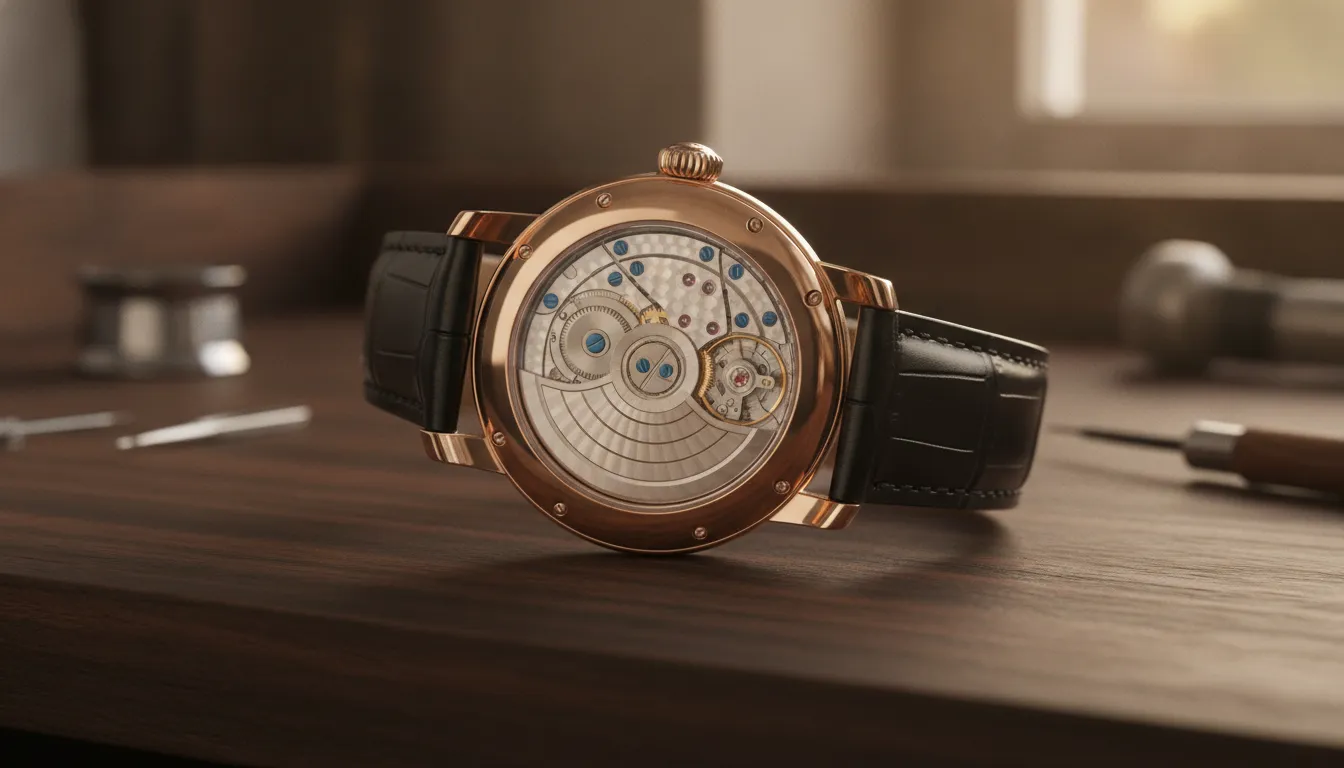
The rotor is a weighted component that moves as the wearer's wrist changes position. Its inertia and gravity help it respond to acceleration, turning motion into winding activity. The winding system transfers that energy through the movement and tensions the mainspring. The mainspring then acts as the stored-energy source for the watch.
What do the mainspring, escapement, and balance do?
The mainspring stores energy and releases it gradually into the gear train. The escapement controls how that energy is released, while the balance acts as the movement's oscillating timekeeping element. Together, these parts regulate the flow of power so the hands advance in measured increments rather than moving freely.
Why do automatic watch calibers differ?
A caliber is the specific movement design inside a watch. Differences in architecture, winding components, barrel capacity, complications, and regulation can affect how a watch performs. Reserve, accuracy, and care should therefore be judged according to the individual watch and its manufacturer's specifications, not treated as universal automatic-watch standards.
For example, controlled testing can evaluate a movement across changes in position and temperature. The resulting rate data describes the movement under those test conditions, not every automatic watch. Kravit Jewelers has been family-owned since 1927, and questions about a particular movement are best handled through an assessment rather than a generalized specification.
How Long Does an Automatic Watch Run Off the Wrist?
An automatic watch usually continues running for a period after you remove it, but the exact power reserve depends on its movement, mainspring, and complications. There is no single running time that applies to every automatic watch. To know what to expect from a particular timepiece, check the manufacturer's specifications for its caliber.
While the watch is on your wrist, movement helps wind the mainspring through the automatic winding system. Once the watch is set aside, it draws on the energy already stored in that spring. When that energy is depleted, the watch stops. Removing it overnight may not be enough to stop a well-wound movement, while leaving it unworn for longer can eventually exhaust its reserve.
Power reserve can differ substantially between calibers. The size and design of the energy-storage system affect how long the movement can operate, and additional functions can draw on that energy. A chronograph or another complication may reduce available reserve while it is active. These are movement-specific considerations, not universal rules for every automatic watch.
It is also helpful to separate power reserve from accuracy. A movement may be tested against defined rate criteria across different positions and temperatures, but those results describe that movement under specific test conditions. They do not mean every automatic watch has the same reserve or that a particular watch will run for a universal number of hours off the wrist.
If your watch stops much sooner than its documented specification, or stops despite regular wear, it may warrant professional assessment. Kravit Jewelers provides watch servicing and repair from its Oceanside showroom, with service needs evaluated according to the individual timepiece.
Does an Automatic Watch Need Manual Winding?
Usually, an automatic watch can wind itself while you wear it, but some models may also support manual winding through the crown.
An automatic movement uses a weighted rotor that responds to the acceleration of your wrist. As the rotor moves, it transfers energy into the watch's winding system. The exact behavior depends on the movement, so the manufacturer's instructions should always take priority over general advice. Rotor movement is made possible by the combination of the rotor's inertia and gravity, which causes it to move as the watch changes position.
Manual winding can be useful when an automatic watch has stopped after sitting unworn, particularly if the movement is designed to accept winding through the crown. However, there is no safe universal number of turns or winding procedure for every watch. Crown design, winding direction, operating positions, and manufacturer guidance can vary. Follow the owner's manual, and stop if the crown feels unusually resistant rather than forcing it.
This differs from a manual-wind mechanical watch. Both types use mechanical energy rather than a battery, but a manual-wind watch relies on the wearer to wind its mainspring regularly. An automatic watch is designed to supplement that process with wrist motion through its rotor. The distinction is therefore about how the mainspring receives energy, not whether the watch is mechanical.
Explore automatic watch repair guidance before winding a stopped or unfamiliar movement.
If an automatic watch will not start, stops quickly, or feels different when you operate the crown, an assessment is more appropriate than repeated winding. Movement construction and manufacturer specifications determine the right handling, and a qualified watch professional can help identify the next step.
How Accurate Is an Automatic Watch in Daily Wear?
An automatic watch's daily accuracy depends on its movement, adjustment, position, temperature, and wearing conditions, so there is no single accuracy range that applies to every model. Mechanical timekeeping is a carefully regulated balance of interacting parts, but it does not behave exactly like a digital reference or a quartz watch. The practical question is not only what a watch achieves in controlled testing, but also how its rate behaves on your wrist and between positions overnight.
Why can the same watch gain or lose time?
Gravity affects a mechanical movement differently when the watch is worn flat, resting on its side, or positioned crown-up overnight. Temperature can also influence the movement's components and the way it keeps time. Daily activity matters as well. A watch exposed to repeated shocks, strong magnetic fields, or changing conditions may perform differently from the same watch in a controlled test environment. These variations are reasons to follow the manufacturer's specifications rather than assume that one owner's experience defines a whole category.
What does controlled accuracy testing measure?
Controlled testing provides useful context, but it should not be mistaken for a promise about every automatic watch. Testing can examine a movement's rate across changes in position and temperature. The result is a movement-specific benchmark under defined conditions, not a universal standard for all automatic watches.
When a watch's rate changes noticeably, the cause may be adjustment, magnetism, wear, or a service need. An assessment can identify the appropriate next step. Kravit Jewelers provides watch servicing and repair from its Oceanside showroom, with Swiss-trained watchmakers and polishers. Service needs should be evaluated for the individual timepiece rather than assumed from general movement guidance.
Read our automatic watch repair guidance for practical next steps when your timepiece no longer keeps its expected rate.
Automatic vs. Manual vs. Quartz: Which Movement Fits You?
The right movement depends on whether you value wrist-powered convenience, hands-on winding, or straightforward electronic timekeeping. Automatic and manual-wind watches are both mechanical, meaning they use stored energy and a regulating system to keep time. An automatic movement adds a rotor that responds to the wearer's motion, while a manual movement is wound directly through the crown. Quartz watches use an electronic circuit and a vibrating quartz crystal as their time reference.
| Movement | Power source | Daily ownership | Maintenance character |
|---|---|---|---|
| Automatic mechanical | A mainspring wound by a rotor that moves with the wrist. | Wear it regularly, or follow the maker's instructions for winding and storage when it is off the wrist. | Mechanical care and professional assessment may be needed over time. |
| Manual-wind mechanical | A mainspring wound by turning the crown. | Wind it according to the manufacturer's guidance and enjoy a more deliberate daily ritual. | Mechanical care, with winding and handling forming part of ownership. |
| Quartz | An electronic circuit regulated by a vibrating quartz crystal. | Typically chosen for simple, convenient timekeeping without winding. | Electronic and battery-related service needs differ from mechanical care. |
An automatic watch can suit someone who appreciates traditional mechanics but does not want to wind the watch every morning. The rotor's weight, inertia, and gravity help it move as the wrist accelerates, transferring energy to the mainspring. That convenience still depends on the individual movement and how it is worn.
A manual-wind watch may appeal to a wearer who enjoys interacting with the mechanism. Quartz can be the practical choice when consistent, uncomplicated daily use matters most. In every category, specifications and care requirements vary by watch. When you are comparing an older or complicated timepiece, an in-person assessment can clarify what its movement requires.
How Should You Care for an Automatic Watch?
Care for an automatic watch by following its manufacturer guidance, protecting it from avoidable shocks and moisture, and arranging a professional assessment when its performance or condition changes.
Store the watch in a clean, secure place when it is not being worn. Keep the crown properly positioned according to the manufacturer's instructions, and avoid operating it when the watch is exposed to moisture unless the model's guidance specifically permits it. Water resistance is not a universal feature of automatic watches, and its performance can depend on the individual watch's construction and condition.
Be thoughtful about impacts, unusual noise, or changes in timekeeping. An automatic movement contains delicate mechanical components, so a sudden loss of accuracy, difficulty winding, condensation beneath the crystal, or a watch that stops unexpectedly deserves attention rather than an improvised fix. Do not assume that every movement has the same care requirements, power reserve, or service schedule. Those details vary by model and manufacturer specifications.
A professional assessment can help determine whether the watch needs repair or another form of service. Kravit Jewelers provides watch servicing and repair from its Oceanside showroom, with Swiss-trained watchmakers and polishers. Specific service needs should be evaluated for the individual watch, without assuming a particular outcome or turnaround.
For owners in Oceanside, Nassau County, and across Long Island, automatic watch repair guidance can help with the next steps before bringing in a timepiece for assessment.
Explore watch repair and servicing at Kravit Jewelers.
Frequently Asked Questions
What is an automatic watch?
An automatic watch is a mechanical timepiece that winds its mainspring through a rotor. As the rotor responds to wrist movement, it stores energy that powers the movement without relying on a battery. It still requires appropriate care, and its power reserve and accuracy depend on the specific caliber and manufacturer specifications.
How long does an automatic watch run when it is not being worn?
It runs until the energy stored in its mainspring is depleted. The duration varies by movement, mainspring capacity, and complications, so the manufacturer's stated power reserve is the best reference for a particular model. If the watch stops, follow the maker's instructions for restarting or winding it.
Does an automatic watch need a battery?
No. An automatic watch is powered by stored mechanical energy rather than a battery. Wearing it can keep the rotor winding the mainspring, while some models also support manual winding through the crown. Always use the winding method and limits specified for that watch.
How accurate is an automatic watch in daily wear?
Accuracy varies with the movement, position, temperature, magnetism, wear, and service condition. There is no universal daily-rate expectation for every automatic watch. Some movements have model-specific test results and published tolerances, while a watch that gains or loses time unexpectedly may benefit from professional assessment.
When should an automatic watch be serviced?
Service needs depend on the watch, its condition, and the manufacturer's guidance. Signs such as inconsistent timekeeping, reduced power reserve, moisture concerns, or unusual sounds warrant an assessment. A qualified watch professional can determine whether repair or another form of service is appropriate for the specific movement.
Explore Watch Repair and Servicing
Understanding an automatic watch can make ownership more rewarding, especially when you know where to turn with questions about care or performance. For verified information about assessing and maintaining an automatic timepiece, explore Kravit Jewelers' watch repair and servicing information. Review the available guidance and choose the next step that fits your watch and its needs.


