



A tennis bracelet is designed to move with the wrist rather than sit as one rigid circle. Its distinctive look comes from a continuous row of individually set diamonds or gemstones connected in flexible sections, creating a refined line that can range from delicate to bold. The details behind that movement matter: construction affects comfort, the clasp supports security, and regular care helps protect the settings.
Explore Kravit's tennis bracelet collection
In simple terms, what is a tennis bracelet? It is a flexible bracelet with gemstones arranged around the wrist in a continuous, articulated design. Although diamonds are traditional, the style may also feature colored stones or a combination of both. Gold and platinum are among the precious metals commonly used.
Understanding how the sections, settings, and fastening work makes it easier to assess a bracelet thoughtfully, whether you are shopping for a new piece or caring for one already in your collection. Let us begin with the construction that gives this classic style its signature flexibility.
What Is a Tennis Bracelet, and How Does It Work?
A tennis bracelet is a flexible band made with a continuous line of individually set diamonds or gemstones that circles the wrist. Its defining feature is not a particular stone size or width, but the way each setting connects with the next to create an articulated line that moves naturally while maintaining a seamless appearance. GIA describes the style as an elegant, flexible band with individually set stones.
That construction gives the bracelet its fluid drape. Instead of behaving like one solid piece, the connected sections can move as your wrist moves. The result is a line of sparkle that follows the shape of the wrist rather than standing away from it. Tennis bracelets can range from slim, delicate strands to bolder bands, so the overall presence may be subtle or distinctly statement-making.
How is a tennis bracelet different from a bangle?
A bangle is generally a rigid bracelet that keeps its circular or oval form when you take it off. It may slide over the hand or open with a hinge, but its body does not articulate in the same way. A tennis bracelet is built for flexibility. Its linked sections allow it to bend around the wrist and settle more closely against the skin.
How is it different from a station bracelet?
A station bracelet typically spaces individual gemstones along a chain, leaving visible stretches of metal between each focal point. A tennis bracelet presents a continuous jeweled line instead. The stones may be set close together so the design reads as an uninterrupted band, even though the underlying structure consists of separate articulated sections.
Understanding that difference helps explain why the name refers to a construction and visual style, not a bracelet intended only for athletic wear. When assessing one, look beyond the surface sparkle and notice how smoothly the sections move together. For a broader overview of bracelet silhouettes, you can choose the right bracelet style.
Explore Kravit's bracelet collection
Why Do They Call It a Tennis Bracelet?
The name is commonly associated with a memorable tennis moment involving Chris Evert at the 1987 U.S. Open. During a match, the clasp on her diamond bracelet broke, and the bracelet fell from her wrist. Evert asked officials for a time out so she could look for it. According to the Gemological Institute of America, the story helped the term "tennis bracelet" become widely known.
That story explains the name behind the style, but it does not mean a tennis bracelet is designed specifically for playing tennis. In fact, a bracelet with a continuous line of individually set stones requires thoughtful construction and a secure closure, whether it is worn for an occasion or as part of an everyday jewelry wardrobe.
Today, the term generally describes a flexible bracelet made with closely aligned diamonds or other gemstones. The stones may be set in gold, platinum, or another appropriate precious-metal design, and the bracelet may be delicate or more substantial in width. Colored stones, or a combination of diamonds and colored stones, can also create a tennis-style look.
So, what is a tennis bracelet in practical terms? It is a flexible, articulated line of gemstones that follows the wrist, with a name rooted in a widely cited sports story. When evaluating one, focus less on the anecdote and more on the quality of the settings, the movement of the links, and the security of the clasp.
How Is a Tennis Bracelet Constructed?
A tennis bracelet is built as a flexible band rather than a single solid loop. Its continuous line is made from individual diamonds or gemstones held in separate settings joined by articulated sections that allow the bracelet to follow the natural movement of the wrist. This construction creates the fluid, continuous appearance that defines the style.
Each setting supports a stone while the connected links provide movement between one section and the next. The result should feel graceful when the wrist bends, yet remain sufficiently structured to keep the stones aligned. The quality of that balance depends on careful craftsmanship, including the way the settings, links, and clasp work together. A professional inspection can be especially valuable when evaluating an older or inherited bracelet.
Gold and platinum are traditional precious-metal choices for this style. The stones do not have to be diamonds, however. Colored gemstones, or a combination of diamonds and colored stones, can create a different character while retaining the articulated construction associated with a tennis bracelet. The important distinction is the continuous, individually set line, not a single required gemstone type.
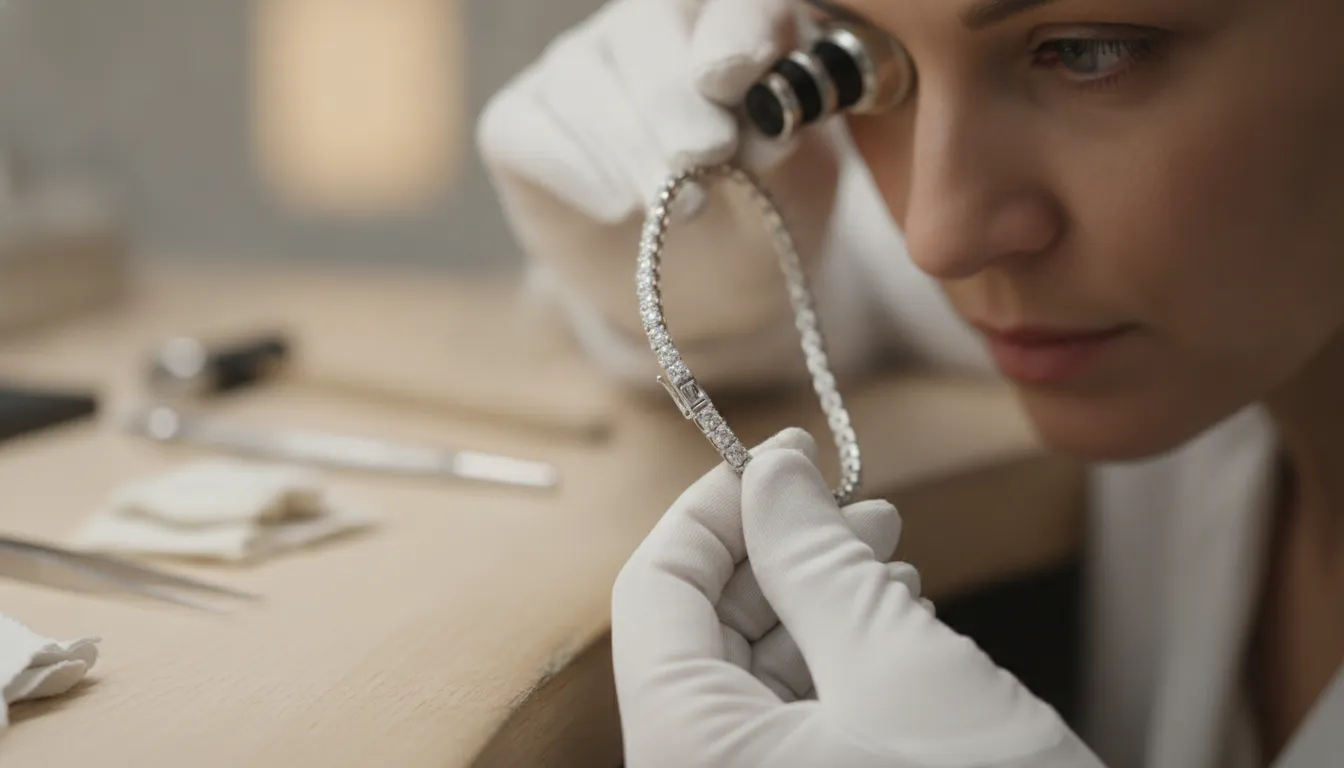
Width also changes how the finished piece reads on the wrist. Slim strands tend to look delicate and understated, while wider bands create a bolder visual presence. Both are part of the tennis-bracelet spectrum, so width is a design decision tied to the wearer's preferred proportion and style, not a fixed requirement.
| Feature | What to notice |
|---|---|
| Articulation | Linked sections should bend smoothly around the wrist. |
| Stone line | Individually set stones create the continuous jeweled appearance. |
| Metal | Gold and platinum are traditional precious-metal choices. |
| Width | Delicate strands look understated, while wider bands make a bolder impression. |
| Clasp | The closure should engage fully, with a safety latch when the design includes one. |
Choose the right bracelet style with Kravit's bracelet guide.
Understanding these components makes it easier to discuss a bracelet with a jeweler. Instead of viewing the piece only as a row of stones, you can consider how its articulated sections, metal, settings, and width create its movement and visual character.
How Should a Tennis Bracelet Fit?
A tennis bracelet should feel secure enough to stay comfortably in place while still allowing natural movement around your wrist. It should not pinch, restrict your motion, or hang so loosely that it repeatedly slides over your hand. Because tennis bracelets range from slim, delicate strands to bold bands, the ideal fit can vary with the bracelet's width, construction, and your wearing preferences. GIA's tennis-bracelet guide also reflects this range of proportions.
What should a comfortable fit feel like?
When you move your wrist, the bracelet should articulate smoothly rather than feel rigid or pull against a single point. The stones and links should rest naturally without pressing into your skin. A little movement is expected, but excessive looseness can let the bracelet rotate constantly, catch on nearby objects, or place unnecessary strain on the clasp and articulated sections.
Pay attention to comfort during ordinary movements, not only while your wrist is still. Bend your hand, turn your wrist, and notice whether the bracelet shifts in a way that feels distracting. If it leaves deep pressure marks, catches repeatedly, or feels as though it could slip over your hand, the fit deserves a closer assessment. Avoid relying on one universal finger-width rule, since wrist shape, bracelet width, clasp design, and personal comfort all affect the right adjustment.
When should a jeweler check the fit?
For a valuable, inherited, or frequently worn bracelet, ask a qualified jeweler to assess both fit and articulation. This is especially sensible if the piece feels newly loose, has developed a stiff section, or no longer sits evenly on the wrist. A professional can evaluate the bracelet without treating a general sizing guideline as a substitute for inspecting the actual links, settings, and clasp.
How Do You Keep a Tennis Bracelet Secure?
Keep a tennis bracelet secure by fully engaging its clasp and safety latch, checking the bracelet regularly, and pausing wear when you notice looseness, twisting, or damage. No clasp is failproof, so routine attention matters, especially with a flexible piece worn often.
How should you check the clasp?
Before putting the bracelet on, inspect the clasp and confirm that it closes completely. If the design includes a safety latch, engage it as well rather than treating it as optional. After fastening, give the bracelet a gentle, controlled check to make sure the clasp remains closed. Never force a latch that feels stiff or misaligned. A jeweler can assess whether the clasp needs adjustment or repair.
This detail is especially important because the name "tennis bracelet" is associated with a widely reported 1987 U.S. Open incident in which Chris Evert's diamond bracelet clasp broke and the bracelet fell from her wrist. GIA documents the story as part of the style's history, but it also offers a practical reminder: a secure closure deserves attention. Read GIA's account of the tennis bracelet name.
What should you look for during routine checks?
Lay the bracelet flat and look for sections that twist, sit unevenly, or no longer articulate smoothly. Check for a visibly loose connection, a bent component, or a stone setting that appears different from its neighbors. Because the bracelet is made to move around the wrist, small changes can be easier to notice when you compare its drape and closure with how it normally looks.
Pause wear and seek professional inspection if the clasp does not stay closed, the safety latch will not engage, the bracelet has caught on clothing, or any section feels loose. Avoid testing it through exercise, sleep, household work, or other activity that could place additional stress on the closure. Kravit Jewelers provides fine-jewelry repair and restoration, so an experienced jeweler can help determine the appropriate next step without guessing at the condition.
How Should You Clean and Care for a Tennis Bracelet?
For everyday care, remove your tennis bracelet before harsh activity or contact with chemicals. Store it separately, clean it gently only when the materials allow, and inspect the settings regularly. If a stone, setting, or clasp seems loose, pause wear and ask a qualified jeweler to assess it.
What should you avoid while wearing one?
Take the bracelet off before swimming, exercising, gardening, cleaning, or doing other work that could expose it to chemicals, impact, or snagging. Perfume, cosmetics, hair products, and household cleaners can also leave residue or affect some metals and gemstones. Because a tennis bracelet is made of many articulated sections, avoid treating it like a rigid bangle that can be worn through every activity.
How can you clean it gently?
Start with the least aggressive approach. Wipe the bracelet with a soft, clean cloth to remove surface residue. If the stone and metal combination is known to tolerate gentle cleaning, use lukewarm water and a mild solution, then rinse carefully and pat dry with a soft, lint-free cloth. Do not use abrasive materials, unverified chemical dips, or force around the settings. When you are unsure about a gemstone, finish, or previous repair, skip home cleaning and request professional guidance. Kravit's guide to how to care for fine jewelry offers additional general-care direction.
How should you store and inspect it?
Store the bracelet by itself in a soft-lined compartment or pouch so its stones and metal do not rub against other jewelry. Before wearing it, look for a visibly loose stone, bent section, damaged clasp, or change in how the bracelet flexes. Regular professional cleaning can also make it easier to notice concerns that are difficult to see at home. If the bracelet needs attention, Kravit provides fine-jewelry repair and restoration services. A careful inspection is especially worthwhile for an inherited or frequently worn piece.
What Should You Consider Before Choosing a Tennis Bracelet?
Choose a tennis bracelet by balancing its stones, metal, proportions, flexibility, security, and the way you expect to wear it. The most suitable piece should feel comfortable on your wrist, reflect your personal style, and receive the level of professional guidance appropriate for fine jewelry.
Which stones and metal suit your style?
Diamonds are traditional, but the style can also feature colored gemstones or a combination of diamonds and colored stones. Consider whether you want a quiet, versatile line of sparkle or more color and contrast. Gold and platinum are traditional precious-metal choices, each contributing a different visual character and wearing experience. For a closer look at related material and proportion decisions, you can explore gold bracelet styles and fit.
How should width and articulation affect the decision?
Tennis bracelets range from slim, delicate strands to bold bands. A narrower design may suit understated daily styling, while a wider bracelet can create a more pronounced presence. Look closely at the articulation, or the linked sections that allow the bracelet to move with your wrist. It should flex comfortably without feeling awkward, overly rigid, or difficult to position.
What should you check about the clasp and your lifestyle?
A secure clasp and safety latch can add reassurance, but no fastening should be treated as failproof. Think about whether the bracelet will be worn mainly for occasions or alongside your everyday routine. Before wearing it regularly, make sure the clasp engages properly and that the bracelet feels secure during ordinary movement. If you are considering an inherited piece or a valuable bracelet, professional guidance can help assess its condition and fit. A personalized consultation at Kravit Jewelers in Oceanside can help you discuss those details with a jeweler.
Explore Kravit's bracelet collection
Frequently Asked Questions
What is a tennis bracelet?
A tennis bracelet is a flexible band made with a continuous line of individually set diamonds or gemstones around the wrist. Its articulated construction allows the bracelet to move comfortably rather than behaving like a rigid bangle. The style can range from a delicate strand to a broader statement design. Source: GIA.
What is a tennis bracelet made of?
Traditional tennis bracelets are made with precious metals such as gold or platinum and are commonly set with diamonds. Some designs use colored gemstones or combine colored stones with diamonds, giving the classic flexible silhouette a different character. Source: GIA.
Why do they call it a tennis bracelet?
The name became widely known after a 1987 U.S. Open incident involving tennis player Chris Evert. Her diamond bracelet clasp broke during a match, and the bracelet fell from her wrist. The term refers to the jewelry style, not to a bracelet designed only for playing tennis. Source: GIA.
How should a tennis bracelet fit?
A tennis bracelet should feel comfortable while allowing natural wrist movement without sliding excessively or feeling constricting. Check that the clasp is fully engaged and that any safety latch closes properly. If the piece is valuable, inherited, or feels loose at its settings, have a qualified jeweler assess the fit and security before continued wear.
Ready to Explore Tennis Bracelet Styles?
Choosing a tennis bracelet is easier when you can consider its construction, fit, security, and care with a knowledgeable local jeweler. Explore Kravit Jewelers' bracelet collection to get started, then contact the Oceanside showroom for thoughtful, in-person guidance on choosing or caring for a tennis bracelet.


