

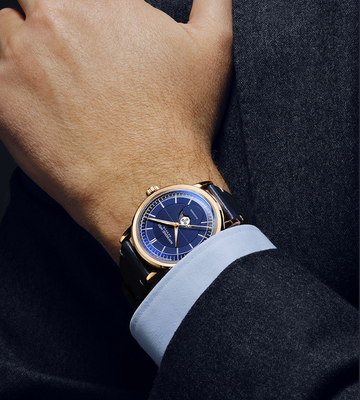


A watch band does more than hold a timepiece in place. Its material, width, taper, buckle, and attachment points affect comfort, appearance, and how confidently you can wear the watch each day. For luxury-watch owners, a replacement should be evaluated against the case and the watch's design, not chosen by appearance alone.
Explore watch repair and servicing
The best watch bands match the watch's lug width and attachment geometry while suiting the owner's comfort, climate, activity, and style preferences. When fit or compatibility is uncertain, an in-person inspection can help protect the case and confirm the replacement is secure.
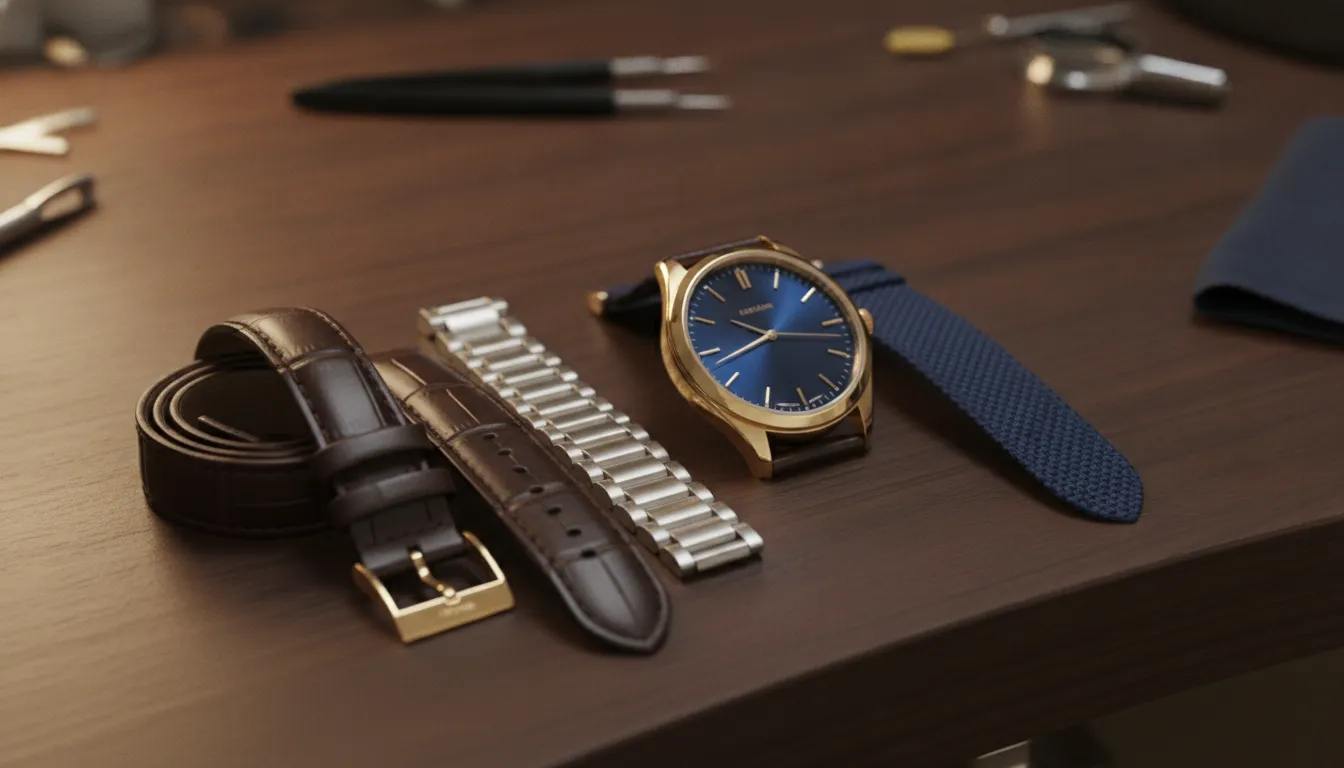
From supple leather and practical rubber to metal bracelets and woven options, each material brings different strengths and tradeoffs. Understanding those differences is the first step toward making a considered replacement decision.
What Are the Main Types of Watch Bands?
Watch bands are the replaceable straps or bracelets that secure a timepiece to the wrist. The right material changes the watch's appearance, weight, flexibility, and everyday care, so the best choice depends on the case design, wearing routine, and desired style.
Leather, metal, rubber or silicone, fabric or nylon, and integrated or specialty bands are the main watch-band categories. Each offering a different balance of appearance, comfort, structure, and maintenance.
| Band type | Typical character | Considerations |
|---|---|---|
| Leather | Refined and traditional | Often suits dressier settings. Finish, lining, and construction influence comfort and longevity. |
| Metal | Structured and substantial | Can create a cohesive, durable look. Weight, edge finish, and link construction affect how it feels. |
| Rubber or silicone | Flexible and easy to clean | Can suit active wear, but water performance depends on the complete watch and band setup, not the material alone. |
| Fabric or nylon | Lightweight and adaptable | May offer a casual feel and straightforward adjustment. The weave, hardware, and attachment method still matter. |
| Integrated or specialty | Designed around a particular case | May require model-specific dimensions or attachment parts. Confirm compatibility before ordering a replacement. |
Material descriptions are useful starting points, not guarantees. A finely finished metal bracelet may feel comfortable on one wrist but too heavy on another. Similarly, a leather band can look formal while its lining and shape determine how it wears through the day. Rubber or silicone can be practical for activity, yet it should not be treated as automatically waterproof or suitable for every watch.
Before choosing among watch bands, check the attachment width, buckle arrangement, case clearance, and spring-bar requirements. A quick-release design may simplify some changes, but the band must still seat securely. When the attachment is unfamiliar or the watch is valuable, an in-person inspection can help protect the case and confirm the fit.
How Do You Measure Watch-Band Width and Length?
A secure fit depends on more than the width of the watch case. Before choosing replacement watch bands, identify the distance between the case lugs, check how the band tapers toward the buckle, and confirm the length that suits your wrist. Small differences matter, especially when the case uses a less common width or a model-specific attachment system.
- Measure the lug width. Lug width is the distance between the inside edges of the watch case where the band attaches. Measure in millimeters with a metric ruler or caliper, or confirm the specification for the exact watch model. Measure the case attachment point rather than relying on the overall case diameter. A replacement band must seat cleanly between the lugs without being forced into place.
- Check whether the band tapers. Many bands are wider at the case and narrower at the buckle. For example, a measurement written as 24/22 indicates 24 millimeters at the case attachment and 22 millimeters at the buckle attachment. Panerai's official strap-sizing guide explains this two-part millimeter system and shows why case and buckle measurements both matter.
- Confirm the buckle width. The buckle opening, buckle hardware, and band end must work together. A band can match the lug width yet look or function poorly if its tapered end does not suit the existing buckle. If you plan to reuse the original buckle, measure its attachment width and verify that the replacement is designed for it.
- Choose the appropriate length. Measure your wrist where the watch will sit, then account for the case and the amount of overlap you prefer. Strap length is commonly offered in categories such as Extra Small, Standard, and Extra Large, but the available options vary by band. The correct choice should leave the watch secure without excessive tail length, tightness, or awkward keeper placement.
These measurements establish a starting point, not a universal compatibility guarantee. Curved ends, quick-release systems, spring bars, and unusual case geometry can change the fit. If the measurements are unclear or the band does not seat easily, pause before applying pressure and have the attachment checked by a qualified watch professional.
Which Watch Bands Are Most Comfortable for Daily Wear?
Daily comfort depends less on a single "best" material than on how the band fits your wrist, suits your routine, and balances the watch head. A band that feels elegant at a formal event may not be the most practical choice for commuting, exercise, or warm weather.
How do climate and activity affect comfort?
Leather is often selected for its refined, traditional appearance, but its comfort depends on construction, lining, finish, and how it responds to the wearer's environment. In hot or humid conditions, some people may prefer a band with a less insulating feel and an adjustment that does not press tightly against the wrist. Care still matters, since exposure to moisture and perspiration can affect leather over time.
Rubber or silicone can be a practical option for active wear because these materials are flexible and generally easy to clean. That does not make every replacement band waterproof. Water resistance depends on the complete watch and band setup, including the watch itself and how the components are fitted.
What makes a band feel secure without feeling heavy?
Metal bracelets offer structure and durability, but their added weight and rigid links may feel different from a lighter leather, rubber, or fabric option. Flexible construction can follow the wrist more naturally, while a smooth edge finish helps reduce rubbing during movement. The right choice is personal: a heavier bracelet may feel reassuring to one wearer and tiring to another.
Adjustment is equally important. A band that is too loose can shift and feel unstable; one that is too tight can create pressure as the wrist changes throughout the day. If the fit remains uncomfortable after careful adjustment, check the band length, taper, attachment, and buckle geometry rather than simply tightening it further.
How Can You Check Compatibility Before Replacing a Band?
A replacement band should fit the watch as a complete system, not simply look close in a product photo. Start with the model specifications when they are available. Confirm the attachment width, commonly called the lug width, against the current band or a careful metric measurement. A small mismatch can leave the band unable to seat properly between the lugs.
Next, check the case attachment and the band profile together. The space around the lugs must accommodate the band without forcing it against the case, crown, or other controls. Case size alone does not determine compatibility. The buckle end matters too, since a tapered band may use a different width where it meets the buckle. Panerai's official sizing guidance illustrates why both case attachment and buckle attachment measurements belong in the specification check: its strap-sizing guide explains the two-part millimeter measurement.
Then inspect the spring bars. The bars must be the correct length and diameter for the watch and band, with ends that sit securely in the lug holes. A quick-release mechanism may make swapping some watch bands easier, but it does not remove the need to verify the attachment geometry. Insert the band evenly and check that each spring-bar end has fully engaged before putting the watch on your wrist.
Finally, examine the buckle, keeper loops, and case clearance. Fasten the buckle gently, confirm that the tongue passes cleanly through its hole, and look for pressure points or rubbing at the case. With the band attached, apply light hand pressure in several directions. The band should remain seated without visible gaps, twisting, or spring-bar movement. If the model specifications are unclear, the bars are damaged, or the fit requires force, pause rather than improvising. Model-specific inspection protects both the watch and its finish.
Learn more about choosing a luxury timepiece
What Should You Consider for a Luxury Timepiece?
A watch band should look as though it belongs with the case, not like an afterthought attached to it. Start with proportion. The band should relate to the width, thickness, and visual weight of the watch. A narrow band can make a substantial case feel top-heavy, while a wide or heavily padded band may overwhelm a more refined design.
How do finish and taper affect the result?
Finish is just as important as size. Polished hardware can echo a bright case, while brushed or matte details may create a quieter, more cohesive appearance. The same principle applies to the band surface. Smooth leather, textured leather, woven fabric, and flexible rubber each create a different impression and respond differently to daily wear.
Taper also shapes both appearance and comfort. A band that narrows toward the buckle can make the watch feel more balanced and may reduce visual bulk at the wrist. The taper must still work with the buckle width, however. As official sizing guidance explains, matching a strap involves more than one measurement: the case attachment width and buckle attachment width both matter. Panerai's sizing guide illustrates this two-part approach in millimeters.
When should you preserve the original design intent?
Consider what the watch was designed to communicate and how its original band supports that purpose. Leather is generally associated with a refined, traditional appearance, while a metal bracelet emphasizes structure and durability. Rubber or silicone may suit active wear because it is flexible and easy to clean. But the complete watch-and-band setup determines whether a particular choice is appropriate for water or activity. Do not assume a replacement band inherits the performance of the watch itself.
When the proportions, finish, taper, or attachment hardware are uncertain, avoid improvising. A quick-release feature can simplify some changes, but the spring bars and attachment geometry still need to seat securely. Model-specific details may not be obvious from a photograph or a generic size chart. In that situation, preserving the watch's intended balance is more important than forcing a convenient replacement.
When Should a Professional Fit or Replace Watch Bands?
A band change may look simple, but the connection between a watch case and its band depends on precise measurements, spring bars, lug shape, buckle geometry, and clearance. If you cannot confirm that the replacement fits your model, pause before applying pressure or using tools. An uncertain fit is a practical reason to arrange watch repair and servicing rather than risk damage during installation.
Stop if the attachment does not seat cleanly
The band should sit evenly between the lugs, with the spring bar fully engaged and no visible gap that suggests incorrect width or attachment geometry. Do not force a band that is too tight, or accept one that moves excessively once attached. A loose connection can allow the watch to shift or fall, while forcing the wrong fit may scratch the case or deform a component. Quick-release hardware can simplify some changes, but it does not remove the need to confirm secure seating.
Inspect damaged spring bars and worn hardware
Professional help is especially appropriate when a spring bar is bent, corroded, difficult to remove, or no longer holds tension. The same applies when the buckle does not align with the replacement band. The attachment points are difficult to see, or the case finish could be marked by improvised tools. These are stop points, not challenges to overcome by applying more force.
Choose inspection for valuable or unfamiliar watches
For a valuable timepiece, an unfamiliar case design, or a band with model-specific attachment requirements, in-person inspection adds an important layer of protection. Kravit's in-house service center includes Swiss-trained technicians, and the store has served Long Island families since 1927. Learn more about Kravit's Oceanside watch expertise, or review watch repair guidance for Long Island owners before deciding how to proceed. A careful assessment helps preserve both the watch's secure fit and its case finish.
How Should You Care for Leather, Metal, and Rubber Bands?
The best care routine depends on the band material, how you wear the watch, and the condition of the attachment points. Treat visible wear as useful information rather than waiting for the band to fail during wear.
How should leather bands be maintained?
Leather benefits from a measured approach. Keep it away from unnecessary moisture, perspiration buildup, and products that can stain or dry the surface. After wearing the watch, allow the band to air out before placing it in a case. A soft, dry cloth can remove surface residue, but use any conditioner only when it is specifically appropriate for that leather and finish. Cracking, deep creases, stretched holes, or a hardened underside are sensible reasons to ask about replacement.
What care does a metal bracelet need?
Metal bracelets can collect perspiration, skin oils, and debris between links. Wipe the exterior with a soft cloth and take care around the clasp, end links, and case. If debris is lodged where you cannot clean it without tools, professional attention is preferable to forcing a brush or implement into the attachment area. Inspect the clasp and links for unusual looseness, damaged edges, or a change in how securely the bracelet closes. Those signs can matter more than cosmetic surface marks.
How should rubber or silicone bands be checked?
Rubber or silicone bands are often practical for active wear because they are flexible and easy to clean. Follow the care guidance for the specific band, and do not assume that a replacement band makes the complete watch setup waterproof. Rinse or wipe away residue as appropriate, then inspect for brittleness, tackiness, splits, stretched holes, or a weakened keeper loop. Material deterioration can make a comfortable band unsafe to continue wearing.
Whenever a replacement uses quick-release hardware, confirm that the spring bars and attachment geometry are correct and that both ends are seated securely. A quick-release mechanism can simplify swapping some bands, but it does not remove the need for a careful fit check. Availability, compatibility, and service requirements vary by watch, so verify them before ordering or installing a replacement.
Get watch repair and servicing guidance from Kravit Jewelers.
Frequently Asked Questions About Watch Bands
How do I know what band fits my watch?
Start by confirming the lug width, which is the distance between the case attachment points. Then check the band length, taper, buckle width, spring bars, and clearance around the case. The watch model specifications or an accurate measurement can help, but model-specific attachment details still matter. Panerai's sizing guide explains why both the case attachment width and buckle attachment width should be considered: Panerai strap sizing guidance.
What are good watch band brands?
A good choice depends less on a universal brand ranking and more on accurate sizing, compatible hardware, appropriate materials, and secure construction. For a valuable or unusual timepiece, prioritize a band that matches the case geometry and intended proportions. If those details are unclear, have the existing band and attachment points inspected before ordering a replacement.
Where is the best place to buy watch bands?
The best source is one that can verify fit before installation, especially when the watch has unusual lugs, a delicate finish, or a model-specific attachment system. Online listings may provide useful measurements, but a local watch-service professional can check the spring bars, buckle, case clearance, and seating in person before the watch is worn.
What are the bands on watches called?
They are commonly called watch bands, watch straps, or watch bracelets. "Strap" often refers to leather. Rubber, fabric, or similar flexible materials, while "bracelet" usually describes a linked metal band. Retailers may use the terms differently, so measurements and attachment compatibility are more reliable than the label alone.
Ready to Find the Right Watch Band?
When band sizing, attachment details, or case clearance are uncertain, model-specific guidance can help you choose a secure and comfortable replacement while protecting the character of your timepiece. Visit Kravit Jewelers' watch repair and servicing page to review your next step with the appropriate service team.


