


Schedule a consultation before you compare tennis-bracelet prices online. A tennis bracelet estimate depends on the combined details of the diamonds or gemstones, metal, setting, craftsmanship, condition, and documentation. Two bracelets can look similar in a photograph while differing meaningfully in quality, construction, and long-term service needs.
This guide explains the factors a jeweler reviews when discussing the cost of a tennis bracelet. It is designed to help you ask better questions, compare like with like, and decide whether an in-person evaluation makes sense for your goals.
Request a tennis bracelet consultation at Kravit Jewelers in Oceanside
What is the short answer to how much a tennis bracelet costs?
Short answer: There is no single responsible price for every tennis bracelet because the bracelet is a complete piece of jewelry, not just a total carat-weight number.
The most useful estimate starts with the exact piece you are considering. A jeweler looks at the stones as a group, the metal and its weight, how the stones are secured, the quality of the clasp and safety features, the labor involved, and the condition of the bracelet. Documentation also matters because it can clarify what the piece contains and which type of value a later appraisal is intended to represent.
Online listings can be helpful for learning the vocabulary, but they are not always an apples-to-apples comparison. A listing may emphasize total carat weight while giving limited information about matching, cut quality, clarity, metal weight, or the bracelet's construction. For a meaningful estimate, compare the complete specification and the service behind the piece.
Which diamond factors shape a tennis bracelet estimate?
Diamond quality, total carat weight, and consistency across the row are the most important stone-related factors in a tennis bracelet estimate. The number of stones alone does not tell the full story.
How does total carat weight affect the conversation?
Total carat weight, often shortened to total carat weight or TCW, is the combined weight of all stones in the bracelet. It helps describe the scale of the piece, but it should not be used as a stand-alone price shortcut. Two bracelets with a similar total weight may use different stone sizes, proportions, cuts, colors, and clarities.
Why do cut, color, and clarity matter?
Cut affects how each diamond handles light. Color and clarity affect how the stones appear and how consistently they match across the bracelet. In a continuous row, mismatched stones can be noticeable because the eye moves along the entire line. A consultation should address the overall visual effect, not just a single representative stone.
GIA describes the 4Cs as color, clarity, cut, and carat weight, and its tennis-bracelet guidance explains that stone characteristics, metal, and total carat weight all influence price. Read the GIA tennis bracelet buying guide for neutral background on these quality factors.
Does natural or lab-grown origin change the estimate?
Stone origin is another question to ask before comparing pieces. Natural and lab-grown diamonds are different categories, and a clear description should identify which type a bracelet uses. Ask how the origin is documented, whether the report covers individual stones or a matched parcel, and whether the bracelet's description matches the paperwork.
How does the metal change the cost and wear experience?
The metal contributes to a tennis bracelet's material value, appearance, durability, weight, and maintenance needs. It also changes how the stones look against the wrist and how the bracelet fits into an existing jewelry wardrobe.
| Metal consideration | What to ask | Why it matters |
|---|---|---|
| Purity | Is the bracelet 14K, 18K, platinum, or another documented alloy? | Purity affects composition, color, weight, and wear characteristics. |
| Weight | How much metal supports the stones and links? | More material and a more substantial build can affect the estimate. |
| Color | Will yellow, white, or rose metal complement the stones and other jewelry? | Color changes the visual contrast and may affect finishing or care. |
| Care | What cleaning, polishing, or refinishing is appropriate? | Maintenance expectations are part of the ownership experience. |
Gold karat marks describe the proportion of gold in the alloy, while platinum is identified through its own purity markings. The Federal Trade Commission's jewelry guidance explains why purity marks and seller information deserve attention when you compare precious-metal jewelry.
A professional consultation also considers whether the metal choice supports your intended wear. A bracelet selected for frequent use may call for a different balance of weight, flexibility, clasp security, and maintenance than one reserved for occasional events.
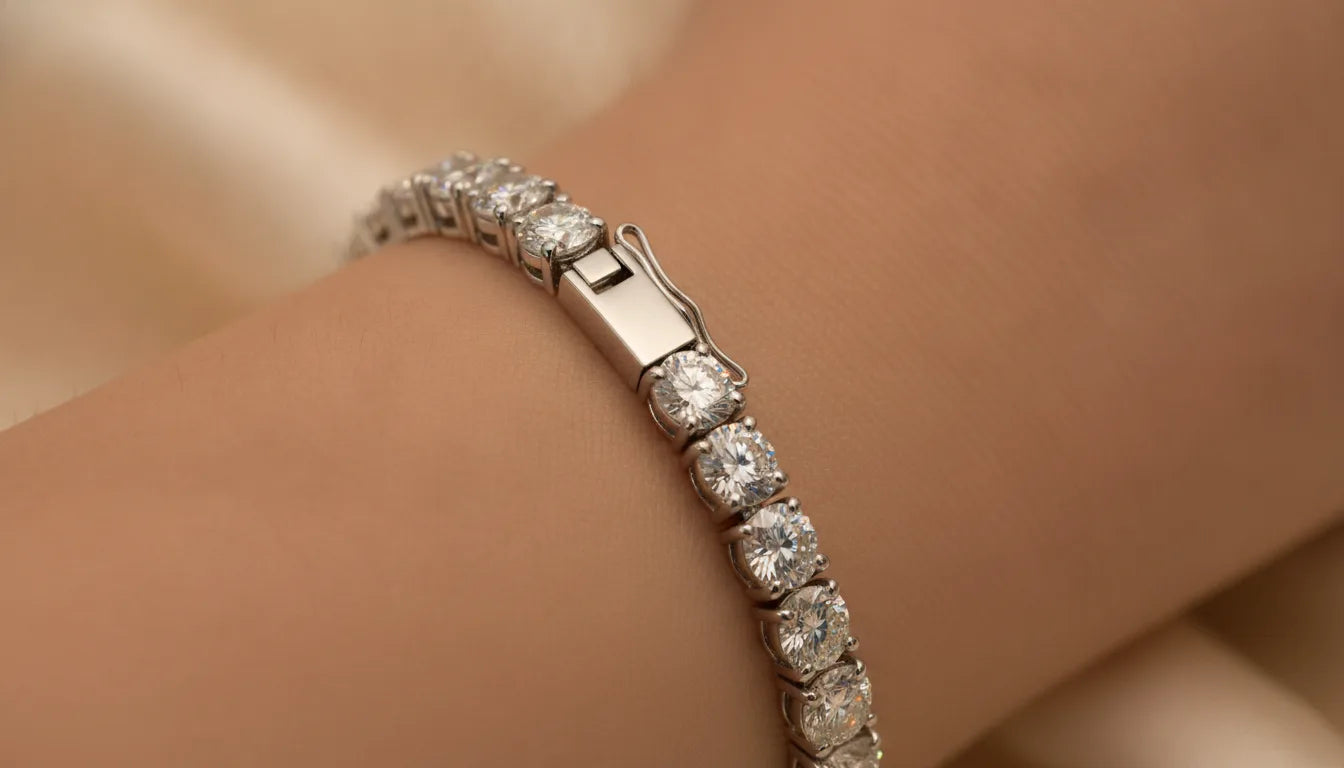
How do setting, clasp, and craftsmanship affect tennis bracelet value?
A tennis bracelet's setting and structural workmanship protect the stones and shape how confidently the piece can be worn. These details can be easy to overlook when a photograph focuses only on sparkle.
What should you know about settings?
Prong settings can allow strong light return while placing attention on the security and condition of each individual stone. Bezel or partial-bezel designs surround more of a stone's edge with metal. Channel-style construction creates a smooth, streamlined row between parallel metal rails. Each approach has a different visual character and a different inspection conversation.
The best choice depends on your priorities. You may prefer an open, bright look, a smoother surface for daily wear, or a design that visually protects more of each stone. A GIA guide to tennis bracelets discusses common setting approaches and the role of secure construction.
Why are the clasp and safety features important?
The clasp is a functional part of the value equation. Ask whether it closes cleanly, whether the safety features engage properly, and whether the links articulate without rough movement. A secure box clasp, figure-eight safety, or other documented safety construction can support peace of mind, but every bracelet still deserves regular inspection.
What does craftsmanship add beyond materials?
Craftsmanship includes how evenly the stones are matched, how securely they are set, how smoothly the links move, and how carefully the bracelet is finished. It can also include the skill needed to size, repair, clean, or restore the piece later. When workmanship is difficult to assess online, an in-person review adds useful context.
Compare diamond bracelet styles, settings, and fit in Kravit's related guide
How do condition and documentation change a tennis bracelet estimate?
Condition and documentation help a jeweler understand what the bracelet is, how it has been maintained, and which value question you need answered. This is especially important for an inherited, previously owned, or recently repaired piece.
Which condition details should a jeweler inspect?
- Loose, chipped, scratched, or visibly damaged stones.
- Worn prongs, stretched links, bent components, or an uneven line.
- Clasp alignment and the function of every safety feature.
- Surface wear, metal thinning, previous repairs, or refinishing.
- Bracelet length, flexibility, and whether the fit suits the intended wearer.
Condition does not automatically make a bracelet undesirable. It tells the jeweler whether the piece needs cleaning, tightening, repair, restoration, or additional documentation before a value discussion. A transparent assessment separates the bracelet's current condition from the cost of bringing it back to a preferred standard.
What paperwork is useful?
Bring any grading reports, purchase records, prior appraisals, insurance schedules, repair receipts, and manufacturer or retailer documentation. A report may describe diamond characteristics, while an appraisal may address a specific purpose such as insurance, estate planning, or a fair-market-value question. These documents should be reviewed for consistency with the actual bracelet.
If you need an appraisal, explain the intended use before the work begins. The International Society of Appraisers distinguishes replacement cost from fair market value because the correct standard depends on the purpose of the valuation. Kravit's insurance and appraisal resources can help you identify the next conversation.
What should you bring to a tennis bracelet consultation?
A productive consultation combines your budget comfort, wear plans, style preferences, and any documents that describe the bracelet. You do not need to know every gemological term before you arrive.
- Share whether the bracelet is for everyday wear, a milestone, gifting, or occasional events.
- Note the wrist size and whether you prefer a close, flexible, or more relaxed fit.
- Describe your preferred metal color and whether the bracelet must coordinate with existing pieces.
- Ask whether natural or lab-grown stones, different shapes, or different setting styles are available for comparison.
- Bring reports and records, especially for an inherited or previously owned bracelet.
- Ask which details are confirmed, which require inspection, and which service options are recommended.
At Kravit Jewelers in Oceanside, a consultation can be part of a larger jewelry conversation. The team has served Long Island families since 1927, and the business combines showroom guidance with jewelry services and custom-design expertise. The goal is not to force a single answer. It is to help you understand the trade-offs before you choose.
For shoppers who are still comparing silhouettes, Kravit's tennis bracelet collection offers a starting point for seeing how metal, scale, and design language change from piece to piece.
Are tennis bracelets worth the cost?
A tennis bracelet can be worth its cost when its quality, construction, documentation, service support, and personal meaning align with how you plan to wear it. Worth is not the same as a promise that a piece will appreciate or resell for a particular amount.
Consider the full ownership experience. Does the bracelet fit securely? Do the stones appear consistent? Is the clasp easy to use? Can you understand the documentation? Do you know where to go for cleaning, inspection, repair, or an appraisal? A lower initial estimate is not automatically better if the comparison leaves out important quality or service details.
For an example of the type of product information to review, see this 14K yellow gold diamond tennis bracelet listing. Use product pages to learn how specifications are presented, then request a consultation when you need help comparing the details of a specific piece.
Contact Kravit Jewelers to discuss your tennis bracelet goals and request personalized guidance
Frequently asked questions about tennis bracelet cost
How much should I pay for a tennis bracelet?
A responsible answer requires the bracelet's stone details, metal, construction, condition, documentation, and intended use. Compare complete specifications rather than relying on total carat weight alone, then request a consultation for a piece-specific discussion.
How many carats are good for a tennis bracelet?
The right total carat weight depends on your preferred scale, budget comfort, wrist size, setting, and how you want the bracelet to wear. A smaller total weight can still create a refined look when the stones are well matched and the design is proportionate.
Do tennis bracelets hold their value?
Resale and appraisal outcomes depend on the exact stones, metal, condition, documentation, market context, and the valuation standard being used. No general article can guarantee a future result for every bracelet.
How can I tell how much a tennis bracelet is worth?
Start with an inspection by a qualified jewelry professional, gather any available reports and receipts, and explain whether you need purchase guidance, insurance documentation, estate information, or another type of valuation.
What is the most important question to ask before buying?
Ask for a complete explanation of the stones, metal, setting, clasp, condition, documentation, and available aftercare. That answer gives you a more useful basis for comparison than a single headline price.


