
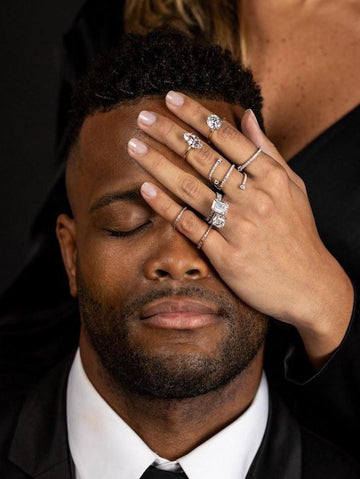



Choosing a diamond for an engagement ring involves more than comparing sparkle. Long Island couples are increasingly weighing origin, appearance, budget, rarity, and the meaning they want the stone to carry for generations. Both options deserve a careful, personal conversation rather than a one-size-fits-all answer.
Lab grown diamonds vs natural diamonds share the same chemical composition, crystal structure, and physical properties, according to the Gemological Institute of America. The meaningful differences are how they are formed, how the market views them, and how each choice aligns with your priorities.
At Kravit Jewelers, our Oceanside team helps you examine both options with clarity and without pressure. Understanding their origins is the right place to begin, because the journey from carbon to finished gem shapes the story, rarity, and perception behind each diamond.
Understanding the Origins: Lab-Grown vs Natural Diamonds
When comparing lab grown diamonds vs natural, the most important distinction is origin. Both are genuine diamonds with the same fundamental chemical composition, crystal structure, and physical properties, according to the Gemological Institute of America (GIA). Their different stories begin with how and where carbon becomes a diamond crystal.
How natural diamonds form
Natural diamonds develop deep beneath Earth's surface, in the mantle, where intense heat and pressure transform carbon deposits into diamond crystals. This geological process takes millions to billions of years. Once formed, some diamonds are carried closer to the surface through volcanic activity and later recovered for cutting and polishing.
The timescale is part of what makes a natural diamond geologically rare. It also gives each stone a connection to the Earth's history that some buyers find meaningful. That does not make one choice universally better than the other, but it does create a distinct origin and emotional point of reference for a natural diamond.
How lab-grown diamonds are created
Lab-grown diamonds are made in controlled laboratory environments in a matter of days or weeks, rather than over geological time. Manufacturers use one of two primary methods: High Pressure High Temperature (HPHT), which recreates conditions associated with natural diamond formation, or Chemical Vapor Deposition (CVD), which builds diamond crystal from a carbon-containing gas. GIA identifies HPHT and CVD as the two major production processes.
Laboratory-grown diamonds are not a recent invention, even though they have become increasingly visible in fine jewelry. According to GIA, synthetic diamonds have been produced for industrial purposes since the 1950s, including use in abrasives, telecommunications, and laser optics. Advances in technology eventually made gem-quality stones practical for engagement rings and other jewelry.
Are lab-grown diamonds legally diamonds?
Yes. In 2018, the Federal Trade Commission confirmed that lab-grown stones meeting the relevant characteristics satisfy the legal definition of a diamond. They are not diamond simulants such as cubic zirconia or moissanite. The meaningful distinction is whether the diamond formed naturally or was created through technology.
At Kravit Jewelers, our team can help you examine both origins in person and understand how the difference fits your priorities. From geological history to design and personal significance.
Are Lab-Grown Diamonds Different? A Visual and Physical Comparison
When comparing lab grown diamonds vs natural diamonds, the most important distinction is their origin, not their appearance or everyday performance. Both are diamonds made of pure carbon arranged in a crystal lattice. The Gemological Institute of America explains that lab-grown diamonds have essentially the same chemical composition, crystal structure, and physical properties as natural diamonds. GIA explains the similarities between natural and laboratory-grown diamonds.
How they look to the eye
A well-cut lab-grown diamond can rival a high-quality natural diamond in appearance. Both can display bright white light, colorful fire, and the lively scintillation people associate with a fine diamond. Cut quality, proportions, symmetry, polish, color, and clarity influence what you see far more directly than whether the stone formed below the Earth or in a laboratory.
In practical terms, the two types are indistinguishable to the naked eye. A standard jeweler's loupe or basic diamond tester is not designed to reveal a stone's growth history. Identifying whether a diamond is natural or lab-grown generally requires specialized gemological equipment and a qualified grading report. That distinction is about origin and identification, not a visible difference in beauty.
How they perform in an engagement ring
Both natural and lab-grown diamonds rank 10 on the Mohs scale, the highest rating for mineral hardness. This makes either type an excellent choice for jewelry worn regularly, including an engagement ring. Hardness does not make a diamond impossible to damage, however. A strong impact can still chip a stone, particularly near a sharp point or an included area, so routine care and professional inspections remain worthwhile. GIA's guide to diamond durability explains why hardness is only one part of gemstone care.
Both types are also evaluated using the same 4Cs: cut, color, clarity, and carat weight. Those characteristics help you compare quality consistently, regardless of origin. For a deeper understanding of the 4Cs, visit our diamond education guide. A Kravit Jewelers professional can show you natural and lab-grown diamonds side by side in Oceanside, allowing you to judge their sparkle in person while reviewing each stone's grading information.
Lab-Grown vs Natural Diamonds: Price, Value, and Environmental Impact
Price is often the first practical difference shoppers notice when comparing lab-grown diamonds with natural diamonds. The right choice depends on how you want to allocate your budget, how you think about rarity, and which sourcing considerations matter to you. Neither option needs to be treated as a universal winner. A careful comparison gives you a clearer foundation for choosing a stone that suits your priorities.
| Consideration | Lab-grown diamond | Natural diamond |
|---|---|---|
| Price difference | Some estimates place prices approximately 70 to 80 percent below comparable natural diamonds, although the final price depends on the stone's specifications and setting. BriteCo's 2025 estimate provides that broad comparison. | Pricing reflects the stone's cut, color, clarity, carat weight, grading, origin, and market conditions. Specific retail prices vary by diamond. |
| Typical 1-carat price range | There is no single reliable range for every 1-carat diamond. Quality grades, proportions, certification, and design can produce substantial differences. | There is no universal range here either. A 1-carat diamond's price can vary significantly based on its individual characteristics and documentation. |
| CO2 impact per carat | Available estimates cited in the research place lab-grown production at 15 to 50 kilograms of CO2 per carat when renewable energy is used. | Mining estimates cited in the research place the impact at approximately 108 to 160 kilograms of CO2 per carat. Environmental impact varies by operation and methodology. GIA reference on diamond origins. |
| Production time | Created in a controlled laboratory environment over days or weeks. | Formed through geological processes over millions to billions of years. |
| Rarity | Production can be scaled, so availability is not limited by geological formation. | Finite geological supply and exceptionally long formation times contribute to its natural rarity. |
In practical terms, a lab-grown diamond may allow you to consider a larger carat weight or a more elaborate setting within a defined budget. A natural diamond may appeal to you because its geological history and finite origin are part of the meaning you attach to the purchase. Those are different value considerations, not a simple ranking.
When comparing lab grown diamonds vs natural, look beyond the headline price. Review each stone's grading information, proportions, cut quality, and how it performs in the setting you are considering. If you are designing a custom engagement ring, our team can help you evaluate the diamond and mounting together so the finished piece reflects your style and priorities.
Resale Value and Rarity: What Long Island Diamond Buyers Should Know
Resale value is one practical distinction to consider when comparing a lab-grown diamond with a natural diamond. Industry estimates commonly place natural diamond resale retention in the range of 25% to 50% of the original purchase price. While lab-grown diamonds may retain approximately 5% to 20%, depending on the stone, market conditions, documentation, and the buyer's offer. These figures are general estimates, not guarantees. The Wharton analysis of the lab-grown market notes that natural diamonds are often perceived as retaining greater rarity, emotional significance, and resale value.
Why natural diamonds are associated with rarity
Natural diamonds are formed by geological processes deep beneath the Earth over millions to billions of years. That finite origin gives each stone a sense of geological scarcity and helps explain why many buyers connect natural diamonds with rarity, tradition, and heirloom value. For some Long Island families, that history is part of the meaning behind an engagement ring or milestone gift.
Lab-grown diamonds offer a different kind of significance. They are diamonds with the same chemical composition and crystal structure as natural diamonds, but they are produced in a controlled environment rather than formed naturally. The Gemological Institute of America explains that the market generally treats the two as separate luxury categories. Even though a lab-grown diamond is not a fake or imitation stone. That distinction can influence future buyer expectations and resale conversations.
Emotional value is personal
Rarity does not determine what a diamond means to every buyer. One person may prioritize geological origin and the tradition of a natural stone. Another may value the flexibility of a lab-grown diamond and direct more of the budget toward a larger center stone, a distinctive setting, or bespoke and custom ring design. Neither choice is inherently more meaningful. The right decision depends on how you weigh origin, budget, long-term plans, and the story you want the ring to carry.
At our Oceanside showroom, Kravit Jewelers carries both natural and lab-grown diamonds. Comparing them in person allows you to review grading documentation, craftsmanship, setting options, and the practical expectations for ownership before choosing.
Which Diamond Type Is Right for Your Engagement Ring?
For Long Island couples comparing lab-grown diamonds vs natural, the right choice depends less on a universal definition of value and more on what matters most to you. Budget, environmental priorities, geological rarity, tradition, and the experience of choosing a stone can all play a meaningful role.
Start with your priorities and budget
Lab-grown diamonds have expanded access to diamond jewelry across a wider range of price points. Because they are created in a controlled setting, they may allow you to consider a larger size. Higher clarity, or a different setting style within the same overall budget. The Federal Trade Commission recognizes lab-grown stones as diamonds under the legal definition. And gemological research confirms that they share the same chemical composition and crystal structure as natural diamonds.
Browse our engagement ring collection to explore styles and settings. That accessibility can be especially useful if your priority is the visual presence of the ring or flexibility in the design. It does not make the decision purely financial, however. Prices vary by the individual stone, grading, cut, setting, and jeweler. So a consultation is the best way to compare complete ring options rather than relying on a broad percentage or an online listing.
Consider environmental and emotional meaning
Some buyers choose lab-grown diamonds because they prefer a created alternative and want to consider the energy and production practices behind their purchase. Environmental impact depends on the mining operation, laboratory, energy source, and supply chain. So ask for specific information rather than treating either category as automatically identical in every respect.
Others are drawn to a natural diamond's geological story. Formed deep beneath the Earth's surface over millions or billions of years, a natural diamond carries a sense of rarity and connection to the natural world. For many couples, that origin adds emotional significance to an engagement ring and reflects a longstanding tradition of marking a commitment with a stone formed by nature.
See both types before you decide
Many of the most important differences are not settled by a photograph or a search result. Seeing both options in person lets you compare cut quality, light performance, proportion, color, and how each stone looks with the setting you are considering. It also gives you an opportunity to discuss grading reports, care, long-term expectations, and the meaning you want the ring to carry.
At Kravit Jewelers, we carry both lab-grown and natural diamonds at our Oceanside showroom. Our team can help you compare the options objectively and shape the conversation around your priorities. Whether you are beginning with a budget or with a vision for the finished ring. Explore our guide to engagement rings in Oceanside before visiting, then bring your questions to a personal consultation.
Frequently Asked Questions
Are lab-grown diamonds as good as natural diamonds?
They can be comparable in beauty and durability. Lab-grown diamonds have the same chemical composition, crystal structure, and physical properties as natural diamonds, and both rank 10 on the Mohs hardness scale, according to the Gemological Institute of America. The meaningful differences are origin, rarity, market perception, and price.
What is the downside to choosing a lab-grown diamond?
The main consideration is that lab-grown diamonds are not generally viewed as equally rare as natural diamonds. Some buyers also place greater emotional significance on a stone formed through geological processes over millions or billions of years. Your priorities, rather than a universal quality ranking, should guide the decision.
Do lab-grown diamonds hold their value?
Resale depends on the individual stone, documentation, market conditions, and buyer demand. Natural diamonds are often perceived as retaining better resale value than lab-grown diamonds, according to Wharton research. Neither type should be purchased as a guaranteed investment.
How can you tell whether a diamond is lab-grown or natural?
Visual inspection alone is not a dependable way to identify origin because both can look remarkably similar. A grading report from a respected gemological laboratory identifies whether the diamond is laboratory-grown or natural and records its relevant characteristics. Ask to review the report before purchasing.
Which is more ethical, lab-grown or natural diamonds?
There is no single answer for every buyer. Lab-grown diamonds may appeal to shoppers focused on avoiding mining, while natural-diamond buyers may prioritize geological rarity and documented sourcing. Ask about provenance, production practices, grading, and documentation, then compare both options with a jeweler you trust.
Ready to Compare Diamonds in Person?
Choosing between lab-grown and natural diamonds becomes clearer when you can view both options side by side and discuss what matters most to you. Visit the Kravit Jewelers showroom in Oceanside for thoughtful, expert guidance as you consider your engagement ring. To plan your visit, contact Kravit Jewelers and take the next step with confidence.


