


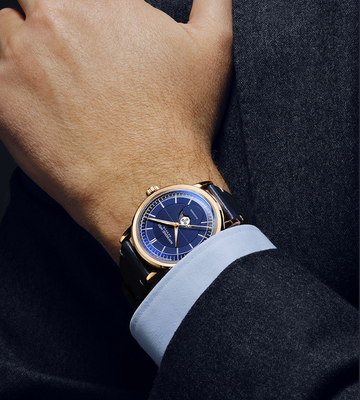



Ready to learn how to wind an automatic watch safely? An automatic watch is designed to turn everyday wrist movement into stored energy, but it is not completely hands-off. After time in a drawer, it may need careful manual winding before it can run reliably. The safest approach depends on the movement, crown design, and instructions for that specific model.
Get watch winding guidance from Kravit Jewelers.
To understand how to wind an automatic watch, first confirm that the movement supports manual winding. Remove the watch from your wrist and follow the maker's guidance for crown position, direction, and stopping point. Never force the crown or assume another watch uses the same procedure.
Knowing what happens beneath the dial makes these precautions easier to follow. A small rotor, mainspring, and gear train work together to keep the watch running, while regular wear and occasional winding serve different purposes.
What Happens Inside an Automatic Watch?
An automatic watch uses wrist motion to turn a rotor, which winds a mainspring that stores and gradually releases energy to power the movement.
Automatic watches are also called self-winding watches because they can build and maintain energy through ordinary movement. Inside the case, the rotor is a weighted component that moves as the watch changes position on your wrist. That motion transfers energy into the mainspring, the coiled spring that serves as the movement's energy reserve. As the spring unwinds in a controlled way, it drives the watch's timekeeping functions.
How does the rotor wind the mainspring?
The rotor does not power the watch directly. Instead, it converts motion into stored mechanical energy. Walking, moving your arm, and other everyday activity may contribute to winding while the watch is worn. The amount of energy a watch retains depends on its movement and design. So a watch that has been resting may eventually stop even when it is functioning normally.
Why might an automatic watch need manual winding?
Self-winding does not mean that hand-winding is never useful. If an automatic watch has not been worn for a period of time, or if daily activity has not provided enough movement. A manual winding boost may help, provided the watch is designed for that function. The correct crown position, winding direction, and number of turns are model-specific. Manufacturer instructions should control rather than a general rule.
For that reason, learning how to wind an automatic watch starts with identifying the particular movement, not simply copying a technique from another model. If the crown feels unusually resistant, grinds, or appears damaged, stop rather than forcing it. A qualified watchmaker can assess the watch and recommend careful next steps.
How Do You Wind an Automatic Watch Safely?
Manual winding can be useful after an automatic watch has been unused or when ordinary daily activity has not supplied enough motion to keep it running. The safe method depends on the movement, so the maker's instructions take priority over any general guide. Before turning the crown, use this careful process.
- Remove the watch from your wrist. Place it securely in your hand or on a soft, clean surface. Winding while the watch is on your wrist can put the crown and stem at an awkward angle, increasing the chance of bending or stressing the mechanism.
- Identify the crown and its starting position. The crown is often located near the 3 o'clock position, but case designs vary. Check whether it is pushed in, pulled to a setting position, or secured with threads. Do not assume that a crown position used by one brand performs the same function on another watch.
- Confirm that manual winding is supported. Many automatic watches can be wound by hand, but that capability is not universal. Consult the owner's manual or the manufacturer's model-specific guidance before rotating the crown. If the watch has a screw-down crown, follow the maker's instructions for releasing and resecuring it.
- Use the specified direction and position. Some manufacturer instructions call for winding with the crown fully pushed in, while others may describe different crown positions or operating details. For example, some manufacturer instructions direct owners of certain models to use the fully pushed-in position and turn the crown gently clockwise. That is model-specific guidance, not a universal rule. Consult the maker's documentation for your own watch.
What should the crown feel like?
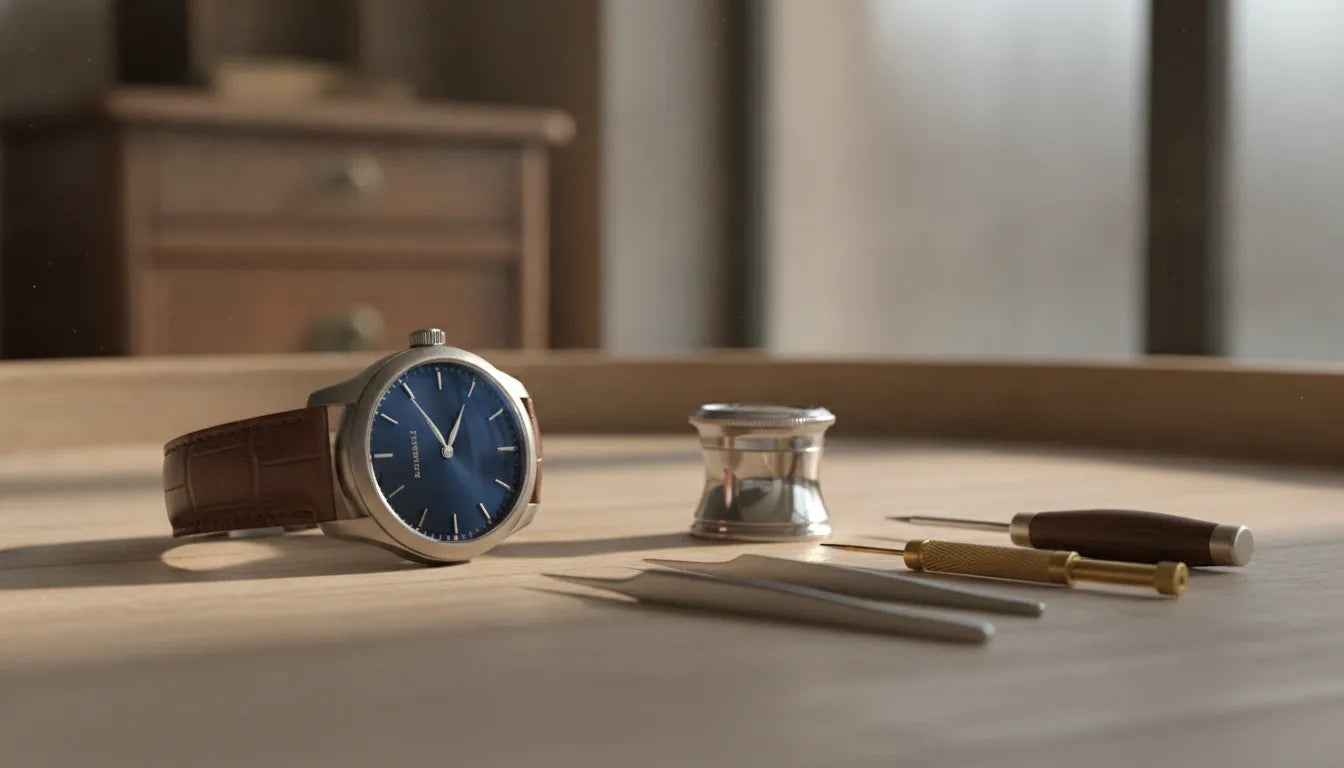
Turn the crown slowly and gently, using only light, controlled pressure. There is no universal turn count, and continuous excessive winding is unnecessary. Stop if you feel unusual resistance, grinding, slipping, or an abrupt change in how the crown operates. Never force the crown to complete a presumed number of turns. Unusual resistance, visible damage, or uncertainty is a reason to consult a qualified watchmaker rather than continue.
When finished, return the crown to the position specified by the manufacturer. A crown that is not fully returned or secured can affect the watch's intended water resistance. If you are unsure which position is correct, leave the watch dry and seek model-specific advice before wearing it near water.
How Many Turns Should You Wind an Automatic Watch?
There is no universal number of turns for every automatic watch. Follow the instructions for your specific model and calibre, and stop when the manufacturer indicates the watch is sufficiently wound or the crown develops unusual resistance.
The required rotation count can vary substantially between movements. For example, Longines reports that some of its watches may require approximately 20 to 114 crown turns for a full wind, depending on the calibre. That range is useful evidence of model variation, not a rule to apply to another brand or movement. Read the owner's manual before relying on a number, winding direction, or crown position.
| Situation | What to follow | Why it matters |
|---|---|---|
| Model-specific instructions | Use the turn count and procedure stated for your watch's movement or calibre. | Winding requirements can differ significantly between models. |
| General guidance | Wind gently and use only the crown position and direction approved by the manufacturer. | A generic count cannot replace model-specific instructions. |
| Stop cues | Stop if the crown feels unusually resistant, grinds, or behaves differently from normal. | Forcing the crown can turn an ownership task into a service issue. |
Continuous excessive winding is unnecessary, even though many automatic watches include protection against overwinding. If the instructions are missing or you are uncertain whether the crown is in the correct position, do not guess. A qualified watchmaker can identify the movement and explain the appropriate winding procedure without forcing a delicate component.
This variation is why the owner's manual and the maker's instructions should take priority over a universal internet tip.
Should You Wear an Automatic Watch Instead of Hand-Winding It?
Short answer: regular wear often keeps an automatic watch wound, but manual winding can be useful after the watch has stopped or has not received enough movement. The right approach depends on the movement and the manufacturer's instructions.
An automatic watch uses motion from your wrist to turn a rotor, which winds the mainspring. Walking and ordinary daily activity can contribute to that process, so a watch worn consistently may not need manual winding. Longines similarly recommends regular wear to help maintain consistent winding, while Timex describes manual winding as an occasional boost for watches designed to support it.
Wearing time is not a fixed formula. Power reserve varies by movement, and the amount of energy stored depends on the watch's design and how actively it has been worn. Some watches may continue running for a period after removal, while another may stop sooner. Do not treat a general power-reserve example as a guarantee for your particular watch.
Manual winding is most useful when you want to restart a stopped watch, resume use after a period of non-use, or compensate for limited daily activity. First confirm that the movement permits hand-winding. Then follow the maker's instructions for crown position, direction, and winding limits. Remove the watch from your wrist before handling the crown, and stop if you feel unusual resistance or grinding.
Explore watch repair and servicing at Kravit Jewelers.
If the watch keeps stopping despite regular wear, loses time noticeably, or behaves differently from its normal pattern, avoid repeatedly winding it as a test. A qualified watchmaker can assess whether the issue involves the movement, crown, or another component.
What Should You Do With a Screw-Down Crown?
Answer: Treat a screw-down crown as a model-specific water-resistance feature. Unscrew it only when the manufacturer's instructions call for access, make the required adjustment carefully, and secure it fully before exposing the watch to water.
Some watches, particularly certain dive watches, use a screw-down crown to help protect the case against water ingress. That design adds a threaded sealing action beyond the crown's ordinary pushed-in position. It does not mean the watch is safe in every water situation, however. Water resistance depends on the model, its seals, its condition, and whether the crown is properly secured.
Crown positions also vary. On one watch, the neutral or fully pushed-in position may support normal operation. A partially pulled position may adjust the date, while a fully pulled position may set the time. Those are useful examples, not a universal map for every automatic movement. Some crowns must first be unscrewed before they can be pulled out, and the winding direction or available functions may differ by model. The owner's manual should identify the correct positions for your watch.
Before winding or setting the watch, remove it from your wrist so you can handle the crown without twisting the case or applying sideways pressure. Follow the maker's instructions for unscrewing, winding, returning, and tightening the crown. Never force a crown that feels unusually stiff, grinds, fails to engage, or appears damaged. If you are unsure whether the crown is sealed, stop and ask a qualified watchmaker. A partially secured crown can compromise the protection you expect, even if the watch was designed for water resistance.
Which Winding Mistakes Should You Avoid?
Answer: Avoid winding an automatic watch while it is on your wrist, forcing a resistant crown, guessing the winding direction, or changing the date without checking the maker's instructions. If the watch behaves unusually, stop and seek qualified watchmaker guidance.
Careful handling matters because winding procedures are not universal. Crown positions, winding directions, date functions, and the number of turns can vary by movement and model. A method that is appropriate for one automatic watch may be wrong for another.
Do not wind the watch on your wrist
Take the watch off before manipulating the crown. This gives you a steadier grip and reduces the chance of pulling the crown at an angle or pressing the case against your wrist while turning it. It also makes it easier to identify whether the crown is fully seated, partially pulled, or in another model-specific position.
Do not force resistance or guess the direction
Gentle, controlled movement is the standard. If the crown feels unusually stiff, grinds, catches, or will not move as expected, stop rather than applying more pressure. Continuous excessive winding is unnecessary, and unusual resistance or visible damage should be assessed by a qualified watchmaker. For related guidance, see this watch crown repair advice.
Be cautious with the date function
Do not change the date simply by guessing which crown position controls it or when that function is safe to use. Some movements have restricted date-setting windows, while others use different crown positions or procedures. Follow the manufacturer's instructions for your specific watch. If you are uncertain, leave the date adjustment alone until a watchmaker can advise you.
Finally, do not dismiss unusual behavior after winding. Stopping repeatedly, losing noticeable time, grinding, or failing to respond normally may indicate a service concern rather than a winding mistake. Stop handling the crown and arrange an inspection instead of trying to correct the problem with additional turns.
When Should You Stop Winding and Seek Watch Service?
Stop winding and seek qualified watch service if the crown feels unusually resistant, grinds. Appears damaged, or the watch continues to lose time after you follow the maker's instructions.
Manual winding should feel controlled and predictable for a watch designed to support it. If the crown catches, slips, grates, or requires force, stop rather than trying to complete a preferred number of turns. A bent, loose, cracked, or missing crown also deserves professional attention. The crown helps protect the movement and, on some watches, contributes to water resistance, so damage should not be treated as a minor cosmetic issue.
Water concerns are another reason to have the watch assessed. Seek service after visible moisture under the crystal, water exposure with an unsecured crown, or any concern that the case may no longer be sealed. Kravit's watch service capabilities include water-damage assessment and pressure testing. These checks can help determine the appropriate next step without relying on a guess about the watch's condition.
Arrange an evaluation as well when winding no longer resolves persistent timing problems, the watch stops repeatedly, or its behavior changes noticeably. Do not assume that a different winding direction, crown position, or turn count will correct a problem. Manufacturer instructions vary by model, and uncertainty itself is a sound reason to consult a watchmaker. For more context, see this automatic watch repair guidance.
At Kravit Jewelers' Oceanside showroom, Swiss-trained watchmakers service multiple brands, including vintage watches. Depending on the watch and its needs, the service department can perform movement servicing. Cleaning, oiling, regulation, diagnostics, precision timing, water-damage assessment, pressure testing, and strap or bracelet repair. Review the available watch repair and servicing information before visiting, especially if you are unsure which instructions apply to your watch.
Bring your watch to Kravit Jewelers for careful watch repair and servicing in Oceanside, NY.
Frequently Asked Questions
How many rotations should you use to wind an automatic watch?
There is no universal number. The correct amount depends on the movement and the manufacturer's instructions. Wind gradually, use the recommended direction, and stop if the crown feels unusually tight, rough, or resistant. Do not treat a turn count from another watch as a rule for yours.
Do you need to manually wind an automatic watch?
Not always. Wearing the watch allows wrist motion to turn its rotor and help wind the mainspring. Manual winding can be useful after the watch has stopped or received too little movement, but only if the movement is designed for hand-winding. Check the owner's instructions before using the crown.
Is it safe to wind an automatic watch backwards?
Do not assume that reverse winding is appropriate for every model. Crown direction, winding behavior, and the feel of the mechanism vary by movement. Follow the manufacturer's instructions and avoid forcing the crown in either direction. If you feel grinding or abnormal resistance, stop and have the watch assessed by a qualified watchmaker.
How long should you wear an automatic watch to wind it?
Wearing time depends on the movement, your activity, and the watch's existing power reserve. Ordinary wrist movement may replenish energy, but it does not guarantee a full wind on every model. If the watch stops despite normal wear, or its running behavior changes, professional diagnostics can help identify the cause.
When should you seek automatic watch service?
Seek qualified service if the crown is damaged, difficult to operate, grinding, or unusually loose, or if the watch will not run normally after careful winding. Water exposure, visible damage, inconsistent timekeeping, and uncertainty about the correct procedure are also good reasons to stop experimenting and consult a watchmaker.
Ready to Get Guidance for Your Automatic Watch?
If your watch resists winding, feels unusual, or leaves you uncertain about the next step, careful guidance can help protect its movement and avoid unnecessary handling.
Visit Kravit's watch repair and servicing page for guidance.


