



Schedule a professional cleaning consultation at Kravit Jewelers if your necklace has a loose stone, worn setting, or damaged clasp. If you are researching how to clean a pave diamond necklace at home, a controlled setup, lukewarm water, mild soap, and a very light touch can remove everyday film without putting closely set stones under unnecessary stress.
Schedule a jewelry care consultation with Kravit Jewelers
How do you clean a pave diamond necklace safely?
Short answer: Clean a pave diamond necklace over a towel or inside a bowl, using lukewarm water, a few drops of mild soap, and a soft-bristled brush. Inspect the stones and settings first, brush lightly from the underside, rinse in a covered bowl, and dry completely with a lint-free cloth.
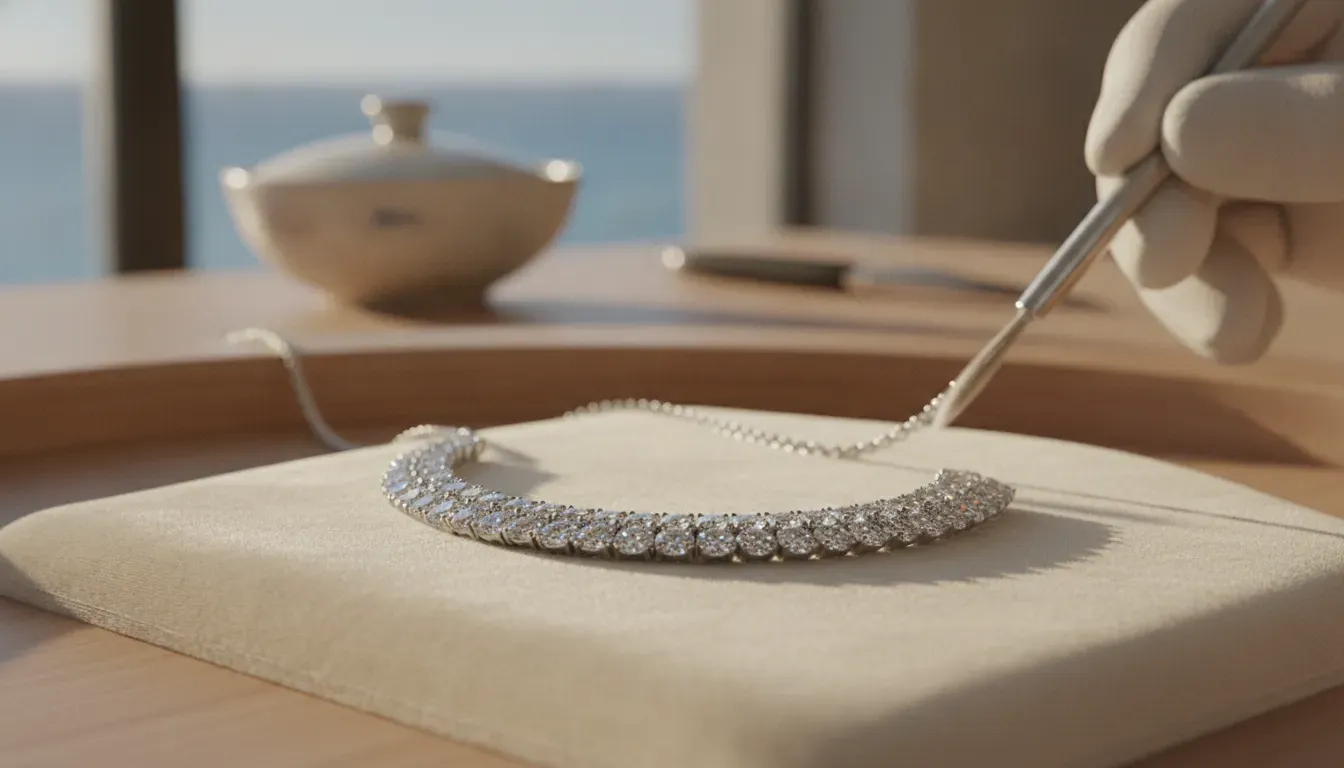
Pavé means that small diamonds are set close together with very little visible metal between them. That arrangement creates a bright, continuous line of sparkle, but it also gives lotion, skin oil, and dust many small spaces to collect. The setting deserves as much attention as the diamond surfaces.
Before you begin, gather a small bowl, lukewarm water, mild dish soap without moisturizer or abrasive particles, a clean soft-bristled brush reserved for jewelry, and a lint-free cloth. Work on a stable, well-lit surface. Keep the necklace away from an open sink drain, and do not clean it over a hard counter where a clasp or stone could be damaged if dropped.
Follow these gentle cleaning steps
- Secure the workspace: Place a folded towel on the surface and close the sink drain if you are working nearby. A bowl is safer than rinsing a delicate necklace under running water.
- Mix the solution: Fill the bowl with lukewarm water and add only a few drops of mild dish soap. Swirl gently until the soap is dispersed.
- Soak briefly: Place the necklace in the solution for several minutes so everyday oils and residue can loosen. Do not soak a piece with a loose stone, damaged metal, or an unknown treatment.
- Brush the setting: Lift the necklace with clean fingers or a soft cloth. Use the brush with minimal pressure, working around the underside of each pavé section before brushing the top.
- Clean the chain and clasp: Run the brush gently along the chain, bail, and clasp. Avoid pulling the chain or catching bristles between links.
- Rinse in a second bowl: Replace the soapy water with clean lukewarm water and move the necklace through it until no soap remains. Avoid an uncovered sink.
- Pat, then air-dry: Blot the necklace with a lint-free cloth. Lay it flat on a clean towel until the settings and clasp are fully dry before storing or wearing it.
This method is intended for a diamond necklace whose metal and additional stones are known to be suitable for mild soap and water. A necklace may contain pearls, opals, emeralds, enamel, glued components, or treated gemstones that need a different approach. When the materials are unfamiliar, ask a professional jeweler before placing the piece in water.
What should you inspect before cleaning a pavé necklace?
Short answer: Before cleaning, inspect every diamond section, the surrounding metal, chain links, bail, and clasp under bright light. If a stone moves, a prong feels worn, the chain is kinked, or the clasp does not close securely, skip the water and brush routine until a jeweler evaluates the necklace.
Cleaning cannot correct a structural problem. In fact, brushing or moving a compromised necklace can turn a small setting issue into a missing stone or a broken chain. Take a slow look at the piece from both sides before you prepare the solution.
- Stone security: Watch for a diamond that appears lower than its neighbors, shifts when touched very lightly, or makes a faint clicking sound.
- Metal around the pavé: Look for bent edges, worn beads, damaged prongs, or a section where the diamonds no longer sit evenly.
- Chain and connections: Check for stretched links, kinks, open jump rings, or a bail that is rubbing against the pendant.
- Clasp: Close it once without forcing it. A clasp that opens too easily needs attention before the necklace is worn outside the home.
- Additional materials: Identify pearls, colored gemstones, enamel, leather, or other components before choosing a cleaner.
Do not glue a loose diamond or attempt to tighten a setting with household tools. Put the necklace in a small soft pouch, keep it separate from other jewelry, and arrange an evaluation.
Which cleaners and tools should you avoid?
Short answer: Avoid abrasive powders, toothpaste, baking soda, bleach, ammonia, chlorine, boiling water, steam, and at-home ultrasonic cleaners for a pavé diamond necklace. These methods can scratch metal, affect certain materials, or create enough vibration and heat to loosen stones in a delicate setting.
Diamond is hard, but the metal that holds a diamond can still scratch or wear. A product that feels gentle on a countertop may be too abrasive for polished gold or platinum. Household disinfectants and pool chemicals can also affect metal alloys and finishes. Never mix cleaning products.
| Method or material | Why to avoid it at home | Safer choice |
|---|---|---|
| Toothpaste or baking soda | Abrasive particles can mark polished metal and leave residue in small settings. | Mild soap, lukewarm water, and a soft brush. |
| Bleach, ammonia, or chlorine | Strong chemicals may affect metal alloys, finishes, or additional gemstones. | Use only a mild solution suited to the known materials. |
| Boiling or very hot water | Heat can stress some materials and makes handling a slippery piece riskier. | Use lukewarm water. |
| Ultrasonic or steam cleaner | Vibration or pressure can loosen stones, especially when a setting is worn or damaged. | Have a jeweler inspect the necklace before any professional equipment is used. |
The Gemological Institute of America explains that harsher home cleaning methods, including ultrasonic and steam cleaners, are not recommended for routine consumer use because they can loosen gemstones in their settings. The GIA diamond care and cleaning guide is a helpful reference, but a jeweler should still tailor advice to the complete necklace, not just its diamonds.
Read Kravit's complete fine-jewelry cleaning guide
How often should you clean a pave diamond necklace?
Short answer: Clean a pave diamond necklace when a visible film of lotion, oil, or dust begins to soften its sparkle, adjusting the routine to how often you wear it and what it encounters. A soft wipe after wear can reduce buildup, while professional inspection is appropriate when the setting or materials need closer attention.
Necklaces usually collect less residue than rings because they are not washed with the hands, but perfume, moisturizer, sunscreen, makeup, sweat, and hair products can still settle along the chain and under the diamonds. Put the necklace on after applying personal-care products, and let those products dry before wearing it.
After wearing the piece, wipe accessible surfaces with a clean, soft cloth. A gentle home clean can follow when buildup is visible, provided the pre-cleaning inspection shows no warning signs and the materials are known. The longer a film remains in the underside of a setting, the harder it is to remove without more vigorous brushing.
Remove the necklace before showering, swimming, exercising, sleeping, or applying sprays and lotions. Water exposure can introduce soap and minerals, while activity can pull the chain or catch a closely set section on clothing. These habits reduce both residue and mechanical stress.
How should you store and protect a pavé diamond necklace?
Short answer: Store a pavé diamond necklace clean and completely dry in a soft-lined compartment or individual pouch, with the clasp closed and the chain separated from other jewelry. Keep it away from bathroom humidity, direct heat, abrasive surfaces, and pieces that could scratch or tangle the necklace.
Storage protects the necklace between cleanings. A necklace placed loose in a crowded jewelry box can rub against harder stones, catch on another chain, or develop a kink that puts stress on the clasp and connection points.
- Close the clasp before storing so the chain stays together.
- Lay the necklace flat in a soft-lined compartment, or use a pouch designed to keep it separate.
- Keep the piece away from diamonds and other hard stones that may scratch polished metal.
- Choose a dry, temperature-stable location rather than a steamy bathroom.
- Do not place heavy jewelry on top of a delicate pavé necklace.
- Check the clasp and chain before putting it back into regular rotation.
If the necklace is sentimental, vintage, or worn frequently, store it where you can see it during routine checks. A quick inspection makes it easier to notice a missing bead, a stretched link, or a stone that no longer sits evenly.
When should you choose professional cleaning or repair?
Short answer: Choose professional care when a pavé diamond necklace has a loose or missing stone, worn setting, damaged chain, unreliable clasp, unknown gemstones, heavy buildup, or a vintage construction. A jeweler can assess the piece first and recommend cleaning, tightening, repair, or another treatment based on its materials and condition.
Professional cleaning is more than placing jewelry in a machine. The important first step is an inspection that identifies risks before cleaning begins. If the necklace needs repair, an evaluation can separate a simple cleaning from work on a clasp, chain, setting, or stone.
Kravit Jewelers provides jewelry repair in Oceanside, NY, with a one-on-one consultation, a detailed assessment, recommendations, and a clear estimate before work proceeds. Its repair team handles necklace and stone services, followed by quality assurance and polishing. That local, hands-on path is useful when an at-home routine no longer feels appropriate.
For broader maintenance ideas, you can also review Kravit's article on when professional jewelry cleaning is worth it. If your necklace needs an assessment, use Kravit's jewelry repair service page or contact the Oceanside showroom with details about the piece and the concern.
Request a jewelry repair and cleaning assessment
Frequently Asked Questions About Pave Diamond Necklace Care
Is mild dish soap safe for a pave diamond necklace?
Mild dish soap can be suitable for many diamond necklaces when the metal and other gemstones are known to tolerate water and gentle cleaning. Choose a plain formula without moisturizer, dye, or abrasive particles, and stop if the necklace has a loose stone, unknown treatment, or delicate additional materials.
Can I use toothpaste or baking soda to clean pavé diamonds?
No. Toothpaste and baking soda can be abrasive, and their residue may lodge between closely set diamonds. Use lukewarm water, a small amount of mild soap, and a very soft brush instead. If buildup will not lift with a gentle routine, have a jeweler inspect the necklace.
Can I put a pavé diamond necklace in an ultrasonic cleaner?
Do not use an ultrasonic cleaner at home without professional guidance. Vibrations can loosen stones in a worn or delicate setting, and a necklace may contain gemstones or materials that need a different treatment. A jeweler should inspect the piece before using professional equipment.
Are pavé diamonds real diamonds?
Pavé describes the setting style, not whether the diamonds are natural or lab-grown. It means small diamonds are set closely together to create a continuous field of sparkle. Check the necklace's documentation or ask a jeweler about the origin and treatment of its individual stones.
What should I do if a stone moves while I am cleaning?
Stop cleaning immediately and do not wear the necklace. Pat it dry without brushing further, place it in a soft pouch, and keep it separate from other jewelry. Do not apply glue or use household tools. A jeweler can assess the setting and recommend the safest repair.
How can I keep a diamond necklace from losing its sparkle?
Wipe the necklace gently after wear, keep it away from lotions, sprays, chlorine, and heavy activity, and store it dry in its own soft-lined space. Periodic professional inspection is valuable for pavé settings because it checks stone security as well as surface cleanliness.
With a careful setup and a light touch, routine care can help a pavé diamond necklace stay bright without taking unnecessary risks. When the setting, chain, clasp, or gemstone materials raise any doubt, professional guidance is the safer next step.


