




Choosing a meaningful gemstone ring involves more than selecting a beautiful shade of green. The stone's color, clarity, cut, setting, durability, treatment disclosure, and care needs all shape how it looks and performs over time.
The best emerald ring for you should show attractive, evenly distributed color, a thoughtful cut, protective setting, and clear treatment documentation. Natural inclusions are common in emeralds, so evaluate the stone as a whole rather than expecting diamond-like clarity. GIA notes that color is the primary quality factor. Reports can identify characteristics, origin status, and detectable treatments: GIA's emerald buying guide.
For Long Island shoppers, seeing a gemstone in person can make its proportions, transparency, and setting easier to understand. Start with the qualities that most influence the stone's visual character, then consider how color and clarity work together.
How should you evaluate an emerald ring's color and clarity?
Prioritize color first, then assess transparency, inclusions, treatment disclosure, and documentation together. Emerald is the bluish green to green variety of beryl. Gem professionals generally consider color its most important quality factor. Look for a pleasing balance of hue, tone, and saturation rather than judging it by a checklist alone. A reputable GIA emerald buying guide can help explain report terminology.
What makes an emerald's color appealing?
Begin with hue, which describes the basic color impression. Desirable emerald color ranges from bluish green to pure green. Saturation describes the strength or intensity of that color, while tone describes how light or dark the stone appears. Many buyers favor vivid saturation with a tone that is not so dark that the green becomes difficult to appreciate. Personal preference still matters, so view the stone under balanced lighting and from several angles.
Transparency is the next consideration. Highly prized emeralds tend to show transparent color distributed evenly, without obvious color zoning. A stone that looks lively and balanced in person may be more appealing than one selected solely for its measurements. The setting, surrounding metal, and lighting can influence how the green appears. Evaluate the complete ring rather than relying on a photograph.
How should you judge inclusions and clarity?
Unlike many diamonds, emeralds commonly contain inclusions visible to the unaided eye. These internal features are part of the stone's natural character and are not automatically defects. However, their size, position, and effect on transparency deserve careful attention. Eye-clean emeralds are rare and especially valuable, but a buyer should not assume that fewer visible inclusions alone make one stone the right choice. Ask whether an inclusion affects the stone's appearance, structural condition, or care requirements.
Why do treatments and reports matter?
Many emeralds have surface-reaching fractures that may be treated with fillers. Treatment is not necessarily a reason to reject a stone, but it should be disclosed clearly because it can affect care and long-term expectations. Documentation should also clarify whether the emerald is natural or laboratory-grown and identify detectable treatments. A GIA Colored Stone Identification and Origin Report assesses weight, measurements, shape, cutting style, and color. It can also report natural or laboratory-grown status and detectable treatments. Review the report alongside the actual stone, and ask a qualified jeweler to explain unfamiliar terminology before choosing an emerald ring.
Which cuts and settings work best for an emerald ring?
The best emerald ring combines a cut that displays rich, even color with a setting that protects the stone from everyday impact. The emerald cut is a classic choice because it follows the natural shape of many emerald crystals. Oval, pear, and heart shapes offer a softer or more distinctive outline. Prongs, bezels, and halos each provide different balances of visibility, protection, and style. Whichever design you choose, review the stone's proportions, treatment information, and identification documentation before deciding.
Which emerald cuts are worth considering?
An emerald cut can give a ring a refined, architectural look and draw attention to the gem's color. A well-cut stone should present attractive color without making fissures visually overwhelming. The goal is not simply maximum size. Emeralds are available in many sizes, and comparable quality can become significantly more expensive as size increases, so proportions and visual presence should be considered together.
Oval emeralds soften the linear character of an emerald cut and can create an elongated appearance on the finger. A pear shape introduces a graceful point, while a heart shape offers a distinctly romantic silhouette. For example, Kravit's pear-shaped emerald ring can serve as a reference for the look, without implying that the piece is currently available. In a custom design, the outline should suit the wearer's style as well as the stone's color and proportions.
How do settings protect an emerald?
Prongs can leave more of the gem visible and may be appropriate when carefully placed around vulnerable edges. They also require periodic inspection, since worn or damaged prongs can reduce security. A bezel surrounds the perimeter with metal, adding a protective rim that can be useful for an active wearer. A halo places smaller stones around the center and can frame its color, while also adding structure around the central gem. The right choice depends on lifestyle, setting height, and the shape of the individual emerald, not on appearance alone.
Ask for clear documentation before finalizing the ring. A GIA Colored Stone Identification and Origin Report can record the emerald's weight, measurements, shape, cutting style, and color. It can also indicate whether the stone is natural or laboratory-grown and identify detectable treatments. Since inclusions and fracture filling are common considerations with emeralds, that information helps you understand what you are buying and discuss appropriate care. For a ring tailored to your preferences, explore custom gemstone ring design with a jeweler who can evaluate the stone and setting together.
Is an emerald ring durable enough for everyday wear?
Yes, an emerald ring can suit regular wear when its setting, treatment history, and owner's habits are considered. It needs more care than a ruby or sapphire ring. Durability is not measured by hardness alone. GIA rates emerald at 7.5 to 8 on the Mohs scale, which describes resistance to scratching. Toughness describes how well a gem withstands impact, cleavage, and breaking. Emerald has fair to good toughness, so a hard knock can be more concerning than ordinary contact with softer materials. See GIA's emerald care and cleaning guidance for technical recommendations.
That distinction matters when choosing a daily ring. Someone who removes jewelry before gardening, exercise, home repairs, and hands-on work may enjoy an emerald as an everyday signature. If your routine regularly exposes your hands to impacts or rapid temperature changes, occasional wear may be the more practical choice. A protective setting and regular inspection of the prongs can also reduce avoidable risk, but no setting makes an emerald indestructible.
| Gemstone | General care implication |
|---|---|
| Emerald | Plan for gentler wear and cleaning. Protect it from impact, heat, chemicals, ultrasonic cleaning, and steam, especially when fractures are filled. |
| Ruby | Generally offers a more forgiving option for frequent wear, while still benefiting from sensible impact protection and professional inspection. |
| Sapphire | Generally offers a more forgiving option for frequent wear, but its setting, surface condition, and any treatments still deserve routine care. |
Why do emerald treatments affect daily wear?
Many emeralds have surface-reaching fractures that are filled with oils, resins, or polymers. GIA notes that some estimates place fracture-filled emeralds at 90 percent or more. Filling can improve appearance, but it is not permanent armor. Heat may extend existing fractures, while light and chemicals can alter or deteriorate filling materials. For that reason, avoid exposing an emerald ring to high heat, harsh household chemicals, or sudden temperature extremes. Treatment information should be part of the purchase conversation and preserved with the ring's documentation.
Ultrasonic vibrations can weaken an already fractured emerald, and hot steam may cause oil or unhardened resin to sweat out of fractures. Do not assume a jeweler's standard cleaning process is appropriate for every emerald. Ask for a gemstone-specific assessment before professional cleaning or repair.
Discuss a custom emerald ring with Kravit Jewelers
A custom consultation can balance the emerald's beauty with a setting and wearing plan that fit your routine. With thoughtful selection and gentle care, an emerald ring can be a meaningful piece for frequent, informed wear.
How do you clean and care for an emerald ring?
The safest way to care for an emerald ring is to clean it gently with warm, soapy water. Protect it from heat and chemicals, and arrange professional inspection when the setting or stone shows signs of damage. Emeralds have fair to good toughness, so they deserve more cautious handling than ruby or sapphire. Treatment materials used to fill surface-reaching fractures can also change or deteriorate when exposed to heat, chemicals, or improper cleaning methods.
- Prepare a gentle cleaning solution. Use warm, not hot, water with a small amount of mild soap. Place a soft cloth or towel beneath the work area so the ring is less likely to be damaged if it slips. GIA identifies warm, soapy water and gentle scrubbing as the safest cleaning method for emeralds.
- Clean the ring softly. Dip the ring briefly, then use a very soft brush or cloth to loosen residue around the setting. Work carefully around the underside of the stone and the metal rather than pressing directly against the emerald. Rinse with clean, lukewarm water and pat dry with a soft, lint-free cloth. For broader maintenance advice, review this guide to safe jewelry cleaning guidance.
- Avoid risky cleaning methods. Do not use ultrasonic cleaners or steam cleaners unless a qualified professional has confirmed that the stone and its treatment can tolerate them. Ultrasonic vibrations may weaken an already fractured emerald, while hot steam can cause oil or unhardened resin to move out of fractures. Avoid harsh chemicals, abrasive cleaners, boiling water, and sudden temperature changes. Heat can extend existing fractures, and chemicals may affect fracture-filling materials.
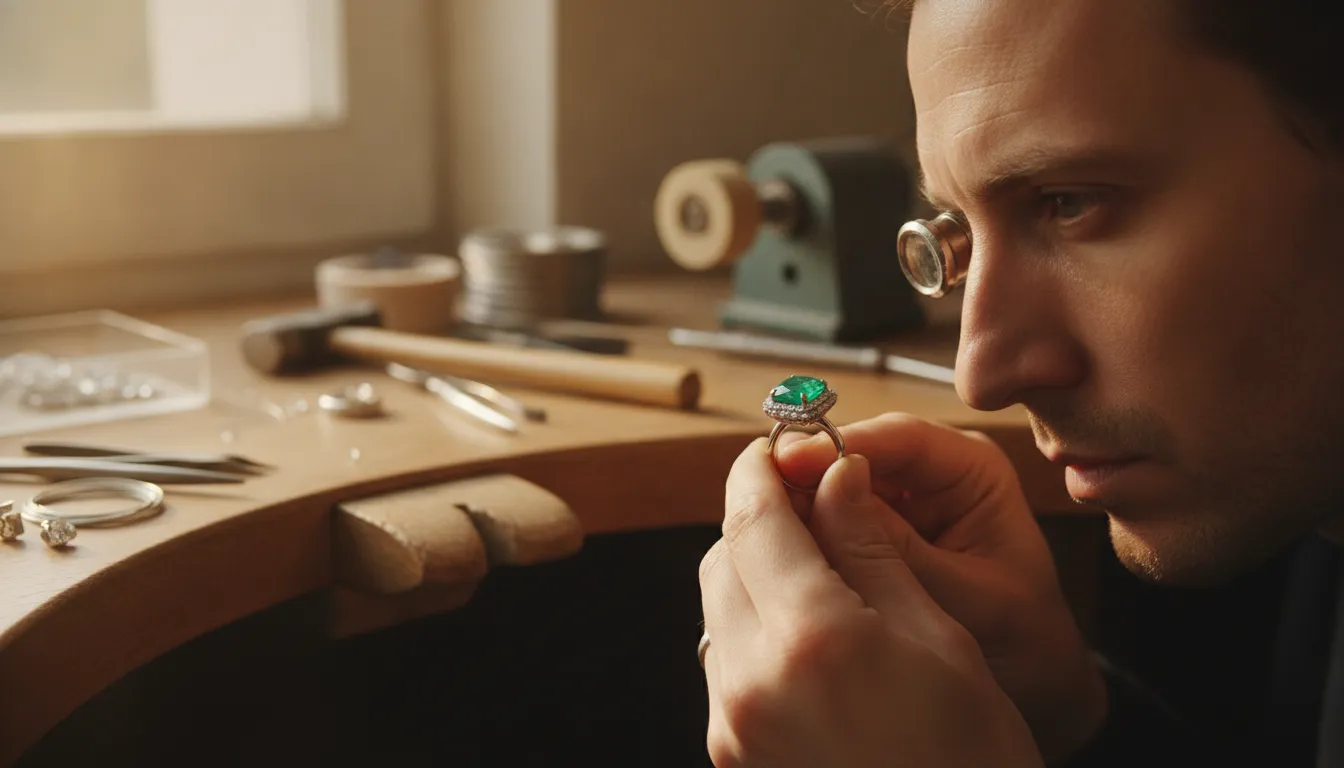
Store the ring separately in a soft-lined compartment or pouch so harder jewelry cannot scratch its surface. Remove it before activities involving heat, impact, cleaning products, or rough manual work. When you handle the ring, check whether the emerald moves, the prongs feel uneven, or the setting catches on fabric. These can indicate a security problem rather than a simple cleaning issue.
Arrange a professional inspection if the ring has been dropped, the stone appears loose, a prong is bent or worn, or the emerald's appearance changes after cleaning. A jeweler can assess the setting and recommend appropriate prong repair without exposing the stone to an unsuitable cleaning process. Regular, careful maintenance helps preserve both the emerald's character and the ring's long-term security.
Can an emerald ring become a meaningful engagement or anniversary ring?
Yes. An emerald ring can be a deeply personal choice for an engagement or anniversary when its color, symbolism, and design reflect the person wearing it. Emerald is associated with May birthdays and the 20th and 35th wedding anniversaries. That gives it a natural connection to spring birthdays and milestone celebrations. GIA identifies emerald as the bluish green to green variety of beryl, a color profile that makes it distinctive in fine jewelry.
Why choose emerald instead of a traditional diamond?
For an engagement ring, emerald offers a vivid green alternative to the colorless brilliance many couples expect from a diamond. Its appeal is less about following a convention and more about choosing a stone with a recognizable character. The green can feel romantic, botanical, vintage-inspired, or thoroughly modern depending on the cut and surrounding design.
Emeralds also carry natural individuality. Visible inclusions are common, and gem professionals sometimes refer to an emerald's internal inclusions as a jardin, or garden. Rather than treating every inclusion as a flaw, couples may see it as part of the stone's identity. A careful selection process can focus on the balance of color, transparency, cut, and overall presence that feels right for the wearer.
How can a custom design make the ring more personal?
Custom design allows the meaning to continue beyond the center stone. You can consider the emerald's shape, the metal color, the setting profile, accent stones, engraving, and proportions that suit the wearer's style. A design may draw on a shared place, a family tradition, a birth month, or a milestone without becoming overly literal.
At Kravit Jewelers, custom engagement-ring design includes stone selection, metal preferences, engraving, and size adjustments. That process gives Long Island couples an opportunity to evaluate the emerald in person and discuss how the setting should support its character. If you are beginning with an idea rather than a finished design, explore engagement rings for inspiration before considering a more individualized direction.
As with any meaningful gemstone ring, documentation and care matter. Emeralds can receive treatments that alter apparent clarity or durability, so treatment information should be discussed before a purchase. With an informed selection and a design chosen for the wearer's lifestyle. An emerald ring can mark a proposal, a milestone, or a promise that deserves its own unmistakable color.
Where can Long Island shoppers get guidance on an emerald ring?
Long Island shoppers can receive personalized emerald ring guidance at Kravit Jewelers in Oceanside. This family-owned jeweler has served the community since 1927. Private appointments make room to discuss color, cut, setting, wear, care, and long-term service without pressure. The same relationship can continue through custom design, in-house repair, and professional appraisal support.
Choosing an emerald ring is easier when you can evaluate the stone and setting in person. Emeralds often have visible inclusions, and subtle differences in color, transparency, proportions, and mounting can be difficult to judge from a product photograph. An experienced jewelry professional can explain what you are seeing, answer questions about treatment disclosure, and help you compare design directions that suit the wearer's lifestyle.
What can a private appointment include?
At Kravit's Oceanside showroom, a private appointment can focus on your priorities rather than a generic checklist. You may discuss a classic emerald cut, an oval or pear shape, a protective setting, or a custom ring built around a particular stone. Custom design consultations can include stone selection, metal preferences, engraving, and size adjustments. If you are planning an engagement ring or anniversary gift, this process also allows the design to reflect the recipient's style and the meaning behind the occasion.
Local expertise remains valuable after the ring is selected. Kravit operates an in-house repair and custom-design facility, supporting maintenance and repair under one roof. A professional inspection can help identify a loose setting or other concern before it becomes more serious. Kravit's GIA-certified appraisers also provide expertise in gemstone identification and certified appraisals for insurance and estate purposes. That documentation can help you keep accurate records for an important piece of jewelry.
For shoppers coming from Nassau County or elsewhere on Long Island, the goal is not simply to find an emerald ring. It is to understand the stone, choose a design with confidence, and establish a trusted source for care over time.
Request personalized showroom guidance
Frequently Asked Questions
Are emerald rings expensive?
They can vary widely in cost because color, transparency, size, cut, treatment, origin, and metal all affect the finished ring. Size can have a particularly strong effect when overall quality remains comparable. Rather than judging by carat weight alone, compare the stone's appearance, documentation, and setting quality with a jeweler.
What does it mean to wear an emerald ring?
Many people choose emeralds for their vivid green color, individual character, and personal symbolism. Emerald is also the birthstone for May and is associated with the twentieth and thirty-fifth wedding anniversaries, according to the Gemological Institute of America: GIA emerald reference.
How do you clean an emerald ring?
Use warm, soapy water and a soft brush or cloth, then rinse carefully and pat dry. Avoid harsh chemicals, abrasive tools, ultrasonic cleaners, steam, and sudden heat. If the emerald has been treated or the setting feels loose, ask a professional to recommend the safest cleaning method.
Are emeralds good for engagement rings?
Yes, an emerald can be a distinctive engagement-ring choice when its setting and care routine suit the wearer's lifestyle. Emeralds are less forgiving of impact and heat than some other gemstones, so protective settings, thoughtful daily-wear habits, and periodic inspections are important. A jeweler can help match the stone and design to how the ring will be worn.
Are emerald rings popular?
Emerald rings remain popular because their vivid green color gives them a distinctive identity in fine jewelry. Their appeal also comes from their symbolism, vintage associations, and ability to create an engagement or anniversary design that feels personal. Popularity should be secondary to choosing a stone and setting that fit the wearer's style and care routine.
Ready to explore an emerald ring designed for you?
An emerald ring can feel especially personal when its color, cut, setting, and care needs align with your style and daily life. Personalized guidance can help you consider those details thoughtfully, whether you are selecting a meaningful gift or shaping a custom design. Explore custom jewelry design and get started with guidance from Kravit Jewelers for your emerald ring.


