
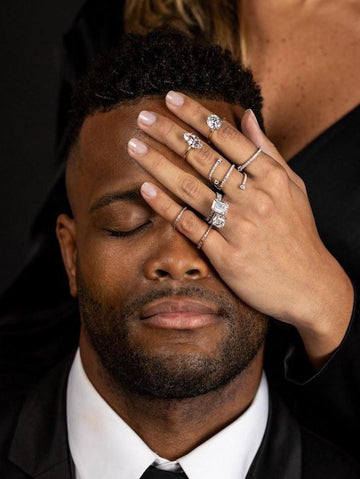

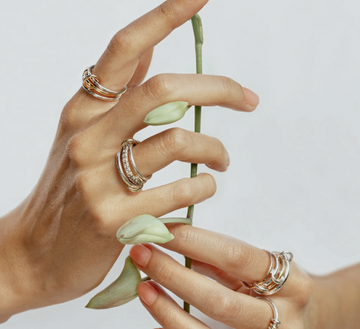


A three-stone engagement ring brings more visual movement to the hand than a solitaire, so the wedding band has to complement a wider, more detailed silhouette. The right pairing is not simply the one with the most sparkle. It is the one that respects the center stone, side-stone spread, setting height, and the way both rings move together.
Explore engagement rings with Kravit Jewelers.
Choosing a trilogy engagement ring with diamond wedding band starts with comparing proportion and spacing in person. Look at how the band meets the side stones, whether its profile creates comfortable clearance, and whether the metal and finish create continuity or an intentional contrast. Since each setting is different, there is no single band shape that works for every ring.
Understanding what gives this pairing its distinctive character makes the later decisions clearer. Begin with the relationship between the three-stone design and the band, then evaluate width, profile, metal, and everyday comfort as one complete bridal set.
What makes a trilogy engagement ring with diamond wedding band distinctive?
A trilogy, or three-stone, engagement ring has a clear visual rhythm: one center diamond sits between two side stones that may be the same size or smaller. That center-plus-side-stone arrangement creates more horizontal presence than many solitaire silhouettes, while giving the ring meaning that can feel deeply personal. The design asks the wedding band to complement three focal stones rather than compete with one.
The three-stone style has a history reaching back at least to the seventeenth century. Its symbolism is flexible, which is part of its enduring appeal. Some couples see the stones as yesterday, today, and tomorrow. Others connect them with friendship, love, and fidelity, or with family. The meaning does not dictate a particular setting or band. Instead, it gives the pair a narrative that can guide how deliberately you build the finished look. GIA describes these traditional interpretations and the basic center-and-side-stone structure.
How does the center-and-side-stone spread change the look?
On a trilogy ring, the eye travels across the center and both shoulders. The side stones can frame the center closely for a unified, compact appearance, or extend farther outward for a broader and more pronounced silhouette. Their shape, height, setting style, and relationship to the center diamond all affect the ring's apparent scale. A diamond wedding band adds another line of sparkle beneath that spread, so its own diamond size and visual density matter. A very delicate band may let the trilogy remain the clear focal point. A more substantial band may create a balanced, celebratory statement, but it should be assessed against the ring's actual proportions rather than chosen by width alone.
Diamond cut also influences how the stones work together visually because cut is an important factor in how much a diamond sparkles. GIA notes that its cut assessment considers proportions, culet size, girdle thickness, facet symmetry, and polish. If you are comparing diamonds for the center, side stones, or band, consistent attention to light performance can help the finished combination look intentional. A grading report can provide objective information for comparing a round brilliant diamond, while other shapes require a different evaluation approach.
Why does the band pairing require more intention?
The lower edge of a trilogy setting may sit close to the finger, rise above it, or include a gallery and side-stone structure that changes the available clearance. A straight diamond band can sit neatly beside one ring, while another trilogy setting may call for a contoured or shaped band. Neither choice is universal. The important question is how the actual pieces meet when worn together. Try the engagement ring and band as a pair, checking movement, rubbing, comfort, profile, and everyday practicality before deciding.
That in-person check also protects the visual balance. The band should support the trilogy's center-plus-side-stone design without hiding the side stones, leaving an awkward gap, or creating friction between settings. Exact dimensions and metal choices vary by ring, so proportion is best confirmed from the pieces themselves. For couples in Oceanside, Nassau County, and across Long Island. A focused review of the complete pairing can turn a beautiful trilogy ring into a cohesive bridal set that feels comfortable and considered.
How should proportion and stone spacing guide the band?
A trilogy ring already creates a strong horizontal composition: the center diamond is bordered by two stones that may be the same size or smaller. That spread affects how a diamond wedding band looks beside it. The goal is not to find a universal ratio. It is to create a relationship in which the band supports the three-stone design without competing with the center or making the setting appear crowded.
Start with the side-stone spread
Look at the full footprint of the engagement ring from above. Closely set side stones can make the center appear more concentrated, while a wider spread can give the ring a more open, substantial presence across the finger. A band with very small diamonds may disappear beside a broad trilogy setting. A band with large, widely spaced stones may create two competing focal points.
Consider the visual distance from the center stone to each shoulder, then compare that distance with the visible diamond area of the wedding band. A band that repeats the scale of the side stones often creates a quiet, continuous line. A band with smaller diamonds can provide a refined contrast and let the trilogy ring remain the clear centerpiece. Neither approach is automatically correct. The shape of the stones, the setting height, and the wearer's preferred level of sparkle all matter.
How do width and diamond scale affect balance?
Band width should be evaluated against the combined width of the trilogy setting, not in isolation. A narrow band can look delicate and leave the three-stone ring visually dominant. A wider band can feel more architectural, but it may also make the overall set appear heavier on the finger. Pay attention to the shoulders of the engagement ring as well. Tapered shoulders may transition naturally into a narrower band, while substantial shoulders may call for a band with enough presence to feel intentional.
Diamond scale is more than carat weight. Face-up dimensions, stone shape, cut quality, and setting style determine how much visual attention each diamond receives. Cut affects sparkle because a diamond's proportions and facets influence how light travels through it and returns to the viewer. The Gemological Institute of America explains that its cut assessment considers proportions, culet size, girdle thickness, facet symmetry, and polish. For round brilliants, a GIA Diamond Grading Report can provide a cut grade that helps with objective comparison:
Why should you check the actual rings together?
Measurements on a product page are useful starting points. They can help you compare band width, gemstone dimensions, and material details, but they cannot show exactly how two specific settings will meet. The gallery, prongs, milgrain, and underside of the trilogy ring may change the apparent spacing between the pieces.
Try the actual engagement ring with the candidate band on the same finger. View the set from above, from the side, and while the hand is relaxed. Check whether the diamonds align in a pleasing way, whether a visible gap feels intentional, and whether the band rubs against prongs or the setting. Move your hand naturally to see if one ring shifts and changes the balance. Exact dimensions and metal choices should remain consultation-based because fit varies by ring. A careful in-person comparison is the most reliable way to judge proportion, comfort, and everyday practicality before choosing a final pairing.
Which wedding band profile works best with a three-stone setting?
There is no single wedding band profile that suits every three-stone setting. The right choice depends on the height and shape of the ring's gallery, the space beneath the side stones, and how closely you want the rings to sit. A straight band can create a clean line. A contoured, curved, or shaped band may follow the trilogy outline more closely. The important question is which profile fits your actual ring without unwanted movement or pressure.
A straight band is often the simplest place to begin. It can sit flush against some settings and gives the bridal set a balanced, continuous appearance. However, if the center or side-stone settings extend low toward the finger, a straight band may meet the gallery before it reaches the base of the engagement ring. That can leave a visible gap or force the rings to sit at an angle. The gap is not automatically a flaw, but it should be an intentional part of the look.
A contoured band is shaped to follow the lower outline of the engagement ring. It may provide more clearance around a low gallery or side stones while keeping the two rings visually connected. A curved band offers a related approach, often with a softer arc that can accommodate the setting without appearing highly tailored. A shaped band can provide the most specific fit when the trilogy ring has pronounced shoulders, an unusual silhouette, or a gallery that needs carefully planned space. These profiles can improve alignment, but a close contour can also make sizing, future ring changes, or independent wear more particular.
| Profile. | Starting point. | Check. |
|---|---|---|
| Straight. | Clean line. | Clearance. |
| Contoured. | Close outline. | Pressure. |
| Curved. | Soft curve. | Alignment. |
| Shaped. | Tailored fit. | Comfort. |
Compare one profile at a time. Then test the actual rings together.
Use the table as a starting point. Test the actual rings together before choosing.
When comparing options, bring the trilogy ring with you and review the band's width, thickness, inner edge, and relationship to the gallery. Product specifications can help narrow the choices, and you can explore wedding bands before an in-person comparison. Choose the silhouette, finger fit, and comfort that suit how you will wear the set.
Should the metals match or can a trilogy set mix metals?
Matching the metal of your trilogy engagement ring and diamond wedding band is a straightforward way to create visual continuity. White metal keeps the diamonds at the center of attention. Yellow gold or rose gold can give the set a warmer presence. Consistency can appeal when the three-stone setting already has a strong silhouette and you want a calm, cohesive bridal set.
That does not mean every detail must match. A mixed-metal pairing can be equally intentional when the contrast has a clear visual purpose. For example, a yellow gold trilogy ring with a white-metal diamond band can define the band as a separate layer while still keeping the overall look refined. The two colors may echo details already present in the setting, such as prongs, a gallery, or a subtle accent. Mixing metals is also a way to connect the bridal set with other jewelry you wear regularly, rather than treating your engagement ring as an isolated piece.
How can you make mixed metals look deliberate?
Start by comparing tone, rather than choosing metals by name alone. Hold the rings together in natural light and look at how the metal colors relate to the diamonds and to your skin tone. A bright, cool metal beside a softer, warm metal creates more contrast than two finishes with similar depth. Neither approach is automatically better. The right choice depends on whether you prefer the band to blend into the ring or read as a distinct, complementary line.
Finish matters as well. Polished metal reflects more light and can make the transition between rings feel crisp. A brushed or satin finish has a quieter appearance and may provide contrast without adding another color. If one ring has a highly detailed surface and the other is entirely plain. Consider whether that difference supports the trilogy setting or competes with its center and side stones. Repeating one small design cue, such as a soft curve, milgrain detail, or shared edge profile, can make different metals feel connected.
What should you check beyond the color?
Metal coordination is only one part of a successful pairing. Try the actual trilogy ring with the candidate band and check whether the finishes, edges, profiles, and stone settings sit comfortably together. The rings may move independently, touch at certain points, or create rubbing that is not apparent when each is worn alone. Exact dimensions and metal choices vary by ring, so treat photographs and general rules as starting points, not guarantees.
When comparing options, review the material and dimension details available while you explore wedding bands, then assess the pieces together in person when possible. Kravit Jewelers can help you weigh continuity against contrast and consider how the pairing fits your existing style. The goal is not to follow a universal rule. It is to create a trilogy engagement ring with diamond wedding band combination whose color, finish, proportions, and movement feel considered every time you wear it.
How can you test a trilogy ring and diamond band for everyday wear?
A beautiful pairing should feel natural when your hands are moving, resting, and working. A trilogy ring has a broader visual spread than a simple solitaire because the center stone is framed by two side stones. The band must therefore be assessed with the actual engagement ring, not judged by appearance on its own. Kravit recommends checking movement, rubbing, comfort, profile, and everyday practicality together before making a final decision.
- Put both rings on the same finger. Begin with the exact trilogy ring and diamond band you are considering, or the closest available dimensions. Look at the set from above and from the side. Check whether the band sits naturally beneath the center stone, whether the side stones create an unintended gap, and whether either ring rotates when you relax your hand. A small amount of movement may be normal, but persistent twisting can affect how the set looks and feels.
- Check for rubbing and pressure. Slowly flex your finger, make a fist, and move the ring against the neighboring fingers. Notice whether the band presses against a side stone, prong, gallery, or raised section of the trilogy setting. Metal-on-metal contact and repeated friction can be uncomfortable, and a close fit that seems acceptable for a moment may become distracting over a full day.
- Test snag risk from several angles. Run the set carefully past a knit fabric or the edge of a soft cloth. Do not pull forcefully. Observe whether a prong, elevated diamond, or sharp band edge catches. Also consider routine movements such as putting on gloves, reaching into a pocket, fastening clothing, or handling a bag. A higher-profile design may offer dramatic presence, while a lower or more contoured profile may suit a hands-on routine better.
- Evaluate comfort on your dominant hand. If you plan to wear the rings on your dominant hand, repeat the test while writing, typing, lifting a light object, and gripping a handle. The finger may encounter more contact and pressure there. Compare the feel with your non-dominant hand, and pay attention to the combined height and weight of the set rather than either ring separately.
- Match the test to your lifestyle. Think through work, exercise, childcare, travel, hobbies, and other activities that involve impact, moisture, gloves, or frequent handwashing. Everyday wear does not mean every activity is equally suitable for fine jewelry. Your jeweler can help identify a practical combination of band profile, setting details, and fit without treating one arrangement as a universal rule.
- Ask for a professional inspection and care plan. Before purchase, have the setting and band examined for secure stones, sound prongs, and a comfortable relationship between the two rings. After wearing the set, periodic professional inspection can help identify wear before it becomes a larger repair. For ongoing maintenance or a concern about looseness, contact Kravit through its jewelry repair and maintenance service.
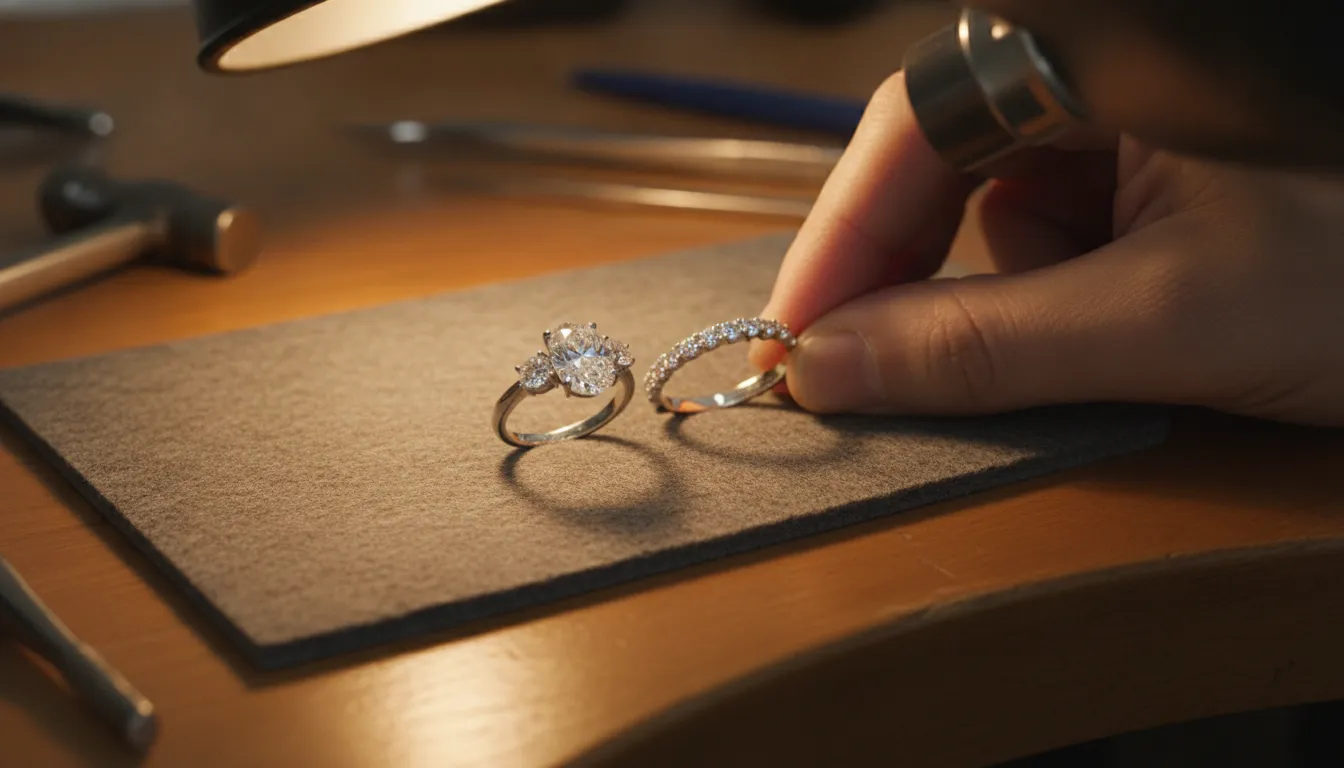
For additional guidance on spacing and comfort when multiple rings are worn together, review Kravit's ring stack fit guide. The most useful test is an honest one: wear the trilogy engagement ring with diamond wedding band together. Move through familiar motions, and choose the pairing that remains comfortable and secure as well as beautifully balanced.
When is custom design the right way to create the pairing?
Custom design becomes especially useful when a ready-made wedding band cannot sit comfortably or visually naturally beside your three-stone engagement ring. A trilogy setting may have substantial side stones, a raised gallery, an unusual basket, or a distinctive curve across the finger. A straight band can leave an unwanted gap, press against the setting, or compete with the center diamond instead of completing it. If you have tried several options and none feels balanced, the issue may be the relationship between the rings rather than the quality of the bands themselves.
What can be coordinated through a custom design?
A custom bridal set can be planned around the actual engagement ring, rather than selected from a general size or style category. The design conversation may consider the center stone and side stones together, including their shape, scale, spacing, and visual weight. The goal is not to make every element identical. It is to create a considered relationship in which the band supports the trilogy silhouette without obscuring its details.
Profile is another important consideration. Depending on the engagement ring's gallery and setting, the band may need a contour, a gentle curve, a particular height, or a carefully considered edge. Exact dimensions should remain consultation-based because even rings that appear similar can sit differently on the finger. Trying the engagement ring and proposed band together helps reveal movement, rubbing, clearance, and comfort before a design is finalized.
Metal selection can also be tailored to the pairing. Matching metals may create a continuous appearance, while a deliberate combination of colors can introduce contrast and personal character. Either approach should account for the existing ring, finish, setting details, and how the pieces will be worn. A custom discussion can also address engraving, size adjustments, and other personal details that may be difficult to find in a ready-made band.
When should you consider a custom bridal set?
Consider custom design if the band rocks from side to side, rubs against the engagement ring. Leaves an awkward gap, catches on clothing, or makes the center stone appear visually crowded. It can also be appropriate when you have a clear preference for a particular metal, profile. Engraving detail, or stone arrangement but cannot find those elements working together in one finished pairing. These are design questions, not signs that one universal band style is right or wrong.
Kravit Jewelers offers guidance on stone selection, metal preferences, engraving, and size adjustments as part of its custom design service. A private, no-pressure conversation can help you evaluate the actual rings together and determine whether a coordinated solution makes sense. To explore the possibilities, visit custom jewelry design and bring your trilogy engagement ring with diamond wedding band pairing goals to the discussion.
How do you choose the final diamond wedding band?
The strongest pairing is the one that respects the character of the engagement ring while remaining comfortable enough for real life. With a trilogy setting, evaluate the complete composition rather than choosing a band in isolation. The center diamond, side stones, gallery, shank, and band should look intentional together from the top and from the side.
Start with visual balance
Look at the relationship between the band and the three-stone spread. A delicate diamond band may preserve the focus on the center stone, while a more substantial band can echo the presence of the side stones. Neither approach is automatically right. Consider the scale, shape, and spacing of the stones, along with the amount of metal visible between them. The band should complement the silhouette without hiding the details that make the trilogy design distinctive.
Pay attention to sparkle as well as size. Cut influences how much a diamond sparkles, and a grading report can provide useful objective information when you compare round brilliant diamonds. If the engagement ring has a particularly active pattern of facets or contrasting stone shapes, a quieter band may create a more refined balance. If the setting is understated, additional diamond detail may suit your preferred level of brilliance.
Confirm physical fit with the actual rings
Bring the engagement ring when trying on bands, or use the exact ring and band together whenever possible. Check whether the pieces sit evenly, move independently, or rub against one another. Examine the profile from the side, including the space beneath the center setting. A straight band may sit neatly with one trilogy ring but meet the gallery or side stones on another. A curved or contoured option may improve alignment, but its shape must be assessed on the specific ring rather than assumed to fit universally.
Move your hand naturally. Make a fist, hold a glass, type, and clasp your hands. Notice pressure, sharp edges, snag points, or any tendency for one ring to rotate. Product dimensions and profile details can help narrow the choices, but exact fit varies by ring and should be confirmed in person.
Coordinate the metal thoughtfully
Matching the metal can create a continuous, classic appearance between the trilogy ring and diamond band. Mixing metals can introduce contrast and give the set a more personal, collected feel. If you mix colors, coordinate the finish and overall weight so the difference looks deliberate rather than accidental. The metal choice should also work with jewelry you wear regularly and with the visual tone you want for the finished set.
Let everyday lifestyle make the final call
Think beyond the first impression. If you work with your hands, exercise often, or prefer low-maintenance jewelry, prioritize a profile that feels secure and does not catch on clothing. If you enjoy a more expressive stack, a fuller diamond band may be appealing, provided the combined rings remain comfortable and stable. A professional can also help you consider inspection, cleaning, and future maintenance as part of the decision.
For couples in Oceanside, Nassau County, and across Long Island, Kravit Jewelers offers personal guidance for comparing these details. You can explore wedding bands and browse engagement ring styles before narrowing your preferences. Bring your priorities, questions, and the ring itself to a no-pressure conversation so the final pairing reflects both visual harmony and the way you live.
Contact Kravit Jewelers to speak with a jewelry expert about your pairing.
Frequently Asked Questions
What wedding band goes with a three-stone engagement ring?
The best pairing depends on the ring's side-stone spread, setting height, band width, and the way both rings move together. A straight band may create a clean contrast, while a contoured or curved profile can follow the engagement ring more closely. Try the actual rings together and check clearance, rubbing, comfort, and visual balance before deciding.
Can a trilogy ring be an engagement ring?
Yes. A trilogy ring is a three-stone engagement ring design, typically placing a center diamond between two same-size or smaller side stones. Its proportions can feel especially meaningful for couples who appreciate a distinctive silhouette and the symbolism associated with past, present, and future.
Should the wedding band match the engagement ring's metal?
Matching metals creates a continuous look and can make the set feel intentionally unified. Mixing metals is also a considered option when you want subtle contrast. Coordinate the finish, setting details, and overall scale so the difference feels designed rather than accidental.
How do I know whether the rings will be comfortable together?
Wear both rings together and move your hand naturally. Check for rubbing between settings, snag points, excessive movement, pressure, and interference with nearby fingers. Consider your daily work and activities as well as your preferred fit. A jeweler can also help evaluate the profile and suggest adjustments when needed.
What does a trilogy engagement ring symbolize?
The three stones are often associated with yesterday, today, and tomorrow, although their meaning is personal. The design can also represent a couple's shared history, present commitment, and future plans. GIA discusses these interpretations in its three-stone engagement ring guide.
Ready to explore your trilogy ring pairing?
The right diamond wedding band should feel balanced with your engagement ring and comfortable for everyday wear. Seeing the two pieces together can make details such as proportion, profile, spacing, and metal coordination easier to evaluate. For personalized, no-pressure guidance, contact Kravit Jewelers to explore a pairing that reflects your style and priorities.


