
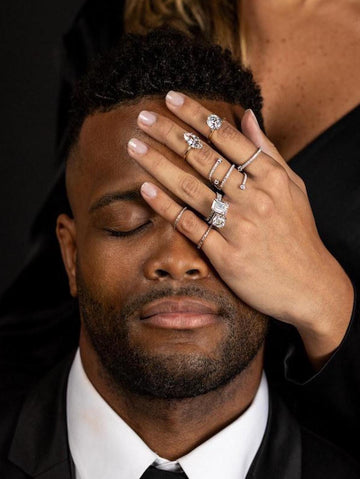

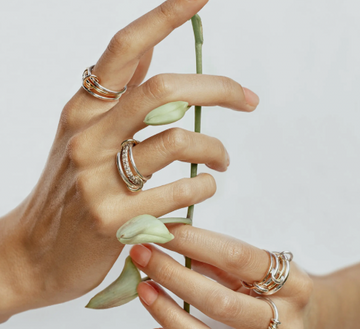


A beautiful ring stack feels considered rather than crowded. When several diamond eternity bands share one finger, the most successful combinations balance sparkle with breathing room. The combination should relate naturally to an engagement ring or wedding band and remain comfortable enough for everyday life.
Explore diamond wedding bands and eternity bands at Kravit Jewelers.
Stacking diamond eternity bands looks balanced when the bands have a clear relationship in width, metal tone, shape, and diamond presence, while still leaving room for personal style. There is no single correct formula; the right combination depends on your existing rings, proportions, comfort preferences, and how you plan to wear them.
Start by looking at the stack as a whole instead of choosing each band in isolation. The placement of the widest or most visually prominent ring, the way neighboring contours meet, and the contrast between repetition and variation all shape the final impression. From there, proportion offers a practical foundation for building a polished combination.
What makes a diamond eternity band stack look balanced?
A balanced stack has a clear visual anchor, a controlled sense of repetition, and enough contrast to keep the rings from blending into one indistinct line. The anchor might be an engagement ring, a wider eternity band, or a distinctive band with a memorable shape. The remaining rings should support that focal point rather than compete with it. When planning stacking diamond eternity bands, begin by identifying which ring should draw the eye first.
Start with one visual anchor
An anchor gives the stack a center of gravity. If your engagement ring has a prominent center stone or sculptural setting, slimmer diamond bands can frame it without overwhelming its profile. If the rings are being worn without an engagement ring, a slightly wider or more detailed eternity band can serve as the focal piece, with simpler bands placed beside it.
Look at the stack from above and from the side. A ring that looks beautifully proportioned from one angle may create an awkward height difference from another. Pay attention to the relationship between the band widths, the height of the settings, and the amount of space between each ring. The right proportion depends on your rings, finger shape, lifestyle, and comfort. There is no universal formula.
Repeat one detail, then introduce contrast
Repetition creates cohesion. You might repeat round diamond shapes, a shared metal tone, a similar finish, or a consistent line of sparkle. The repeated detail helps different rings feel intentionally chosen rather than randomly collected. At the same time, contrast gives the eye a place to pause. A polished band beside a textured band, or a warm metal beside a cool one, can make the diamonds appear more defined.
Keep contrast focused. Mixing several widths, finishes, stone shapes, and metal colors at once can make the stack feel visually busy. Choose one primary language, such as continuous sparkle, and let a single contrasting element add personality. For a more personalized combination, a jeweler can help compare metal preferences, stone choices, engraving, and size adjustments through custom jewelry design.
Before deciding, wear the rings together and move your hand naturally. A stack should look composed while remaining practical for your daily routine. For more detailed guidance on movement and spacing, review this guide to ring stack fit and comfort.
How should you plan band widths and proportions?
Band width creates the visual rhythm of a stack. When every ring has a similar presence, the result can feel calm and cohesive. When widths, profiles, or diamond coverage vary, the eye moves across the hand and the combination feels more layered. Neither approach is automatically better. The right balance depends on the engagement ring or band you already wear, your finger shape, your lifestyle, and how much presence feels comfortable.
Begin by looking at the complete stack rather than choosing each ring in isolation. Note which piece should anchor the composition. An engagement ring with a prominent center stone may call for quieter neighboring bands, while a simple solitaire can support more visible diamond texture around it. Also consider the side view. Rings that appear balanced from above may feel crowded if their profiles meet tightly or create pressure between the fingers.
Explore Kravit's guide to ring stack fit and comfort.
Use the following framework as a starting point, not a rigid formula:
| Approach | Visual effect | Considerations |
|---|---|---|
| Consistent rhythm | Similar-width bands create a polished, continuous line of sparkle. | Compare profiles and settings so the rings still sit comfortably together. |
| Graduated rhythm | Subtle changes in width guide the eye toward an anchor ring. | Keep the change intentional; a very delicate band beside a substantial piece may look accidental. |
| Contrast-led rhythm | A difference in metal tone, texture, or diamond coverage adds definition. | Repeat at least one element, such as a shared shape or finish, to maintain cohesion. |
Proportion also includes the amount of diamond coverage. A full eternity band can read as continuous sparkle, while a band with an open section may create visual breathing room. Consider whether you want the stack to look uninterrupted from every angle or whether a quieter area better suits daily wear. The profile and contour matter just as much as the view from above, especially when pairing bands with a setting that has a substantial gallery or curved shoulders.
For a personalized combination, compare the rings together in person. Kravit's product presentation includes material details, dimensions, and multiple images. A private consultation in the Oceanside showroom can help you assess how the proportions work on your hand. A thoughtful stack should look intentional, feel practical, and leave room for the personal meaning behind each ring.
Which metal combinations look intentional?
Mixed metals can make a stack feel collected rather than perfectly matched, but the combination should still have a visual plan. Start by choosing one dominant metal tone for the overall palette, then use a second metal as a deliberate accent. For example, a white-metal engagement ring can remain the anchor while yellow-gold bands add warmth. A yellow-gold stack can gain contrast from a single white-metal eternity band, especially when the diamonds provide a shared point of brightness.
Repeat the accent instead of scattering it
Repetition is what makes contrast look intentional. If one band introduces rose gold, consider echoing that tone elsewhere in the stack through another narrow band. A detail in the engagement ring, or a separate ring worn on the other hand, can connect the pieces. You do not need every ring to contain every metal. Repeating one accent at least once is often enough to connect the pieces without making the stack feel busy.
The same principle applies to the diamond design. A white-metal band with bright diamond coverage can bridge yellow and rose gold by giving the eye a consistent point of light. A wedding band can complement an engagement ring through a contrasting metal tone or the sparkle of melee diamonds, so contrast does not have to mean visual conflict. GIA notes that both approaches can complement the engagement ring.
Let the dominant palette guide the finish
Think beyond color and consider finish, profile, and scale. Polished bands in different metals may feel cohesive when their widths and silhouettes relate to one another. Likewise, a textured or sculptural band can serve as the focal point while simpler bands support it. If every ring has a different finish, shape, and metal color, the stack may look accidental even when each piece is beautiful on its own.
There is no universal rule for which metal should lead. Your existing engagement ring, skin tone, wardrobe, lifestyle, and personal meaning all matter. If you are building a combination from the beginning. Compare the bands beside your engagement ring in natural light and view them from the side as well as above. Kravit's custom jewelry design service can help you explore metal preferences, stone choices, engraving, and size adjustments when an off-the-shelf combination does not express your style. The most successful stacks feel considered because the elements repeat, contrast, and support one another, not because they follow a rigid formula.
Should you choose straight or contour eternity bands?
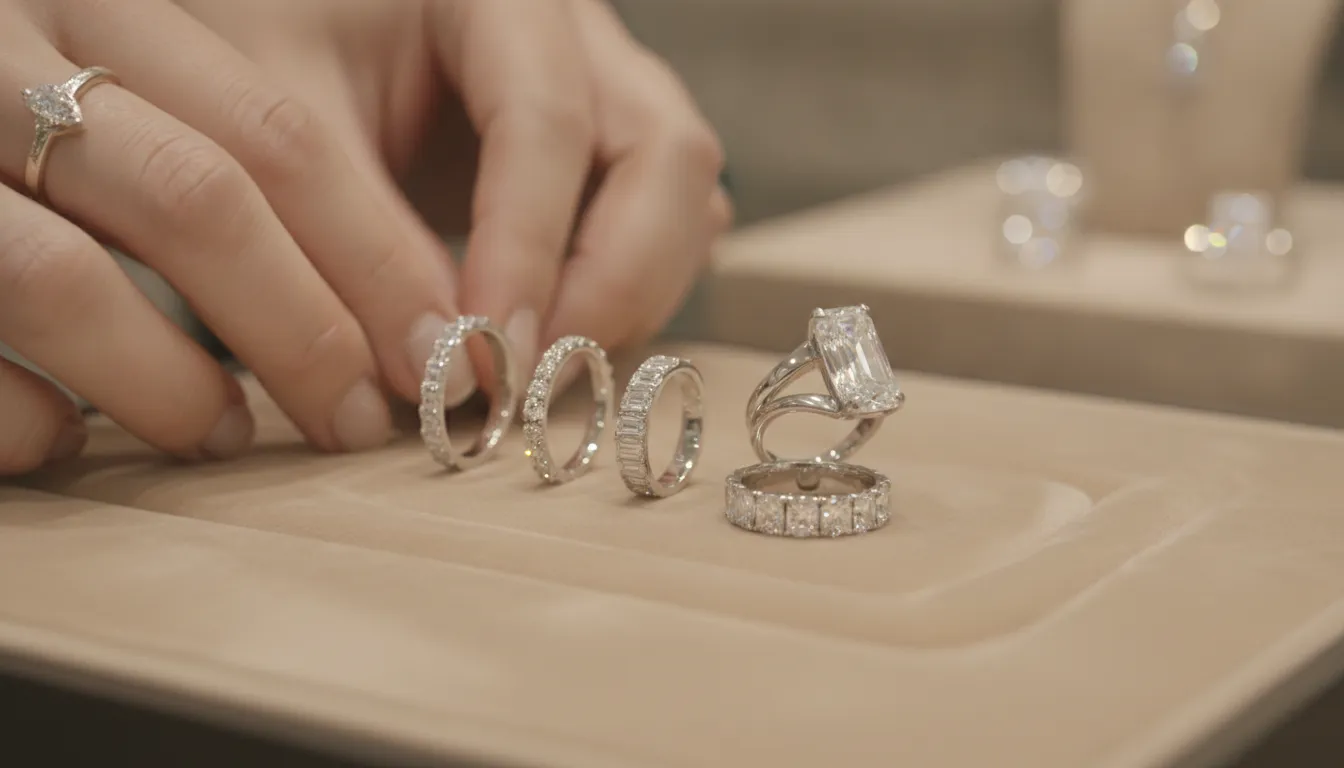
The shape of an eternity band can determine how naturally it sits beside an engagement ring. A straight band follows a consistent line around the finger, while a contour band is shaped to curve around part of the center stone or setting. Neither is automatically better. The right choice depends on the engagement ring's profile, the look you want between the rings, and how much movement or spacing feels comfortable in daily wear.
When does a straight band create the right look?
A straight eternity band brings a clean, even silhouette to a stack. It can echo the simple geometry of a streamlined engagement ring, or create an intentional contrast beside a ring with a more detailed setting. Because the band does not curve around the center stone, it may leave a small gap when paired with a raised or prominent engagement ring. Some people appreciate that breathing room because each ring remains visually distinct. Others prefer the openness of wearing the bands together or separately.
Rotation is also part of the decision. A straight band can be worn in several positions around the finger, which may suit someone who enjoys changing the arrangement of a stack. The relationship between the rings matters more than a rule about whether they should touch. Look at the full profile from above and from the side, including the shoulders, gallery, and any details that extend toward the wedding band.
When might a contour band feel more integrated?
A contour eternity band can follow the outline of an engagement ring more closely, helping the two pieces read as a connected composition. This may be appealing when the center stone or setting extends lower toward the finger and a straight band would create a noticeable gap. A curved shape can also frame the engagement ring without requiring the bands to press against one another.
The curve should still feel natural on your hand. A highly specific contour may look beautifully paired with one engagement ring but be less flexible if you later change the stack. Consider whether you want a dedicated pairing or a band that can move among other rings. For a broader look at spacing, movement, and everyday comfort, explore this guide to ring stack fit and comfort.
When comparing stacking diamond eternity bands, try both silhouettes with your own engagement ring rather than judging them in isolation. A jeweler can assess how the settings meet, where gaps appear, and how the rings rotate as you move. At Kravit Jewelers. A private consultation can help Long Island clients compare proportion and contour in person while keeping the final choice grounded in personal style and practical wear.
How can you make a diamond eternity band stack comfortable?
Comfort begins with how the bands meet your finger, not simply with how much sparkle they add. When planning a stack, pay attention to each ring's profile, or the shape and height of the band above your finger. A low, smoothly finished profile may sit more easily beside another band than a taller design with a pronounced edge. The right combination depends on your existing rings, finger shape, lifestyle, and personal preferences.
Check the edges and the space between bands
Run a fingertip gently along the inside and outside edges of each ring. Edges should feel finished rather than sharp, especially where an eternity band meets an engagement ring or another diamond band. If two rings press against one another, consider whether a slightly different profile, contour, or spacing would create a more natural relationship. A small gap can be an intentional design choice, while a close fit may create a cleaner, more unified appearance.
Movement matters as well. Wear the proposed combination together and notice whether one ring twists, slides, or catches when you move your hand. A stack that looks balanced while your hand is still may feel less comfortable if the bands shift during ordinary activities. Try bending your fingers, holding a glass, fastening a button, and resting your hand on a table. These simple checks can reveal pressure points that are easy to miss in front of a mirror.
Consider your daily routine
Think about when you plan to wear the stack. A high-profile arrangement may suit special occasions but feel less practical if you use your hands frequently. You may also prefer to remove certain rings for work, exercise, household tasks, or activities that expose jewelry to impact. Diamonds are durable, but GIA notes that durability also includes toughness and stability, and any gemstone can be damaged by a hard enough impact. Regular inspection is sensible when a ring is worn often.
For a helpful overview of fit, spacing, and movement, read Kravit's ring stack fit and comfort guide. You can also learn what an eternity band is before comparing styles. In Oceanside, a private consultation can help you test how different profiles and edges feel together, so your stack reflects both your style and the way you live.
How do you add personal style without losing cohesion?
A polished stack does not have to look perfectly matched. The goal is to give each ring a role while repeating enough visual cues that the combination feels considered. Start with one anchor, such as an engagement ring or a favorite diamond eternity band, then choose additions that relate to its scale, outline, or finish. This approach leaves room for personality without turning the stack into a collection of unrelated pieces.
Texture is one of the easiest ways to create distinction. A smooth polished band can sit beside a softly brushed, milgrain, or woven surface, provided the overall profiles remain comfortable together. Shape can create a similar point of interest. For example, a straight band may provide a clean frame for a contoured or gently curved band, while shared rounded edges can keep the transition graceful. Look at the stack from above and from the side. A combination that appears balanced in one view may feel crowded or uneven in another.
Finish and metal tone can either connect the rings or provide controlled contrast. Repeating the same metal creates a quiet, seamless effect. Mixing tones can be just as intentional when one detail bridges them. A shared diamond shape, similar setting style, or a slim band placed between two stronger elements can help. A wedding band can complement an engagement ring through a contrasting metal tone or the sparkle of melee diamonds, rather than matching every detail exactly. GIA's guidance on pairing engagement rings and wedding bands also emphasizes that meaning, comfort, and practicality matter more than one universal arrangement.
Personal meaning can guide the final choices. An engraved date, a family-inspired texture, a birthstone accent, or a ring selected to mark a milestone can give the stack a story. Keep one meaningful detail prominent, then let the surrounding bands support it instead of competing for attention. If an inherited ring or unusual shape does not align with standard options, custom jewelry design can help bring together preferred stones, metal choices, engraving, and sizing in a more cohesive combination. In Oceanside, a private styling conversation can also help you compare the stack on your hand and refine the balance around your existing rings, lifestyle, and comfort preferences.
What are three balanced stacking formulas to try?
Once you understand proportion, metal tone, and contour, a simple formula can make the selection process feel more focused. Use these ideas as starting points rather than fixed rules. The best combination depends on the rings you already wear, the shape of your finger, your lifestyle, and how much visual presence feels comfortable.
-
Quiet sparkle: repeat one refined element
For an understated stack, pair a slender diamond eternity band with a second band that repeats one of its defining details. That might be a similar metal tone, a matching diamond shape, or a closely related surface finish. The repetition creates continuity without making every ring identical. Keep the overall profile easy to wear, especially if the stack will sit beside an engagement ring or another substantial band.
Check the arrangement from the top of your hand first. Do the diamonds read as a clean line, or does one ring visually interrupt the others? Then turn your hand sideways. Look for a profile that feels balanced rather than crowded. Run a fingertip lightly along the edges as well. Any point of pressure or persistent rubbing is a reason to reconsider the pairing.
-
Mixed metal: create contrast with a connecting detail
Combining metal tones can add dimension while still looking intentional. Start with one dominant tone, then introduce a second through a single band or a small repeated detail. A diamond band can act as the visual bridge because its sparkle relates to both rings, even when the metal colors differ. This approach gives you contrast without asking every element to compete for attention.
View the stack from above with your hand relaxed, then compare it with the side view. If the color change feels abrupt, look for a shared detail such as similar diamond coverage, a related band shape, or a polished finish. When trying mixed metals, consider how the combination will work with other jewelry you wear regularly, not only with the engagement ring in front of you.
-
Contour frame: let the center ring guide the shape
When the center ring has a pronounced setting or an unusual profile, use it as the starting point for a contour-based stack. A shaped band can follow the outline more closely, while a straight band can frame the ring with a deliberate visual gap. The goal is not necessarily to eliminate every space. A small, intentional opening can highlight the center ring and give the stack room to breathe.
Check the top view for alignment around the center stone. Next, inspect the side view while gently flexing your finger. The rings should sit naturally rather than forcing one another out of position. If you are combining custom details, metal preferences, engraving, or size adjustments, a private consultation can help you compare the proportions in person. Kravit's Oceanside team can discuss personalized options without treating one formula as the only correct answer.
Frequently Asked Questions
How many diamond bands should you wear in a stack?
There is no universal number. Start with the engagement ring or one band as the anchor, then add pieces until the total feels balanced and comfortable. Two or three rings often create a refined foundation, while additional bands can introduce more contrast, color, or meaning. Your finger shape, existing rings, lifestyle, and comfort preferences should guide the final arrangement.
Can you mix metals when stacking diamond eternity bands?
Yes. Mixing white, yellow, or rose gold with platinum can make a stack feel intentional rather than overly matched. Repeat one visual element, such as a similar diamond shape, profile, or finish, to connect the different metal tones. If the combination feels uncertain, compare the bands together in natural light before choosing.
Are straight or contour bands better for an engagement ring?
It depends on the engagement ring's shape and how closely you want the bands to sit. A contour band can follow a raised or detailed setting, while a straight band creates a cleaner look and may leave a deliberate gap. Try both profiles with your ring, paying attention to movement, spacing, and whether the stack feels comfortable when your hand bends.
How can you keep a diamond eternity band stack comfortable?
Check the fit of every ring together, not just one band at a time. Look for rubbing, pinching, excessive movement, or edges that catch on clothing. A professional can assess sizing, spacing, settings, and alignment, then discuss adjustments or a custom combination. Regular cleaning and maintenance can also help identify a loose stone or worn setting before it becomes a larger concern.
Ready to Explore Your Ring Stack?
Balanced stacking diamond eternity bands is easier when proportion, contour, comfort, and personal style work together. Explore diamond wedding bands and eternity bands to compare directions for your stack, then contact Kravit Jewelers to arrange a private styling consultation. A thoughtful conversation can help you refine a combination that feels cohesive and distinctly yours.


