




Schedule a professional inspection if you are searching for how to know if a diamond is loose in setting. Act promptly if you notice movement, a new clicking sound, a snag, or a prong that looks different from the others. A home check can help you spot a warning sign, but it cannot confirm that a diamond is secure. Remove the ring before the problem gets worse, and have a qualified jeweler assess it.
Request a professional jewelry repair assessment in Oceanside.
How to know if a diamond is loose in setting?
A diamond may be loose if it visibly rocks, tilts, spins, sits higher than before, or makes a faint click when the ring moves. A lifted, bent, thin, cracked, or missing prong, a visible gap, or new snagging on fabric is also a warning. Stop wearing the ring and arrange a professional inspection.
Look for a change rather than trying to prove the stone is loose. Your ring may have looked even and stable when it was new, so a new tilt, gap, or rough edge deserves attention even if the diamond still appears bright. A loose stone can move only slightly at first, and a compromised prong may not be obvious without magnification.
| What you notice | What it may indicate | Safest response |
|---|---|---|
| Diamond rocks, tilts, or changes position. | The stone may not be held firmly in its seat. | Remove the ring and seek an inspection. |
| Clicking, rattling, or a new moving sound. | A stone or setting component may be shifting. | Do not keep shaking or tapping it to test it. |
| Prong looks shorter, thinner, lifted, or cracked. | Metal may be worn or no longer covering the girdle correctly. | Keep the ring off until a jeweler evaluates it. |
| Ring catches on hair, clothing, or a soft cloth. | A prong or edge may be raised or damaged. | Stop wearing it and avoid pulling the snag free. |
What can you safely check at home?
The safest home check is visual and non-contact. Under bright, indirect light, hold the ring by its band and inspect the diamond from the top, side, and underside. Compare each prong, look for gaps or a tilted stone, and stop immediately if you see an irregularity. Do not press, shake, or adjust the setting.
Use a clean, uncluttered area so a stone is easier to see and less likely to disappear if it comes out. A soft towel beneath the ring can provide a safer surface during a brief visual inspection. Handle the band or shank, not the diamond itself.
- Check the ring under steady light. Look at the diamond face-up, then from the side. Note whether it appears lower, higher, crooked, or tilted compared with its usual position.
- Compare the prongs. On a prong-set ring, look for one that is shorter, flatter, thinner, pushed outward, cracked, or no longer touching the diamond as it should.
- Look for daylight or a gap. A new opening between a prong and the stone, or a visible gap at the edge of the setting, can signal that the stone seat or securing metal needs attention.
- Notice new snags without testing forcefully. If the ring has already caught on hair, a sweater, or a towel, treat that as useful evidence. Do not drag it across fabric to recreate the snag.
- Stop at the first concern. Home observation is a screening step, not a pass or fail certification. If something looks different, place the ring in a small padded box or soft pouch.
Setting design and regular care both affect how well a diamond is protected, but general guidance cannot replace an inspection of your specific ring. When a stone or prong looks different, treat the change as a reason to stop wearing the piece and seek professional advice.
What do clicking, movement, snags, and worn prongs mean?
Clicking or movement means the ring needs professional attention, not repeated home testing. A prong can wear down from everyday friction, bend after an impact, or lift after catching on fabric. A snag can reveal a raised edge before the stone visibly moves. These signs do not identify the exact repair, but they do justify removing the ring.
Each symptom provides a clue, but none should be used alone to diagnose the setting. A faint click may come from a moving diamond, a damaged prong, or another setting component. Similarly, a stone can be at risk even when it does not make a sound. Do not wait for a dramatic wobble or a missing prong before acting.
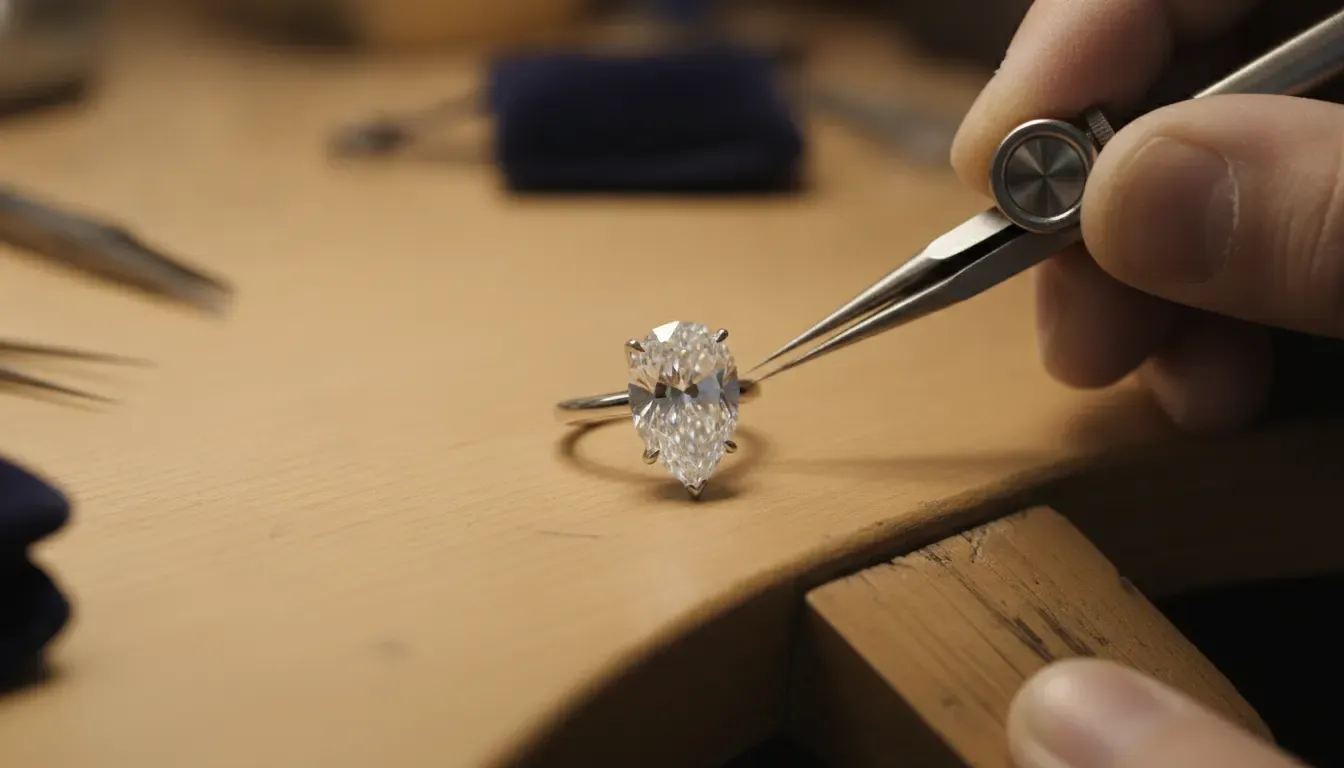
Prongs are small, but they perform an important job: they hold the diamond at its girdle and keep it positioned in the setting. Over time, the metal can become thinner or change shape. This is why a prong that looks uneven, catches on fabric, or leaves a gap should be treated as a structural concern rather than a cosmetic imperfection.
If the issue appears to involve prong wear, Kravit's diamond ring prong repair guide provides deeper context about professional repair. The right solution depends on the ring's metal, construction, stone, and remaining strength, so do not copy a repair technique from a video or attempt to push a prong back into place.
Read about diamond ring prong repair and professional next steps.
Why does a diamond become loose in its setting?
Diamonds can become loose when prongs or other setting parts thin, bend, crack, or shift from daily wear, a snag, an impact, or age. A ring that spins or rubs against hard surfaces may experience uneven wear. Workmanship and the setting's construction also affect how securely the stone is held.
Common contributors include:
- Daily abrasion: Repeated contact with desks, door handles, tools, bags, and other jewelry can wear the metal gradually.
- Sudden impact: A knock against a counter, car door, gym equipment, or another hard surface can bend a prong or disturb the stone seat.
- Snagging: Hair, knit fabric, and towels can catch a raised prong. Pulling the ring free may make the bend worse.
- Age and previous work: Older settings or rings that have been resized, repaired, or heavily worn may need a closer structural assessment.
- Setting design: Prong, bezel, channel, pave, halo, and vintage settings show wear differently. Accent stones can also have less visible securing metal, making an experienced inspection valuable.
Hardness does not make a diamond or its setting indestructible. The GIA notes that diamonds can still chip under the right conditions, particularly around vulnerable areas and certain shapes. A jeweler should assess both the stone and the metal instead of assuming that a strong gemstone means a safe setting.
What should you do before wearing or cleaning a potentially loose diamond?
Take the ring off, place it in a separate padded box or soft pouch, and avoid water, ultrasonic cleaning, household cleaners, cosmetics, and strenuous activity until it is inspected. Do not press the diamond, bend a prong, use pliers, or keep tapping the ring. If the stone is missing, protect the area and contact a jeweler promptly.
These interim steps reduce handling and help protect the diamond from further movement:
- Remove it carefully by the band. Do not pull on the stone or catch the setting against clothing while taking it off.
- Store it separately. Choose a secure, padded container. Keep the ring away from loose items that could catch a prong or scratch the metal.
- Do not clean it. Water, a sink, a brush, steam, and an ultrasonic cleaner can add movement or make a loose stone harder to recover. Cleaning can wait until a professional confirms the setting is stable.
- Do not perform a DIY repair. A tool can scratch the metal, chip the stone, or break a weakened prong. A temporary-looking adjustment can also hide damage that needs a more complete repair.
- If the diamond has fallen out, stop searching with the ring in hand. Keep the setting and any recovered stone separate. Note where and when you noticed the loss, then ask a qualified jeweler about the next evaluation step.
Professional jewelry-care guidance emphasizes paying attention to warning signs rather than ignoring a problem until a stone or component is lost. A local jeweler can examine your individual piece and explain the safest next step.
What does a professional jeweler inspect?
A professional inspection evaluates the diamond, its seat, the prongs or other securing parts, the gallery and surrounding metal, alignment, and evidence of impact or wear. The jeweler then explains whether the piece needs a careful adjustment, rebuilt or replaced prongs, a new setting component, resetting, or another service. The recommendation depends on the ring's condition.
A bench jeweler can inspect areas that are difficult to assess at home and can distinguish a loose stone from a damaged head, worn gallery, bent prong, or other setting issue. The process may include magnified examination, checking how the stone sits, assessing the surrounding metal, and looking for damage that is not visible face-up.
Kravit Jewelers describes a personalized repair process that begins with a consultation and detailed assessment, followed by expert recommendations, a transparent estimate before work proceeds, skilled repair, quality assurance, and polishing. The store's jewelry and prong repair services page also identifies stone setting, diamond replacement, and prong replacement among its service capabilities.
This is why a professional inspection is more useful than trying to identify a repair from a sound or a single photograph. The goal is not only to make the diamond feel tight. It is to understand why the setting changed and whether the surrounding structure is ready for continued wear.
Can a jeweler repair a loose diamond?
Often, a loose diamond can be secured, but the correct repair cannot be promised without seeing the ring. Depending on the metal and damage, a jeweler may tighten sound prongs, rebuild worn tips, replace damaged prongs or a setting component, or reset the stone. A severely compromised setting may require a different recommendation.
Do not assume that every loose stone needs the same treatment. A small adjustment may be appropriate when the surrounding metal remains strong. A worn or cracked prong may need rebuilding or replacement. If the setting itself has been damaged, the jeweler may discuss resetting or redesigning the ring. These decisions are consultation-based because stone shape, setting style, metal, previous repairs, and the extent of wear all matter.
For some heirlooms, a repair preserves the original character. For others, a new setting or custom jewelry design consultation may be worth discussing after the inspection. Neither path should be selected from a generic price list or a DIY tutorial.
How can you help prevent a loose setting?
Protect a diamond ring by removing it for high-impact or hands-on activities, avoiding harsh cleaning experiments, storing it separately, and arranging periodic professional inspections. Check it visually after an impact or snag and before cleaning. Early attention to a thin prong or new movement can help prevent a more serious loss.
Good maintenance is practical, not complicated:
- Remove the ring before exercise, gardening, household work, moving furniture, or activities that may cause impact or abrasion.
- Keep it away from sinks and drains when it is not being worn.
- Store it in a dedicated pouch or box instead of letting prongs contact other jewelry.
- Look at the setting after a hard knock, a significant snag, or a noticeable change in how the ring sits.
- Ask a jeweler how often your specific ring should be checked, especially if it is worn daily, vintage, delicate, or set with multiple small stones.
Professional care is particularly valuable for sentimental engagement rings, inherited pieces, and rings worn every day. A short inspection can identify a maintenance need before it becomes a missing-stone problem, but no home routine can replace an in-person assessment when a warning sign appears.
Request a repair consultation for a potentially loose diamond.
Frequently asked questions about loose diamonds
Is it safe to wear a ring if the diamond moves only a little?
No. Even slight movement can indicate that the stone or a securing component is no longer stable. Remove the ring and have it assessed instead of wearing it until the movement becomes more obvious.
Can you hear a loose diamond click or rattle?
Sometimes, but sound is not a definitive test. A click or rattle can be a warning that the stone or setting is shifting. Do not repeatedly shake or tap the ring. Remove it and seek professional guidance.
Should I press the diamond to see if it moves?
No. Pressing the diamond or using a pin, fingernail, pliers, or another tool can add force to an already compromised setting. Use visual observation only, then let a jeweler check the stone securely.
Can cleaning make a loose diamond fall out?
It can add handling, vibration, moisture, or pressure to a setting that is already compromised. Do not clean a ring when you suspect movement or prong damage. Store it safely until it has been inspected.
What if the diamond has already fallen out?
Keep the ring and any recovered diamond separate in a secure container. Avoid wearing the empty setting, note where the loss occurred, and contact a professional jeweler about evaluating the stone and setting.
How often should diamond ring prongs be checked?
Ask a jeweler to recommend an interval for your ring, and arrange an inspection sooner after an impact, snag, repair, or visible change. Daily-worn or delicate settings may need more frequent attention than an occasionally worn piece.


