


A beautiful necklace chain is the foundation of fine jewelry. It has the power to transform a simple pendant into an elegant statement or serve as a stylish standalone accessory. Whether you are shopping for a special milestone gift, building a personalized layering stack, or choosing a secure home for a family heirloom from our necklace collection. Finding the right chain style and length is essential. With so many designs, thicknesses, and metal options available, selecting the perfect piece can feel overwhelming. Having a reliable necklace chain types guide is key to making a lasting investment that balances elegance, durability, and comfort.
When selecting a necklace chain, your decision should focus on three main factors: the chain style, the length, and the metal composition. The style determines the visual texture, the length affects how the necklace drapes, and the metal composition influences the chain's durability and color. If you plan to wear a pendant, choose a highly durable style like a box, rope, or wheat chain. For standalone wear or fashionable layering, contemporary profiles like the paperclip or fluid snake chain are exceptional choices. By scheduling an appointment at our Oceanside showroom, you can try on various styles to see how each feels and drapes against your neck.
For nearly a century, Kravit Jewelers has helped Long Island families choose fine jewelry that stands the test of time. Since 1927, our family-owned jewelry store has offered three generations of expertise, guiding clients from Oceanside, Nassau County, and the surrounding communities. In this complete guide, our master jewelers explain the characteristics of popular chain styles, help you determine the correct length, and share professional tips for layering and care.
Ready to find the perfect chain? Book Your Appointment at Kravit Jewelers
Necklace Chain Types Guide: What Are the Most Common Necklace Chain Types?
Necklace chains are crafted using diverse metalworking techniques, resulting in unique visual textures, flexibility, and strengths. Some styles are designed to glide smoothly with fluid movement, while others feature geometric links that reflect light with intense sparkle. Understanding the differences between these common chain types helps you match the style to your lifestyle and aesthetic preferences.
Necklace chain types guide: The most common necklace chain styles include cable, curb, Figaro, rope, snake, box, paperclip, and wheat chains. Each offers a different visual texture and strength profile. Cable and box chains are ideal for pendant wear, while curb and Figaro chains work well as standalone pieces. Rope and wheat chains offer the highest durability for heavy pendants.
The Cable Chain
The cable chain is the most classic and widely recognized jewelry chain. It consists of uniform, oval or round metal links connected in an alternating horizontal and vertical pattern. This design mimics traditional anchor chains used on ships. Because of its clean lines and simple structure, the cable chain is highly versatile. It is a popular choice for holding delicate pendants, as it does not distract from the beauty of the center stone. Cable chains are also easy to repair if a link ever breaks, making them an excellent option for everyday wear.
The Curb Chain
A curb chain features flat, interlocking links that lie flush against the skin. The links are often rounded with slightly curved edges to allow them to nestle together tightly. Curb chains are highly durable and have a classic, heavy look. Thicker curb chains, also known as Cuban links, are popular in Men's jewelry because of their bold style. Thinner, delicate curb chains offer a sleek and modern look for Women's fashion, catching the light with their wide, flat surfaces.
The Figaro Chain
Originating in Italy, the Figaro chain is a beautiful modification of the curb chain. It features a distinctive pattern of two or three short, circular links followed by one elongated oval link. This rhythmic design gives the chain a decorative, stylish look. Figaro chains are highly popular as standalone necklaces, though they also pair beautifully with medium to large pendants. The alternating link sizes offer a refined look that looks elegant in yellow gold, rose gold, or sterling silver.
The Rope Chain
The rope chain is one of the most durable and visually striking chain styles. It is made of small, closely linked metal segments connected in a spiral pattern that resembles a real rope. This intricate, twisted design creates a highly reflective surface that catches light from all angles, giving the chain a bright, luxurious shimmer. Rope chains are exceptionally strong and are highly recommended for holding heavy, valuable pendants. Even if one link wears down, the surrounding woven links keep the necklace secure.
The Snake Chain
If you prefer a sleek, contemporary style, the snake chain is an excellent choice. Rather than traditional open links, a snake chain is made of tightly joined round plates or bands. This dense structure creates a smooth, continuous metal tube that resembles the scales of a snake. The chain is incredibly fluid, draping elegantly and moving with the natural curves of your body. Because the surface is continuous, it does not tangle easily. However, snake chains must be handled with care, as they can kink if bent past their natural angle, and kinks can be difficult to repair.
The Box Chain
As the name suggests, the box chain is made of square links that are connected to form a continuous, smooth box-like tube. This geometric design offers a sleek, modern look with clean lines. Box chains are exceptionally sturdy and have a smooth glide. Because they are highly durable and do not snap easily, they are the go-to choice for supporting heavy pendants. The flat, square surfaces of the links reflect light with a subtle, sophisticated shimmer that works well for both men and women.
The Paperclip Chain
The paperclip chain has become a major favorite in modern fashion. It features elongated, rectangular links that resemble paperclips, creating a light, airy, and contemporary look. This style is highly versatile, looking beautiful when worn alone, with a custom pendant, or as a key piece in a layered stack. The open links make it easy to adjust the length, as the clasp can often be fastened into any of the rectangular loops. Paperclip chains are typically lightweight, making them comfortable for all-day wear.
The Wheat Chain
Also known as a Spiga chain, the wheat chain is made of four strands of interwoven, flat oval links that run in a single direction. This intricate weaving creates a textured, braid-like pattern that resembles a head of wheat. Wheat chains are highly flexible and have a substantial visual weight. Because of their woven construction, they are incredibly strong and stretch-resistant. This makes them a durable choice for supporting treasured gemstone pendants or daily-wear charms.
The Bead or Ball Chain
The bead chain features small, spherical metal balls connected by short wire bars. The beads can be placed close together or spaced out along the wire. This style has a casual, contemporary look and is often used for dog tags, keychains, and modern streetwear jewelry. While bead chains offer a unique look, they are generally less durable than linked styles like the cable or box chain. Making them best suited for lightweight fashion pendants rather than heavy heirlooms.
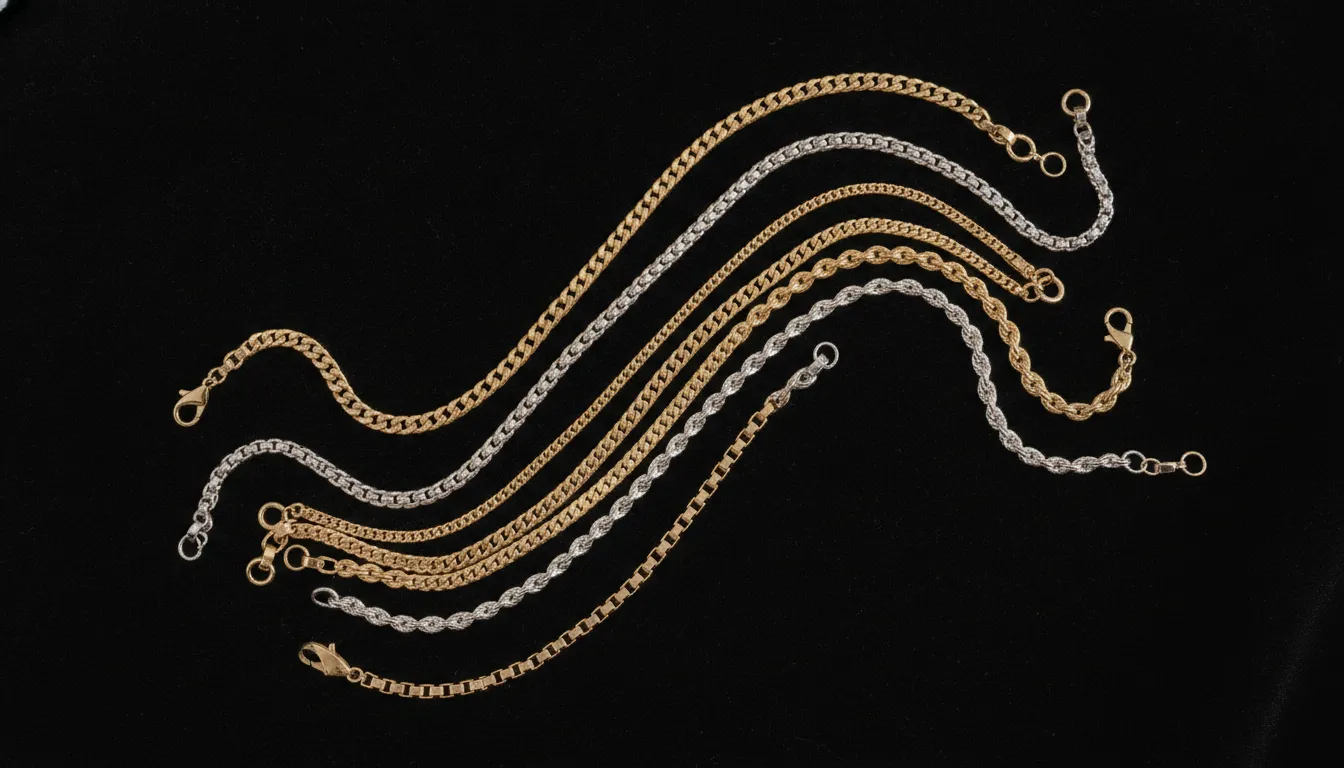
Comparison of Necklace Chain Styles
| Chain Style | Visual Profile | Strength Grade | Best Use |
|---|---|---|---|
| Cable Chain | Classic, uniform oval links | Medium (easy to repair) | Daily wear with light pendants |
| Curb Chain | Flat, interlocking flush links | High (very sturdy) | Bold standalone look, Men's wear |
| Figaro Chain | Alternating round and long links | High (decorative but strong) | Standalone wear, classic styling |
| Rope Chain | Spiral, twisted rope texture | Excellent (extremely secure) | Heavy pendants, high-shine statement |
| Snake Chain | Smooth, fluid scale-like plates | Medium (prone to kinking) | Contemporary styles, delicate slides |
| Box Chain | Square, geometric box blocks | Excellent (highly break-resistant) | Daily wear pendants, versatile styling |
| Paperclip Chain | Elongated, rectangular loops | Medium (lightweight structure) | Fashion layering, adjustable standalone |
| Wheat Chain | Interwoven, braided wheat texture | Excellent (stretch-resistant) | Intricate pendants, textured elegance |
Necklace Chain Lengths: Finding Your Perfect Fit
Choosing the right necklace chain length is just as important as selecting the style. The length determines where the necklace drapes on your chest. It affects how it frames your face, pairs with your necklines, and fits your body type. Standard chain lengths vary for Men's and Women's jewelry to suit different neck sizes and style preferences.
Necklace chain lengths guide: Standard women's chain lengths range from 16 inches (choker) to 36 inches (rope), while men's lengths start at 20 inches. The 18-inch princess length is the most popular for women, resting at the collarbone. For men, the 22-inch chain is the standard. Match your chain length to your neckline and body frame for the best look.
Standard Women's Chain Lengths
For most women, chain lengths range from 16 inches to 36 inches. Each length rests at a different point on the torso:
- 16-Inch Chain (Choker Length): Sits right around the base of the throat. On a petite frame, it fits like a collar; on a larger frame, it may feel snug like a choker. It is ideal for high necklines, crew necks, and off-the-shoulder tops. It is also a perfect base layer for a multi-chain stack.
- 18-Inch Chain (Princess Length): This is the most popular standard length for women. It rests gracefully at the collarbone, creating an elegant drape. This length is highly versatile, pairing beautifully with almost any outfit or neckline, and is the go-to size for holding everyday pendants.
- 20-Inch Chain (Matinee Length): Sits a few inches below the collarbone. It is a flattering choice for business casual attire, V-necks, and low-cut tops. This length draws the eye downward, making it a great option for showcasing medium-sized statement pendants.
- 24-Inch Chain (Opera Length): Rests at the center of the breastbone. This length offers a dramatic look that works well with high necklines, turtlenecks, and evening wear. It is ideal for holding large lockets or bold designer medallions.
- 30 to 36-Inch Chain (Rope Length): Hangs below the bustline. These longer chains can be worn as a single long line for a bohemian chic look. Or wrapped twice around the neck to create a double-layered collar or princess necklace.
Standard Men's Chain Lengths
Men's necklace chains typically start at longer lengths to accommodate broader neck sizes and shoulders:
- 20-Inch Chain: Sits at the base of the neck. This is the standard starting length for most men, fitting comfortably around the average collar size. It looks great when worn under a shirt or paired with a small pendant.
- 22-Inch Chain: Rests at the collarbone. This is the most common length for men's chains, falling just below a standard crew-neck t-shirt. It is highly versatile and works well for both thin and medium-weight chains.
- 24-Inch Chain: Sits a few inches below the collarbone, resting at the center of the chest. This length is ideal for displaying larger pendants, religious medals, or heavy designer chains outside of a shirt.
- 30-Inch Chain: Hangs at the center of the breastbone. This extra-long length is popular for thick curb and Cuban chains, offering a bold style statement when worn over casual streetwear.
Which Necklace Chain Is Best for Your Pendant?
If you plan to wear a pendant, charm, or locket on your chain, matching the design and weight of the two pieces is essential. The right pairing ensures your necklace remains secure, drapes beautifully, and resists wear over time. When selecting a chain to hold a pendant, our master jewelers recommend following this three-step process.
Best chain for pendants: For pendants, choose a chain strong enough to support the weight. Box, rope, and wheat chains offer the highest durability for heavy pendants, while cable and curb chains work well for lightweight charms. Always match the clasp style to your pendant weight and check that the bail opening fits your chain width.
Step 1: Match the Weight and Thickness
The thickness and weight of your chain should balance the size of your pendant. A heavy gold medallion or a large gemstone locket will pull down on a thin, delicate chain, causing the links to stretch out or snap under the weight. Conversely, a tiny diamond slide will look lost on a thick, chunky rope chain. As a general rule, choose sturdier woven styles like box, rope, or wheat chains for heavy pendants. Keep delicate cable or snake chains for light, minimalist charms.
Step 2: Check the Bail Clearance
The bail is the metal loop at the top of a pendant that the chain slides through. Before purchasing a chain, ensure its width and the size of its end loops or clasps are small enough to pass smoothly through the pendant's bail. If the chain is too thick, or the clasp is too wide, the pendant will not slide on. If you have a favorite pendant, bring it into our Oceanside showroom or start a custom design so we can find a chain with the perfect fit.
Step 3: Evaluate Clasp Security
The clasp is the security guard of your necklace, keeping your treasured jewelry safely attached. Ensure your chain features a secure clasp style that matches the weight of your piece:
- Spring Ring Clasp: This is a classic, circular clasp with a tiny spring-loaded lever. It is lightweight, affordable, and common on thin, delicate chains. While secure for light necklaces, the delicate spring inside can wear down over time, making it less ideal for heavy pendants.
- Lobster Claw Clasp: Shaped like a lobster's claw, this sturdy clasp uses a spring-loaded gate that opens when you pull back on a small lever. It is significantly stronger and more durable than a spring ring, making it the preferred choice for thick chains and valuable pendants.
- Toggle Clasp: This decorative closure consists of a metal bar that slips through a metal ring. While it adds a beautiful design element to modern necklaces, it is less secure than a lobster claw and is best reserved for lightweight fashion jewelry.
How to Choose the Right Metal for Your Necklace Chain
The metal you choose for your chain affects its color, durability, hypoallergenic properties, and price. When investing in fine jewelry, opting for precious metals ensures your chain retains its value and beauty for generations. Understanding the differences between these precious metal options helps you choose the right fit for your daily lifestyle.
Necklace chain metals: 14K gold is the most popular choice for everyday chains due to its durability and warm color. 18K gold offers a richer hue and higher purity but is slightly softer. Platinum provides the ultimate strength and hypoallergenic properties, while sterling silver is a classic, affordable option that requires occasional polishing.
14K Gold versus 18K Gold
Gold is the ultimate symbol of luxury and warmth. When shopping for gold chains, you will typically choose between 14K and 18K gold. Pure 24K gold is too soft to be used for chains. It is alloyed with other metals like copper, silver, and zinc to add strength.:
- 14K Gold: Consisting of 58.3% pure gold, 14K gold is highly durable, scratch-resistant, and strong. It is the perfect choice for an everyday chain, as it stands up well to daily wear, workouts, and sleep. Its color is a beautiful, classic gold.
- 18K Gold: Containing 75% pure gold, 18K gold has a richer, more vivid yellow hue. It is highly luxurious and prestigious. Because of its higher gold content, it is slightly softer and heavier than 14K gold, making it ideal for special occasion pieces or refined designer gold jewelry collections.
Platinum
For the ultimate in strength and durability, platinum is the premium choice. Platinum is a dense, naturally white metal that does not require plating to maintain its bright sheen. It is highly resistant to wear and is exceptionally secure for holding precious gemstones. Platinum is also hypoallergenic, making it the perfect option for those with sensitive skin or nickel allergies. While platinum carries a higher price point due to its density and rarity, its heirloom quality makes it a worthy investment.
Sterling Silver
Sterling silver is a beautiful, classic, and affordable option. Made of 92.5% pure silver alloyed with copper, sterling silver offers a bright, reflective sheen that pairs wonderfully with casual attire. While silver is softer than gold and platinum, high-quality sterling silver chains are highly versatile and easy to style. Silver can tarnish over time when exposed to air and moisture, but a quick polish with a soft jewelry cloth restores its original luster instantly.
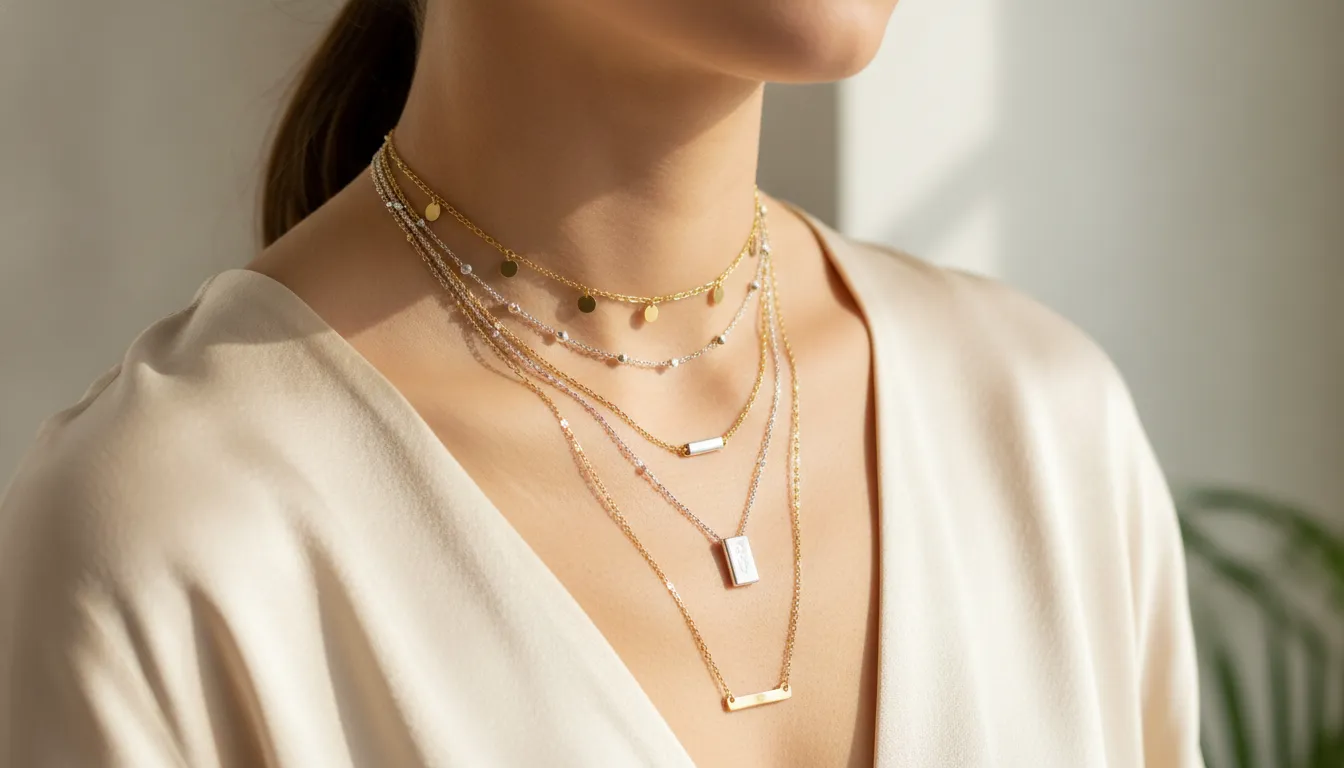
Necklace Chain Layering: Styling Tips for a Polished Look
Layering multiple necklace chains is a beautiful way to express your personal style, create visual interest, and showcase different pieces from your jewelry collection. Designing a balanced, cohesive stack requires mixing different lengths, textures, and weights to prevent tangling and ensure each chain stands out. Here are three expert tips to help you create a polished layered look.
Necklace layering tips: For a polished layered look, space each chain length by at least two inches to prevent tangling. Mix textures by pairing a smooth snake chain with a textured rope or wheat chain. Limit your stack to three chains and vary the pendant sizes to create visual depth while keeping each piece visible.
1. Space Your Lengths Evenly
To keep your chains from tangles and ensure each piece is visible, space your lengths by at least two inches. A classic three-chain stack might include a 16-inch chain resting at the base of the throat. An 18-inch chain draping over the collarbone, and a 20-inch chain hanging just below. This gradual descent creates a beautiful cascade that frames your face and flatters almost any neckline.
2. Mix Textures and Profiles
A great layered stack features diverse visual textures. Pair a flat, geometric paperclip chain with a highly textured rope chain and a delicate, shimmering cable chain. Mixing open-link styles with dense, solid weaves adds depth and contrast, keeping your stack from looking heavy or uniform. You can also mix metal colors, such as pairing yellow gold with white gold or platinum, for a contemporary look.
3. Use an Anchor Piece
Every beautiful layered stack needs an anchor. Place your heaviest chain or your largest pendant on the longest chain at the bottom of the stack. This heavy piece draws the eye downward and acts as a visual anchor, keeping the lighter, simpler chains above it from shifting or tangling. Keep your top layers delicate and minimal to maintain a balanced, elegant look.
Necklace Chain Care, Maintenance, and Professional Repair Tips
A fine necklace chain is an investment that can last a lifetime with proper care and maintenance. Because chains are worn close to the skin, they are exposed to daily body oils, sweat, cosmetics, hairspray, and perfume, which can dull their luster over time. Follow these simple steps to keep your chain looking bright and beautiful.
Routine Home Cleaning
To maintain your chain's high shine, clean it regularly at home. Soak the chain in a bowl of warm water mixed with a few drops of mild, ammonia-free dish soap for ten minutes. Use a very soft-bristled toothbrush to gently clean between the links, removing any trapped dirt or oil. Rinse the chain thoroughly in clean warm water and dry it completely with a soft, lint-free microfiber cloth. Never use harsh chemicals or abrasive cleaners, which can scratch the metal.
Proper Storage
How you store your chains is key to preventing damage and frustrating tangles. Always store your necklace chains flat or hung vertically in separate compartments of a jewelry box. If you travel, loop your chain through a drinking straw or a soft fabric card to keep it from knotting inside your bag. Never toss multiple chains together in a single pouch. As the links can wrap around each other and create tight knots that are difficult to untangle without damaging the metal.
When to Visit a Professional Jeweler
Even with meticulous care, daily-wear chains require professional maintenance over time. Bring your chains into a trusted jewelry showroom once a year for a safety inspection. Our expert jewelers can check for worn clasps, loose solder joints, or stretched links before they cause a break. If your chain does snap, do not attempt to fix it at home. Our in-house master jewelers and Swiss-trained polishers specialize in seamless gold and platinum soldering, clasp replacements, and professional cleaning. For details on keeping your pieces in perfect condition, read our complete guide to jewelry repair and chain maintenance services.
Not sure which chain is right for you? Schedule a Free Consultation
Frequently Asked Questions
Which necklace chain style is the strongest?
The strongest chain styles for daily wear are box, rope, and wheat chains. These styles feature interlocking, multi-link patterns that distribute weight evenly and resist stretching or snapping. They are highly recommended for supporting heavy, valuable pendants and withstanding daily wear.
How do I know what size chain necklace I need?
To find your perfect fit, wrap a soft tape measure or a piece of string around your neck at the level you want the chain to drape. Measure the string against a ruler to find your size. If you are shopping for a gift, an 18-inch chain is the standard, most versatile length for women, while a 22-inch chain is the standard for men.
Can a broken necklace chain be repaired?
Yes, most broken necklace chains can be professionally repaired. A jeweler can use micro-soldering or laser-welding to fuse broken links back together seamlessly. At Kravit Jewelers, our in-house master jewelers can repair delicate cable, box, rope, and curb chains, as well as replace worn clasps to ensure your necklace remains secure.
Why do some chains kink or knot easily?
Fluid, flat chain styles like snake and herringbone chains are constructed of tightly joined metal plates. While they offer a sleek, high-shine look, they can kink if they are bent past their natural angle or stored improperly. Once a snake chain kinks, the flat plates are damaged, making the kink very difficult to smooth out. Always store flat styles lying flat in a soft pouch.
Visit Kravit Jewelers in Oceanside for Expert Guidance
While online guides can help you learn the basics of necklace chain styles, nothing compares to seeing fine jewelry in person. At Kravit Jewelers, our knowledgeable staff is ready to help you explore our curated necklace and pendant collection, compare chain types, and find the perfect length for your style. Whether you are searching for a classic box chain, a modern paperclip style. Or a luxurious designer gold piece, we provide the personal service that has defined our family business since 1927.
We invite you to visit our beautiful showroom at 3151 Long Beach Rd., Oceanside, NY 11572. Book an appointment for a personalized consultation today. You can also call 516-766-3855 or text 516-261-6276 to discuss your custom jewelry and chain repair needs with a trusted Long Island expert.
While online guides and photos can help you learn the basics of chain styles, there is no substitute for seeing fine jewelry in person. The weight, drape, and light reflection of a gold or platinum chain can only be fully appreciated when held in your hand and tried on your neck. Placing different styles side by side helps you find the piece that matches your style and feels most comfortable.
At Kravit Jewelers, we invite you to visit our beautiful showroom at 3151 Long Beach Rd., Oceanside, NY 11572. Our knowledgeable, friendly staff is ready to help you explore our curated necklaces collection, compare different chain types, and find the perfect length for your look. Whether you are searching for a classic box chain, a modern paperclip style. Or a luxurious designer gold piece, we provide the personal service that has defined our family business since 1927.
Ready to find your perfect chain? Book an appointment for a personalized consultation at our Oceanside showroom today. You can also call us at 516-766-3855 or text our team at 516-261-6276 to discuss your custom jewelry and chain repair needs with a trusted Long Island expert.


