
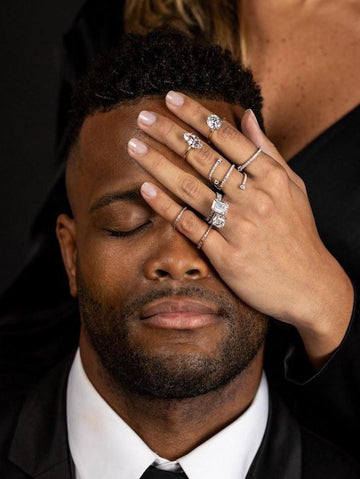



The Asscher cut diamond is a step-cut diamond, admired for its geometric elegance and often compared to shapes like the emerald cut and other elongated diamond styles. It is very similar to the emerald cut. The Asscher cut is a blend of both the princess cut diamond and the emerald cut. This cut has X-shaped facets that start at the corners and move to the center.
History of the Asscher Cut Diamond
This cut of diamonds was designed by Joseph Asscher, the grandson of the I.J. Asscher Diamond Company’s founder in 1902. It did not gain popularity for rings until the 1920s with the birth of the vintage look. The Asscher cut lost popularity, being found mainly in vintage jewelry stores during the Great Depression. It regained it’s popularity in the early 2000’s.
Characteristics Of Asscher Cut Diamonds
Types Of Asscher Cuts
When you shop for the Asscher cut diamond you will find one of two kinds:
- Standard cut- 58 facet cut that reflects an Art Deco style.
- Royal cut- 74 facet cut with a higher crown and 16 added facets.
Clarity
With a flat table, you get an unobstructed view of the center of the diamond. This view allows any imperfections to be seen with the naked eye. Obstructions are quite easy to see, so it is recommended to get a clarity grade of at least VS2.
Color
Color is more of a personal preference with Asscher cut. Although this cut has a step cut, you can get a lower grade color than if you were to have a different cut. It is often recommended that the lowest you go for an Asscher cut stone is a grade H.
Depth
Depth of a diamond is measured from the very top to the lowest point, also called a culet. Asscher diamonds are best between a 60%-68% depth. Anything larger than that and the stone will look as if it is disappearing on itself.
The depth of a ring helps make the stone look bigger, even though it is a smaller carat. The shallower the stone and the larger table helps you not pay for weight that you cannot see.
Why the Asscher Cut Appeals to Vintage Jewelry Lovers
The Asscher cut continues to stand out because it offers a look that feels both historic and refined. Its square shape, cropped corners, and step-cut faceting create a sense of structure that many vintage jewelry lovers appreciate. Rather than relying on the intense sparkle of a brilliant cut, the Asscher cut produces a more subtle hall-of-mirrors effect. This gives the stone depth, symmetry, and a clean architectural appearance that feels sophisticated and timeless.
One reason this shape remains appealing is its strong connection to Art Deco design. Jewelry enthusiasts who love vintage-inspired rings are often drawn to cuts with bold lines and balanced proportions, and the Asscher cut fits that style beautifully. It pairs especially well with settings that feature milgrain details, side stones, or geometric metalwork, all of which enhance its antique character without overwhelming the center diamond.
The Asscher cut is also a smart choice for buyers who want a diamond with personality. Because the cut highlights clarity and symmetry so clearly, it has a distinctive presence that feels intentional and elegant. In engagement rings and heirloom-style pieces, it offers a unique alternative to more common shapes while still feeling classic. For anyone drawn to vintage aesthetics, refined craftsmanship, and a diamond with unmistakable visual depth, the Asscher cut remains an exceptional option.
Conclusion
With Kravits Jewelers, you’ll find a wide selection of diamonds to choose from for your perfect design, whether you are selecting a loose stone or planning a custom engagement ring design that highlights the Asscher cut’s vintage-inspired beauty. We hold the highest quality standard to provide you with the best service for your dream engagement ring. No matter what setting, diamond, or ring type you wish to purchase, our great jewelers will help you decide on the best one for you. Contact us to book an appointment and pick the ring of your dreams.


