



Platinum vs white gold engagement rings offer a similarly elegant white-metal look, but they feel and age differently. Platinum is naturally white, dense, and develops a soft patina. White gold is lighter, typically rhodium plated, and may need periodic replating. The best choice depends on comfort, finish, design, and preferred maintenance.
Explore engagement rings and compare both metals with Kravit Jewelers.
Choosing an engagement ring metal is a personal decision with practical consequences. The metal frames the center stone, influences how the ring feels each day, and shapes the care it may need over decades. Two rings can look almost identical in a display case yet develop very different character after years of wear. Understanding those differences before selecting a setting makes it easier to choose with confidence.
At Kravit Jewelers, our family has served Oceanside and Long Island since 1927. We help couples compare materials, settings, and proportions in person, where the subtle differences between platinum and white gold become much clearer. This guide explains what separates the two metals, what each one does especially well, and which questions to ask before making your choice.
Platinum vs white gold engagement rings at a glance
Platinum and white gold are both refined choices for an engagement ring. Each creates a cool-toned setting that complements diamonds and many colored gemstones. The meaningful differences are in composition, weight, surface finish, and maintenance rather than simple beauty. Neither metal is universally better. The stronger match is the one that supports the wearer's taste and routine.
| Feature | Platinum | White gold |
|---|---|---|
| Color | Naturally white | Usually finished with white rhodium plating |
| Feel | Dense and substantial | Lighter on the hand |
| How it ages | Develops a soft patina | Rhodium finish gradually wears |
| Typical care | Cleaning, inspection, and optional polishing | Cleaning, inspection, polishing, and occasional replating |
| Best suited to | Natural white color and substantial feel | Bright finish and lighter comfort |
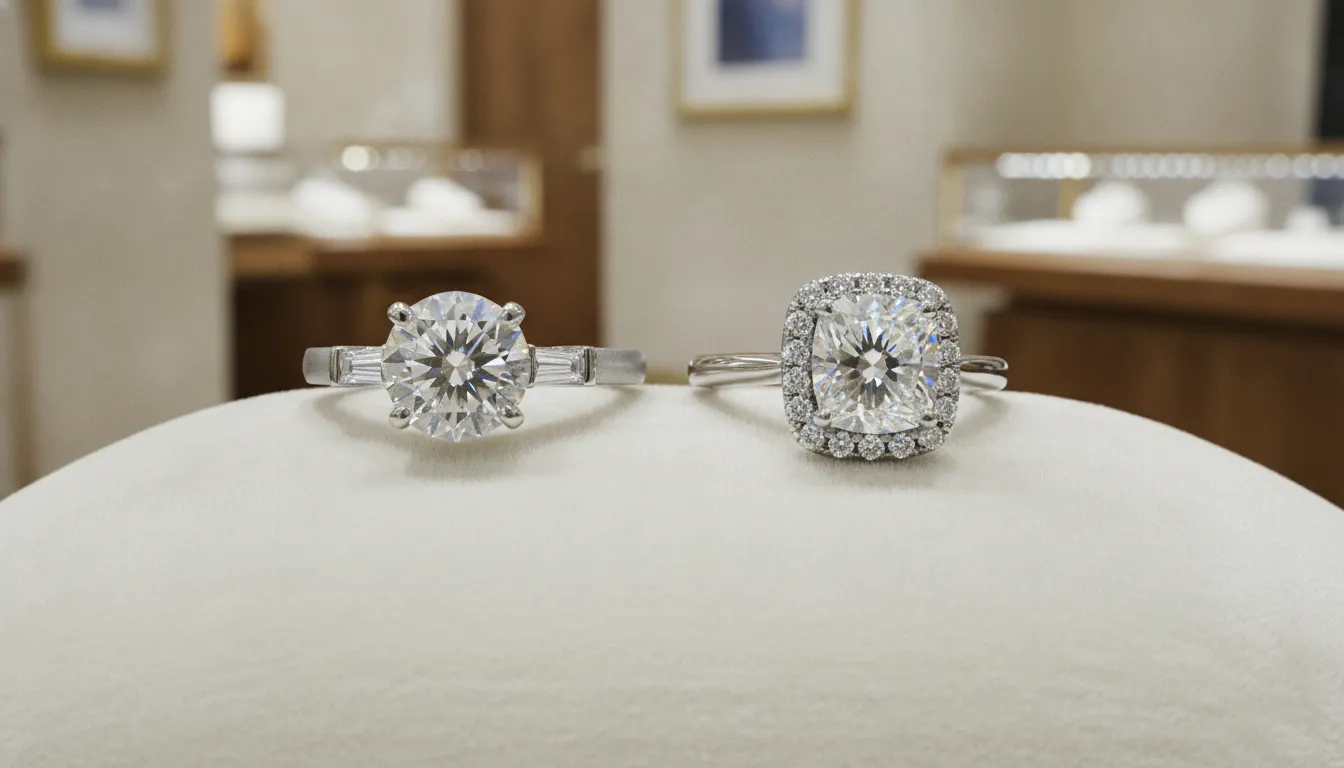
The table is a useful starting point, but a ring is more than a list of specifications. Band width, setting style, finger size, center-stone proportions, and personal comfort can all change the experience. A slim platinum solitaire may feel lighter than expected, while a wide white gold setting can still have a substantial presence. Consider the finished ring as a whole.
What is the difference between platinum and white gold?
Platinum is naturally white
Platinum is a naturally white precious metal. It does not require a white surface coating to achieve its color, so its underlying tone remains consistent as the ring is worn. Platinum engagement rings are commonly made with a high proportion of platinum combined with a smaller amount of other metals that help the alloy perform well in fine jewelry.
Because platinum is dense, a platinum ring usually feels more substantial than a white gold ring of the same design. Some people associate that weight with permanence and luxury. Others prefer a ring that feels less noticeable during a busy day. Trying on comparable designs is the most reliable way to understand whether platinum's presence feels reassuring or too weighty.
White gold is a gold alloy with a bright finish
White gold begins with gold blended with other metals to create a paler alloy. Most contemporary white gold engagement rings receive a rhodium finish that provides the crisp, bright-white appearance shoppers recognize. The exact alloy can vary, which is one reason it is useful to discuss metal sensitivity and care with a jeweler rather than making assumptions based only on color.
Rhodium plating is a surface finish, so it gradually changes with wear. Areas that receive frequent contact may begin to reveal the warmer tone of the alloy underneath. Replating can restore the bright finish. How often that service is desired depends on the individual ring, the wearer's routine, and personal preference. Some owners notice subtle warmth and continue wearing the ring as is; others prefer to refresh the finish.
Purity marks and workmanship matter
Metal name alone does not determine a ring's quality. The alloy, construction, setting design, stone security, and finishing work all matter. Hallmarks can identify metal content, but they do not replace a careful evaluation of craftsmanship. A well-made setting should support the gemstone, feel comfortable, and be designed with future inspection and service in mind.
When comparing rings, ask about the specific metal, how the setting was constructed, and what care is recommended. At Kravit Jewelers, we approach the metal decision as part of the complete design conversation, not as an isolated specification.
How platinum and white gold look over time
Platinum develops a patina
Freshly polished platinum has a bright, refined surface. With daily wear, tiny marks gradually blend into a soft finish known as patina. This appearance is not a color change. It is the visual effect of the surface developing character through use. Many people appreciate patina because it gives the ring a quiet, heirloom-like depth.
If the wearer prefers a brighter look, a professional jeweler can assess and polish the ring when appropriate. Patina is therefore a style preference, not automatically a flaw that must be corrected. Before selecting platinum, it helps to view both newly polished and naturally worn examples so you know which finish appeals to you.
White gold's rhodium finish gradually changes
Newly finished white gold typically has a cool, reflective brightness. As rhodium wears, the underlying white gold alloy can become more visible, especially along the bottom of the shank and other high-contact areas. The change may be gradual and uneven because every person wears a ring differently.
Professional jewelry service can restore the bright white surface. That extra maintenance is an important part of the ownership conversation, but it is not necessarily a drawback. For someone who loves a crisp, high-polish appearance and already plans regular jewelry service, white gold can be an excellent fit.
Diamonds and gemstones respond to both metals beautifully
Both platinum and white gold create a clean visual frame around a diamond. Their cool color can blend subtly with white-diamond settings, allowing the stone to command attention. The choice may be more visually noticeable on the shank and larger metal surfaces than around delicate prongs.
Design can also combine tonal effects. A white-metal head may be paired with a different-color band, or a custom setting may use contrast intentionally. If you are considering a distinctive profile, halo, hidden detail, or mixed-metal composition, Kravit's custom design process can help turn the idea into a cohesive ring.
Durability, scratches, and stone security
Durability is often oversimplified into a single winner. In reality, platinum and white gold respond differently to friction, impact, polishing, and long-term use. Both can serve beautifully in an engagement ring when the design is well made and the ring receives appropriate care.
Surface marks are normal on every daily-wear ring
Any precious-metal ring worn every day will develop signs of use. Door handles, desks, gym equipment, luggage, and household tasks all create opportunities for contact. Platinum tends to show a softer pattern of surface marks that becomes patina. White gold may retain a bright look while fresh, but scratches and changes in its rhodium finish will also appear over time.
A ring should not be judged solely by whether it can scratch, because every practical engagement-ring metal can. A better question is which aging pattern you prefer and what care routine you are comfortable maintaining. Removing fine jewelry before activities that may expose it to force, chemicals, or abrasion is wise regardless of the chosen metal.
Prongs need regular inspection in either metal
Platinum is frequently selected for prongs because it can provide a secure, refined setting for gemstones. White gold is also widely used for engagement-ring settings. In either material, prongs can experience wear or damage. No metal removes the need for professional jewelry inspection and repair expertise.
The center stone's shape, size, elevation, and setting style affect protection as much as the metal choice. A low-profile bezel and a high-set solitaire behave differently in daily life. Someone who works frequently with their hands may benefit from a more protective design, while someone drawn to a delicate silhouette may accept additional care requirements.
Contact Kravit Jewelers to compare settings and discuss the right metal for your lifestyle.
Maintenance preserves the complete ring
Routine service is not limited to polishing or replating. A professional can check stone security, inspect prongs and channels, evaluate the shank, and clean areas that are difficult to reach safely at home. Inspection timing should reflect the ring's design, wear pattern, and condition. If the ring receives a hard impact or a stone appears loose, it should be evaluated promptly rather than waiting for a routine visit.
Comfort, weight, and everyday wear
Platinum has a more substantial presence
Platinum's density gives it a distinctive feel. On a narrow ring, the difference may be subtle. On a wider band or a setting with more metal, the added weight can be immediately noticeable. Some wearers love that sensation because the ring feels grounded and important. Others prefer a lighter piece that fades into the background during the day.
Weight can also influence how a ring balances. A top-heavy design may rotate if the fit is loose, although metal alone does not solve fit concerns. Proper sizing, center-stone proportions, band width, and ring profile all contribute to stability.
White gold often feels lighter
White gold generally offers a lighter experience in an otherwise comparable design. This can appeal to someone new to wearing rings, someone who stacks several bands, or anyone who simply prefers less weight. The lighter feel does not make white gold look less luxurious. Design, finishing, diamonds, and craftsmanship create the overall impression.
Band shape and fit can matter more than metal
A thoughtfully fitted ring often feels better than a poorly fitted ring in the wearer's preferred metal. Wide bands can feel snugger than slim ones. Rounded interior profiles may feel different from flatter interiors. Knuckle shape, seasonal changes, and a planned wedding-band stack can all influence sizing.
Try the ring on, move your hand naturally, and pay attention to pressure points and rotation. If possible, compare platinum and white gold versions with similar dimensions. The goal is not simply to identify which sample is lighter. It is to discover which finished ring feels balanced, secure, and natural on your hand.
Maintenance and long-term care
Care for platinum
Platinum does not require replating to remain white. Its routine care centers on cleaning, inspection, and optional polishing. Owners who enjoy patina may choose to keep the evolving surface largely untouched. Those who prefer a brighter finish can ask a jeweler to review appropriate polishing options based on the ring's condition and details.
At home, use only a gentle method recommended for the specific ring and gemstone. Not every gemstone should be treated like a diamond, and some designs have delicate elements that need special attention. Avoid aggressive products or improvised techniques that can affect finishes or stones.
Care for white gold
White gold shares the same need for thoughtful cleaning and setting inspections, with the added consideration of rhodium plating. Replating frequency is not identical for every wearer. Friction, personal chemistry, band shape, and daily habits all influence how the finish changes. A jeweler can evaluate the ring and recommend service based on its actual condition.
Polishing and replating should be purposeful rather than automatic. During an appointment, ask the jeweler to inspect the complete ring, including the shank and all stone settings. This provides a more useful picture than focusing only on surface color.
Protect either ring during demanding activities
Good habits support either metal. Remove the ring before strength training, gardening, heavy cleaning, or work that places the hands near machinery. Store it in a secure, separate place rather than a loose pocket or shared jewelry dish. Avoid assuming that a durable metal makes the gemstone or setting immune to damage.
For professional help, Kravit Jewelers offers in-house expertise and can assess the appropriate next step for a treasured ring. Our Oceanside team has supported Long Island families across generations, from the original selection through future care.
How metal choice affects ring design
Consider the complete silhouette
Metal choice should support the design rather than compete with it. A substantial platinum setting can feel beautifully architectural, while a fine platinum detail can use the metal's natural white tone to create an understated effect. White gold can bring a bright finish to classic solitaires, halos, three-stone rings, and contemporary settings.
Look beyond the top view. The side profile reveals how high the center stone sits, how the gallery is constructed, and whether the ring will pair comfortably with a future wedding band. These features affect daily wear and the final look of a bridal set.
Plan for the wedding band early
An engagement ring is often selected before the wedding band, but the two should be considered together. A straight band may sit flush with some settings and leave a gap beside others. A contoured or custom wedding band can follow the engagement ring's outline. Matching metals can create a unified appearance and simplify the care conversation, while intentional mixed-metal combinations can add contrast.
Bring up stacking preferences during the engagement-ring consultation. If you envision several bands over time, evaluate their combined width, weight, and profile. Trying on a complete stack can reveal comfort considerations that are not obvious when viewing the engagement ring alone.
Custom design makes the choice more personal
Custom design is especially helpful when the desired features do not align neatly with a standard setting. Perhaps you want platinum prongs with a contrasting band, a low profile for an active routine, or a setting shaped around a particular gemstone. A guided design process can balance aesthetics, wearability, and service needs without reducing the decision to metal alone.
Kravit Jewelers combines modern design capabilities with the perspective of a heritage jeweler. The result should feel personal on day one and considered for the years ahead.
Which metal is right for your engagement ring?
Choose platinum if you value a naturally white metal, appreciate a substantial feel, and like the idea of a patina developing over time. It can also be compelling for a design that uses platinum's character as part of the visual story. Choose white gold if you prefer a lighter ring, love a crisp bright finish, and are comfortable with occasional rhodium service.
These are guiding tendencies, not rigid rules. A wearer who loves platinum may still prefer the proportions of a particular white gold setting. Another person may arrive expecting white gold and discover that platinum's weight feels exactly right. The most confident decision usually follows an in-person comparison.
Questions to ask during your consultation
- How does this exact setting feel in platinum and white gold?
- How will the surface finish change with regular wear?
- What care is recommended for this design and gemstone?
- How will the engagement ring pair with a future wedding band?
- Does my lifestyle suggest a lower profile or more protective setting?
- What customization options could improve comfort or appearance?
There is no substitute for seeing the details up close. Compare the metals under natural and showroom light, notice their weight, and consider how each one supports the chosen stone. A skilled jeweler can explain the tradeoffs without pushing a universal answer.
Frequently asked questions
Is platinum better than white gold for an engagement ring?
Platinum is not automatically better than white gold. It is naturally white, feels denser, and develops patina. White gold is lighter, has a bright rhodium finish, and may need periodic replating. The better option is the one that matches the wearer's preferred feel, appearance, design, and maintenance routine.
Does white gold turn yellow over time?
White gold does not simply turn yellow, but its rhodium surface finish can wear and reveal the warmer tone of the underlying gold alloy. The pace varies by ring and wearer. Professional replating can restore the bright white appearance when desired.
Does platinum scratch more easily than white gold?
Both metals develop surface marks with daily wear. Platinum's marks gradually create a soft patina, while white gold can show scratches and wear in its rhodium finish. The visual result differs, so compare worn examples and choose the aging style you prefer.
Can platinum and white gold rings be worn together?
They can be worn together, but adjacent rings may rub against one another over time. A jeweler should evaluate the designs, fit, and contact points, especially for a daily-wear stack. Planning the engagement ring and wedding band together can improve comfort and help manage wear.
Compare platinum and white gold at Kravit Jewelers
Platinum and white gold each offer an elegant foundation for an engagement ring. The right decision comes from understanding how the metal looks, feels, ages, and supports the complete design. An in-person comparison makes those differences tangible and allows you to focus on the details that matter most to you.
Since 1927, Kravit Jewelers has helped Long Island couples select meaningful jewelry with personal attention and lasting expertise. Visit our Oceanside showroom to compare platinum and white gold engagement rings, explore setting options, and discuss a ring designed for your life.
Contact Kravit Jewelers to begin your engagement ring consultation.


