



A professional jewelry appraisal gives you a detailed, expert-supported record of what you own and an opinion of value prepared for a specific purpose. If you are searching for a jewelry appraisal near me in Oceanside or elsewhere on Long Island, choose an experienced appraiser who will inspect your piece in person, explain the process, and prepare documentation suited to your needs.
Contact Kravit Jewelers to ask about an appraisal consultation at our Oceanside showroom.
A professional jewelry appraisal typically includes an in-person examination, identification of gemstones and metals, measurements, condition notes, photographs, and an opinion of value. The report should state its intended use, such as insurance scheduling or estate planning, because the appropriate type of value depends on why the appraisal is needed.
Kravit Jewelers has served Long Island families since 1927. Our GIA-certified appraisal expertise and full-service showroom help clients understand fine jewelry, watches, and heirlooms without mailing valuable pieces to an unknown provider. This guide explains what to expect, how to prepare, and which questions to ask before choosing an appraiser.
What does a professional jewelry appraisal include?
A professional appraisal includes a careful description of the item, an assessment of its materials and condition. Supporting photographs, and a value conclusion tied to a clearly stated purpose. It is much more detailed than a verbal estimate at a counter.
Identification and measurements
The appraiser begins by identifying the piece and recording its physical characteristics. Depending on the item, that can include the jewelry type, construction, dimensions, total weight, metal type, purity marks, maker's marks, and identifying inscriptions. Gemstones may be examined for species, approximate measurements, estimated weight, cut, color, clarity, and visible treatments when they can be identified within the scope of the inspection.
Mounted stones often cannot be assessed in exactly the same way as loose stones. Prongs and settings can limit access, and an appraiser should explain any limitations rather than present an unsupported conclusion as a certainty.
Condition, photographs, and value
The report should describe the condition visible at the time of inspection. Worn prongs, loose stones, damaged clasps, scratches, or evidence of prior work can matter both for identification and for care planning. Clear photographs help distinguish your item from similar pieces and provide a useful record if it is later lost or stolen.
The final report normally states the appraisal's intended use, effective date, methodology, limiting conditions, and value conclusion. It should also identify the appraiser and relevant qualifications. Keep the report and photographs somewhere secure, and share the appropriate copy with your insurer, attorney, or other professional when needed.
What happens during an in-person jewelry appraisal?
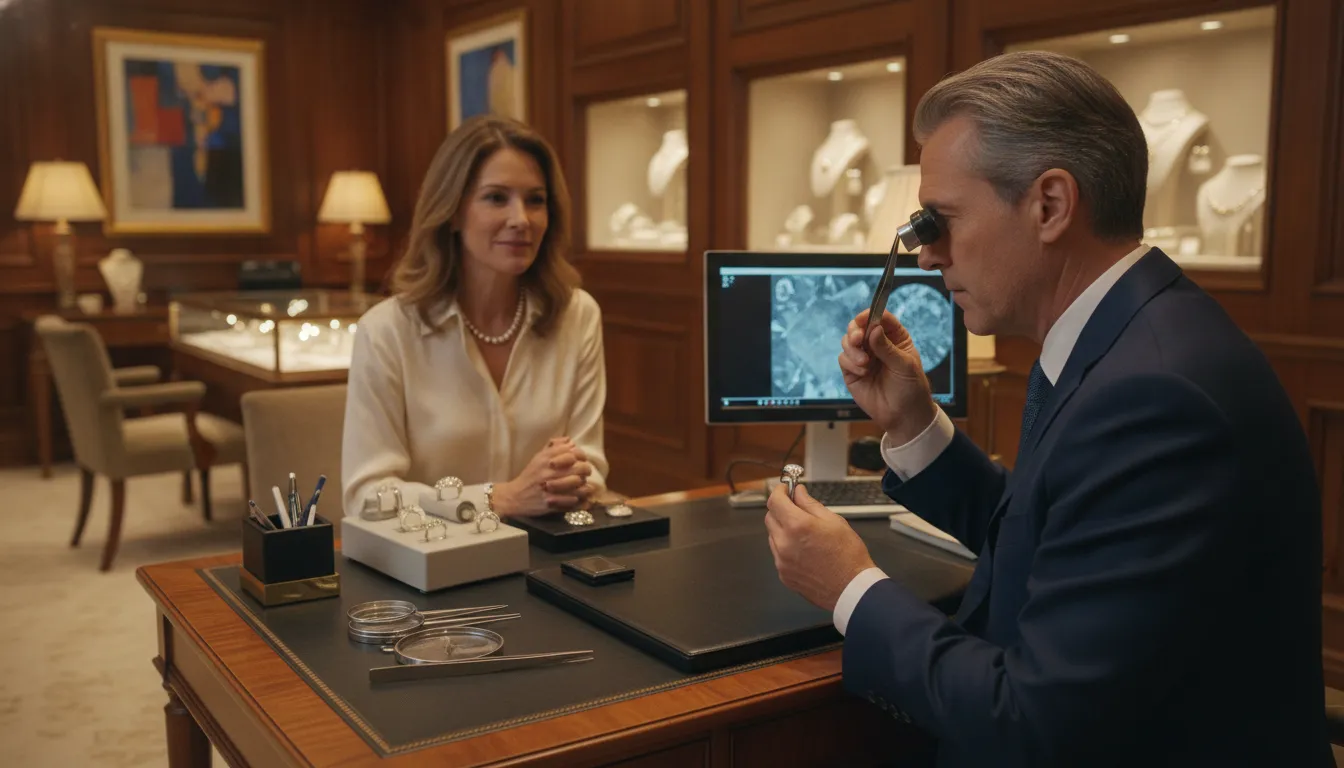
During an in-person appraisal, the professional examines your jewelry using gemological tools, documents identifying details, discusses why you need the report, and prepares a written conclusion. The process should feel transparent, methodical, and tailored to the piece.
A closer look at the appraisal process
- Purpose discussion: You explain whether the report is for insurance, estate planning, personal records, or another need.
- Initial documentation: The appraiser records the item's type, dimensions, weight, markings, and visible design details.
- Gem and metal examination: Appropriate tools help evaluate mounted stones, metal, construction, and condition.
- Photography: Images capture the whole piece and useful identifying features.
- Research and valuation: The appraiser considers relevant market information and applies the type of value appropriate to the assignment.
- Written report: You receive documentation that explains the item, intended use, findings, limitations, and value conclusion.
Why in-person inspection matters
Photos can be helpful, but they rarely show every detail needed for a reliable report. Color can shift on a screen, measurements can be difficult to confirm, and hallmarks or signs of wear may be hidden. An in-person inspection lets the appraiser handle the piece, examine it from multiple angles, and discuss limitations directly with you.
Local service also reduces the need to ship a valuable heirloom or engagement ring. At Kravit Jewelers, clients can visit a long-established Oceanside showroom and speak directly with a knowledgeable team. If the inspection reveals wear that deserves attention, our jewelry repair services provide a separate path for discussing care options.
What should you bring to a jewelry appraisal?
Bring the jewelry itself, any prior appraisal, purchase receipt, grading report, provenance records, repair history, and the questions you want answered. Missing paperwork does not necessarily prevent an appraisal, but relevant records can help the appraiser understand and document the item.
A practical appointment checklist
- The complete item: Bring all matching pieces, detachable components, and original accessories that may be relevant.
- Prior appraisals: Older reports can help document history, although the professional should still conduct a fresh inspection.
- Receipts and invoices: Purchase documents may identify a seller, date, or original description.
- Laboratory reports: Bring GIA or other grading documents associated with a diamond or colored gemstone.
- Provenance records: Family notes, maker documents, or past correspondence can add context for an heirloom.
- Repair records: Documentation of replaced stones, resized rings, or other work may clarify the piece's history.
- Your intended use: Be ready to explain whether you need the report for insurance, an estate, or another purpose.
Questions worth asking before the visit
Ask what credentials the appraiser holds, what the report will include, whether the item will remain on-site, and how limitations will be explained. You can also ask whether the appraisal is appropriate for your intended recipient. For example, an insurer may have documentation requirements that differ from those used by an attorney or estate professional.
Pricing and turnaround time can vary with the number, complexity, and type of items. Contact the showroom for current information rather than relying on a general estimate that may not fit your collection.
Why do people obtain jewelry appraisals?
People obtain appraisals to document valuables for insurance, support estate and inheritance planning, maintain personal records, or understand an item before making another informed decision. The purpose should be established before the value is developed.
Insurance documentation
An appraisal can help an insurance professional understand the item and determine appropriate scheduled coverage. Standard homeowners or renters policies may apply limits or special conditions to jewelry, so discuss the report and coverage details directly with your insurer. An appraisal does not itself provide insurance or guarantee how a future claim will be handled.
Values and markets can change. Ask your insurer when updated documentation may be needed, and contact an appraiser if the piece has been altered, damaged, or substantially repaired since the last report.
Estate planning and family records
A detailed report can help families identify heirlooms and organize records before items pass to another generation. For formal estate, tax, divorce, charitable contribution, or legal matters, tell the appraiser exactly how the report will be used and consult the appropriate legal or tax professional. The assignment and value definition must fit the intended purpose.
Selling is a different conversation
An appraisal is not the same as an offer to purchase your jewelry. A buyer's offer reflects what that buyer is willing to pay under current market conditions, while an appraisal develops a value for a stated use. If your goal is to sell precious metal or jewelry, learn about Kravit's separate gold buying service and clearly explain your objective when you visit.
Appraisal vs. grading report vs. purchase offer
An appraisal provides a value conclusion for a stated purpose, a grading report describes a gemstone's characteristics without assigning a retail value. And a purchase offer states what a buyer is willing to pay. Understanding the difference helps you request the right service.
| Document or service | Primary purpose | Typical contents | Value or price included? |
|---|---|---|---|
| Jewelry appraisal | Insurance, estate, or another stated use | Item description, condition, photographs, methodology, and intended use | Yes, a value conclusion suited to the assignment |
| Gemstone grading report | Document gemstone characteristics | Findings such as measurements and quality characteristics | No retail value conclusion |
| Purchase offer | Propose a transaction | Amount a buyer is willing to pay under current conditions | Yes, an offer price |
Why the value type matters
A single piece can have different relevant values depending on the assignment. A report prepared for insurance scheduling should not automatically be treated as the expected amount from a sale. Similarly, a purchase offer is not proof of replacement value. A qualified appraiser will ask questions before beginning and state the intended use in the report.
How to choose a jewelry appraisal near me
Choose a local jewelry appraiser by reviewing credentials, relevant experience, report quality, security practices, and willingness to explain the assignment. The lowest fee or fastest promise should not outweigh careful documentation and clear communication.
Look for relevant expertise
Gemological education helps an appraiser identify and describe jewelry accurately. Experience also matters because antique pieces, contemporary fine jewelry, diamonds, colored gemstones, and watches can present different questions. Kravit Jewelers offers GIA-certified appraisal expertise and has served Long Island from Oceanside since 1927.
Ask to see what a complete report generally contains and how the appraiser handles uncertainty. A trustworthy professional should distinguish observed facts from assumptions and explain the scope of the inspection. You can learn more about our local history and services in our guide to choosing a jewelry store in Oceanside, NY.
Consider security and service after the inspection
Before leaving an item, ask how it will be identified, stored, and handled. In-person local service gives you the opportunity to discuss those safeguards directly. It also makes it easier to return with questions about your report or to discuss care needs separately.
Frequently asked questions about jewelry appraisals
How much does a jewelry appraisal cost?
Jewelry appraisal fees vary based on the appraiser, number of items, complexity, research required, and report type. Ask for current fee information before the appointment. Be cautious when a valuation is tied to a percentage of the item's value, because that arrangement can create a conflict of interest.
How long does a jewelry appraisal take?
Timing depends on the number and complexity of the pieces, the report's purpose, and the research required. A simple item and a large mixed collection require different levels of work. Contact the appraiser for an estimate based on your specific items and deadline.
Can I get jewelry appraised without a receipt?
Yes, an appraiser can often inspect and document jewelry without a purchase receipt. Bring any grading reports, prior appraisals, provenance notes, repair records, or other information you do have. The appraiser should explain any limitations created by missing documentation.
Is an appraisal the same as what I can sell my jewelry for?
No. An appraisal develops a value for a stated purpose, while a purchase offer is the amount a particular buyer is willing to pay. Tell the professional whether you need insurance documentation, estate-related information, or a selling conversation so you receive the appropriate service.
How often should jewelry be reappraised?
There is no single schedule that fits every piece or policy. Ask your insurer about its documentation requirements and consider an update after major repairs, alterations, or meaningful market changes. Keep prior reports so changes can be reviewed over time.
Schedule an appraisal conversation in Oceanside
A useful appraisal begins with the right purpose and a careful in-person inspection. Kravit Jewelers combines GIA-certified appraisal expertise with the personal service of a family-owned Long Island jeweler established in 1927. Bring your questions and available documents, and our team can help you understand the appropriate next step for your jewelry, watches, or heirlooms.
Contact Kravit Jewelers to discuss an appraisal consultation at our Oceanside showroom.


