
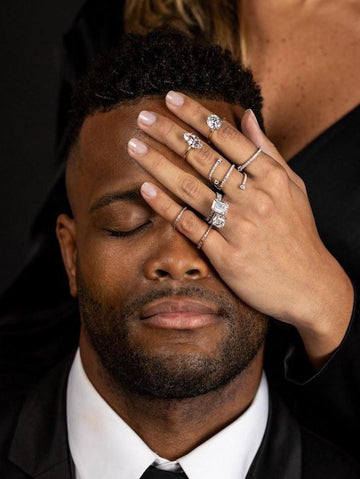

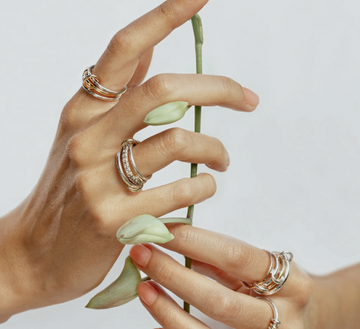


Choosing among the finest engagement rings Long Island has to offer is not simply a search for sparkle. It is an intimate decision about proportion, character, craftsmanship, and the person who will wear the ring for decades. The most rewarding experience pairs rigorous diamond knowledge with the unhurried perspective of a jeweler who understands both the significance of the moment and the standards expected by discerning Long Island clients.
Explore engagement rings at Kravit Jewelers.
Kravit Jewelers has served Oceanside, NY, as a family-owned jeweler since 1927. That heritage matters because an engagement ring is rarely a one-visit purchase. Selection, design, appraisal, sizing, maintenance, and future service all benefit from a relationship with specialists who remain accessible. With GIA-certified appraisers and in-house services, Kravit Jewelers brings technical discipline and personal attention to every stage of the process.
Why Engagement Rings Long Island Buyers Choose Locally
A respected local jeweler lets you compare diamonds in person, understand the evidence behind their grades, and consider how each ring suits an actual hand and lifestyle. Kravit Jewelers combines this hands-on guidance with family ownership since 1927, GIA-certified appraisers, and in-house services in Oceanside, NY.
Digital browsing is useful for discovering silhouettes, but a screen cannot fully communicate a diamond's movement, a setting's profile, or the comfort of a band. In a showroom, you can compare stones under more than one lighting condition, observe brilliance from different angles, and see whether a delicate design feels balanced or overly fragile for everyday wear. Those impressions often prove more meaningful than a magnified product image.
A local consultation also gives context to grading data. Two diamonds with similar report summaries can present quite differently because of their proportions, facet relationships, inclusion location, or fluorescence. An experienced professional can explain why one stone appears lively while another looks comparatively subdued, then help you decide which distinctions are visible and valuable to you.
Key takeaway: choose the diamond with your eyes, then use independent grading information to understand and confirm what you see.
Continuity is equally important. A ring may later need professional inspection, resizing, refinishing, appraisal, or repair. Working with an established jeweler means knowing where to return and who understands the piece. Kravit Jewelers has deep roots in Oceanside and offers in-house capabilities that support the relationship beyond the initial selection.
Trust should be evident in the consultation itself. A qualified jeweler will ask thoughtful questions, explain tradeoffs without oversimplifying them, and allow you to compare options without pressure. For buyers seeking a broader view of the local luxury experience, the Kravit Jewelers guide to high-end jewelry on Long Island offers useful perspective on expertise, service, and selection.
How to Read the GIA 4Cs With Confidence
The GIA 4Cs describe a diamond through cut, color, clarity, and carat weight. They are most useful as a framework for comparison, not as a prescription for one perfect grade. Prioritize beauty and proportions, understand what is visible without magnification, and balance each quality factor against your personal preferences.
The Gemological Institute of America developed the 4Cs to provide a consistent language for diamond quality. Understanding that language makes a consultation more productive, but the aim is not to pursue the highest grade in every category. The goal is to identify the combination that creates the appearance, scale, and character you value.
Cut: the engine of a diamond's light performance
Cut describes how well a diamond's facets and proportions work together to return light. In a standard round brilliant, GIA assigns an overall cut grade ranging from Excellent to Poor. The assessment considers brightness, fire, scintillation, weight ratio, durability, polish, symmetry, and other proportion-related observations. Cut grade is not the same as shape: round, oval, emerald, pear, cushion, and marquise are shapes, while their faceting arrangements are cut styles.
A high cut grade is a valuable filter, yet diamonds within the same grade can still have different visual personalities. Compare them face-up and in motion. Look for balanced brightness across the stone, crisp flashes, pleasing contrast, and no persistently dark or watery areas. GIA does not currently issue an overall cut grade for most fancy shapes, so expert visual evaluation becomes especially important for those diamonds.
Color: subtle tone viewed in context
GIA grades diamond color from D, colorless, through Z, light yellow or brown. Differences between adjacent grades can be subtle, particularly once a diamond is mounted. Shape, size, setting metal, and personal sensitivity all influence how color appears. A near-colorless diamond may look beautifully bright in one setting, while another buyer may prefer the icy appearance of a higher color grade.
Clarity: rarity, visibility, and placement
Clarity evaluates internal characteristics, called inclusions, and surface characteristics, called blemishes. GIA grades range from Flawless to Included, based on their size, number, position, nature, and relief under 10x magnification. The most practical question is often whether a characteristic is visible without magnification and whether its placement has any bearing on beauty or durability. A discreet inclusion can make a diamond compelling without diminishing its face-up appeal.
Carat weight: precise mass, not apparent size
Carat is a unit of weight, not a measurement of diameter. Two diamonds of equal carat weight can face up at different sizes because their shapes and proportions distribute weight differently. A well-proportioned diamond can present with impressive presence, while a poorly proportioned stone may hide weight in its depth. Review measurements alongside carat weight rather than relying on the number alone.
Key takeaway: a refined diamond decision balances all four Cs; it does not maximize one grade at the expense of beauty, wearability, or value.
What a GIA Diamond Grading Report Tells You
A GIA diamond grading report identifies and describes a diamond through its report number, measurements, 4Cs grades, finish assessments, fluorescence, inscriptions, comments, and plotting information when applicable. It provides an independent quality record, but it is not a monetary appraisal and cannot replace seeing the diamond with an experienced professional.
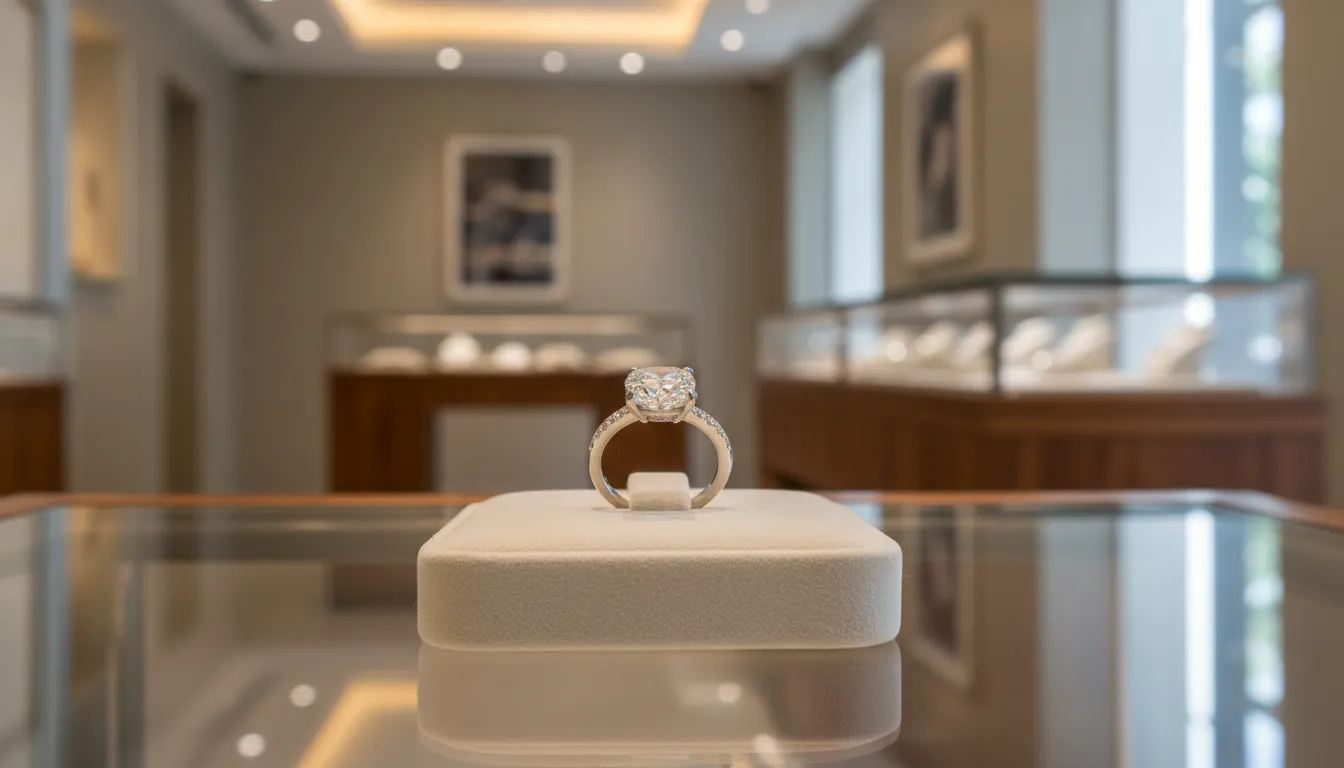
For a significant diamond purchase, the grading report is essential evidence. It begins with a unique report number and records whether the diamond is natural or laboratory-grown, along with its shape and cutting style and its measurements. The report then lists carat weight, color grade, clarity grade, and, for eligible round brilliants, cut grade. Finish details include polish and symmetry, both graded on a scale from Excellent to Poor.
Many full GIA reports include a clarity characteristics plot that maps notable inclusions and blemishes. Comments may identify additional characteristics not plotted. The proportions graphic can show table percentage, total depth, crown angle, pavilion angle, girdle description, and culet information, depending on the report format. An inscription field records any report number or message observed on the girdle. Buyers can verify report details through GIA's report-check service.
Understanding fluorescence without fear
Fluorescence describes a diamond's visible-light response when exposed to ultraviolet radiation. GIA records its strength as None, Faint, Medium, Strong, or Very Strong and may note the observed color, commonly blue. Fluorescence is not a measure of a diamond's color grade, and it is not automatically good or bad. In many diamonds it has little noticeable effect under ordinary viewing conditions.
Some buyers appreciate blue fluorescence in a diamond with a warmer body color because it may influence the stone's appearance in certain light. In rare cases, strong or very strong fluorescence can be associated with a hazy or oily appearance. The prudent approach is simple: view the specific diamond in varied lighting and ask an expert to assess it, rather than rejecting or selecting it solely because of the fluorescence line on a report.
A GIA report also differs fundamentally from an appraisal. The report documents gemological characteristics; it does not state a value. An appraisal evaluates the completed item, including the diamond, setting, metal, workmanship, and relevant market context, for a specified purpose. Kravit Jewelers' GIA-certified appraisers can explain these distinct documents and help buyers understand when each is appropriate.
Key takeaway: use the report to verify identity and quality, and use expert observation to interpret how those facts translate into beauty.
Choosing a Setting That Fits Style and Daily Life
The right setting should flatter the center stone, express the wearer's taste, and withstand the realities of daily life. Consider profile height, prong exposure, metal, band width, wedding-band compatibility, and maintenance needs. A skilled jeweler can explain where visual delicacy requires extra care and where structural choices improve durability.
The setting is the architecture of an engagement ring. It determines how the center stone is presented, how light reaches it, how the ring feels on the hand, and how easily it integrates with a future wedding band. The strongest choice is not merely fashionable; it is proportionate to the diamond and appropriate for the wearer's routine.
Solitaire and cathedral settings
A solitaire places the center stone at the forefront, making it an enduring choice for buyers who appreciate restraint and versatility. A cathedral setting lifts the center through graceful shoulders that rise from the band, adding architectural presence and some side support. Higher profiles may allow a wedding band to sit more closely, but they can also be more exposed to knocks and snags.
Halo, hidden halo, and side-stone designs
A halo surrounds the center with smaller diamonds, creating a luminous frame and broader face-up presence. A hidden halo places accent diamonds beneath the center, offering a private flash from the side while keeping the top view more restrained. Three-stone and other side-stone designs add symbolism and visual width, though their multiple settings require attentive care.
Bezel, prong, and low-profile options
Prongs expose more of a diamond and create a light, classic appearance. Four prongs can emphasize a stone's outline; six can create a more rounded effect and offer additional points of contact. A bezel encircles some or all of the stone's edge, making it appealing for active wearers who prefer a smoother profile. Low-profile settings may reduce snagging but can affect wedding-band fit and the amount of light reaching the stone.
Metal also shapes the result. Platinum offers natural white color and substantial character. White gold creates a bright appearance but may have different long-term finish considerations. Yellow and rose gold bring warmth and can create a striking contrast with a diamond. The best metal choice accounts for color preference, sensitivity, lifestyle, and how the ring will be serviced over time.
Key takeaway: the most luxurious setting is the one whose beauty remains convincing on the wearer's hand, in the wearer's life.
During a consultation, ask to view the ring from the side as well as from above. Examine how the head joins the shank, whether prongs feel smooth, how the band balances, and whether the intended wedding band will sit as desired. Those quiet structural details often distinguish a pleasing design from an exceptional one.
Discover the custom jewelry design experience at Kravit Jewelers.
Ready-to-Wear or Custom: Selecting the Right Path
Ready-to-wear engagement rings offer the certainty of seeing a completed design, while custom rings provide control over proportions, symbolism, materials, and distinctive details. Neither path is inherently superior. The better choice depends on how specific your vision is, whether an heirloom element is involved, and how much collaboration you want.
A ready-to-wear ring can be an excellent choice when a finished design already captures the wearer's style. You can evaluate its proportions directly, try it on, compare it with other silhouettes, and understand the complete visual result before deciding. Ready designs range from classic to highly distinctive, so choosing from a showcase does not mean choosing something impersonal.
Custom design becomes especially compelling when you have a precise idea, want to reinterpret a family piece, need unusual proportions, or wish to incorporate meaningful details that are not available in an existing ring. A sophisticated custom process translates inspiration into a wearable structure. It requires dialogue about aesthetics, stone choice, materials, dimensions, durability, and the relationship between every visible and hidden detail.
| Consideration | Ready-to-Wear Ring | Custom Ring |
|---|---|---|
| Visual certainty | Evaluate the completed ring in person | Review concepts and design details before completion |
| Personalization | May allow selected adjustments | Built around specific aesthetic and symbolic choices |
| Best suited for | Buyers who love an existing design | Buyers with a distinct vision or heirloom element |
| Decision process | Compare finished styles and fit | Collaborate on stone, setting, scale, and details |
| Important questions | Fit, sizing, setting condition, and band pairing | Feasibility, durability, approvals, and service needs |
When exploring custom work, ask how design decisions will be communicated and approved, how an heirloom stone will be evaluated, and which elements affect long-term wear. Avoid choosing custom solely because it sounds more exclusive. The design should have a purpose, and the jeweler should be able to explain how it will function as well as how it will look.
Kravit Jewelers offers the benefit of an established local relationship whether you select a finished ring or pursue a bespoke direction. Their Oceanside team can help refine the concept, assess stones and settings, and keep the design grounded in wearability.
Key takeaway: choose ready-to-wear when the right ring already exists; choose custom when your idea genuinely benefits from expert interpretation.
Preparing for a Productive Engagement Ring Consultation
Arrive with a clear but flexible sense of style, lifestyle, spending comfort, proposal considerations, and any known ring-size information. Bring inspiration images and an heirloom piece if relevant. The best consultation is a conversation: your jeweler should translate preferences into practical options and explain every important tradeoff without pressure.
A thoughtful consultation begins before you enter the showroom. Save a small, edited group of inspiration images and notice what repeats: perhaps an elongated diamond, a yellow-gold band, a low profile, or restrained side details. Do not worry if the images are inconsistent. A skilled consultant can identify the underlying preferences and help distinguish a lasting taste from a passing trend.
Set a comfortable spending range rather than relying on a traditional formula. There is no universal amount that makes a ring meaningful. Be candid about which qualities matter most, and ask to compare options within your range. A transparent discussion lets the jeweler allocate attention intelligently among diamond size, cut quality, color, clarity, setting complexity, and metal.
Bring useful information, not a finished specification
- Inspiration images showing preferred and disliked details
- Any known ring size or a ring worn on the correct finger
- Preferred diamond shapes, metals, and setting profiles
- Details about work, exercise, hobbies, and frequent glove use
- Thoughts on a future wedding band and how it should sit
- An heirloom ring or stone, if it may be assessed or incorporated
- A realistic proposal date, without assuming a completion timeline
Lifestyle deserves particular attention. Someone who works with their hands, exercises frequently, travels often, or prefers understated jewelry may benefit from a lower profile or more protective setting. Someone who enjoys expressive fine jewelry may prefer architectural height or detailed side views. There is no correct answer independent of the wearer.
If the ring is a surprise, gather information discreetly but avoid treating an approximate ring size as final. Finger size varies, and some designs are more complex to resize than others. Ask about sizing considerations before selecting an eternity-style band, intricate shoulder detail, or unconventional construction.
Key takeaway: the consultation should clarify priorities, not test your diamond vocabulary. Excellent guidance makes complex information understandable.
At Kravit Jewelers, buyers can discuss diamonds, design, appraisal considerations, and long-term service in one established local setting. That continuity is valuable for anyone comparing engagement rings in Long Island and seeking a decision that feels both emotionally resonant and technically sound.
Protecting the Ring Through Thoughtful Aftercare
Engagement-ring care begins with mindful daily wear and an ongoing relationship with a qualified jeweler. Remove the ring before impact, harsh chemicals, swimming, or strenuous activity; store it separately; use only appropriate cleaning methods; and arrange professional inspection when needed. Prompt attention to movement, snagging, or damage can prevent larger problems.
Fine jewelry is made to be worn, but daily wear leaves evidence. Prongs can gradually thin, stones can collect residue, finishes can change, and a sudden impact can alter a setting even when damage is not obvious. The objective of aftercare is not to keep a ring untouched; it is to preserve its structure and appearance through informed habits and qualified service.
Remove the ring before strength training, gardening, home improvement, contact sports, or any activity that may compress or strike the band. Take it off before swimming and before applying harsh cleaning chemicals. Store it in a dedicated, fabric-lined compartment away from other jewelry that might scratch the metal or stones. Avoid leaving it loose near a sink or wrapping it in a tissue that can be discarded accidentally.
At home, use only a cleaning method appropriate for every component in the ring. Treatments that may be suitable for an untreated diamond may be unsuitable for certain colored gemstones, delicate finishes, or antique elements. When uncertain, ask the jeweler who knows the piece. Never continue wearing a ring if a stone moves, a prong catches repeatedly, the band changes shape, or the setting receives a significant impact.
Key takeaway: aftercare is part of the purchase decision because the quality and accessibility of future service directly affect how confidently the ring can be worn.
Kravit Jewelers supports clients from its Oceanside showroom with GIA-certified appraisers and in-house services. A professional can assess setting security, explain care suitable for the specific ring, and recommend service based on its condition and construction rather than a one-size-fits-all promise.
Learn about jewelry repair and in-house service at Kravit Jewelers.
Frequently Asked Questions About Engagement Rings on Long Island
Long Island engagement-ring buyers often ask what to bring to a consultation, how grading reports differ from appraisals, whether custom design is worthwhile, and how to protect the ring after purchase. Clear answers begin with the wearer's priorities and continue with independent gemological information, thoughtful design choices, and qualified local service.
What should I bring to an engagement ring consultation?
Bring inspiration images, a comfortable spending range, any known ring size, preferred metals or diamond shapes, and details about the wearer's daily routine. If you have an heirloom stone or ring that may become part of the design, bring it for an expert assessment. A useful consultation starts with ideas, not a rigid specification.
Is a GIA grading report the same as an appraisal?
No. A GIA grading report documents a loose diamond's identifying and quality characteristics, including the 4Cs and measurements. An appraisal considers the completed jewelry item and provides a value opinion for a stated purpose, such as insurance scheduling. Many buyers benefit from having both documents because they answer different questions.
Should I choose a custom or ready-to-wear engagement ring?
Choose ready-to-wear when you want to evaluate a finished ring immediately or already love an available design. Choose custom when personal symbolism, unusual proportions, an heirloom element, or precise design control matters most. A consultation can clarify which route best fits your priorities; neither choice is inherently more meaningful than the other.
How should I care for an engagement ring after purchase?
Remove the ring before strenuous work, impact-prone activities, swimming, or using harsh chemicals. Store it separately, clean it only with methods appropriate for its stones and metal, and have a qualified jeweler inspect the setting periodically. Seek prompt service if a stone moves, a prong catches, or the ring sustains an impact.
Begin With Trusted Guidance at Kravit Jewelers
For a sophisticated engagement-ring experience close to home, visit Kravit Jewelers in Oceanside, NY. Family-owned since 1927, Kravit Jewelers pairs personal consultation with GIA-certified appraisal expertise and in-house services, helping Long Island couples choose a diamond and setting with clarity, confidence, and enduring support.
An engagement ring should feel inevitable once it is on the right hand: considered in every detail, expressive without explanation, and suited to a lifetime of wear. Reaching that point requires more than an attractive setting or an impressive grade. It requires a jeweler who can unite gemological facts, aesthetic judgment, craftsmanship, and attentive service.
Kravit Jewelers offers Long Island buyers the assurance of nearly a century of family ownership and an established Oceanside destination for fine jewelry expertise. Whether your direction is a timeless ready-to-wear design or a personal custom concept, the team can help you compare options thoughtfully and understand what matters at every decision.
Call Kravit Jewelers at 516-766-3855 to begin your engagement ring consultation.


